 CUBE Chatshaala - Discussion Summary
Date: September 15, 2026
Key Participants: Prof. MC Arunan (B Desai Road, Mumbai), Sailekshmi, Niharika Baghari, Kiran Varma, Kiran, Vatshla Singh, Yukti Manral, Diya Bhandari, Chitralekha.
The CUBE ChatShaala meeting on September 15, 2026, focused on practical, home-based biological investigations using Drosophila melanogaster (fruit fly) as a model organism, paired with critical reflections on scientific observation and community research practices.
1. Fruitfly Food Preference Test (FPT)
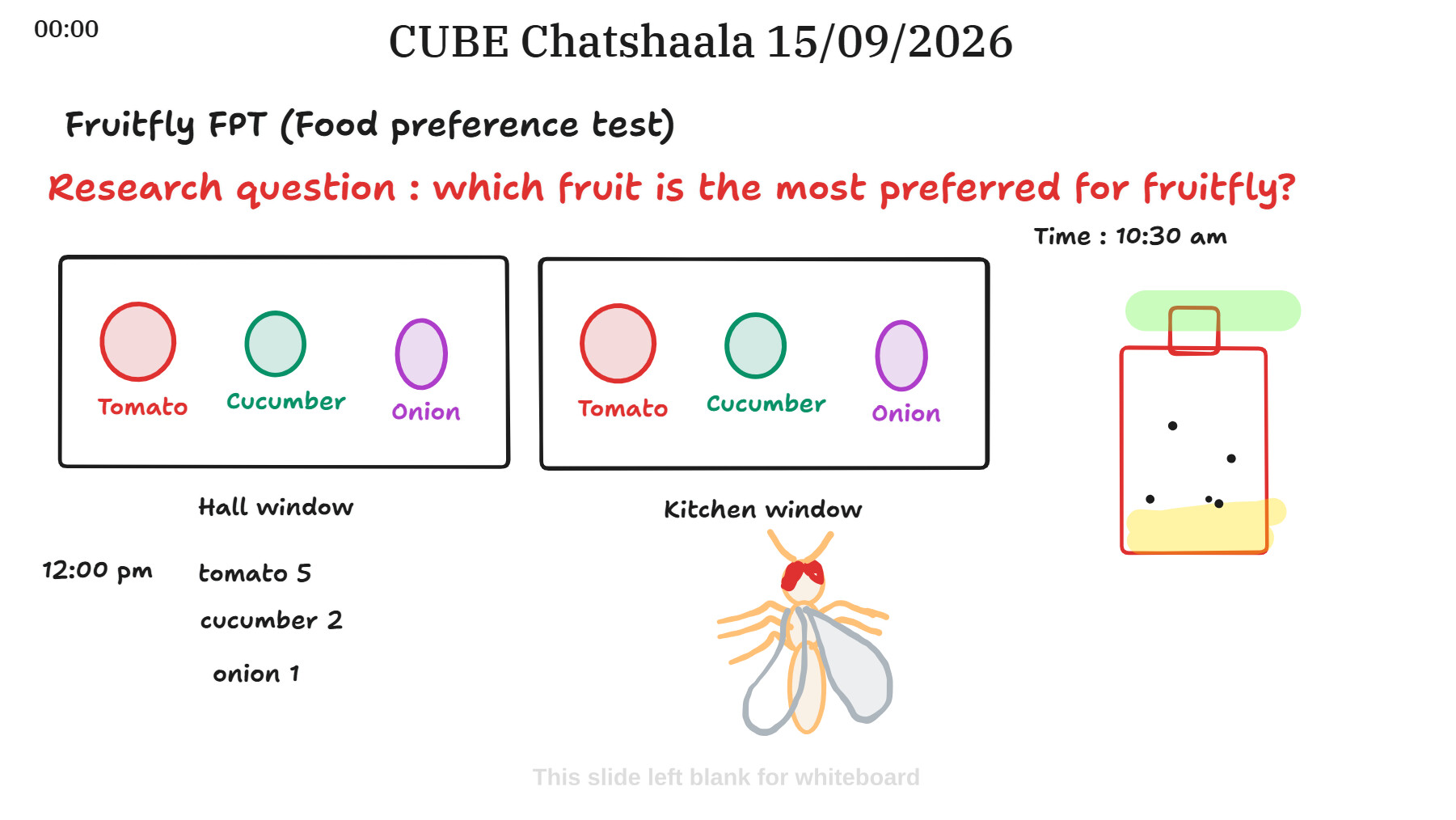
The central experimental discussion revolved around designing and evaluating a Food Preference Test (FPT) to determine which food substrate fruit flies prefer when presented with multiple choices across different environmental locations.
- Research Question: Which fruit/vegetable substrate is most preferred by fruit flies?
- Experimental Setup: Participants placed equal-opportunity choices—Tomato, Cucumber, and Onion—at two distinct environmental locations within a home setup: the Hall Window and the Kitchen Window.
- Observation Data (Recorded at 12:00 PM, after starting at 10:30 AM):
- Hall Window Results: Tomato attracted 5 flies, Cucumber attracted 2 flies, and Onion attracted 1 fly.
- Environmental Variables: The team discussed how localized environmental factors (e.g., airflow, ambient temperature, humidity, lighting, and kitchen odor gradients) might bias fly recruitment independently of the food source itself.
2. Culturing Techniques & Morphological Observations
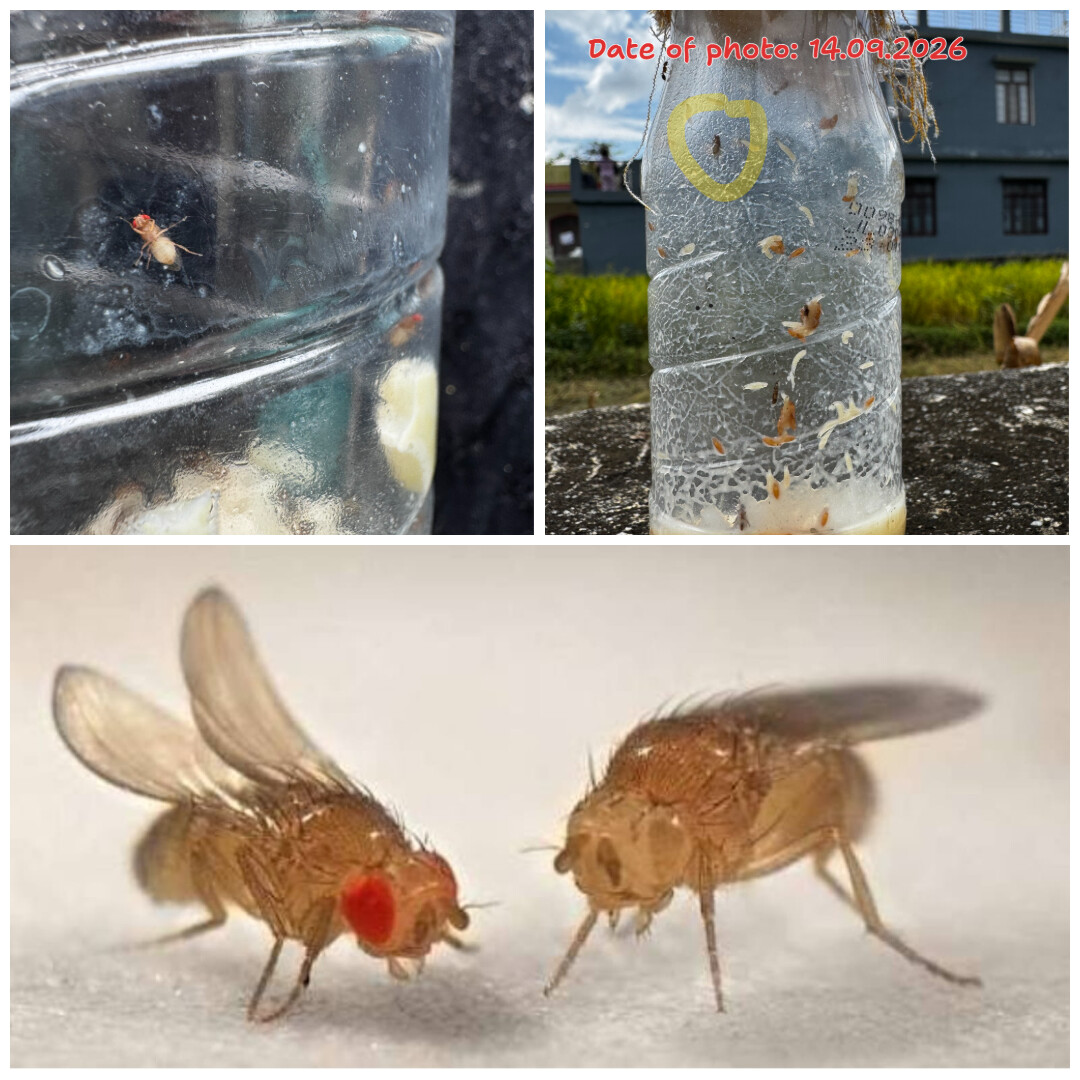
The group reviewed ongoing Drosophila bottle culture setups documented in recent days. Plastic bottle cultures showed healthy developmental progression, with visible egg-laying, active larvae crawling on bottle walls, and pupae formation near the top dry surfaces. Live adult flies featuring characteristic wild-type red compound eyes were observed and photographed.
3. Insect Morphology and Drawing Accuracy
A significant portion of the meeting addressed the anatomical representation of insects. During the whiteboard session, a schematic drawing of a fruit fly prompted a detailed examination of insect body plans. The discussion emphasized fundamental entomological facts:
- Adult insects belong to the class Insecta and possess three distinct body segments: head, thorax, and abdomen.
- All six jointed legs attach exclusively to the thorax (the middle segment).
- The abdomen contains digestive, excretory, and reproductive organs, and completely lacks true jointed walking legs.
The contrast between informal quick sketches (which often incorrectly attach legs to the abdomen) and actual biological anatomy served as an engaging entry point into precise observational science.
4. Commemorating Scientific Perseverance: Veronica Rodrigues Award
The session tied these daily observational efforts to the legacy of the late TIFR scientist Dr. Veronica Rodrigues and the Veronica Rodrigues Award for Perseverance in the Pursuit of Science. The participants highlighted how daily engagement in ChatShaala, active documentation on the MetaStudio platform, and persistent experimentation—even during challenging periods such as lockdowns—reflect the true spirit of scientific inquiry driven by curiosity and rigorous documentation.
 Provocative Questions
-
Olfactory vs. Gustatory Signaling: When a fruit fly lands on a tomato slice during an FPT, is it responding primarily to volatile olfactory cues in the air or taste reception upon contact? How can we isolate smell from taste in a simple kitchen lab setup?
-
Micro-environmental Bias: Why did the Hall Window show a higher fly count for tomato compared to onion? Could ambient light direction or cross-ventilation at the window play a greater role in fly positioning than the food substrate itself?
-
Anatomical Representation vs. Perception: Why do most people subconsciously draw insect legs attached to the abdomen when sketching from memory? What does this reveal about the difference between passive viewing and active scientific observation?
-
Behavioral Plasticity: Do lab-cultured fruit flies exhibit different food preferences compared to wild fruit flies caught directly from fresh farm produce? How might dietary history influence current food choice?
-
Experimental Controls: If we swap the positions of tomato, cucumber, and onion across the windowsill, will the flies follow the tomato or follow the location closest to the edge or light source?
 What I Have Learned
-
Precision in Observation: Science begins with looking closely rather than assuming. A simple exercise like sketching a fly highlighted how easy it is to overlook basic anatomical truths—such as all six legs originating strictly from the thorax—unless one actively verifies morphology against physical specimens or authoritative literature.
-
Designing Controls in Simple Settings: Conducting an FPT at home requires careful accounting for confounding variables. Factors like air currents near windows, proximity to other food sources in a kitchen, and exposure to sunlight can easily skew fly counts if not controlled or randomized.
-
Value of Continuous Citizen Science: The discussion around the Veronica Rodrigues Award reinforced that meaningful scientific contribution does not always require high-end laboratory infrastructure. Consistent daily tracking, simple cultures in plastic bottles, and open discussion on platforms like MetaStudio build authentic scientific temper and collaborative knowledge.
TINKE Moments (This I Never Knew Earlier)
- Leg Attachment Discrepancy on the Whiteboard: A clear “TINKE moment” occurred when comparing the whiteboard schematic drawing of the fruit fly with actual specimen photos. Despite handling fruit flies daily, the drawn legs were attached to the abdomen rather than the thorax. This sudden realization sparked a lively debate on how human cognitive bias distorts physical reality in scientific illustration.
- Low Attraction to Onion: While onion emits strong sulfur-based volatile compounds, it attracted minimal flies (1 fly) compared to tomato (5 flies). This raised an intriguing question about whether certain volatile compounds act as active repellents or if flies lack the specific chemoreceptors required to seek out onion as a suitable oviposition or feeding site.
- Spatial Window Distribution: The difference in fly counts between the Hall Window and Kitchen Window setups suggested that spatial location might override food scent under ambient room conditions, prompting participants to reconsider how spatial orientation affects insect chemotaxis.
Gaps and Misconceptions
-
Misconception — Insect Leg Placement: A common error identified during the drawing exercise was depicting insect legs attached to the abdominal segment.
- Correction: True adult insects (hexapods) strictly have three pairs of legs attached to the three thoracic segments (prothorax, mesothorax, and metathorax). The abdomen is reserved for visceral organs and reproduction.
-
Gap — Inadequate Sample Size and Exposure Duration: Recording counts after only 1.5 hours (from 10:30 AM to 12:00 PM) with a small total number of flies (8 flies total at the Hall window) provides insufficient statistical power to claim a definitive “preference” for tomato.
- Resolution: The experiment needs multiple replicates over extended time intervals, position rotation of substrates to eliminate spatial bias, and larger sample populations.
-
Gap — Chemical Profiling of Test Foods: Treating “tomato,” “cucumber,” and “onion” purely as food names overlooks variables such as ripeness, sugar content, acidity, and fermentation state (yeast activity), all of which heavily influence Drosophila attraction. Standardizing food state is essential for valid comparisons.
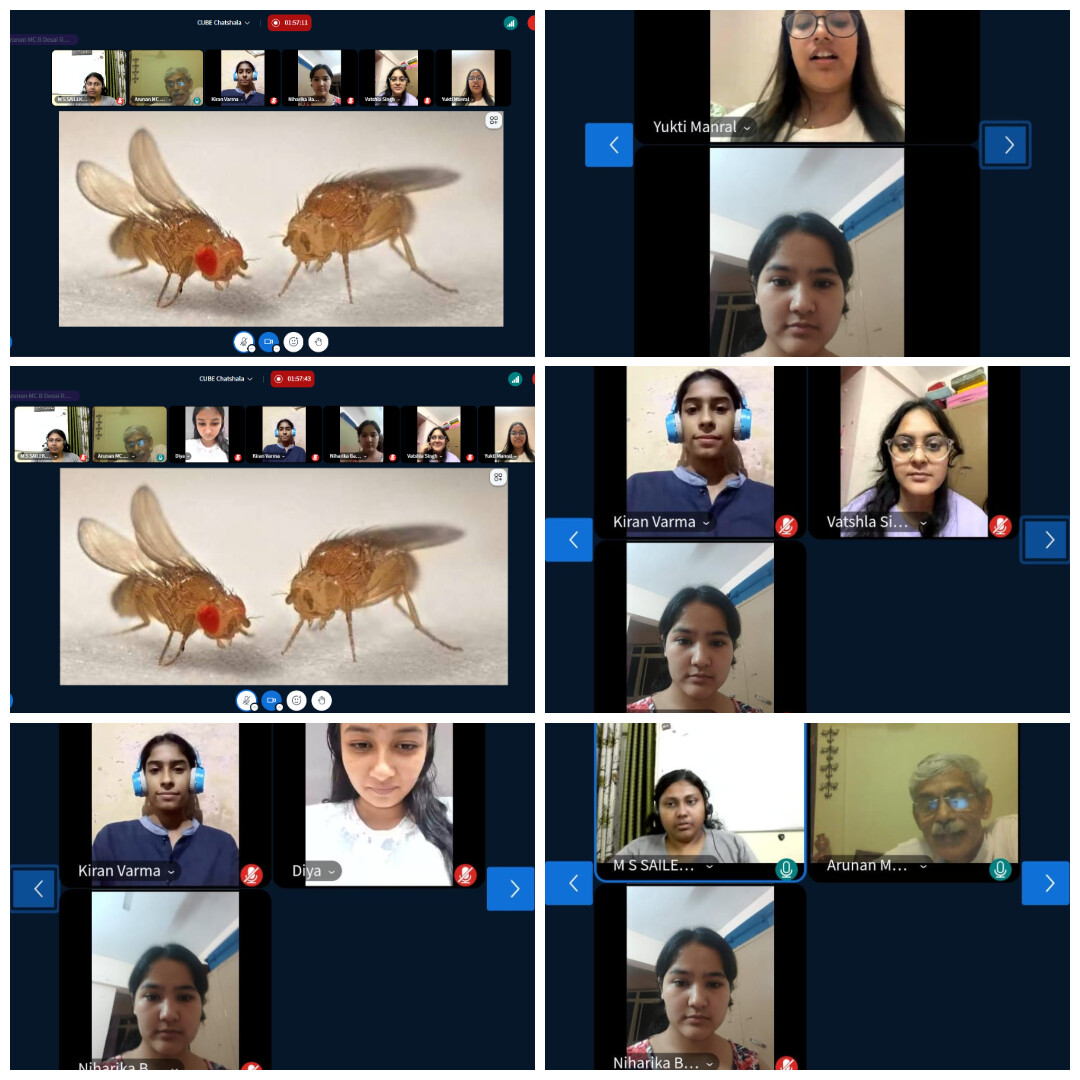
 Photographs during Chatshaala
 Referance