 Meeting Summary: CUBE Chatshaala - October 19, 2025
The session today focused on the essential techniques and fundamental biological concepts underpinning Immunohistochemistry and Microtome preparation, using the context of Liver Cancer research at ACTREC (Advanced Centre for Treatment Research and Education in Cancer).

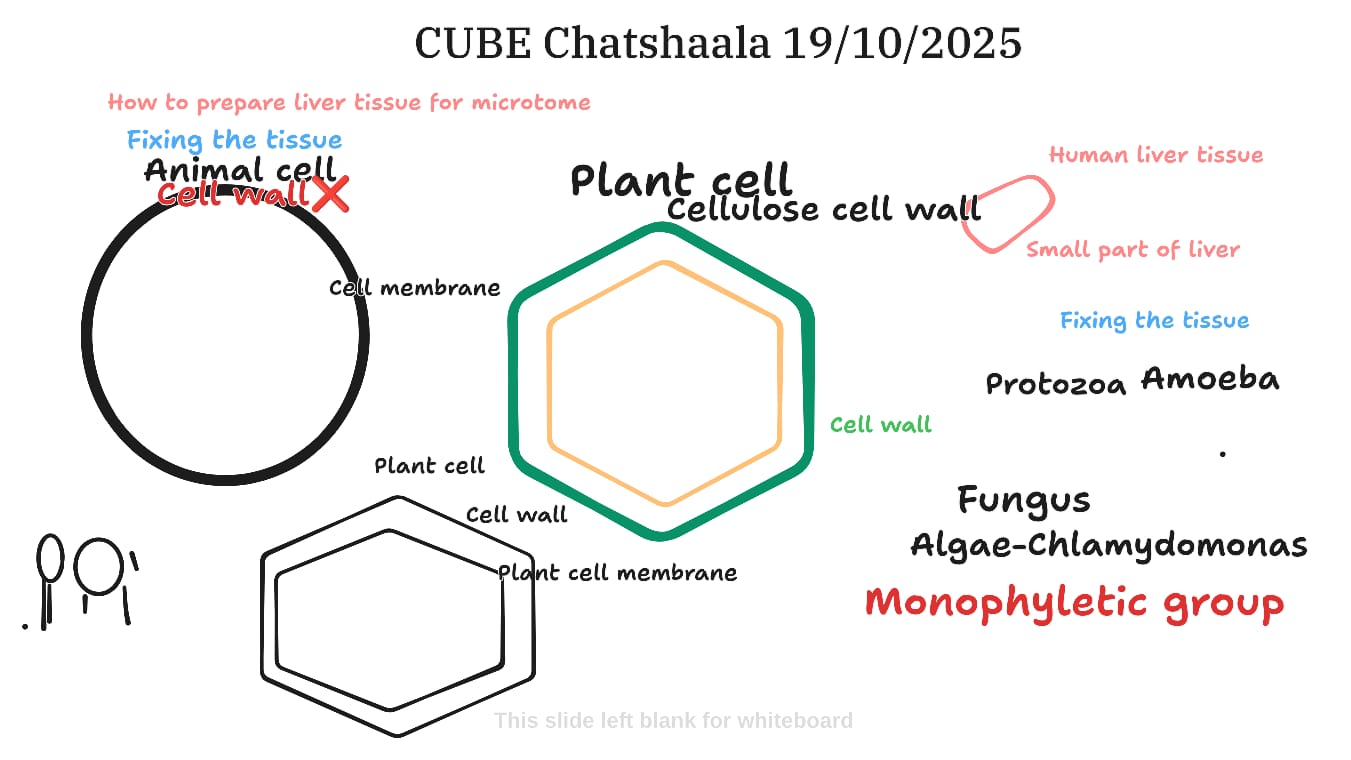
A primary discussion point was the protein DDX5 (an RNA helicase) and its significance in liver cancer, characterized by uncontrolled cell division. Key questions were posed regarding the cellular localization of DDX5 in human liver cells and whether it is present within the cell. The subsequent step, the application of Anti-DDX5 antibodies for staining, highlighted the core principle of immunohistochemistry: using specific antibodies to visualize target proteins within tissue sections.
The preparation of tissue samples for sectioning using a Microtome was then explored, specifically focusing on human liver tissue. The concept of fixing the tissue was introduced as a crucial initial step. We contrasted the cellular structure of Animal cells (lacking a cell wall) with Plant cells (possessing a Cellulose cell wall). The discussion also broadened to include other organisms like Protozoa (Amoeba), Fungus, and Algae (Chlamydomonas), noting that the latter organisms are often considered part of a Monophyletic group (though the specific relationships were not detailed).
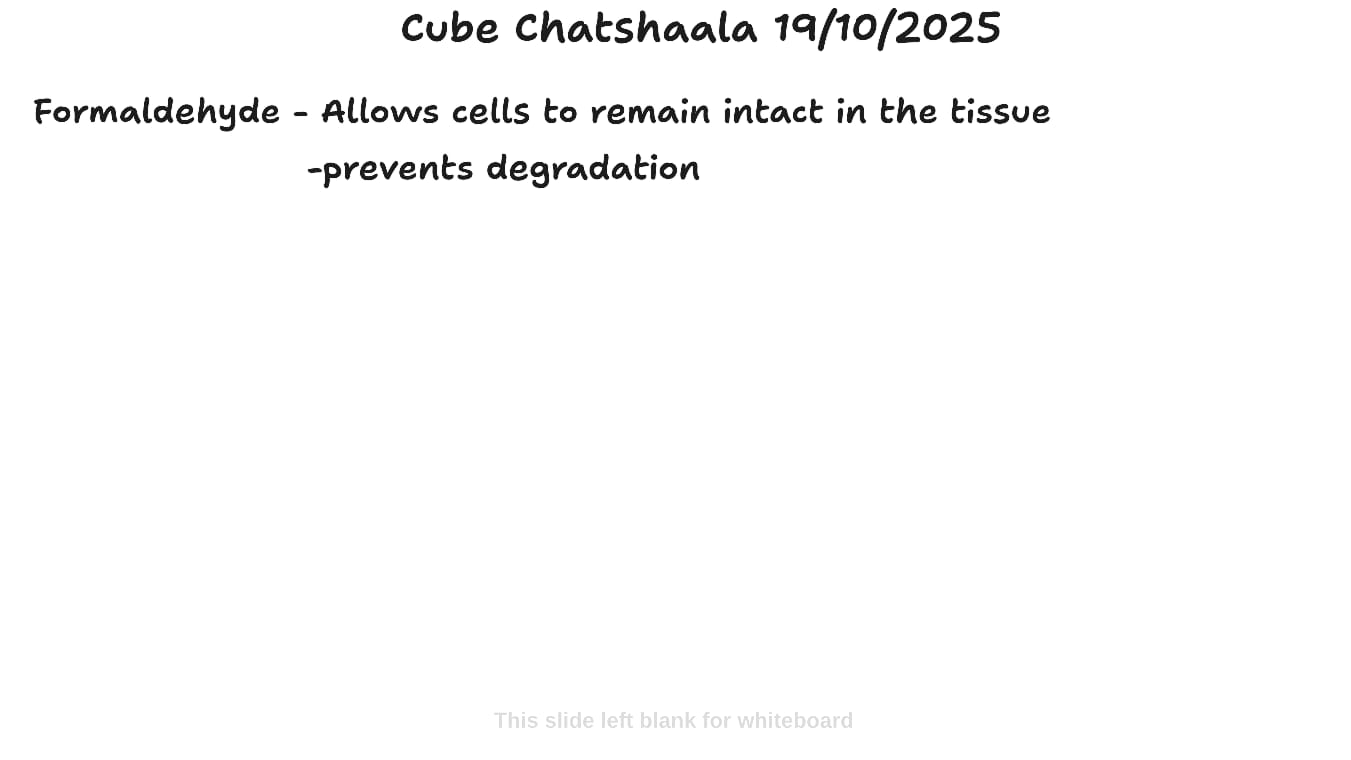
The role of the fixative Formaldehyde was specifically highlighted. Formaldehyde is essential because it allows cells to remain intact in the tissue and, critically, prevents degradation, ensuring the tissue’s morphology and molecular components are preserved for analysis. This fixation step is paramount to obtaining high-quality, reliable results in both microtome sectioning and subsequent immunohistochemical staining.
 Provocative Queries for the General Audience
The Liver’s Uncontrolled Secret: Can a Single Protein Predict Your Fate?
Why are scientists obsessed with DDX5 (an RNA helicase) in liver cancer? If this protein is simply involved in basic cell functions, how does its misplacement or overactivity drive aggressive, uncontrolled cell division? Is it the presence of DDX5, or where it is located within the liver cell, that decides a patient’s prognosis?
Beyond the Knife: Is Preserving the Dead Cell the Key to Curing the Living?
The act of ‘fixing’ a tiny piece of liver tissue in Formaldehyde is fundamental to cancer research. Why is this seemingly simple step—stopping all biological processes—so crucial? If the cell’s structure is perfectly maintained, what hidden information about cancer’s mechanism are we unlocking years after the tissue was removed?
The Antibody Arms Race: How Does a “Tag” on a Protein Turn into a Diagnosis?
We use Anti-DDX5 antibodies to “stain” and visualize this protein. Imagine a molecular-level search-and-destroy mission. How does the exquisite specificity of an antibody allow us to pinpoint a single type of protein among thousands, and what are the limits of this technology (Immunohistochemistry)? Can cancer ever fully hide its molecular identity from us?
Reflections: Learning, Gaps, and Misconceptions
 What I Have Learned (The “TINKE” Moments)
-
TINKE Moment 1: The Fixation-Preservation Paradox: The critical realization of the dual role of Formaldehyde—it not only preserves the structure of the cells but also halts the enzymatic degradation that would otherwise destroy the molecular targets (like DDX5) needed for subsequent analysis. The quality of a final scientific observation begins with this initial chemical “freezing.”
-
TINKE Moment 2: DDX5 as a Localized Marker: The discussion emphasized that the core question in immunohistochemistry for DDX5 is not just if it is present, but where it is present in human liver cells. This highlights the principle that a protein’s function (and pathological role) is often dictated by its cellular compartmentalization (e.g., nucleus vs. cytoplasm).
 Gaps and Misconceptions
-
Gap 1: Monophyletic Group in Context: The term “Monophyletic group” was introduced regarding Algae/Chlamydomonas/Fungus/Protozoa, but the specific evolutionary justification or the relevance to tissue fixation/staining was not clearly elaborated. It leaves a gap in understanding why these diverse groups were grouped, other than as a contrast to animal cells.
-
Gap 2: Mechanism of RNA Helicase in Cancer: While DDX5 was identified as an RNA helicase driving uncontrolled cell division, the specific molecular mechanism—how its helicase activity or mutation directly translates into oncogenesis (cancer development)—remains an underlying conceptual gap for the general audience.
-
Misconception: A potential misconception could be oversimplifying the “fixing the tissue” step as merely “preserving.” The chemical process of cross-linking proteins by formaldehyde is complex and crucial for embedding and subsequent sectioning (Microtome), which was not detailed, leaving the mechanics of fixation as a simple storage step rather than a preparatory chemical process.
 photographs during Chatshaala


 Reference
@Arunan @SN1261 @shivani @shama @Chitralekha and others.