 CUBE Chatshaala - Discussion Summary
Date: 11th September 2026
During today’s CUBE ChatShaala session, participants examined the immune system’s specific response to pathogens, using the common cold as a central case study. The session brought together participants including Sailekshmi, Manali Bhujade, Kiran Kalakoti, Niharika Baghari, Akshada Narad, Raina, Kiran Varma, Chitralekha, Riya, Khushbu Gupta, and Arunan Sir.
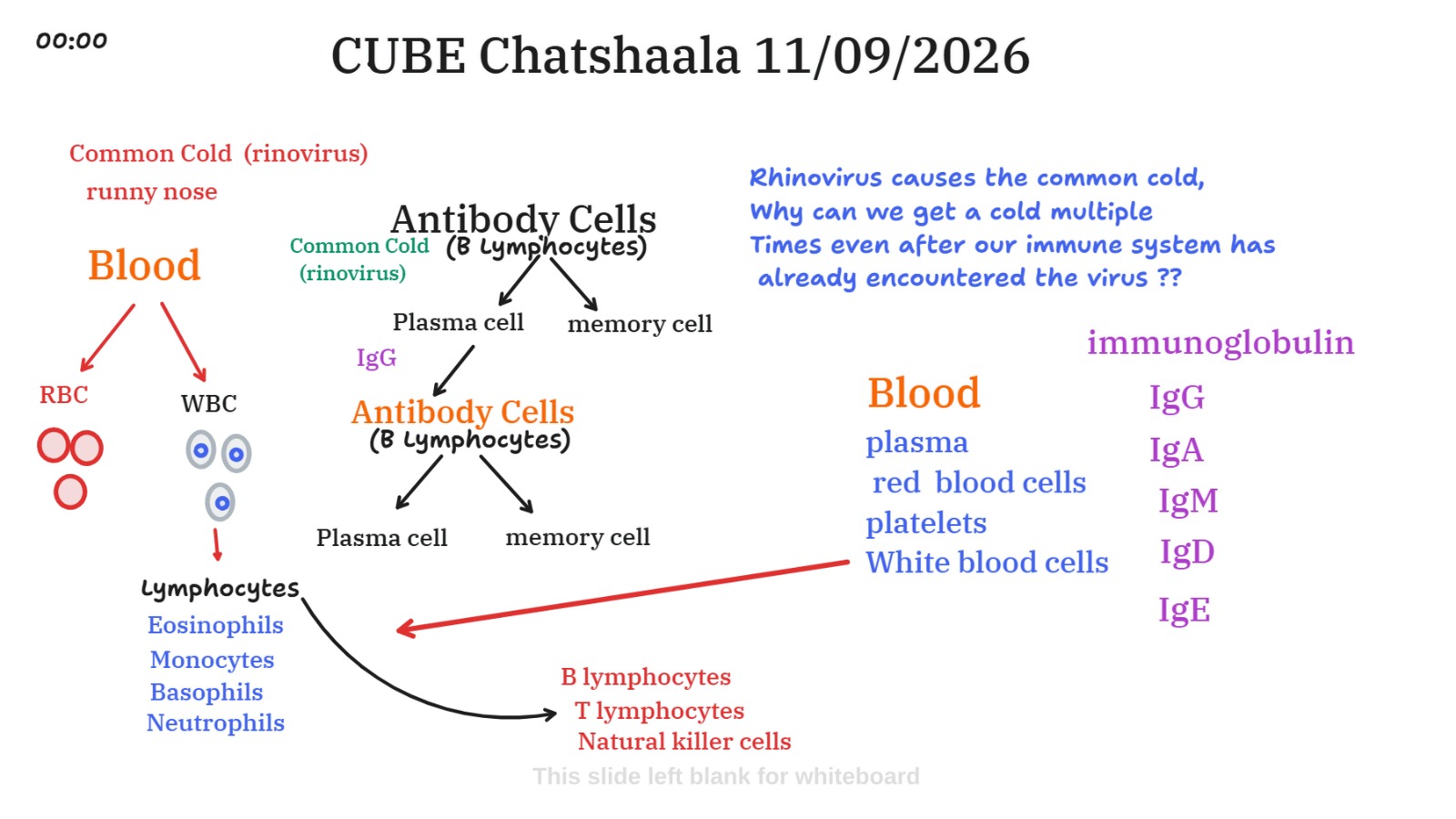
The discussion centered on how rhinovirus causes common cold symptoms such as a runny nose, leading to an analysis of blood components and cellular responses. The group mapped out the differentiation of blood into red blood cells (RBCs) and white blood cells (WBCs), further classifying WBCs into lymphocytes, eosinophils, monocytes, basophils, and neutrophils. Within the lymphocyte category, the focus shifted to B lymphocytes, T lymphocytes, and Natural Killer cells.
A significant portion of the meeting was dedicated to understanding humoral immunity. Activated B lymphocytes differentiate into memory cells and antibody-producing plasma cells, which generate immunoglobulins (IgG, IgA, IgM, IgD, and IgE). The central investigative question addressed during the session was: Why can we get a cold multiple times even after our immune system has already encountered the virus?
 Provocative Questions
-
If B lymphocytes produce memory cells after an initial infection, why doesn’t adaptive immunity provide lifelong protection against the common cold?
-
How do structural variations among more than 200 cold-causing viruses allow them to evade recognition by pre-existing IgG and Secretory IgA antibodies?
-
What mechanisms explain why mucosal immunity via IgA might fail to prevent reinfection in the upper respiratory tract compared to systemic immunity mediated by IgG in the bloodstream?
-
Does the rate of antigenic drift in rhinoviruses outweigh the rate at which B lymphocytes generate long-lived memory plasma cells?
 What I Have Learned
-
Cellular Lineage: B lymphocytes originate from white blood cell lymphocyte lineages and differentiate into specialized plasma cells and long-term memory cells upon antigen encounter.
-
Antibody Diversity: Humoral protection relies on five distinct immunoglobulin classes (IgG, IgA, IgM, IgD, IgE), each serving specific functions in mucosal and systemic defense.
-
Pathogen Complexity: Overcoming viral infections requires understanding that host immune memory is specific to particular antigenic strains, meaning exposure to one viral variant does not grant universal immunity against all cold-causing viruses.
 TINKE Moments (This I Never Knew Earlier)
-
The Re-infection Paradox: A critical moment arose when discussing how individuals contract colds repeatedly despite having intact B-cell memory mechanisms. This highlighted a need to better understand antigenic variation across viral strains rather than assuming host immune failure.
-
Systemic vs. Mucosal Immunity Distinction: Participants faced a conceptual hurdle in differentiating general blood-borne antibodies (like IgG) from local mucosal antibodies (like IgA) that directly defend the respiratory tract lining.
 Gaps and Misconceptions
-
Misconception on Immunological Memory: Assuming that the presence of memory B cells guarantees complete immunity against future colds, overlooking viral mutation and the vast number of distinct cold-causing viral strains.
-
Gap in Mucosal Defense Mechanisms: Overlooking the primary role of Secretory IgA in mucosal surfaces (like the nasal passage) while focusing primarily on systemic white blood cell responses in the bloodstream.
 Photographs during Chatshaala
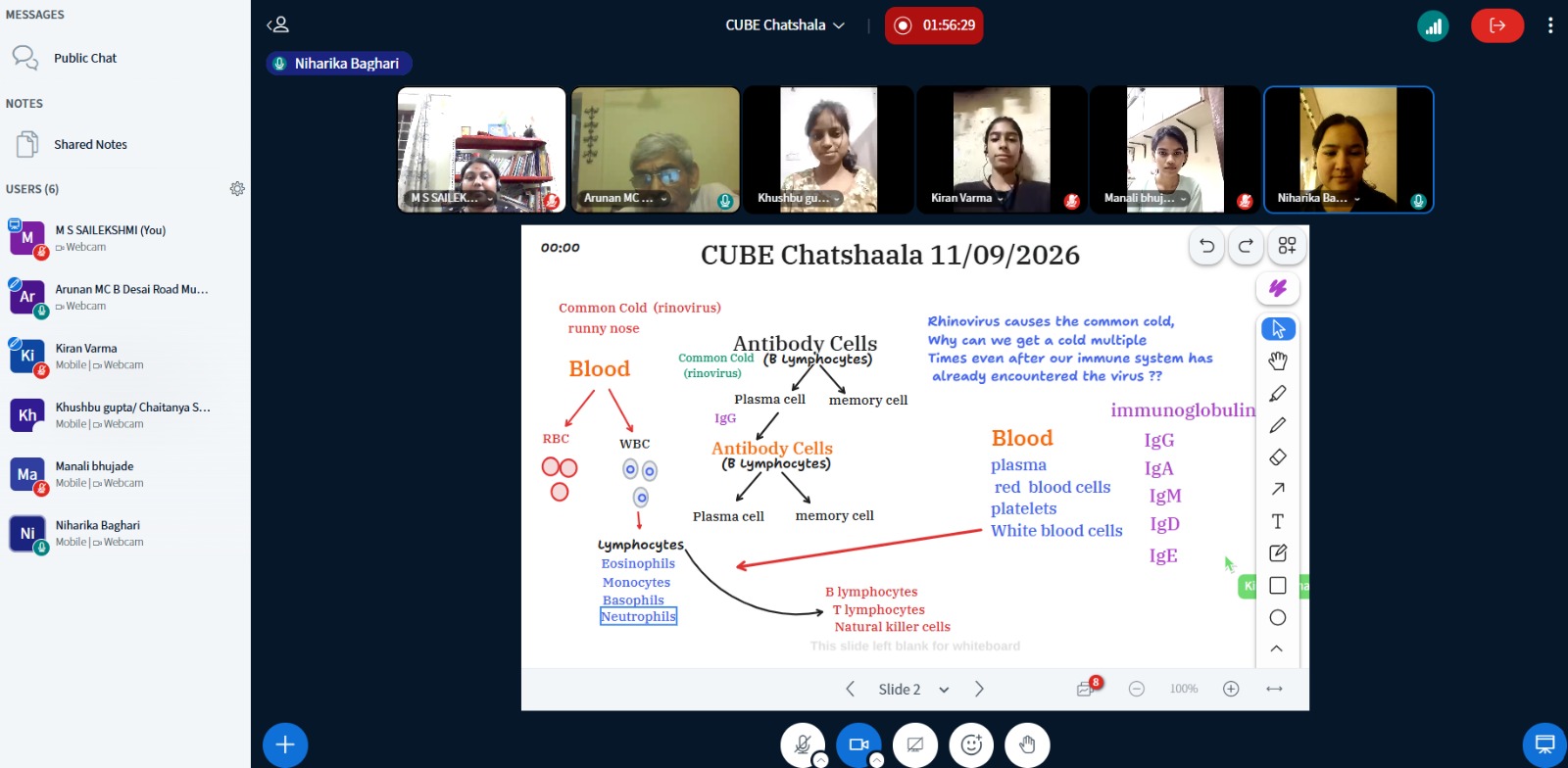
 Referance