# Phyllanthus Sleep Wake Cycle
**URL:** https://metastudio.org/t/phyllanthus-sleep-wake-cycle/3763
**Category:** CUBE chat
**Tags:** phyllanthus, resource, circadian-study
**Created:** [May 15, 2020, 12:53am UTC](https://metastudio.org/t/phyllanthus-sleep-wake-cycle/3763 "2020-05-15T00:53:32Z")
**Posts on this page:** 9
**Page:** 1
### Author:  [@baviskarritik](https://metastudio.org/u/baviskarritik)
#### Post date: [May 15, 2020, 12:53am UTC](https://metastudio.org/t/phyllanthus-sleep-wake-cycle/3763/1 "2020-05-15T00:53:32Z")
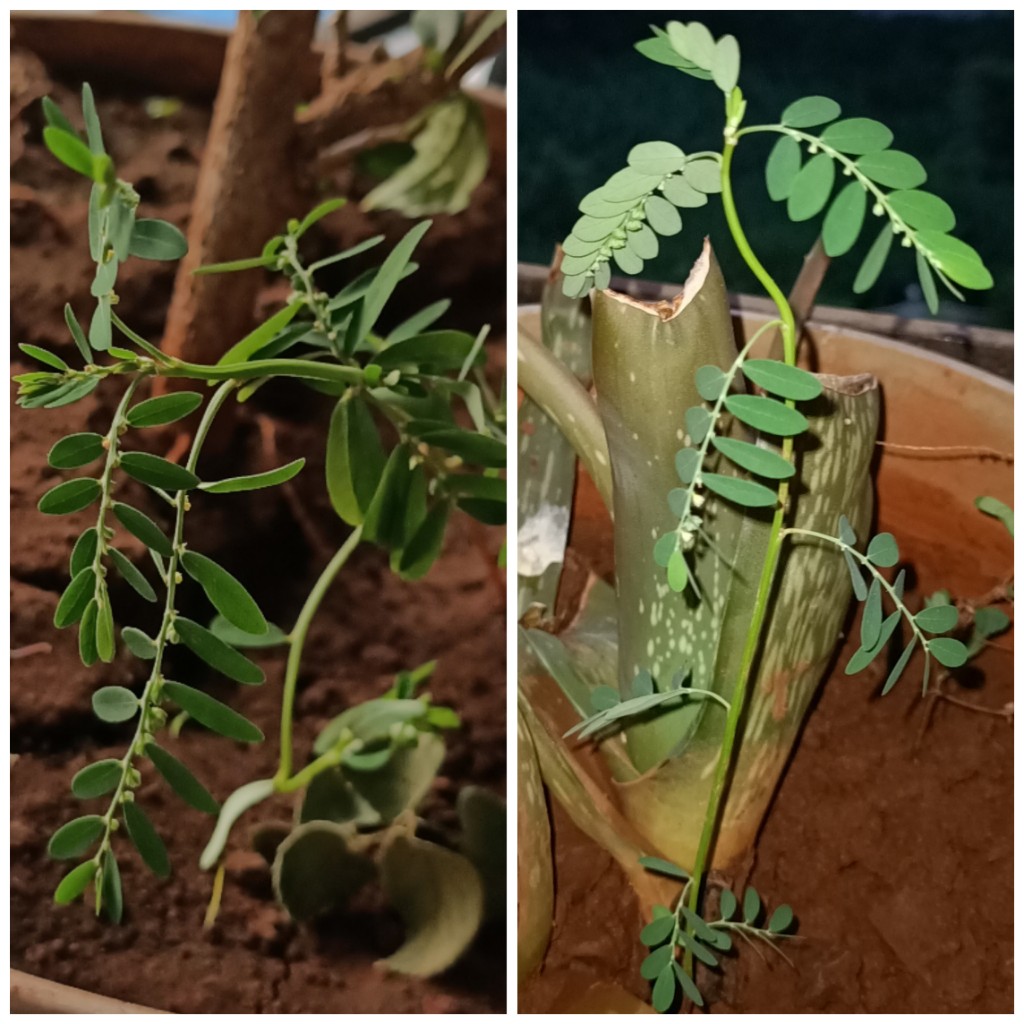
This species of phyllanthus woke up at 6:00 am in the morning. Date :- May 15th 2020
---
### Author:  [@baviskarritik](https://metastudio.org/u/baviskarritik)
#### Post date: [May 15, 2020, 4:41am UTC](https://metastudio.org/t/phyllanthus-sleep-wake-cycle/3763/2 "2020-05-15T04:41:49Z")
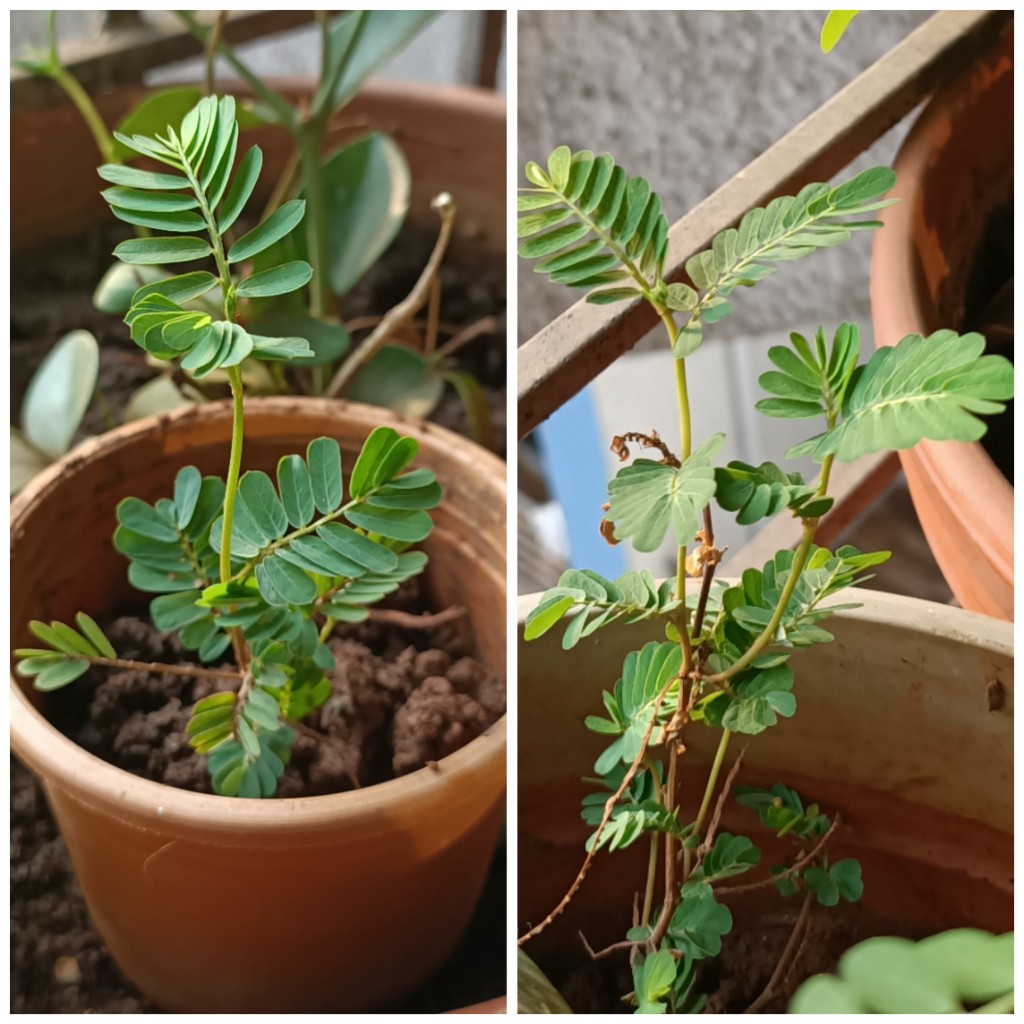
This phyllanthus Species woke up at 6:52 am. Location:- Titwala, Maharashtra.
Date :- may 14th 2020
---
### Author:  [@drishtantmkawale](https://metastudio.org/u/drishtantmkawale)
#### Post date: [May 15, 2020, 5:39am UTC](https://metastudio.org/t/phyllanthus-sleep-wake-cycle/3763/3 "2020-05-15T05:39:49Z")
How do we know the plant above is _ **Phyllanthus** _?
Why study this particular plant only?
---
### Author:  [@baviskarritik](https://metastudio.org/u/baviskarritik)
#### Post date: [May 15, 2020, 6:50am UTC](https://metastudio.org/t/phyllanthus-sleep-wake-cycle/3763/4 "2020-05-15T06:50:01Z")
@drishtantmkawale I found some papers to identify phyllanthus genus and this is what I found. And I think the mentioned characteristics match with the plant I found so I think it is phyllanthus.
[https://scholar.google.com/scholar?hl=en&as\_sdt=0,5&qsp=4&q=taxonomic+implication+genus+phyllanthus&qst=bh#d=gs\_qabs&u=%23p%3D3kvFkgx1ZDIJ](https://scholar.google.com/scholar?hl=en&as_sdt=0,5&qsp=4&q=taxonomic+implication+genus+phyllanthus&qst=bh#d=gs_qabs&u=%23p%3D3kvFkgx1ZDIJ)
The vast majority of Phyllanthus species,
however, share a distinctive vegetative specialization known
as ‘‘phyllanthoid branching’’ ( Branchlets with only 2 subopposite leaves, terminating in a racemose inflorescence) with leaves on
the main axes reduced to scales called ‘‘cataphylls’’ and those
on lateral (plagiotropic), deciduous, floriferous axes
developing normally.
Three New Sections and a New Subgenus of Phyllanthus (Euphorbiaceae)
Author(s): Grady L. Webster
Source: Novon, Vol. 12, No. 2 (Summer, 2002), pp. 290-298
Published by: Missouri Botanical Garden Press
Monoecious or dioecious shrubs or subshrubs,
branching unspecialized, branches smooth or pa-
pillate; phyllotaxy spiral; leaves petiolate, stipules
persistent; flowers pedicellate, in axillary glomer-
ules; sepals 5 or 6, imbricate, entire; staminate disk
of 5 or 6 segments; stamens 3, filaments free or
connate; anthers vertically or horizontally dehis-
cent; pollen grains subglobose, 3- or 4-colporate,
mostly coarsely reticulate; pistillate disk patelli-
form; ovary glabrous, 3-locular; styles + free, bifid;
fruits capsular, seeds smooth or verruculose
Why this plant particularly because, the leaves of this plant open in the morning and closes in the evening , and by noting the time of this I think it can be a step for circadian rhythm studies. I think it is related to ciracadian rhythm
---
### Author:  [@Lydia](https://metastudio.org/u/Lydia)
#### Post date: [May 15, 2020, 6:09pm UTC](https://metastudio.org/t/phyllanthus-sleep-wake-cycle/3763/5 "2020-05-15T18:09:39Z")
So this means there is a sleep wake cycle involved!?
We are trying to correlate our model systems with each other!
Drosophila…or the fruit flies also have this sleep wake cycle!
Can we disuss about the circadian rhythm or the sleep wake cycle of such model systems?
What is it that regulates the sleeping time and the waking up time in phyllanthus plant?
---
### Author:  [@drishtantmkawale](https://metastudio.org/u/drishtantmkawale)
#### Post date: [May 15, 2020, 6:35pm UTC](https://metastudio.org/t/phyllanthus-sleep-wake-cycle/3763/6 "2020-05-15T18:35:41Z")
Always try to explain with the help of photos, it would be more clear to everyone.
I being from a non-botanical background, cannot relate things! @baviskarritik
Well, I knew about the 24-hour Sleep-Wake cycle in Humans, we get up in the morning and sleep at night because we have a brain!
Do plants have a brain?
How does the sleep-wake activity gets regulated in plants?
Interesting!!
@Lydia mentioned about the studies of Circadian Rhythm is _ **Drosophila** _ flies, it is an interesting field too!
Let us study both the models one from Botany and the other one from Zoology although both are the children of Science and see if we find some things in common even if one has a brain and the other doesn’t!
@Lydia Let us follow up the discussion of Circadian Rhythm studies in Fruitflies and the molecular mechanism in them!!
It has garnered a **Nobel-Prize**!
---
### Author:  [@baviskarritik](https://metastudio.org/u/baviskarritik)
#### Post date: [May 15, 2020, 7:11pm UTC](https://metastudio.org/t/phyllanthus-sleep-wake-cycle/3763/7 "2020-05-15T19:11:45Z")
Yes Lydia, absolutely we can co relate our model organism, and use opportunity to study circadian rhythm I think it’s regulated by genes there but genes which induce circadian rhythm in plants as they do not have brain.
[https://link.springer.com/article/10.1007/s10265-017-0991-8](https://link.springer.com/article/10.1007/s10265-017-0991-8)
This a paper,
Title :- Circadian clock during plant development
Authors:-
- [Keisuke Inoue]
- [Takashi Araki]&
- [Motomu Endo]
From The Journal of Plant Research it says that The circadian clock in plants, as in animals and insects, mainly consists of multiple interlocking transcriptional/translational feedback loops. The circadian clock can be entrained by environmental cues such as light, temperature and nutrient status to synchronize internal biological rhythms with surrounding environments.
---
### Author:  [@Lydia](https://metastudio.org/u/Lydia)
#### Post date: [May 15, 2020, 7:23pm UTC](https://metastudio.org/t/phyllanthus-sleep-wake-cycle/3763/8 "2020-05-15T19:23:19Z")
Yes exactly!!
Noble Prize!!
In the year 2017, Jeffrey C Hall, Michael Rosbash and Michael W Young won the prize for uncovering the molecular mechanisms that control circadian rhythms
So by this, we can understand that there are some mechanisms or genes that control the circadian rhythm in flies.
We can first discuss in detail the mechanisms or the genes which are responsible for the circadian rhythm or in simple words, the sleep wake cycle of the flies
We had a very long discussion on this topic a month ago…but then we couldn’t continue the discussion further.
I remember talking about some genes involved…the timeless gene and the per gene.
There is a video which explains this mechanism really well.
I’ll share the link
Take a look at it…and start discussing
[https://www.youtube.com/watch?v=ZktzYgkhrYM](https://www.youtube.com/watch?v=ZktzYgkhrYM)
---
### Author:  [@drishtantmkawale](https://metastudio.org/u/drishtantmkawale)
#### Post date: [January 3, 2021, 3:33pm UTC](https://metastudio.org/t/phyllanthus-sleep-wake-cycle/3763/9 "2021-01-03T15:33:54Z")
Thought of reviving this topic with a bang!
Have a look and please comment.
> **[Phyllanthus TimeLapse.mp4](https://drive.google.com/file/d/1kCklrqGWlJ7ji9ont0iDgOZA6-5ozFGG/view?usp=sharing)**
>
> Google Drive file.
**Phyllanthus (unknown species) going to sleep** in Nerul, Navi Mumbai, MH
Above is a _timelapse video_ taken from **5.14pm to 6.43pm**
**Sunset time:** 6.13pm (according to [AccuWeather.com](http://AccuWeather.com))
**Date:** 3rd January 2021
**Data Collector:** Drishtant MK