 CUBE ChatShaala - Discussion Summary
The CUBE ChatShaala session on September 6, 2026, brought together participants from across India to explore biological diversity, local research initiatives, and the rigorous application of the scientific method to everyday observations. The session featured dynamic collaborative presentations by Vatshla Singh, Manali Bhujade, Niharika Baghari, Sailekshmi, Akshada Narad, Susanta Tanti, and Arunan Sir.
The primary focus centered on bamboo, examining its taxonomic status, ecological role, and socio-economic importance. Often referred to as “poor man’s timber,” bamboo is the largest member of the grass family (Poaceae, subfamily Bambusoideae). India holds the second-largest bamboo reserve globally, following China. Participants discussed the necessity of using DNA fingerprinting alongside morphological characterization to map genetic diversity for conservation efforts. The discussion naturally extended into culinary and nutritional applications, notably bamboo shoot curry. While tender bamboo shoots offer high protein, fiber, and essential minerals with low fat content, their widespread consumption in Southeast and East Asia is influenced by their distinct aroma and slightly bitter, acidic profile. In Northeast India, the bamboo considered as the nutritional value can used to make a variety of dishes, along with decorations and furniture. The Kerala Bamboo Mission was highlighted as a key resource for understanding regional species distribution.
In addition to bamboo, participants reviewed active HomeLab setups across different geographic locations:
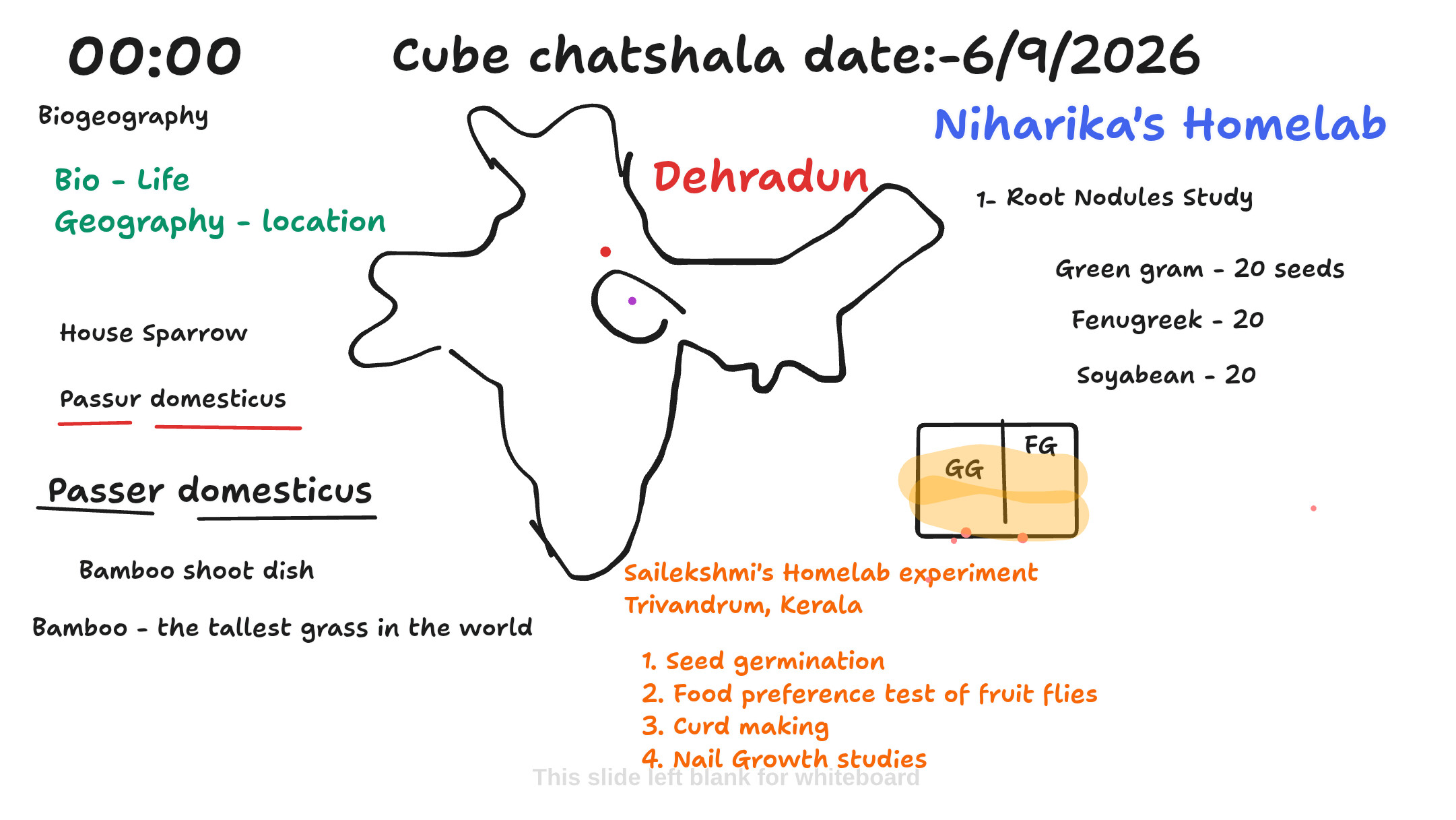
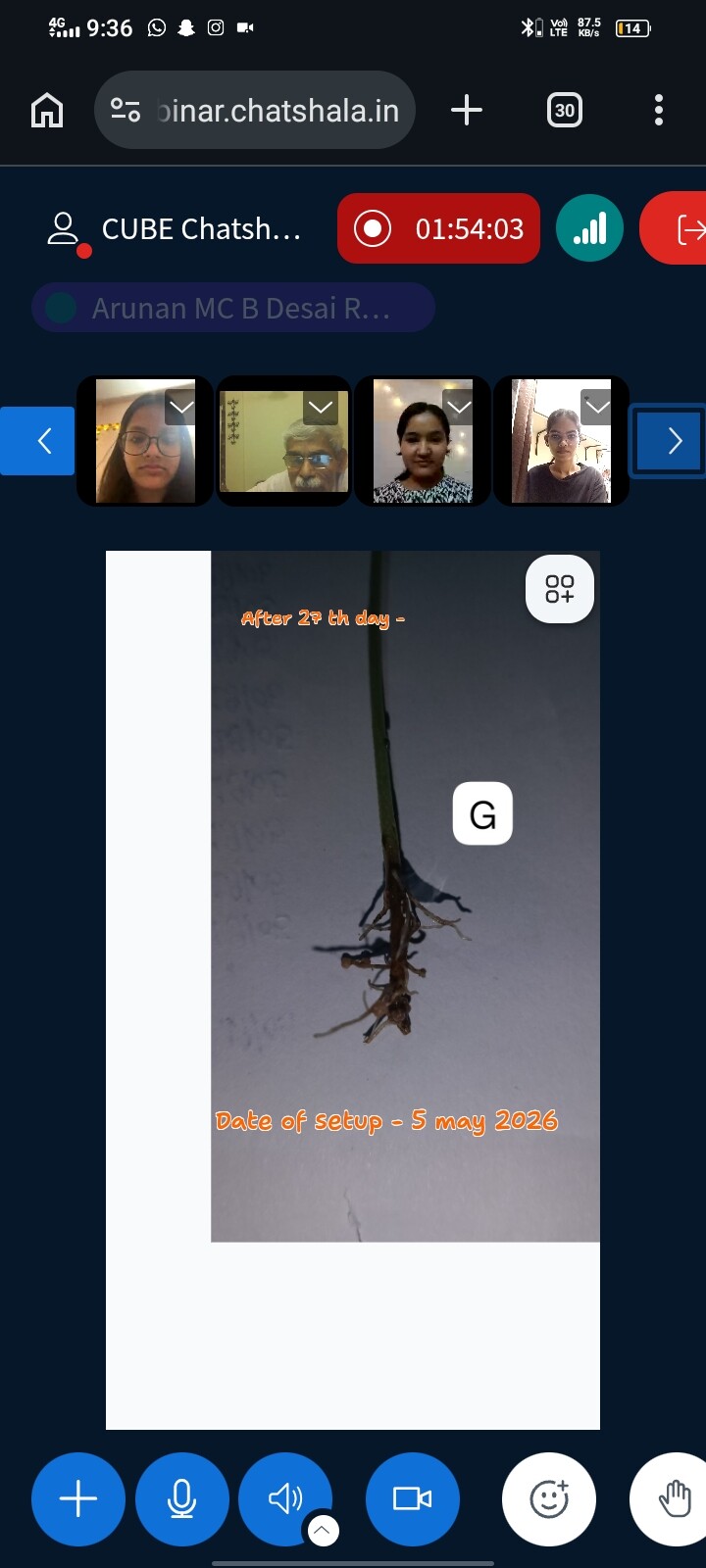
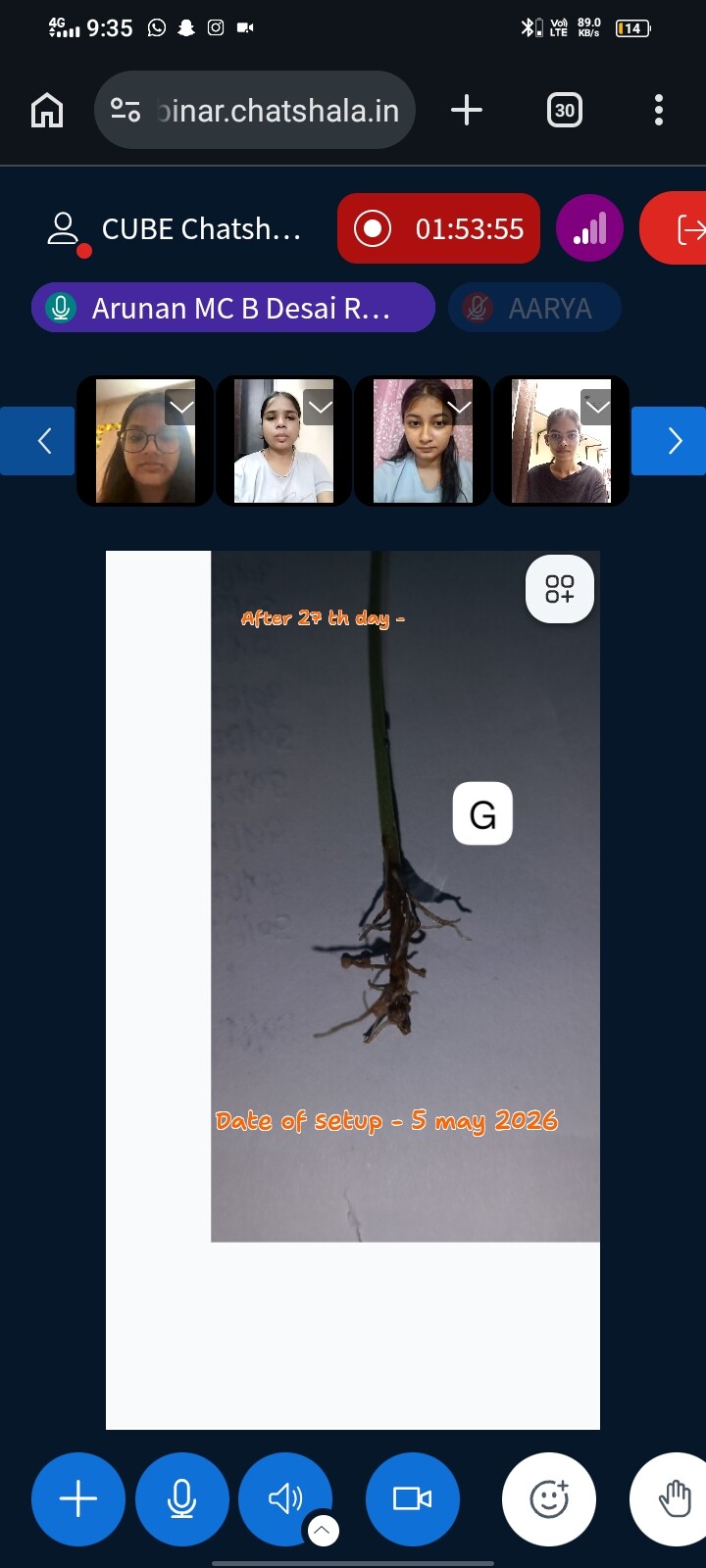
- Niharika’s HomeLab (Dehradun): Focused on symbiotic nitrogen fixation by examining root nodule development in green gram, fenugreek, and soybean seeds (20 seeds each).
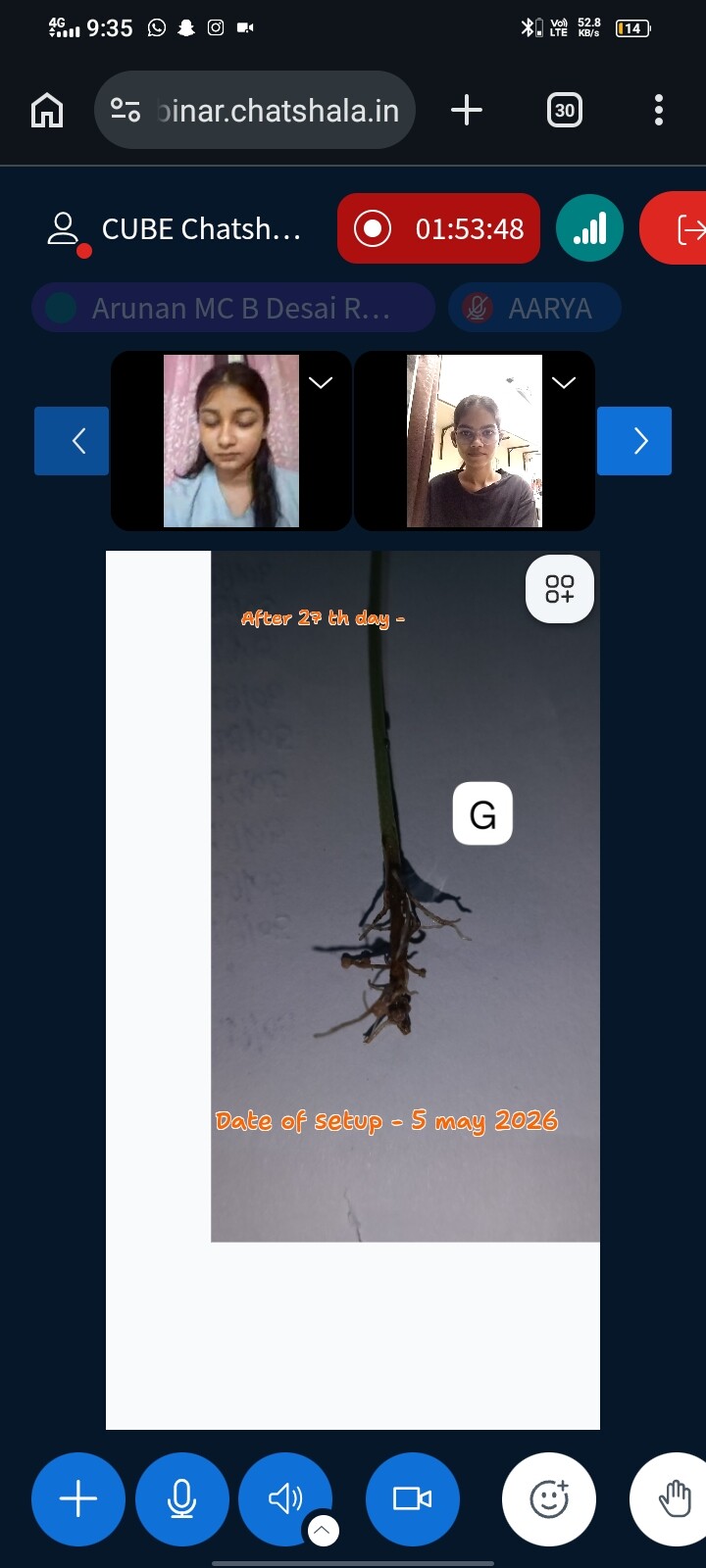
- Sailekshmi’s HomeLab (Trivandrum, Kerala): Covered ongoing projects including seed germination, fruit fly (Drosophila) food preference assays, curd fermentation dynamics, and nail growth measurement using voter’s ink as a biological reference marker.
The session concluded with an emphasis on “Science vs. Illusions,” reinforcing that scientific inquiry requires grounding personal anecdotes and traditional knowledge in peer-reviewed research and experimental evidence.
 Provocative Questions
-
How can we design a HomeLab protocol to systematically test whether the pungent smell and bitter compounds in bamboo shoots can be reduced through fermentation or blanching without compromising their nutritional value?
-
What specific micro-environmental factors in Dehradun versus Trivandrum might account for variations in seed germination rates and root nodulation across identical leguminous species?
-
While bamboo is taxonomically classified as a grass, what structural and developmental mechanisms allow its culms to achieve wood-like rigidity and height without typical secondary growth seen in dicot trees?
-
In what ways can localized biological markers, such as nail growth rates, be standardized across diverse demographic groups to yield statistically valid comparative data?
 What I Have Learned
-
Taxonomic & Nutritional Nuance: Bamboo is far more than a structural material; it functions as an essential, nutrient-dense biological resource whose culinary utilization depends heavily on chemical processing techniques.
-
Biogeographical Context: Mapping research locations across regions—such as Dehradun and Trivandrum—enables a broader comparative framework for decentralized citizen science research.
-
Evidence-Based Framing: Personal observations and traditional practices serve as valuable starting points, but they must be critically evaluated through peer-reviewed literature and controlled experimentation to dismantle unsupported assumptions.
 TINKE Moments &
 Gaps and Misconceptions
-
TINKE Moment (This I Knew Earlier): The transition from discussing a simple family recipe for bamboo shoot curry to analyzing published literature on genetic diversity and biochemical composition demonstrated how everyday experiences can trigger rigorous scientific investigation.
-
Taxonomic and Nomenclature Accuracy: An early draft on the whiteboard listed the scientific name of the house sparrow as “Passur domesticus.” Correcting this spelling to Passer domesticus highlights the importance of precise binomial nomenclature in scientific communication.
-
Gaps in Experimental Standardization: While Niharika’s root nodule study establishes a set sample size (20 seeds each for green gram, fenugreek, and soybean), detailing specific soil parameters, moisture levels, and inoculation methods will be necessary to ensure reproducibility.
-
Misconception around Traditional Practices: Assuming traditional culinary methods are purely anecdotal overlooks the implicit bio-processing knowledge embedded within them. Conversely, treating unverified claims as scientific fact without empirical validation creates an illusion of certainty that robust scientific inquiry must actively address.
 Photographs during ChatShaala
 Reference
- Legacy Of Champaran | Mahatma Gandhi Central University
- The Nutritional Facts of Bamboo Shoots and Their Usage as Important Traditional Foods of Northeast India - PMC
- Bamboo: an overview on its genetic diversity and characterization - PMC
- https://www.researchgate.net/publication/403513241_Book_Review_Bamboo_The_Amazing_Grass_-A_Guide_to_the_Diversity_and_Study_of_Bamboos_in_Southeast_Asia
- https://keralabamboomission.org/index.php/about-us/bamboo-in-Kerala
- https://i.pinimg.com/originals/ed/20/b3/ed20b32208e5b584ad8a71294c7bf400.jpg
- House sparrow - Wikipedia
