 CUBE ChatShaala Meeting Summary: December 3, 2025
Theme: Experiential Biology, Observation, and Accidental Discoveries in HomeLabs
The ChatShaala session on December 3, 2025, focused on practical, home-based biological studies, leveraging both individual student projects and foundational concepts in microbiology. The core discussions revolved around specific student fieldwork, the design of controlled biological environments, and the critical role of serendipitous observation in scientific progress.
I. Student Research & HomeLab Initiatives
The session highlighted the academic work and HomeLab contributions of two students:
-
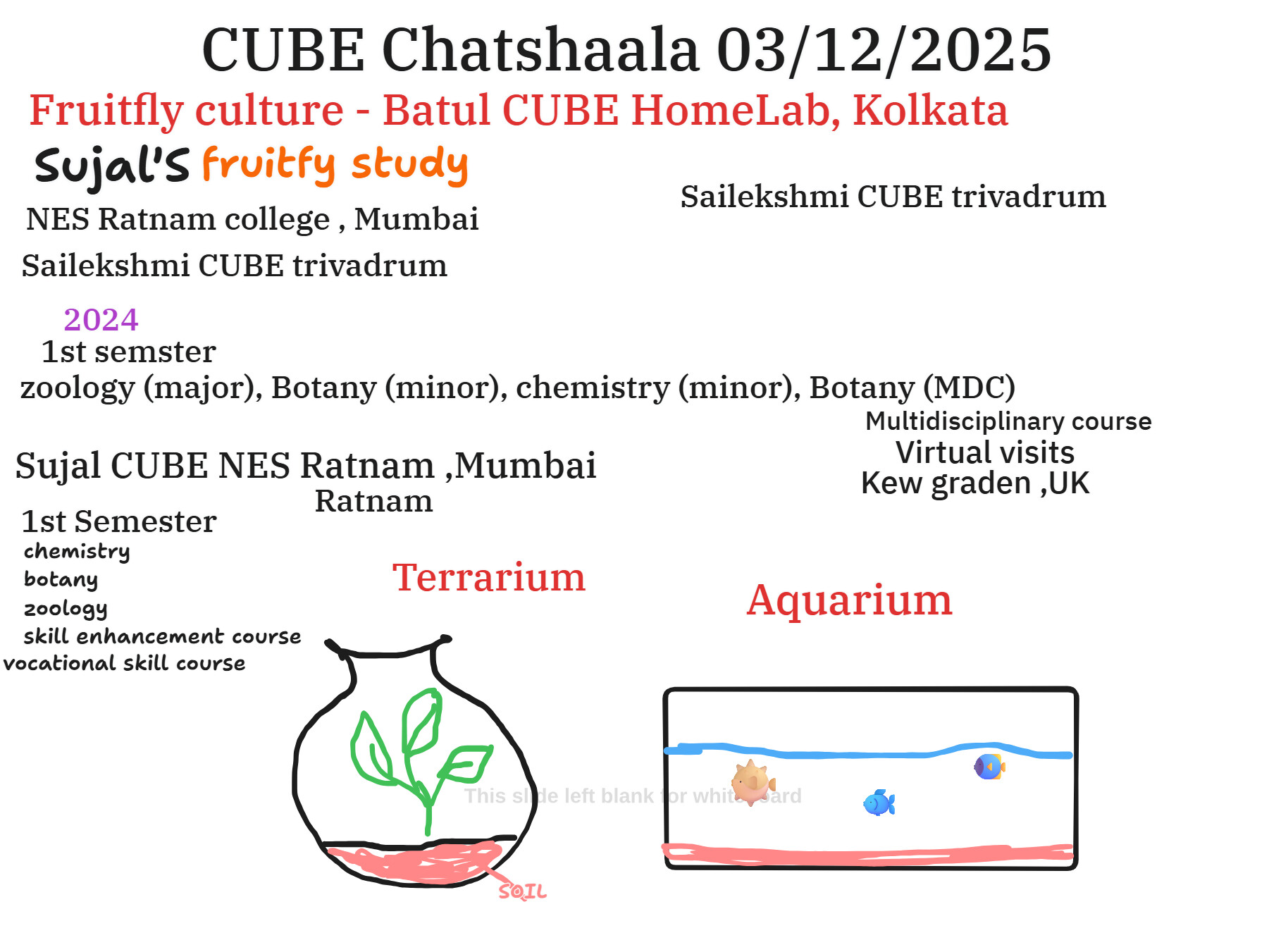
Sujal (NES Ratnam College, Mumbai): Sujal’s academic profile for the 1st semester was noted: Chemistry, Botany, and Zoology (major) with a focus on skill/vocational courses. His work was connected to the CUBE NES Ratnam center.
-
Sailekshmi (CUBE Trivandrum): Sailekshmi’s coursework for the 1st semester (2024) included Zoology (major), Botany (minor), Chemistry (minor), and Botany (MDC—Multidisciplinary Course). Her learning experience was augmented by virtual visits, including to the Kew Garden, UK.
-
Fruitfly Culture: The initiative of Sujal’s Fruitfly Study was discussed alongside the HomeLab contribution of Batul CUBE HomeLab, Kolkata. The emphasis was placed on the techniques and setup required for successful Drosophila culture.
II. Controlled Environments: Terrarium and Aquarium
A comparison was drawn between two distinct controlled environments for biological study:
-
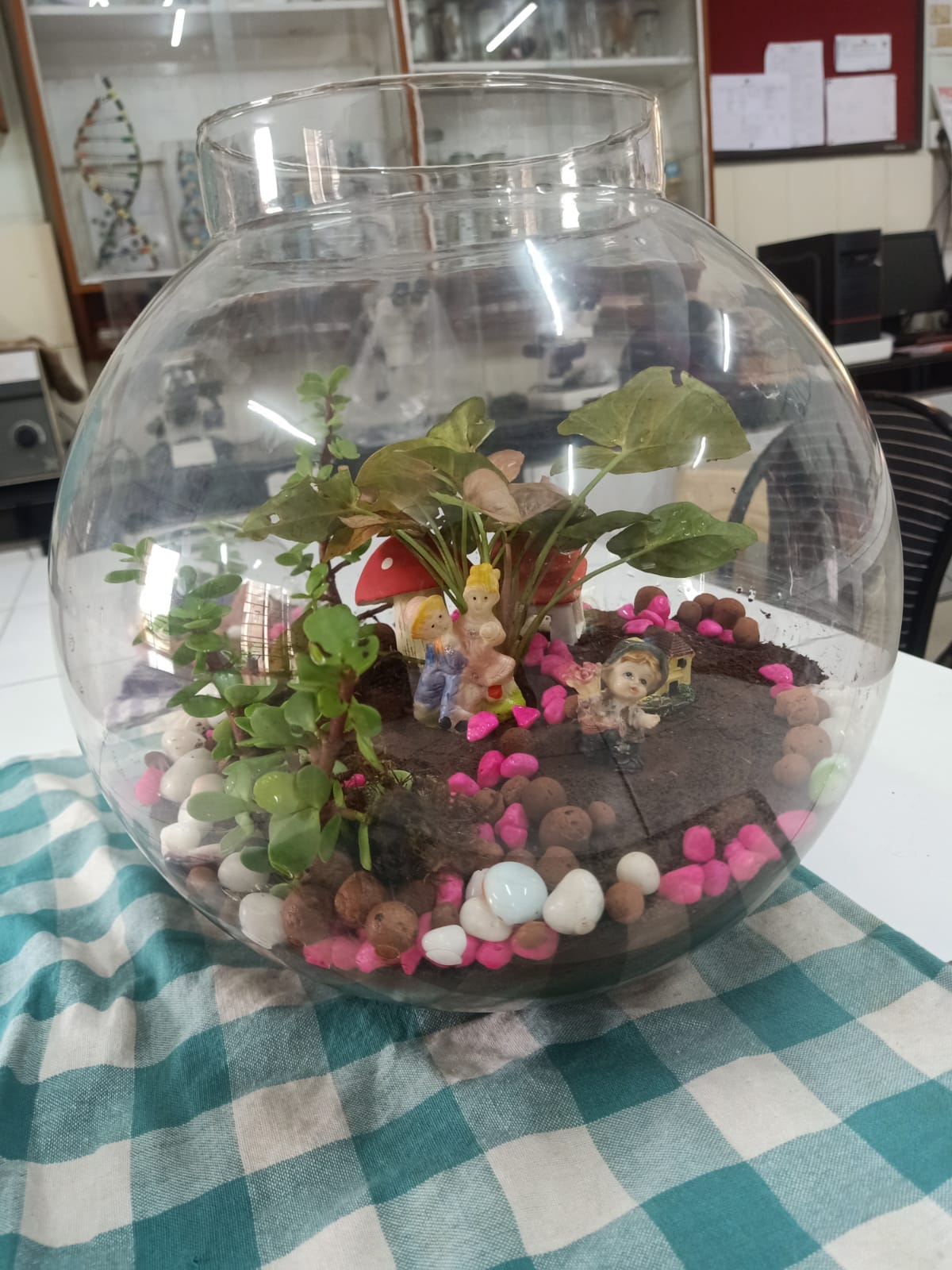
Terrarium: Depicted as an enclosed glass container with soil and plants, representing a self-contained terrestrial ecosystem for the observation of plant life and soil ecology.
-
Aquarium: Outlined as an aquatic environment designed for the observation of marine/freshwater life and their interactions. This section underscored the importance of replicating natural habitats for biological study.
III. The Alexander Fleming Moment & Cardmine Study
This segment delved into the principles of observation and the critical thinking required in microbiology, using the discovery of penicillin as a key metaphor.
-
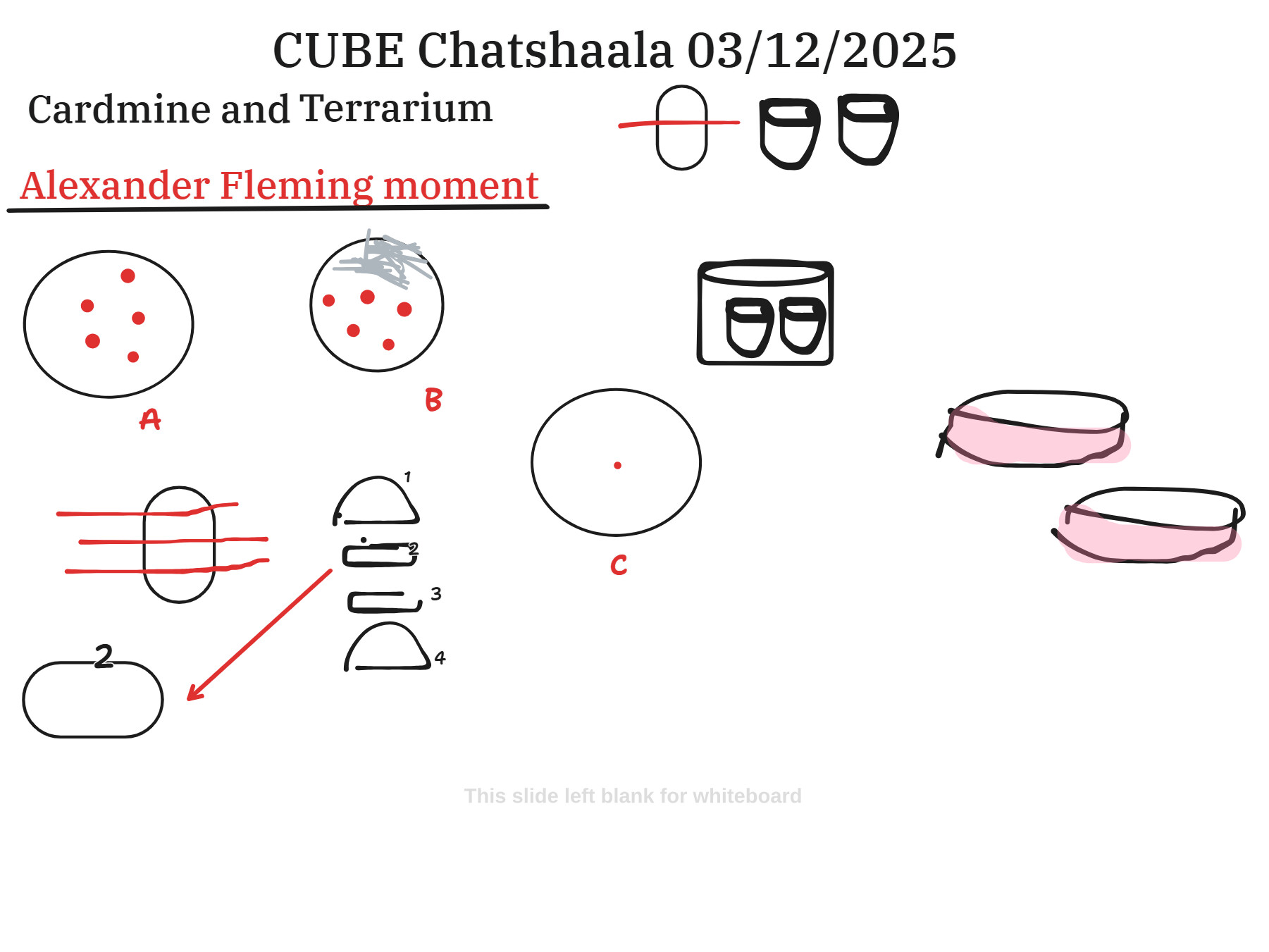
The Analogy: The “Alexander Fleming Moment” was used to illustrate how an unexpected contamination or ‘accident’ (Petri Dish B, showing grey/fuzzy contamination over the red bacterial colonies) can lead to a significant scientific breakthrough, contrasting it with a normal culture (Petri Dish A, showing only colonies).
-
Culture Prep: The initial plate (Petri Dish C, a red dot indicating the inoculation point) was shown.
-
Culture Transfer/Sectioning: A large oval/colony was shown being divided (by red lines) and sub-cultured into four sections (1, 2, 3, 4), and then transferred to a new culture medium (the lower oval 2), representing techniques for isolating or propagating a culture.
-
Controlled Culture: Diagrams of containers suggested a small potato and slicing it into four pieces, where the second potato represented the typical petri dish setup.
-
 Provocative Queries for the General Audience
-
The “Alexander Fleming moment” teaches us that major discoveries often come from errors or contamination. If you were a scientist in your HomeLab, how would you document the things that go ‘wrong’—the mold, the dead fly, the unexpected growth—to ensure you don’t discard the next big discovery? Is careful documentation of ‘failure’ the true key to scientific success?
-
We discussed both terrestrial (terrarium) and aquatic (aquarium) controlled environments. Beyond the obvious, which setup—land or water—offers the most accessible and profound insights for a beginner into the complex interactions of an ecosystem (e.g., nutrient cycling, organism interdependence)? How does the HomeLab environment shape your view of an entire ecosystem?
-
Students like Sujal and Sailekshmi are navigating a formal curriculum (Zoology major, Botany minor) alongside hands-on CUBE HomeLab work. What percentage of genuine scientific skill comes from the academic syllabus, and what percentage is forged in the independent, problem-solving environment of the HomeLab? Can one truly succeed without the other?
 TINKE Moments (This I Never Earlier)
-
The simple line drawings of the terrarium and aquarium made me realize the profound challenge of balancing the carbon cycle and nitrogen cycle in a closed system. The failure of either highlights the fragile balance that makes Earth unique.
-
It struck me that a successful CUBE project essentially requires students to invent their own Skill Enhancement Course (SEC) and Vocational Skill Course (VSC) outside the formal curriculum, giving hands-on context to the theoretical knowledge from their majors/minors.
 What I Have Learned
-
The Power of Contamination: The meeting strongly reinforced the idea that an anomaly, like the grey mold on Petri Dish B, should never be immediately discarded. It is a data point that must be investigated, mirroring the historical path to penicillin discovery.
-
The Global HomeLab Network: The simultaneous mention of students from Mumbai and Trivandrum and the reference to Kew Gardens, UK, underscore the global reach and collaborative nature of the CUBE HomeLab structure, connecting local experiments to international standards.
-
Technique is Foundational: The simple, linear drawings detailing the sectioning and transfer of culture highlight that mastering basic microbiological techniques (like sub-culturing/streak plating) is essential before any complex experiment can be successful.
 Gaps and Misconceptions
-
The “Clean” Lab Myth: A potential misconception that may arise from the discussion is the pressure for a HomeLab to be sterile. While avoiding contamination is key, the “Alexander Fleming Moment” stresses the value of controlled observation of contaminants. The gap lies in distinguishing between carelessness and serendipity.
-
Scale and Application: The summary shows the setup of basic environments (terrarium/aquarium) and culture plates, but a potential gap is the discussion around scaling up the observations. For instance, what are the quantitative methods used in Sujal’s fruit fly study, and how do they translate the simple observation of the Drosophila cycle into publishable data?
-
Purpose of Sectioning: The diagrammatic representation of culture sectioning (1, 2, 3, 4) is clear on how to do it, but the why (e.g., isolation of a pure culture, creating gradient plates) could be a conceptual gap for a new member.
 Reference