CUBE ChatShaala Summary – 26.08.2025
Theme: Do Photosynthesis and Minerals Together Drive Plant Growth?
Today’s discussion revolved around the fundamental yet often misunderstood question:
 Does photosynthesis alone provide all the nutrients required for plant growth?
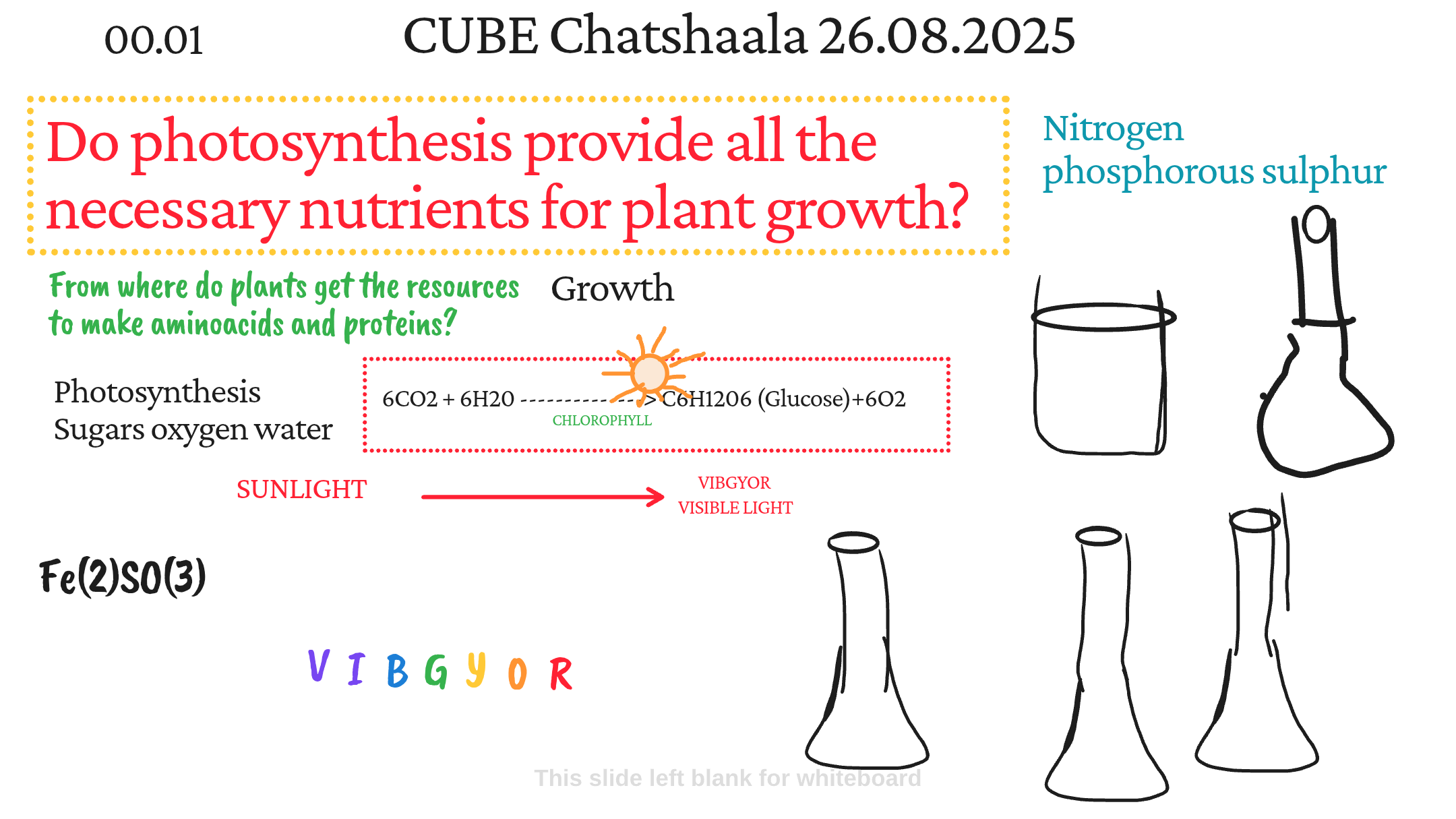
We began by revisiting the well-known photosynthesis equation:

This reaction highlights how plants manufacture sugars (energy source), oxygen, and water balance—but it became clear that this is not enough for complete growth. To build amino acids, proteins, and other biomolecules, plants also need mineral nutrients such as nitrogen, phosphorus, sulphur, and iron from the soil.
 The discussion extended to experimental setups with flasks, Fe₂(SO₄)₃, and visible light (VIBGYOR) to study photosynthesis and nutrient dependency.
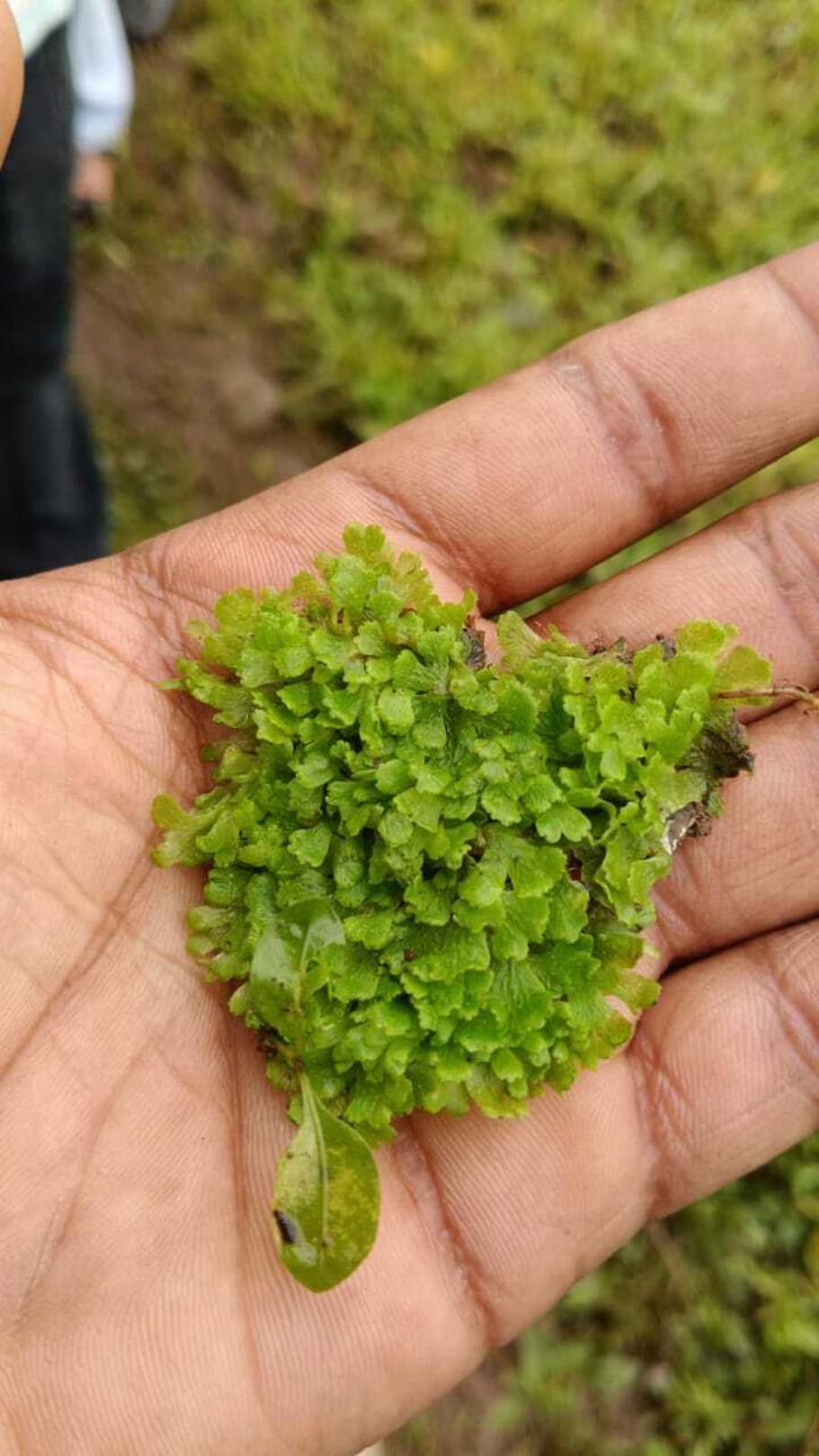

We also examined real-life examples from fieldwork:
-
Floating mats of Azolla (a nitrogen-fixing fern) that partner with cyanobacteria to enrich soil.
-
Purple-pink colonies of fungi/slime molds growing on decaying wood, showcasing nutrient cycles beyond photosynthesis.
This helped us appreciate how plants exist within a nutrient web, not just in isolation with sunlight and CO₂.
 TINKE Moments (This I Never knew Earlier )
-
Photosynthesis ≠ Complete Nutrition → It mainly provides sugars; proteins and other compounds require external mineral inputs.
-
Symbiotic Allies → Azolla and cyanobacteria demonstrate how plants outsource nitrogen needs.
-
Nutrient Recycling in Ecosystems → Decomposers (like fungi/slime molds) are vital in making nutrients available again for plants.
-
Experiments Matter → Simple flask-based setups with visible light can clarify how minerals and light quality influence photosynthesis.
 Provocative Queries to Inspire
 If sunlight and carbon dioxide are everywhere, why do we still need fertilizers for crops?
Could we grow a plant only with photosynthesis in pure water without soil? What would be missing?
 From where does a plant get the nitrogen to make amino acids if photosynthesis doesn’t provide it?
 What role do colors of light (VIBGYOR) play in photosynthesis efficiency?
 What I Learned
 Photosynthesis is essential but incomplete for plant growth.
Mineral nutrients like N, P, S, Fe are indispensable for building complex molecules.
Ecosystems function as nutrient-sharing communities rather than isolated processes.
Experimental curiosity (like CUBE-style setups) can demystify textbook concepts in real time.
 Reference

@Arunan @KiranKalakotiR @2020ugchsncnseethala @sakshiconsultant2002 @SN1261 @ajitadeshmukh13 @Ayana_Sudheer and others.