A day at Aralam Butterfly Sanctuary, Kannur 
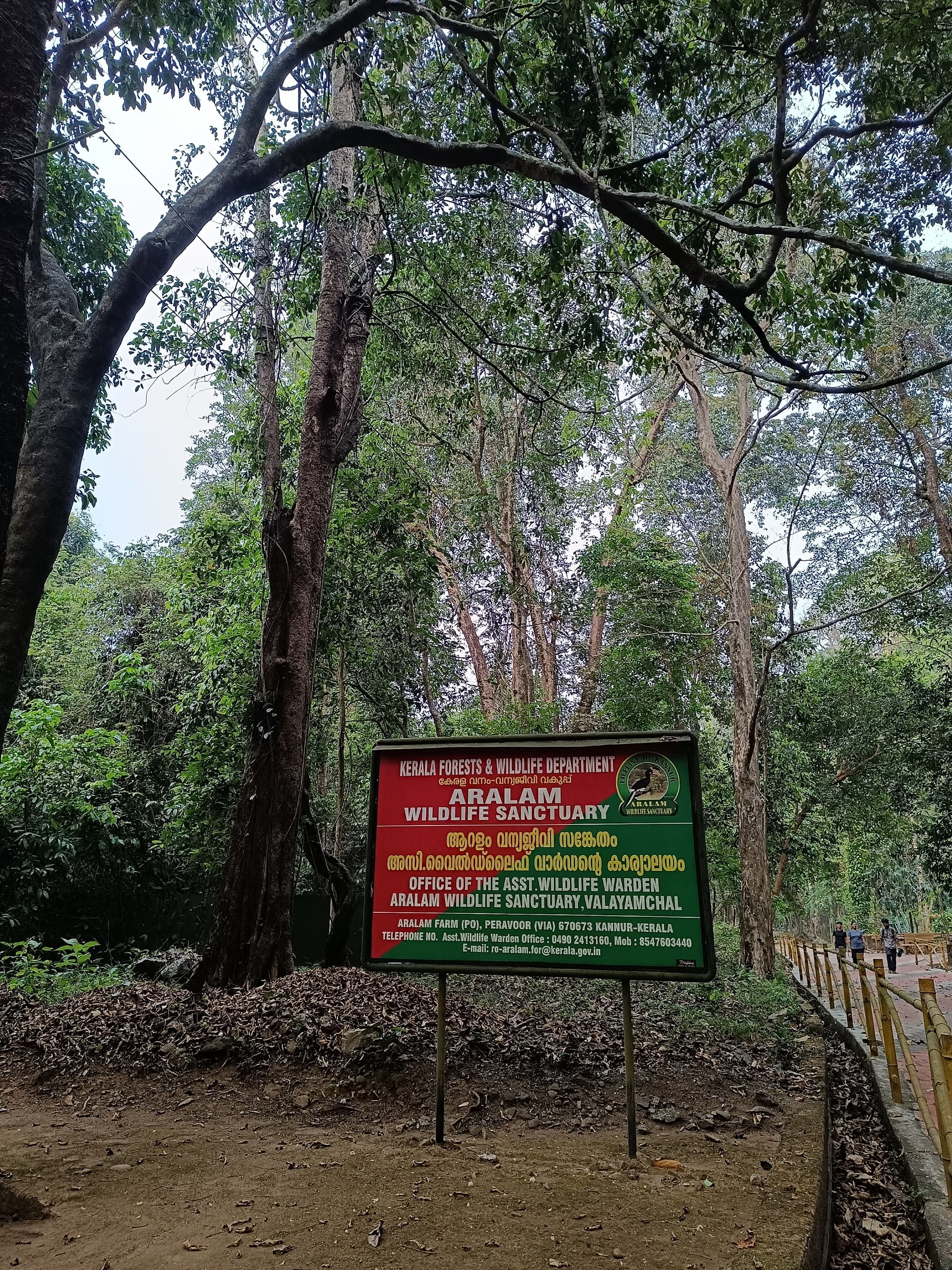
The Aralam Butterfly Sanctuary, located in Kerala’s Kannur district in the Western Ghats, is India’s first dedicated butterfly sanctuary, officially recognized for harboring over 260 species, representing over 80% of Kerala’s total butterfly diversity.
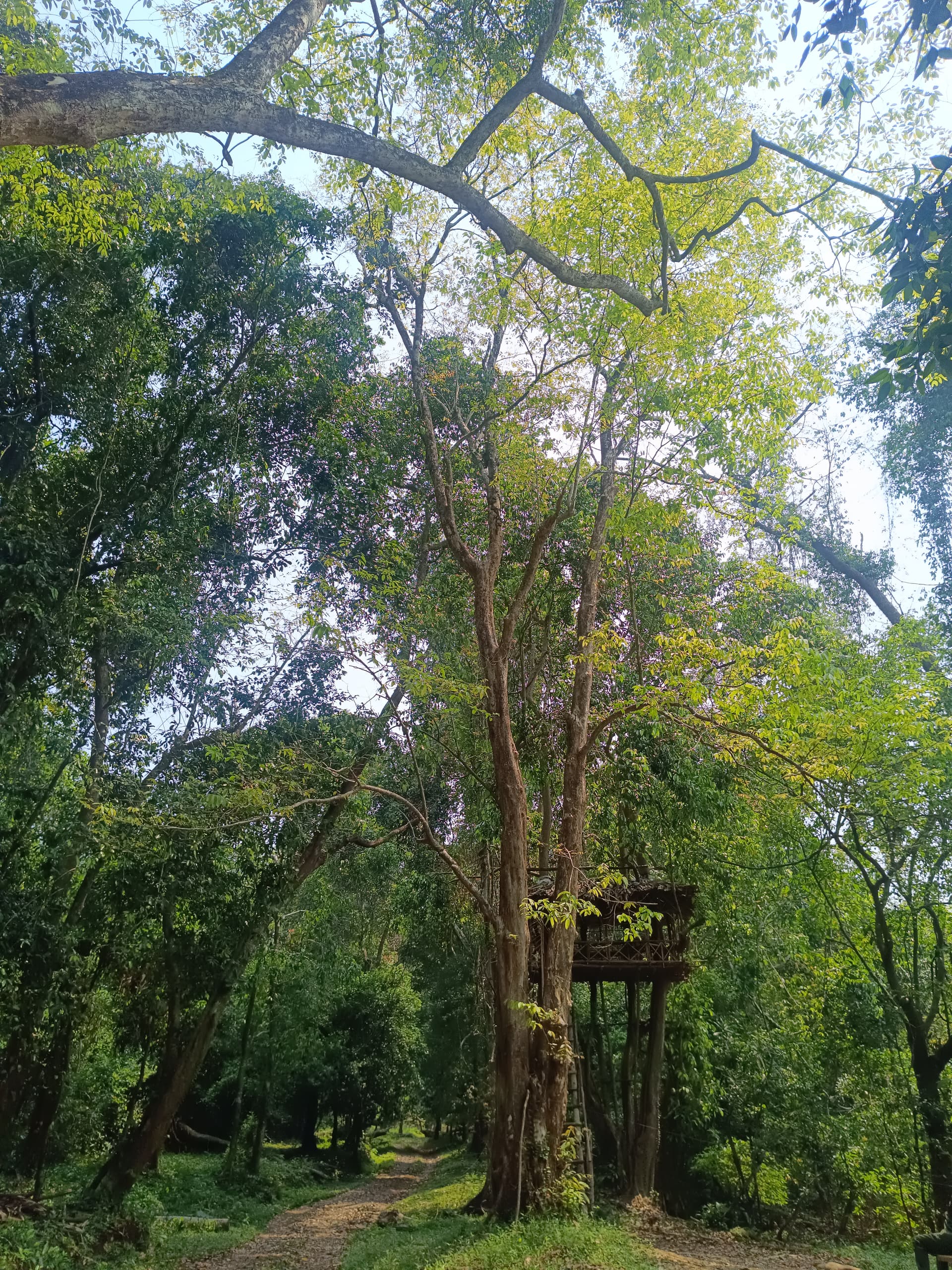
It was pure magic, honestly! I wasn’t expecting to see so many species of butterflies. The way they were all clustered together, sipping from the damp earth, was like they were in their own little party! It was a pretty sight to watch their mud puddling behaviour. I managed to spot a few ones like five bar swordtail, common blue bottle, great orange tip, common jay. The colours, the patterns, the way they flutter around… It was so much exciting. The whole experience felt …so alive!
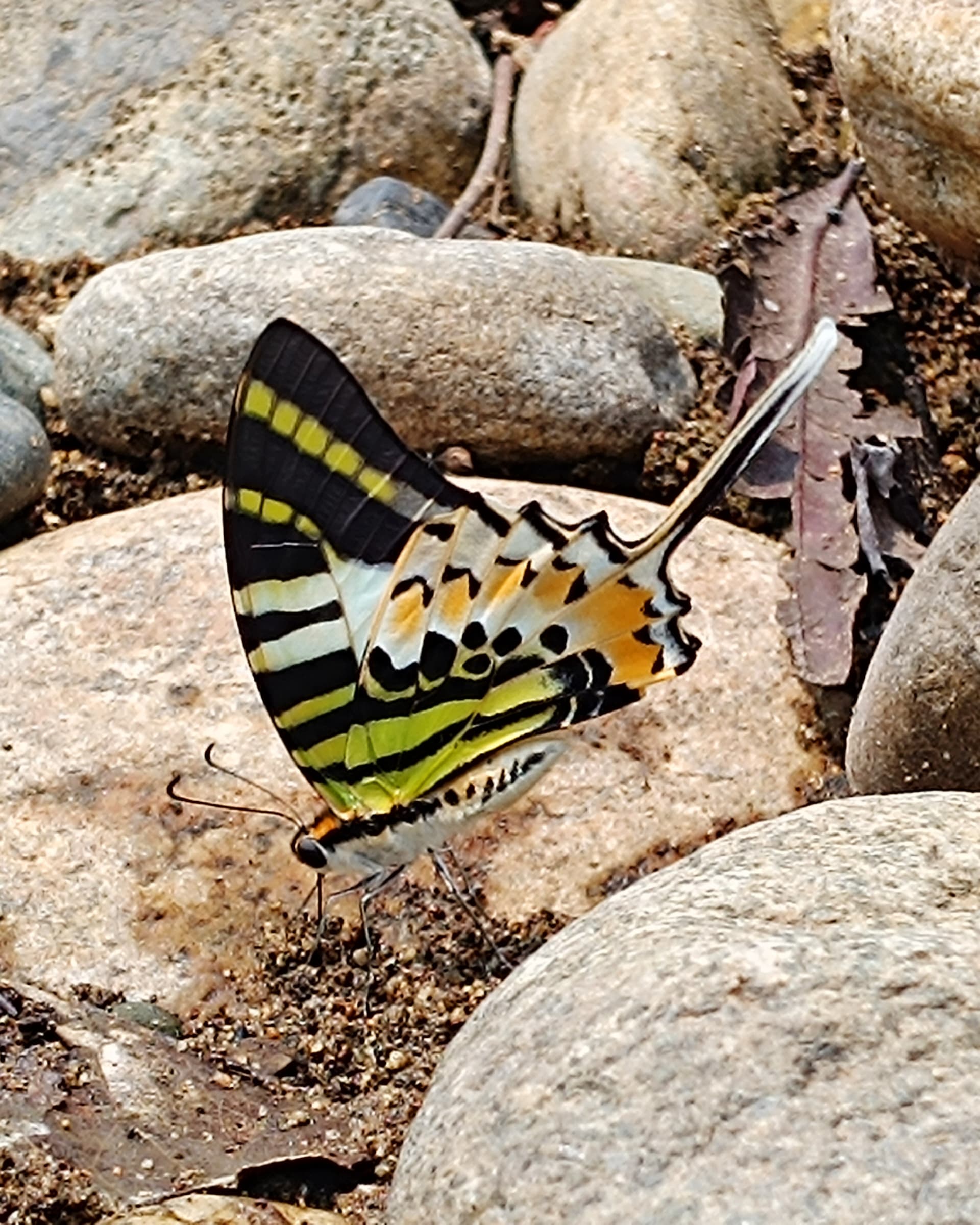
Photo of Five bar Swordtail spotted at 11am
Is this behaviour unique only to male butterflies?? 
What are they trying to gather other than the nutrients they get from nectar? And why they necessarily spray “water jets” while mud puddling? I got curious to know more!  I thought of posting my thoughts in CUBE Context to Curriculum WhatsApp group, where the curiousities, ideas, doubts and even goof ups are celebrated!
Discussion grew 
[09/03, 9:10 am] ayanasudheer: Mud puddling behaviour
Five bar swordtail butterfly observed at Aralam Butterfly Sanctuary, Kannur.
8/03/25; 11am
Another exciting thing I noticed was, butterflies were expelling water through their posterior end while mud puddling! Why do the butterflies do this mud puddling? What are the essential nutrients that are missing in nectars? And why are they emitting water? Have you ever observed this sought of behaviour?
@Batul Ma’am @~𝕾𝖚𝖘𝖆𝖓𝖙𝖆 𝕿𝖆𝖓𝖙𝖎 @Sneha Maurya @Arunan Sir  Sir @Akhil Gupta @M S Sailekshmi
[09/03, 9:36 am] Batul Ma’am: Because while mud puddling they are consuming a liquid diet and hence expel liquid waste.
[09/03, 9:37 am] ayanasudheer: So can we call the process “urination” as in all other organisms
[09/03, 9:43 am] Batul Ma’am: Yes malpighian tubules are present which filter the waste and then it enters the rectum through which it is excreted
[09/03, 9:45 am] Vickram Crishna: Prima facie, I do not believe that is logical. The absorption of nutrition and the expulsion of wastes are two separate and distinct processes.
In human bodies, at least (I am not a biologist, so am not assuming every living body has a parallel), the input of solids and liquids, also gases into the lungs and respiratory system, are independent of the processes that govern release of solids, liquids and gases.
While smaller bodies might have some union in these systems, for optimisation, it is probably not a hard and fast rule.
[09/03, 9:51 am] Batul Ma’am: How else would they maintain an electrolyte balance if they don’t pee out the excess they drank during mud puddling especially minerals in the muddy drink
[09/03, 9:51 am] Vickram Crishna: So, in this creature, the design of the system optimises the expulsion system into a single exit point.
There must be some logic in the creation of two distinct systems in humans, and many other mammals about which I have superficial knowledge, but, from a simple engineering viewpoint, given the very close proximity of the systems, the need for a separate and external urinary vent seems illogical. That same vent is the one used for procreating, which is also a totally different system, which adds to the seeming lack of logic in the design.
Add one more layer of illogic, which lies in Dr Richard Dawkin’s study of the human male urinary system, where a peculiar engineering mistake has evolved, one that leads to health issues provided the human lives long enough.
[09/03, 9:52 am] Vickram Crishna: My point is different, please see the separate response
[09/03, 9:55 am] Batul Ma’am: No the same vent is not used for procreation.In women the urethra and vaginal opening are for two different systems.
[09/03, 9:58 am] Batul Ma’am: I think animals which feed on solid food will need a seperate outlet for feaces and urine.The malpighian tubeless (kidneys) are filtering waste from the blood and hemolymph whereas the rectum is passing out undigested solid.waste.
[09/03, 10:04 am] ayanasudheer: I was observing this behaviour for the first time. I have seen butterfly ‘poops’ while rearing them in my homelab.
But while puddling, I observed some butterflies where spraying water out through their posterior end, while some others were releasing the water to the same region from where they are absorbing the nutrients, by curving their abdomen… It was almost like a water jet, regularly spraying.
I just now googled, and some site shows the term “false urine”.
Too many questions came. I don’t know much about this. So thought of asking in this group.
[09/03, 11:58 am] Arunan Sir Sir: What is meant by mud puddling? Do Fruitflies do it, too? @Batul Ma’am @ayanasudheer
[09/03, 12:16 pm] Vickram Crishna: Proximity, not the same, agreed. But close proximity.
Not great engineering/design, is what I’m saying.
Unnecessary hazards, by design.
[09/03, 12:40 pm] +91 91210 46928: The behavior you saw—squirtng or dripping water from their posterior end—is a crucial part of the puddling process.
The concentration of sodium and minerals in wet mud is actually very low. To get the amount of salt they need, a butterfly has to consume a massive amount of liquid.
If they held onto all that water, they would become too heavy to fly or literally burst.
To solve this, the butterfly’s digestive tract acts like an ultra-fast filtration system.
They use their proboscis to continuously suck up the muddy water, their intestines quickly absorb the dissolved sodium and trace minerals, and they immediately flush the excess water out of their abdomen.
They are essentially turning themselves into tiny, living water pumps to extract the microscopic salts hidden in the soil!
[09/03, 3:52 pm] ayanasudheer: I have heard the term mud puddling in association with butterflies, moths. During the process, they consume nutrients from dead matter, soil, even from rock surface.
I have only noted fruitflies assembling almost on food wastes, decayed matter. @Batul Ma’am

Spotted a Tamil Yeoman basking at around 11am.
By spreading their wings in sunlight, they absorb heat like solar panels, which is essential for flight, foraging, and mating.
 Types of Basking:
 Dorsal Basking: The most common method, where the butterfly sits with wings fully open (180° or 90°) to maximize sun exposure.Lateral Basking: Wings are kept closed but angled toward the sun to absorb heat.
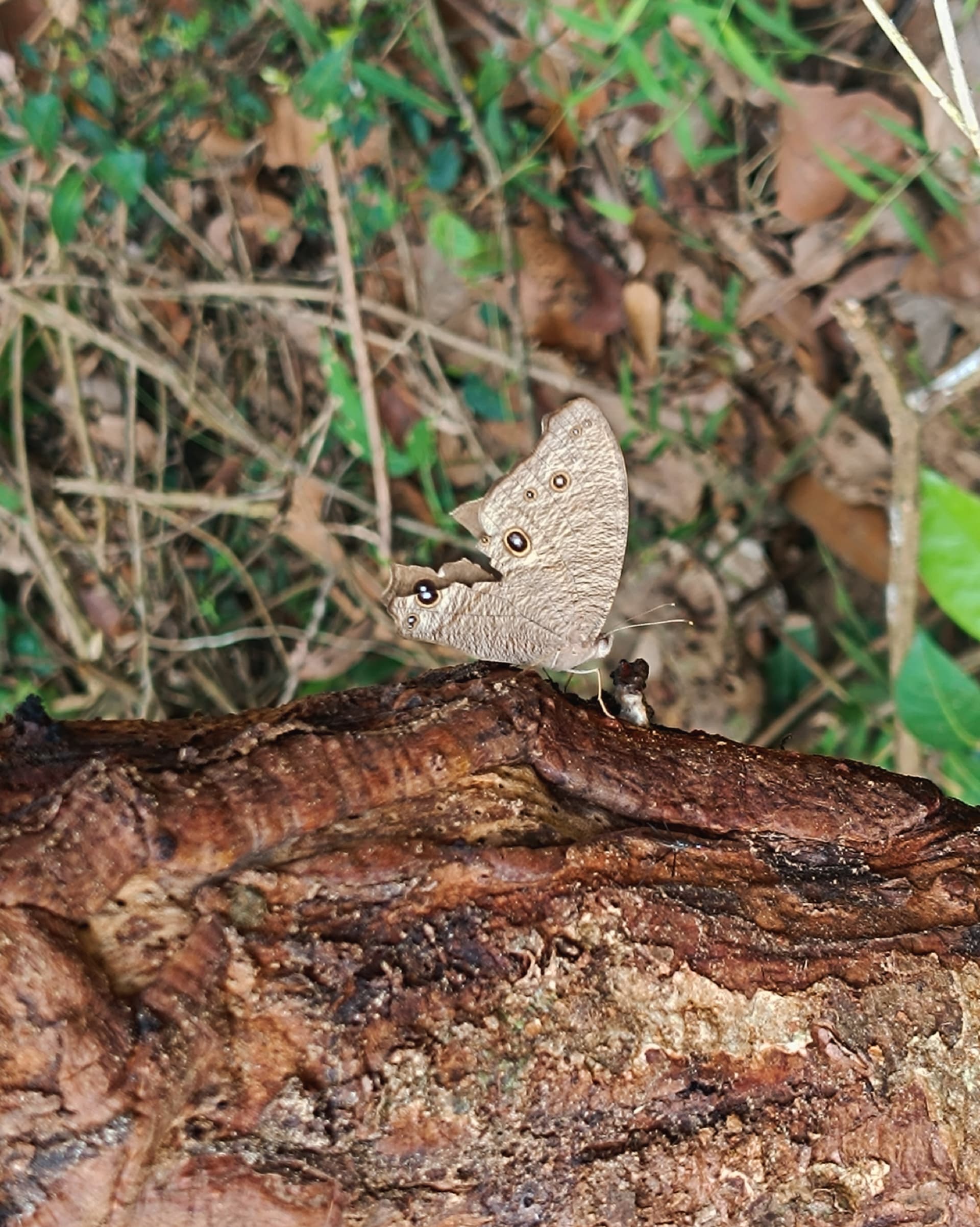
Photo of Common Evening Brown captured at 11.10am. it was hard to spot them as they were perfectly blending with the background.
Camouflage as Defense!!
When resting, the Common Evening Brown closes its wings, revealing an underside that looks like a dry, dead leaf—complete with dark streaks and patterns that blend into the leaf litter and undergrowth.