 CUBE ChatShaala – Meeting Summary (13 January 2026)
The ChatShaala session revolved around living water as a learning system, using pond ecosystems and model organisms to bridge observation, history, and experimental thinking. The discussion began with samples collected from the CHM College pond, highlighting the diversity present even in a small volume of water—algae, snails, water fleas (Daphnia/Moina), plant debris, and other living components. Rather than treating these as isolated specimens, the session emphasized their relationships, histories, and research value.
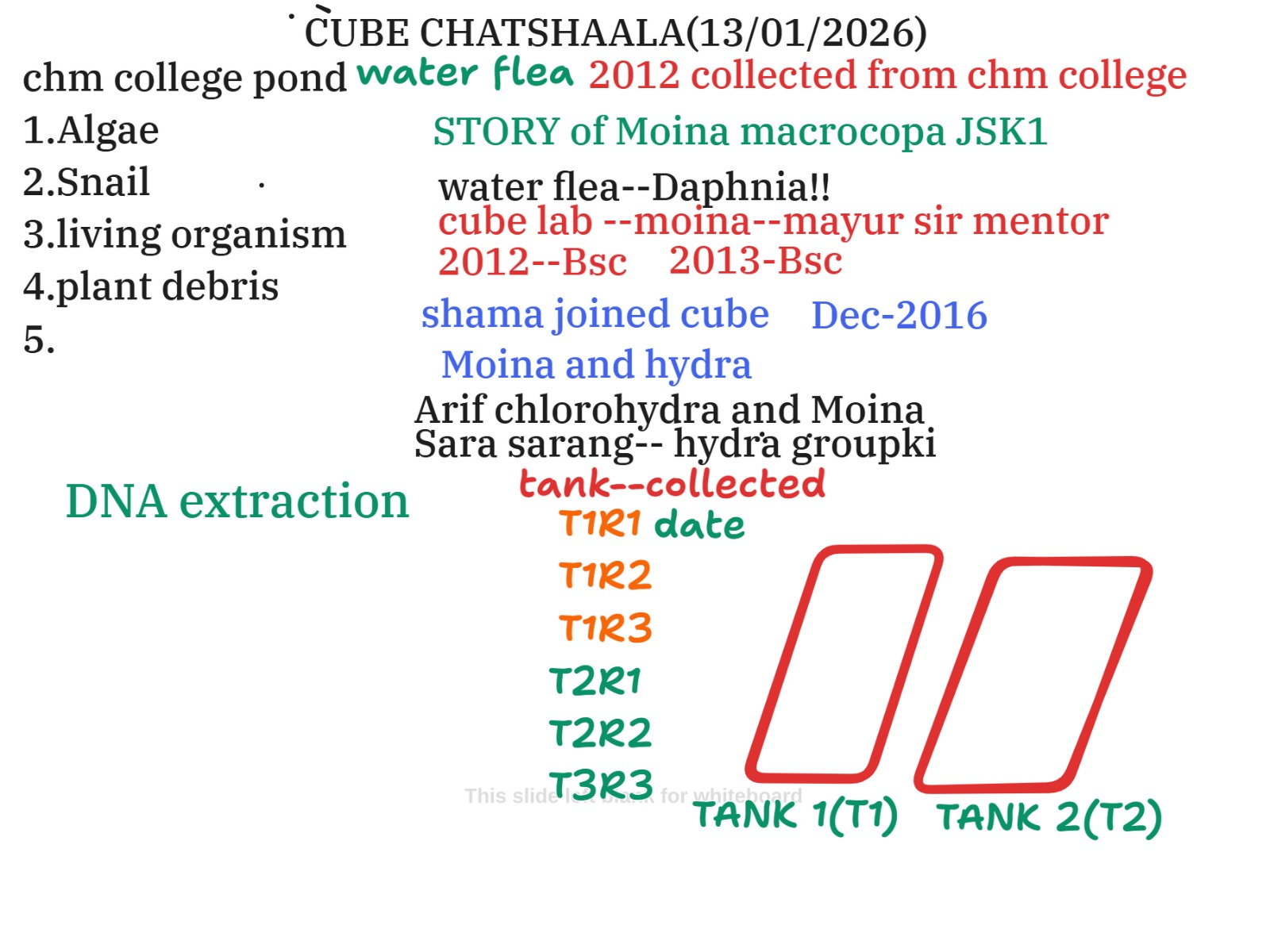
A central narrative was the story of Moina macrocopa, traced through CUBE’s laboratory memory—from early BSc batches (2012–2013), mentorship lineages, and long-term culturing practices, to present-day experimental designs. The continuity of organisms across years became a metaphor for continuity in scientific thinking. The comparison of tank-based cultures (T1 and T2) and systematic labeling (replicates and dates) introduced rigor in experimental documentation, especially in the context of DNA extraction and reproducibility.
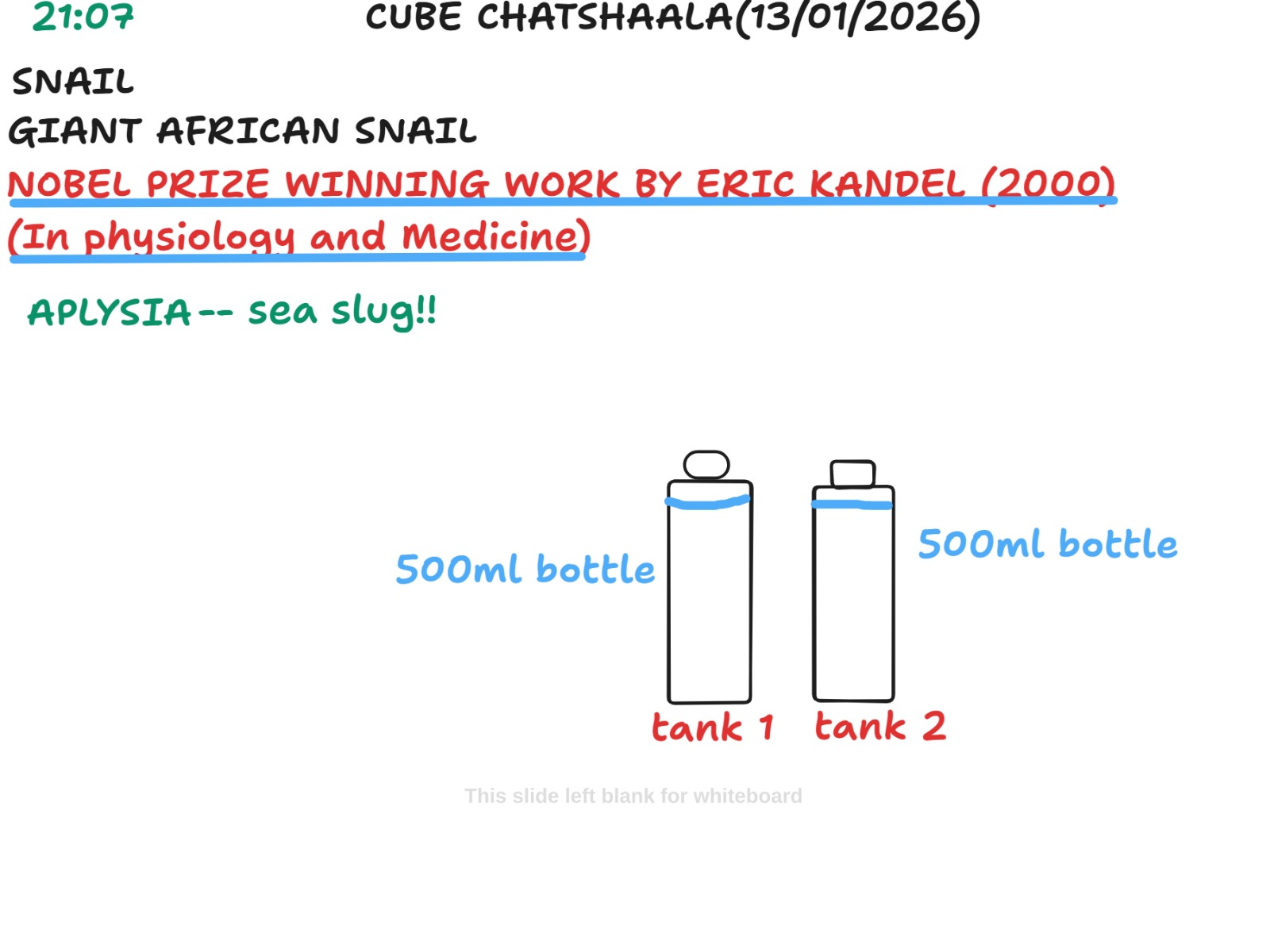
The session then shifted to snails as model organisms, connecting the Giant African Snail and Aplysia (sea slug) to Eric Kandel’s Nobel Prize–winning work on learning and memory. This historical anchor reinforced the idea that humble organisms can transform neuroscience and biology when observed with the right questions. The simple visual of two 500 ml bottles representing tanks reminded cubists that powerful experiments often begin with modest setups.
Overall, the meeting blended ecology, laboratory culture, scientific history, and experimental design, encouraging participants to see biology as a living, evolving conversation rather than a static syllabus.
 What I Learned
-
Small ecosystems like pond water contain layered biological stories worth long-term observation.
-
Model organisms gain significance through questions asked, not through size or complexity.
-
Scientific memory (who worked on what, when, and how) is as important as biological memory.
-
Proper labeling, replication, and timelines are foundational to meaningful DNA-based studies.
-
Nobel-level discoveries can emerge from organisms often dismissed as “simple.”
 TINKE Moments (This I Never Knew Earlier )
-
Living organisms are archives: cultures carry intellectual history, not just biological material.
-
Replication is storytelling: T1, T2, R1, R2 are not codes—they are narratives of control and care.
-
Snails think: learning and memory are not exclusive to “higher” animals.
-
A bottle can be a laboratory: scale does not define seriousness in science.
 Gaps and Misconceptions
-
The assumption that pond organisms are “random” rather than structured communities.
-
Confusion between collection and culturing—many underestimated the skill needed to maintain lineages over years.
-
The idea that DNA work is purely technical, ignoring its dependence on sampling history and ecological context.
-
A misconception that neuroscience must begin with complex brains, overlooking classic invertebrate models.
 Whiteboard-Inspired Questions
-
If organisms persist across generations of students, what exactly is being passed on—DNA, ideas, or curiosity?
-
What does this say about how we define intelligence and learning?
-
How small can an experiment be and still matter?
-
What habits of patience, observation, and humility do these models demand from learners?
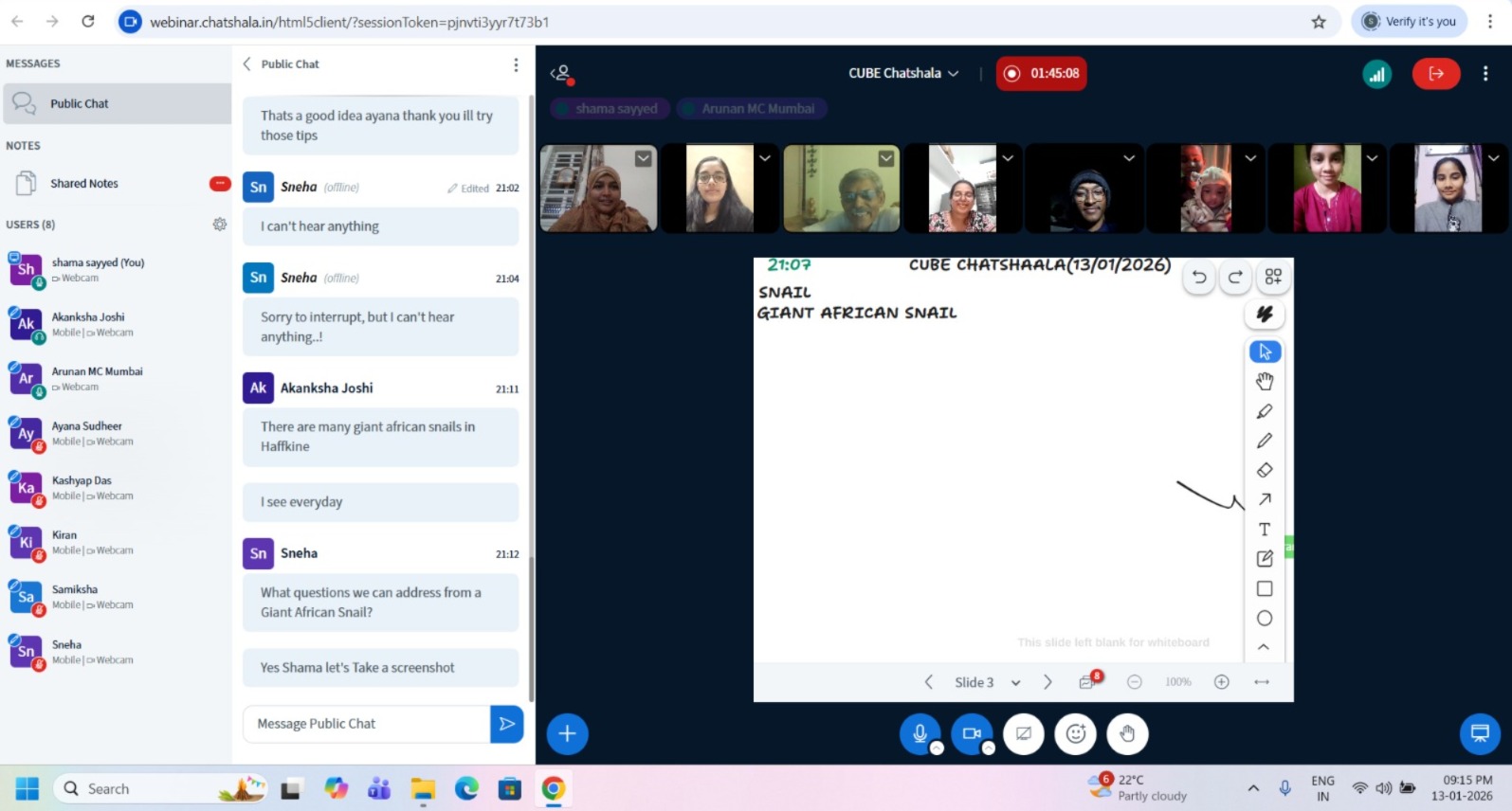
 Photographs during Chatshaala
 Closing Reflection
Today’s ChatShaala quietly reminded us that biology is not rushed discovery; it is stewardship of organisms, questions, and shared intellectual lineage.The real experiment is not only in the tanks, but in how long we choose to care, observe, and remember.
 Reference