 CUBE ChatShaala Summary – 27 November 2025
Today’s session brought together participants from diverse academic backgrounds to explore the evolving structure of undergraduate and postgraduate programs under NEP 2020, along with ongoing CUBE model-organism experiments.
1. Understanding the Four-Year UG Program under NEP 2020
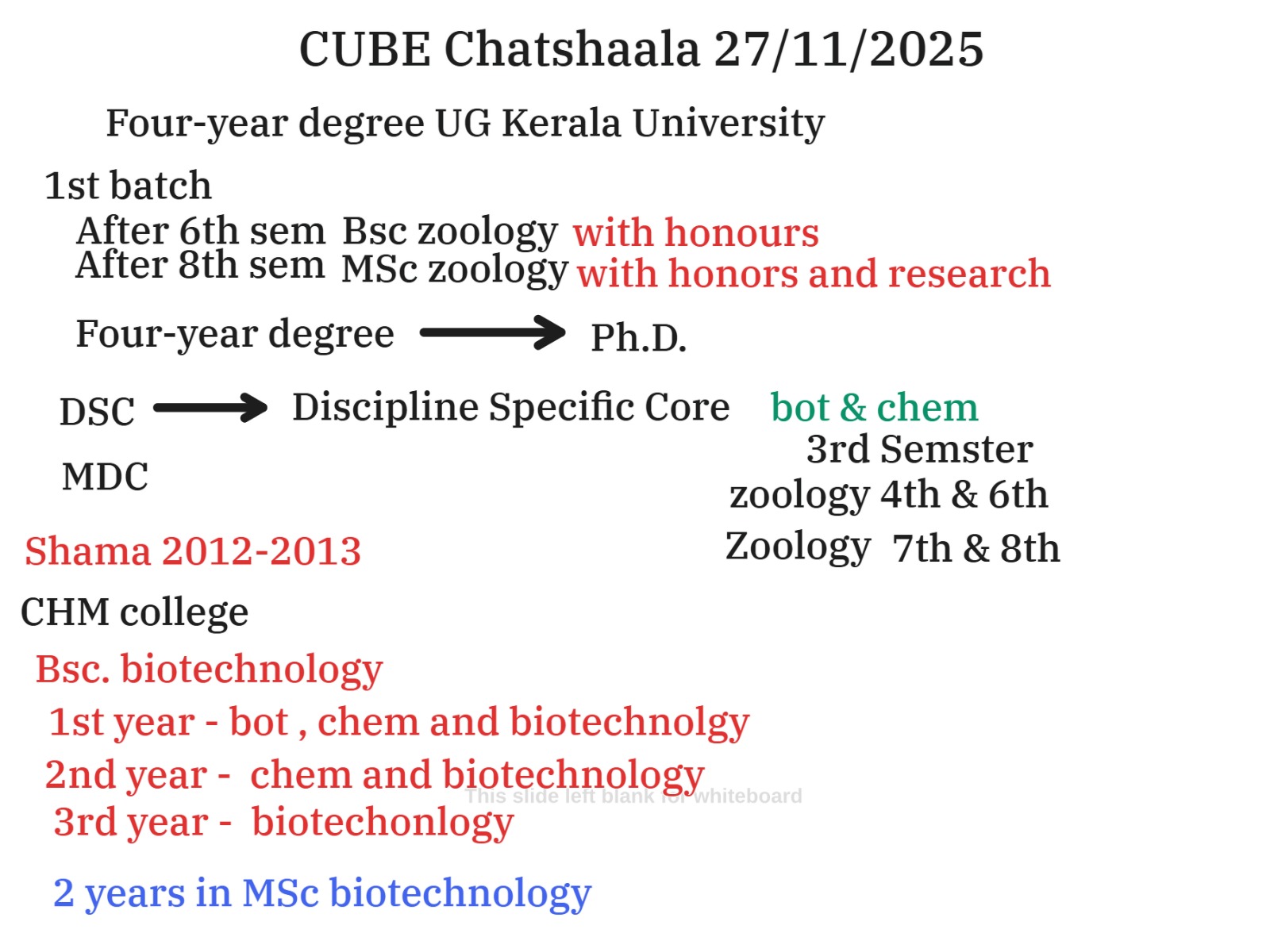
The meeting began with a discussion on the structure of Kerala University’s four-year degree program. Participants reviewed how the curriculum now progresses from foundational courses to Discipline Specific Core (DSC) subjects.
- After 6 semesters, students completing Zoology major earn a B.Sc. with Honours.
- After 8 semesters, they can obtain an M.Sc. Zoology with Honours and Research, making them eligible to enter a Ph.D. pathway directly.
A comparison was drawn with earlier academic models. For example, Shama shared her journey from CHM College (2012–2013), where the B.Sc. Biotechnology curriculum followed a 1–2–3 year specialization pattern (Botany–Chemistry–Biotech in Year 1, Chemistry–Biotech in Year 2, and full Biotech in Year 3), followed by a two-year M.Sc. Biotechnology.
This contrast helped participants appreciate how NEP 2020 restructures flexibility, mobility, and research exposure at the undergraduate level.
2. Movement Across Disciplines
Participants also discussed how DSC subjects such as Botany, Zoology, Chemistry, and Biotechnology interweave throughout the semesters, allowing students to build interdisciplinary expertise.
3. Ongoing Model-Organism Experiments
The second part of the session focused on current CUBE experiments visible on the whiteboard:
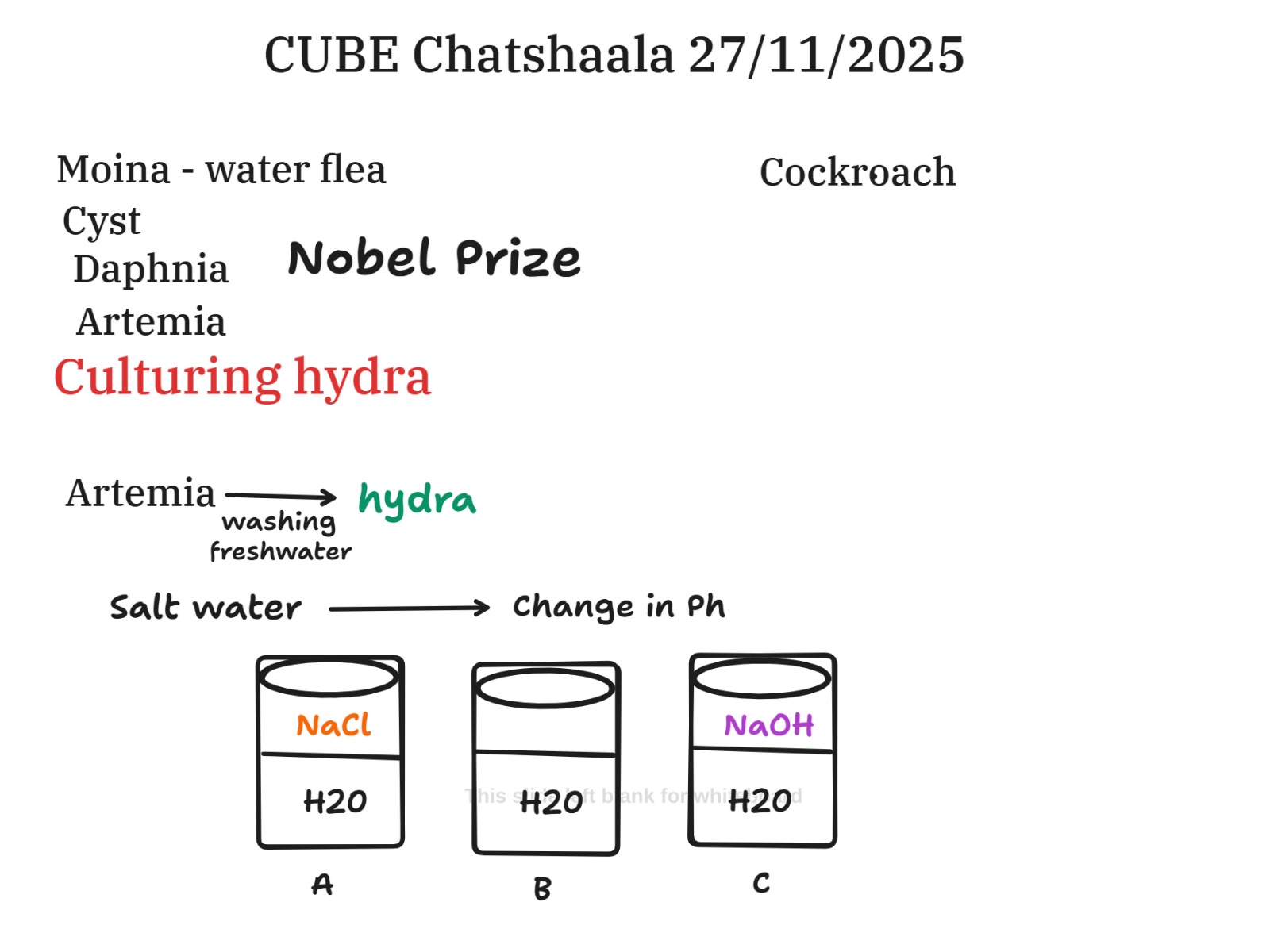
- Moina, Daphnia, and Artemia culture practices
- Observations on water pH, NaOH/HCl addition, and salinity effects
- A short discussion on Hydra culture initiated from saltwater Artemia by first washing them in freshwater
- Notes on cockroach rearing setups
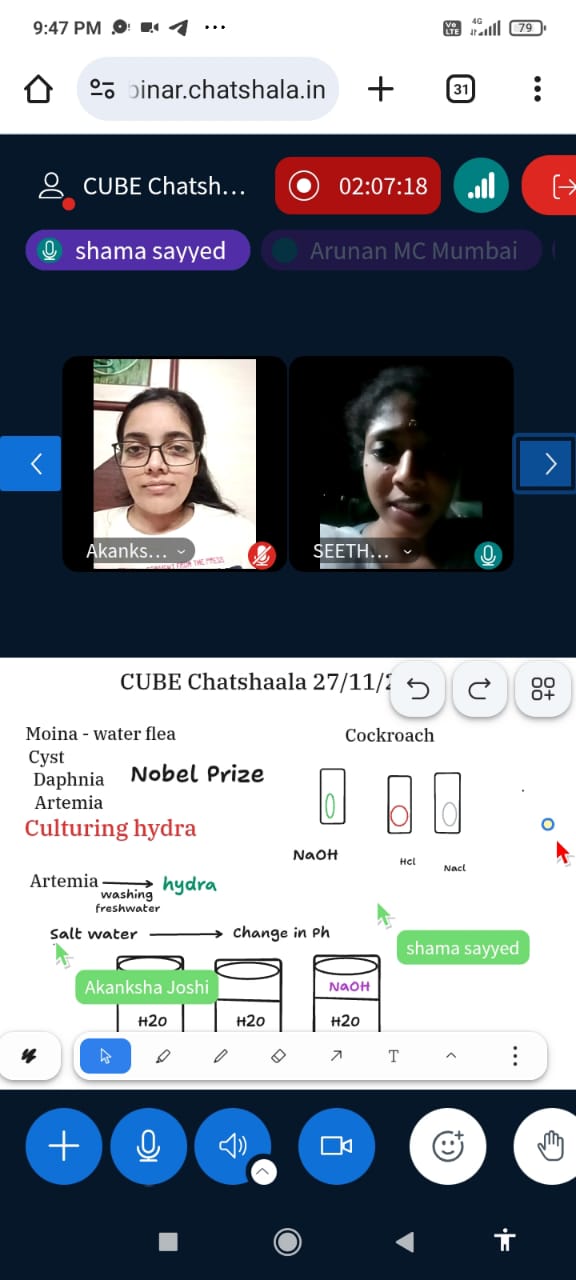
Akanksha, Seethalakshmi, and Shama actively demonstrated their experimental setups, making the session highly interactive.
 What I Learned Today
-
NEP-2020’s four-year degree structure creates a direct bridge from UG to Ph.D.
-
Multi-disciplinary exposure in early semesters helps students decide their long-term path.
-
Hydra can be cultured using Artemia as feed, but only after properly removing salt with freshwater washes.
-
Small experimental tweaks such as pH changes can drastically influence survival in simple organisms like Moina or Hydra.
 TINKE (This I Never Knew Earlier ) Moments
These were the points that made us pause and think:
1. Confusion about M.Sc. Eligibility in NEP Programs
Some participants wondered whether completing eight semesters automatically grants an M.Sc. degree or if additional requirements exist. This gap needs clarification from official university sources.
2. Misconception about Saltwater → Hydra Directly
A misconception surfaced that Artemia from saltwater can immediately be used in Hydra culture. The correction—that they must be washed thoroughly—was an important learning moment.
3. pH and Survival
Many assumed that slight pH change does not matter for Moina or Artemia cultures. Today’s discussion revealed how sensitive these organisms actually are.
 Provocative Questions for the Community
-
Will NEP’s four-year UG program truly help students reach Ph.D. faster—or will it overload them too early?
-
How can washing a tiny saltwater organism determine the success of Hydra culture?”
-
Are we underestimating the role of pH in the survival of Moina and Daphnia?
-
What new possibilities open up when Botany, Chemistry, and Zoology overlap during the first three semesters?
-
How many of us really understand the new exit pathways after every year of UG under NEP 2020?
 Photographs during Chatshaala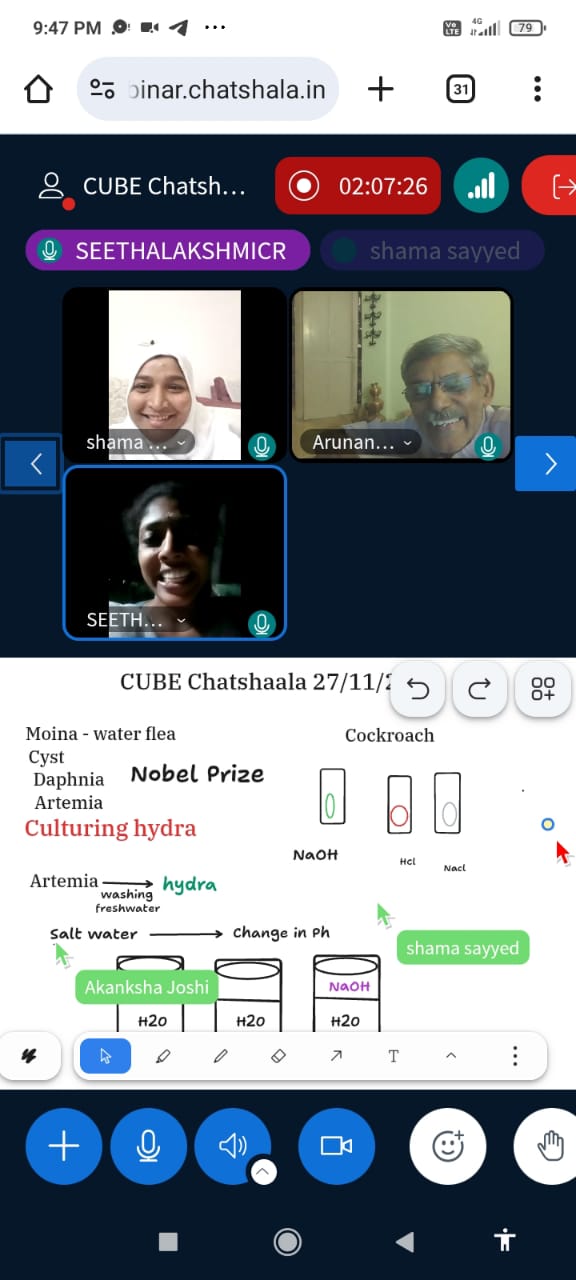
 Reference