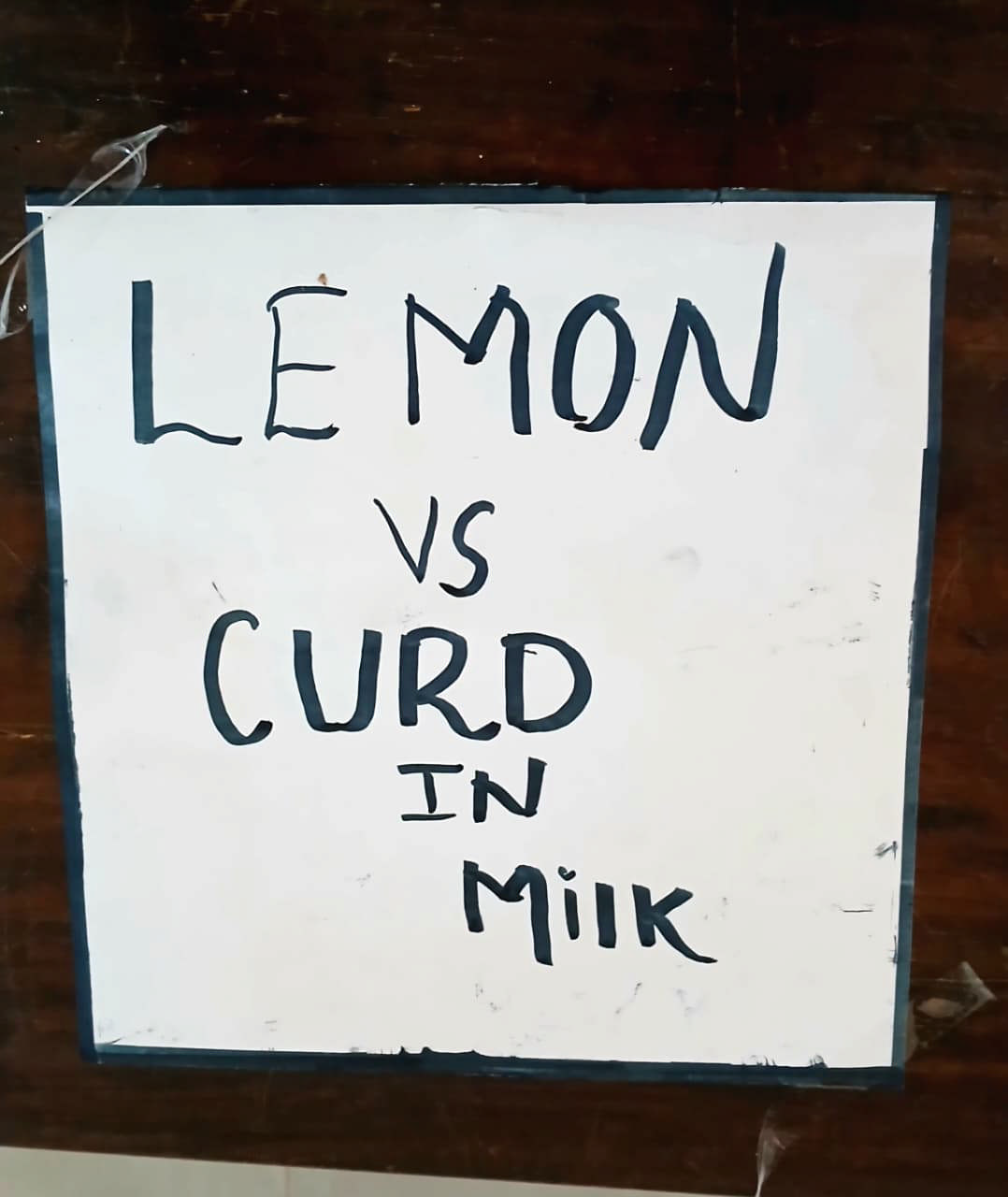
At the recent science exhibition hosted by S.N. College, Chempazhanthy, in Trivandrum, Kerala, one exhibit stood out for its ability to connect everyday practice with scientific exploration. Presented by MS. Sailekshmi from her CUBE HomeLab, the display used the familiar process of curd-making as a model system to highlight biochemical transformations—specifically, the role of acidity in milk coagulation.
 Everyday Practice, Scientific Depth
Curd making is a routine culinary tradition in Indian households, yet beneath its simplicity lies a fascinating interplay of chemistry and microbiology. The exhibit sought to reveal this hidden science, showing how accessible experiments can illuminate complex processes.
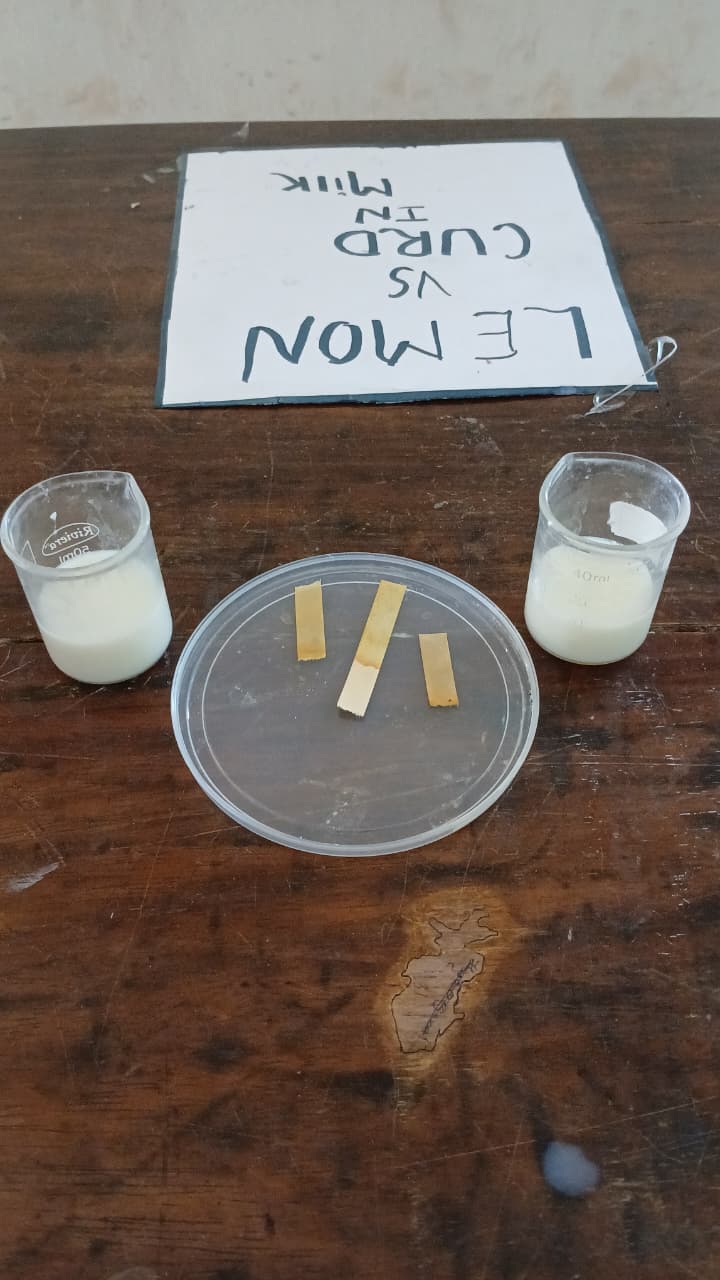
Two experimental setups were presented side by side:
-
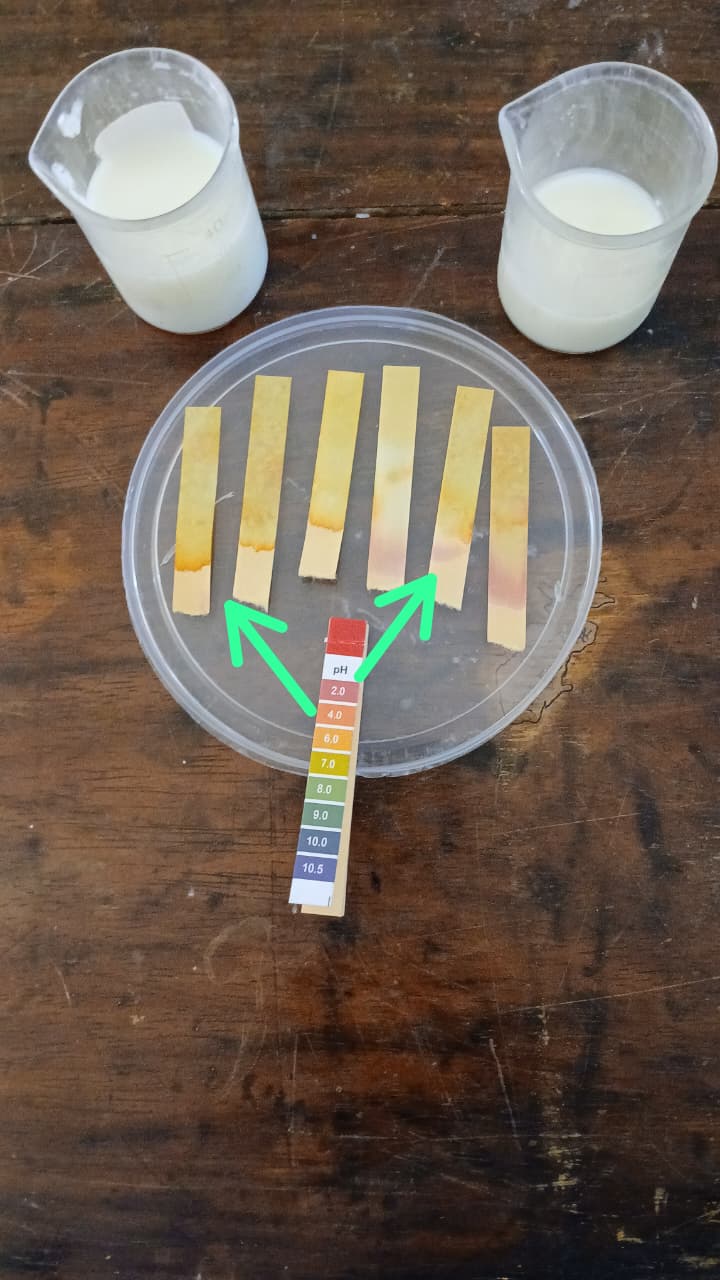
Milk mixed with lemon juice: This sample registered a pH of 0.2, reflecting strong acidity. Citric acid from lemon juice acts quickly, causing milk proteins to coagulate almost instantly.
-
Milk inoculated with curd starter: This mixture showed a pH of 0.4, still acidic but less extreme. Here, lactic acid bacteria gradually ferment lactose into lactic acid, lowering the pH over time and producing curd in a slower, controlled manner.
The comparison underscored how different agents influence the same process, with lemon juice producing a rapid transformation and curd starter enabling a gentler, microbial-driven change.
 Simple Tools, Clear Insights
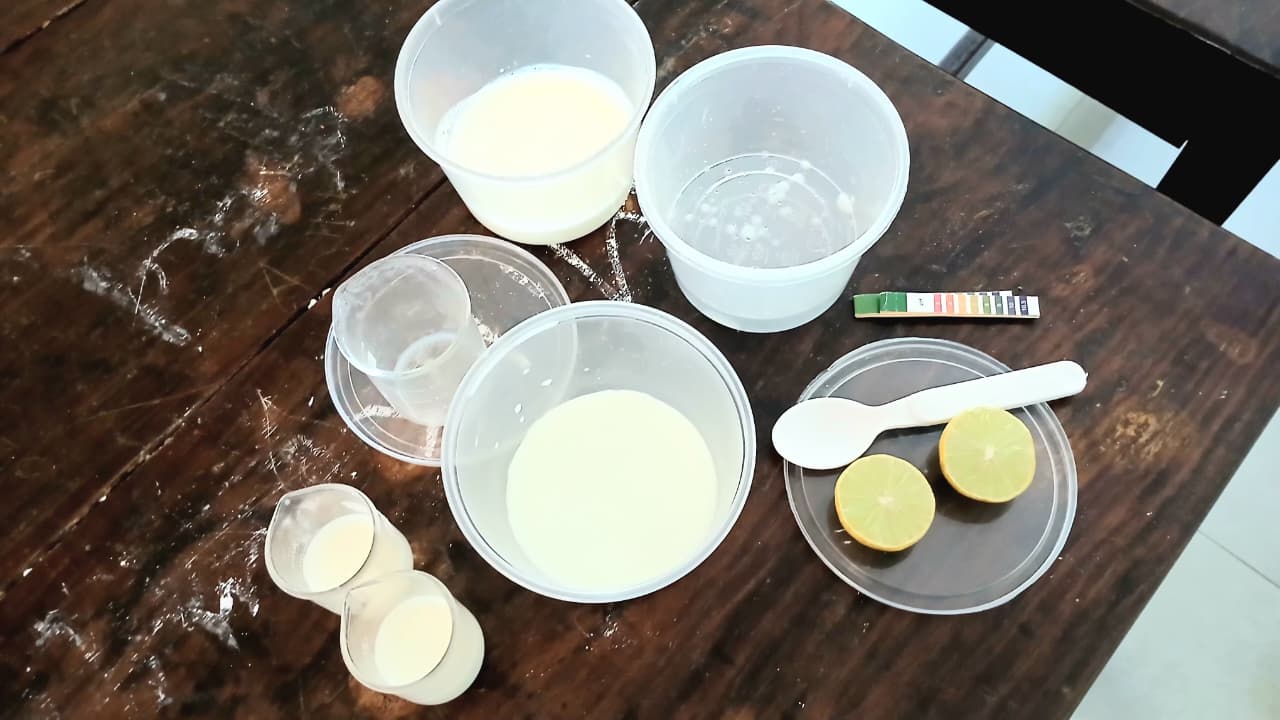
The demonstration relied on a measuring beaker and pH paper strips—basic tools that nonetheless provided precise, visible results. Visitors could directly observe the shift in acidity, reinforcing the idea that scientific principles are not confined to advanced laboratories but can be explored with everyday materials.
 Science at the Intersection of Home and Learning
This exhibit embodied the philosophy of CUBE HomeLabs: science should be approachable, replicable, and relevant to daily life. The display connected home practice and academic inquiry by transforming a kitchen process into a scientific model.
It was more than just a demonstration; it was an invitation to look at the familiar with new eyes, to ask questions, and to appreciate the beauty of natural processes through scientific reasoning. It reminded students that science is not distant or abstract, but rather woven into the rhythms of everyday life.