 CUBE ChatShaala Summary – 27.08.2025
Theme: Fruit Fly Studies – Cultures, Nutrition, and Serendipity in Science
Today’s discussion in CUBE ChatShaala revolved around ongoing fruit fly (Drosophila) experiments, their culture techniques, and surprising observations that connect to historical scientific moments.
 Key Highlights:
- Single-Line Cultures:
-
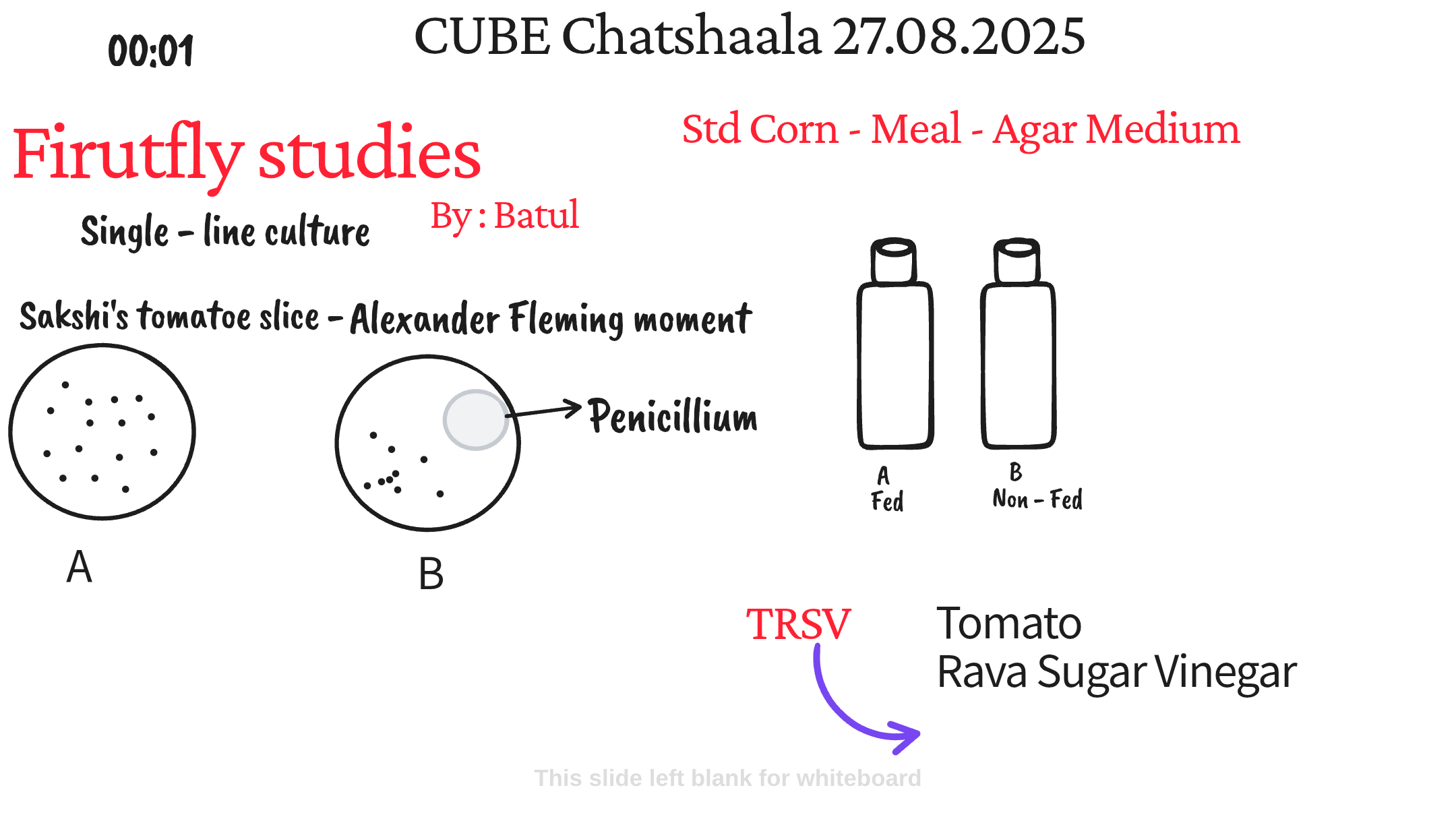
Batul presented insights into maintaining fruit fly populations using TRSV as an alternative to the standard corn meal agar medium.
-
Two conditions were compared: Fed (A) and Non-Fed (B) setups, enabling us to explore how nutrition influences fly survival and reproduction.
- Alexander Fleming Moment:
-
Sakshi shared her experience of observing fungal growth on a tomato slice, where bacterial colonies were inhibited around the tomato slices.
-
This unexpected finding was likened to Alexander Fleming’s discovery of penicillin, reminding us how careful observation can lead to transformative science.
- Alternative Media – TRSV Formula:
-
A discussion took place around the Tomato–Rava–Sugar–Vinegar (TRSV) mix as a cost-effective medium for culturing flies.
-
This community innovation bridges laboratory science with easily available household ingredients.
- Biology of Flies:
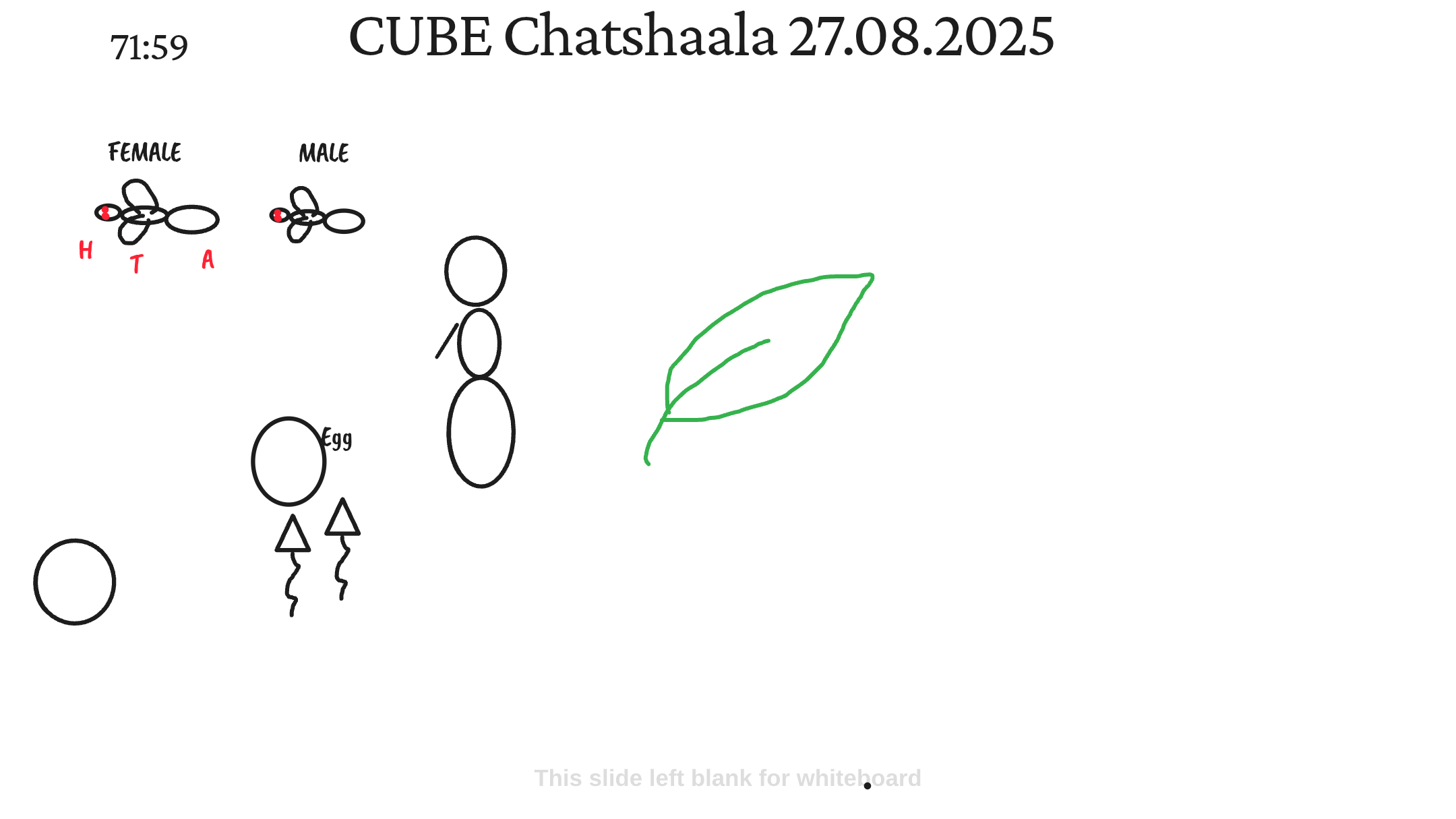
- Participants also revisited sex differentiation in fruit flies (male vs female) and aspects of reproduction, fertilization, and oviposition on natural substrates like leaves.
 TINKE Moments (Today I Never Knew Earlier):
-
Penicillium on tomato slices can create natural bacterial inhibition zones, just like Fleming’s famous observation.
-
Nutrition variation experiments (Fed vs Non-Fed) reveal not only survival differences but also behavioral changes in flies.
-
TRSV medium offers a low-cost substitute for traditional cornmeal agar, broadening access to fruit fly studies.
-
The power of serendipity in science—big discoveries can emerge from ordinary observations, if we stay curious.
 Queries for Reflection & Public Engagement:
 CUBE Curious Questions – Let’s Think Together!
-
If a fungus on a tomato slice can naturally inhibit bacteria, could household food items help us discover new antibiotics today?
-
How do nutritional differences in culture media influence fruit fly growth, lifespan, or fertility?
-
Could TRSV medium be standardized to replace cornmeal agar, making experiments more accessible worldwide?
-
Why do female and male flies differ in size and structure, and how does this affect reproduction in small ecosystems like bottles or vials?
 What I Learned Today:
-
Scientific breakthroughs often begin with unexpected observations.
-
Fruit flies remain a powerful model for studying growth, nutrition, and genetics, even with homemade setups.
-
Low-cost alternatives like TRSV open doors for inclusive science, where anyone can participate from home or school.
 This session reminds us that great science is not limited to big labs; it can happen anywhere curiosity meets observation.
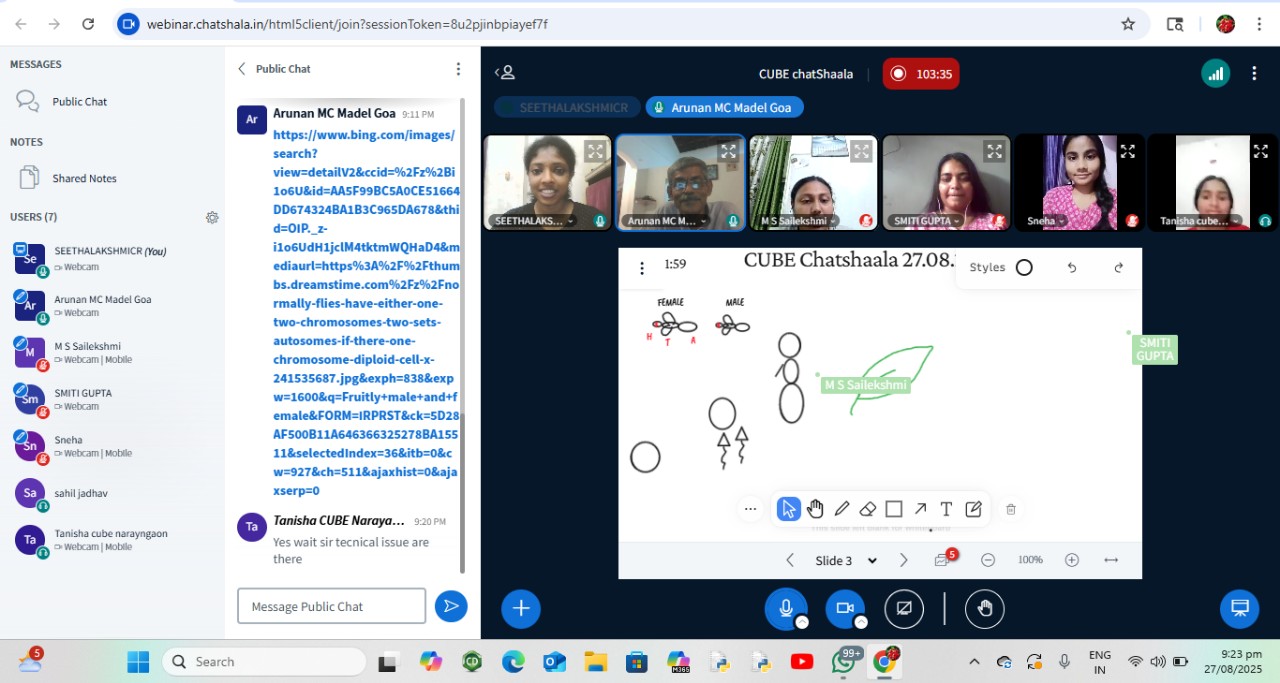
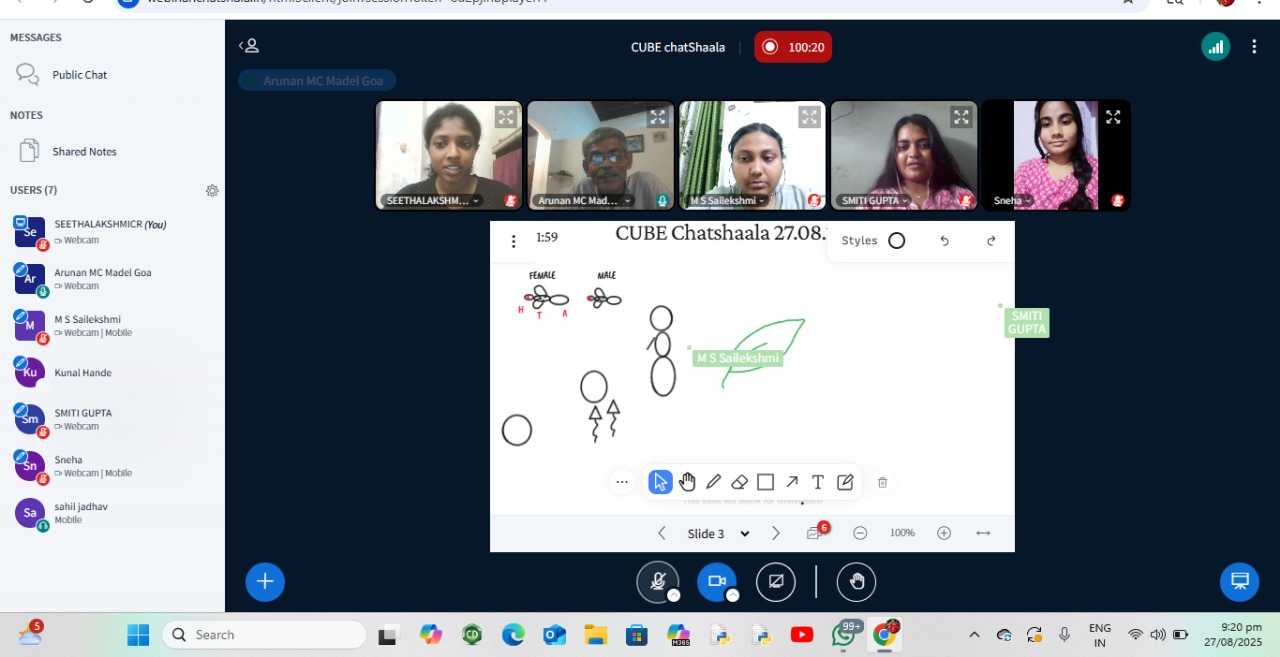
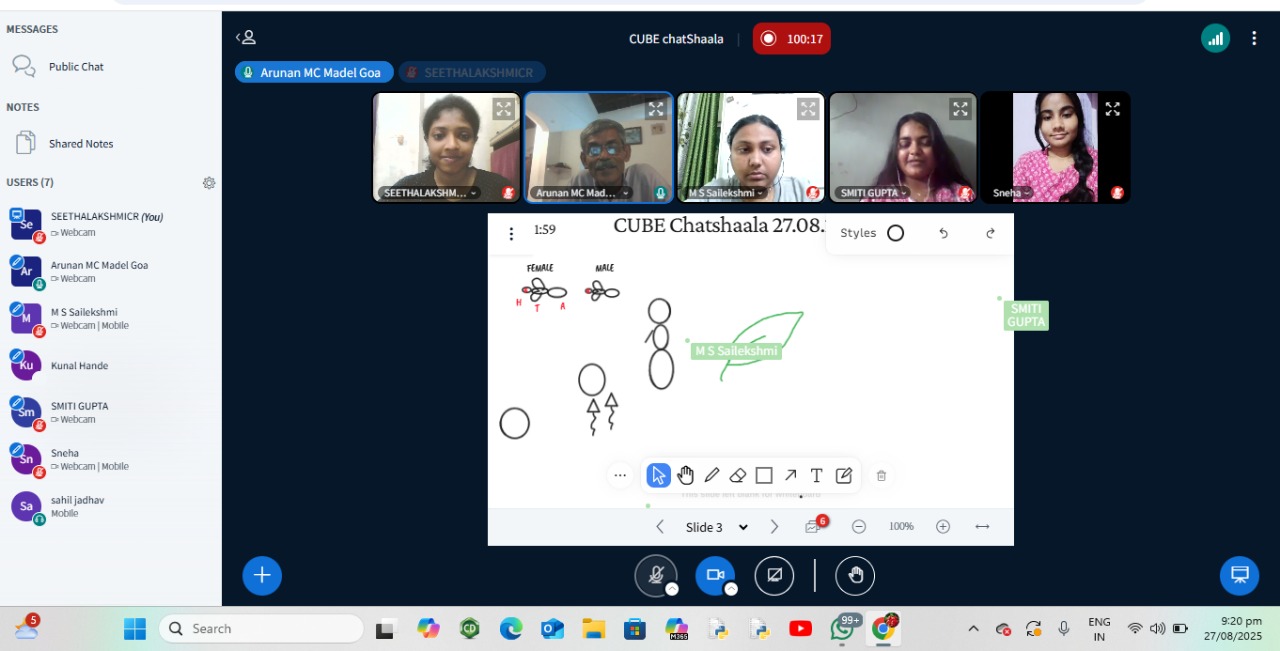
 Photographs during Chatshaala
 Reference

@Arunan @2020ugchsncnseethala @SN1261 @magpie @dhanraj7 and others.