 CUBE ChatShaala Summary – 07/11/2025
Topic: Sneha’s Adventures in the Cardamine Plant
Today’s ChatShaala revolved around Sneha’s fascinating observations on Cardamine, a plant closely related to mustard and fenugreek. The session began with a comparison of seed germination among fenugreek, mustard, and cardamine. Sneha reported that she repeated the cardamine germination experiment three times, indicating a commitment to reproducibility and accuracy in her findings.
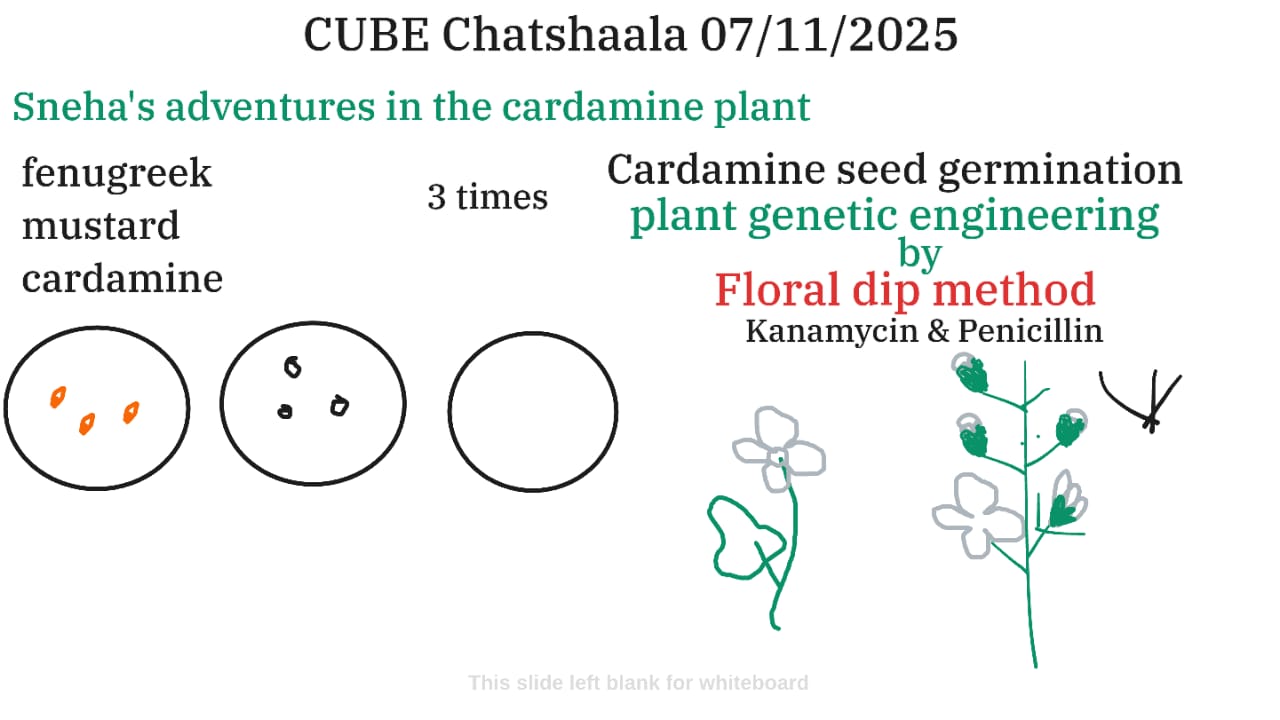
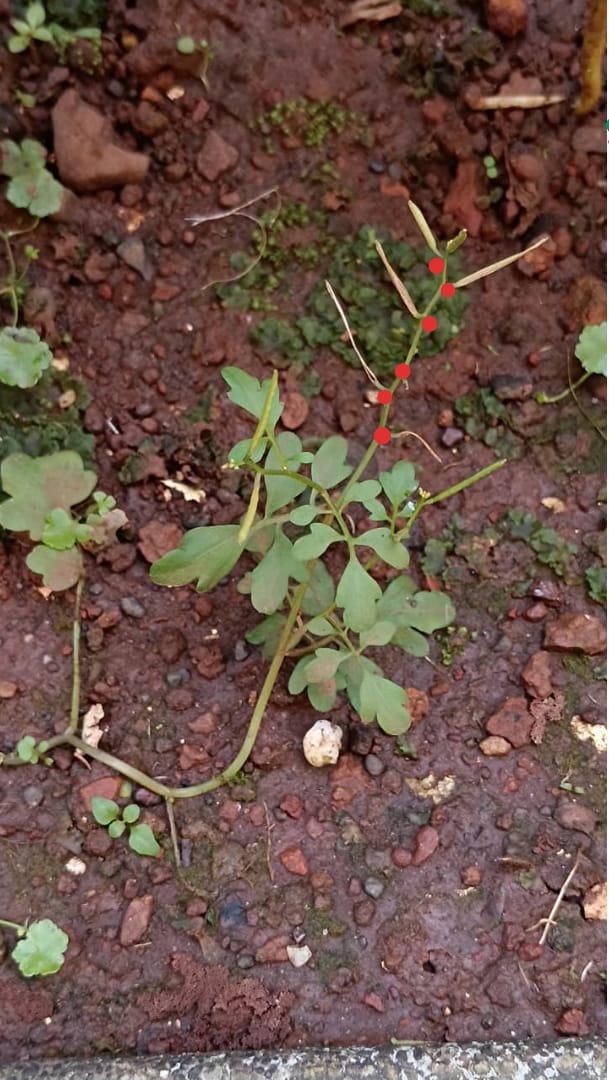

A major highlight of the discussion was Cardamine seed germination in the context of plant genetic engineering. The group explored how the floral dip method, a widely used transformation technique, could potentially be applied to Cardamine for gene transfer experiments. The conversation bridged basic observations of germination with advanced topics like genetic manipulation, highlighting CUBE’s integrative approach to science learning.
The visual whiteboard summary depicted stages of seed setup and illustrations of Cardamine flowers, suggesting a move from simple germination studies to more complex biological inquiries.
 Key Learnings (What I Learned)
-
Comparative seed germination studies help establish baseline plant behavior under controlled conditions.
-
Repetition in experiments builds reliability and scientific confidence.
-
The Floral Dip Method serves as a practical entry point to understand plant transformation and genetic engineering concepts.
-
Linking local observations (Cardamine germination) to global scientific practices (Agrobacterium-mediated transformation) bridges citizen science and modern research.
 TINKE Moments (This I Never Knew Earlier )
-
Realizing that Cardamine, a common weed, is a close relative of Arabidopsis thaliana, the model organism in plant genetics.
-
Recognizing the continuity between observation and molecular biology — how small classroom or home experiments can connect to professional research techniques.
-
Noticing how persistence (“3 times repeated”) is a scientific virtue often overlooked by beginners.
 Gaps and Misconceptions
-
Many participants were unclear about why Cardamine was chosen instead of Arabidopsis — a chance to discuss accessibility, local biodiversity, and ease of cultivation.
-
Some confusion persisted around how the floral dip method actually transfers genes — an opportunity to simplify the mechanism involving Agrobacterium tumefaciens.
-
The relationship between seed germination success and transformation efficiency remains to be better understood.
 Provocative Questions for the Community
-
Can a small home experiment on seed germination lead to breakthroughs in understanding plant genetics?
-
What makes Cardamine an ideal local model plant for genetic studies?
-
How can simple comparative experiments inspire curiosity about DNA, genes, and transformation?
 Reference