CUBE Chatshaala - Discussion Summary
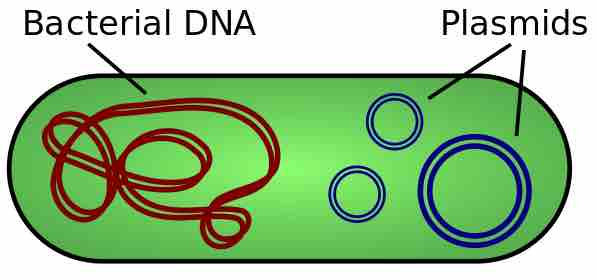
Today’s CUBE ChatShaala (18/02/2026) focused on plant genetic engineering, with Bt cotton serving as the central example. The discussion began with the role of plasmids in bacteria, emphasizing their nature as extrachromosomal DNA distinct from chromosomal DNA. Participants explored how plasmids can be engineered to carry useful genes, such as the Bt toxin gene, which provides cotton plants resistance against bollworms.

The session also touched upon nucleases—enzymes that cut nucleic acids—with distinctions between endonucleases (cutting inside DNA strands) and exonucleases (cutting from the ends). This laid the foundation for understanding how DNA fragments can be manipulated during genetic engineering.
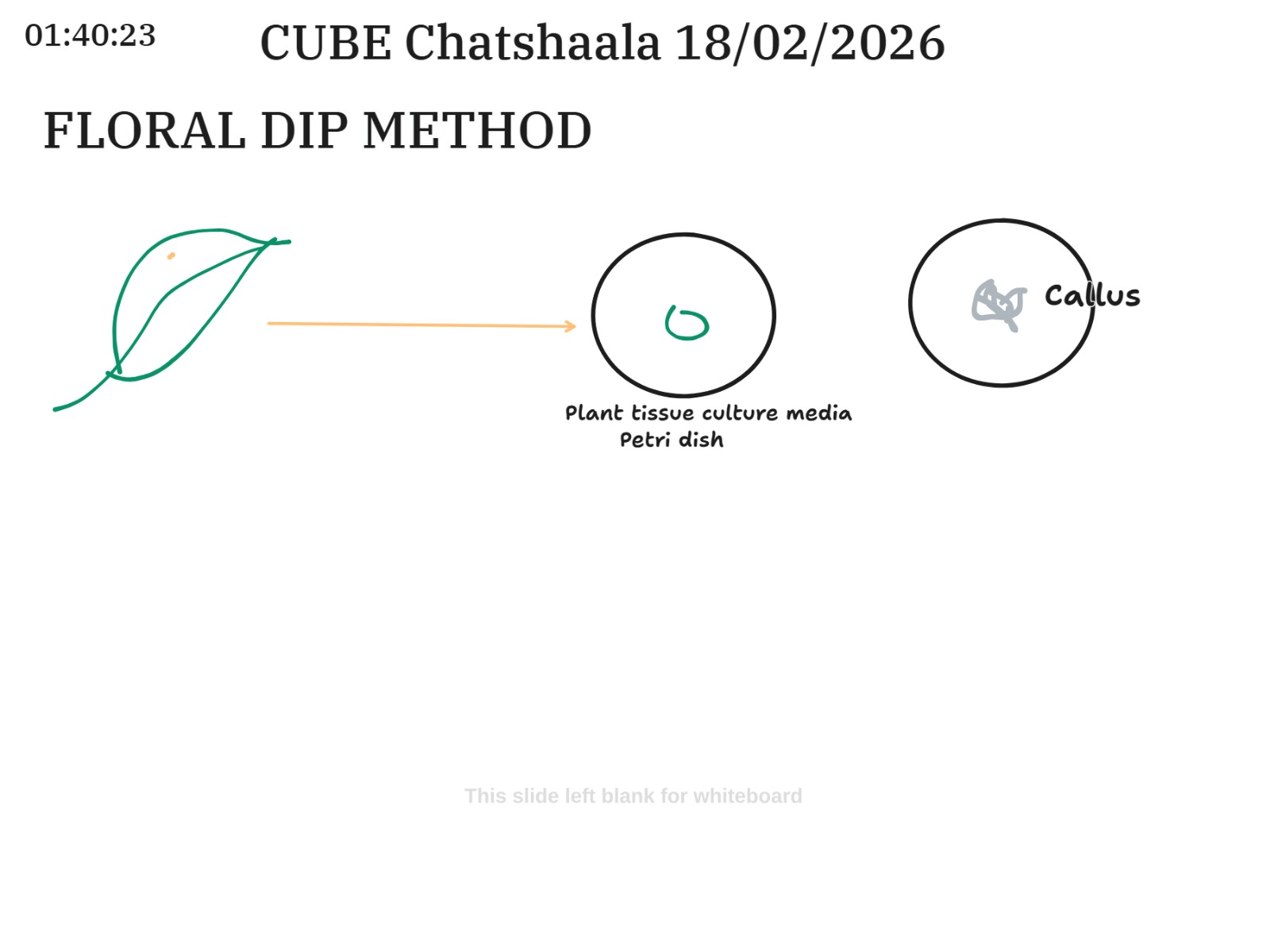
Later, attention shifted to the Floral Dip Method and plant tissue culture techniques. A diagram illustrated how a leaf sample placed in culture media can form a callus, representing undifferentiated plant cells. This highlighted the importance of tissue culture in regenerating genetically transformed plants.
Visual aids, including diagrams of plasmids, bacterial DNA, cotton plants, and tissue culture processes, enriched the discussion. The cubists reflected on how these methods connect molecular biology with practical agricultural applications.
 Provocative Questions
-
Why are plasmids particularly suited as vectors for genetic engineering compared to chromosomal DNA?
-
How does the Bt gene protect cotton plants from bollworm infestation, and what ecological consequences might arise from its widespread use?
-
What are the advantages and limitations of the floral dip method compared to other plant transformation techniques?
-
Could tissue culture methods be applied to conserve endangered plant species beyond genetic engineering purposes?
-
How might farmers’ reliance on genetically engineered crops reshape biodiversity and traditional farming practices?
-
What ethical considerations should guide the use of transgenic plants in agriculture?
 What I Have Learned
-
Plasmids are powerful tools in biotechnology because they are small, easily manipulated, and naturally transferable between bacteria.
-
Nucleases are essential for cutting and recombining DNA, enabling scientists to insert desired genes into plasmids.
-
The Bt cotton case study demonstrates how genetic engineering can directly address agricultural challenges, such as pest resistance.
-
Tissue culture techniques provide a pathway to regenerate whole plants from transformed cells, bridging molecular work with field applications.
-
Genetic engineering is not just a laboratory technique—it has far-reaching implications for ecology, farming, and society.
 TINKE Moments (This I Never Knew Earlier)
-
Realizing that extrachromosomal plasmids are naturally occurring and not artificial constructs, yet they can be harnessed for human purposes.
-
Discovering that callus formation is a critical intermediate step in plant tissue culture, representing a stage where cells lose specialization but gain regenerative potential.
-
Understanding that the endonuclease vs. exonuclease distinction is fundamental to how DNA is cut and manipulated, something often overlooked in casual discussions of genetic engineering.
-
Recognizing that the Floral Dip Method bypasses complex tissue culture steps in some plants, offering a simpler route to transformation.
 Gaps and Misconceptions
-
Some participants seemed to conflate plasmids with chromosomal DNA, not fully appreciating their independence and mobility.
-
There was limited discussion on the risks of Bt cotton, such as resistance development in pests or effects on non-target organisms.
-
The role of regulatory and ethical frameworks in deploying genetically engineered crops was only briefly mentioned and deserves deeper exploration.
-
Tissue culture was sometimes perceived as a purely technical process, but its broader applications in conservation and biodiversity management were not fully addressed.
 Photographs during chatshaala
 Reference