 CUBE ChatShaala Summary – 21st September 2025
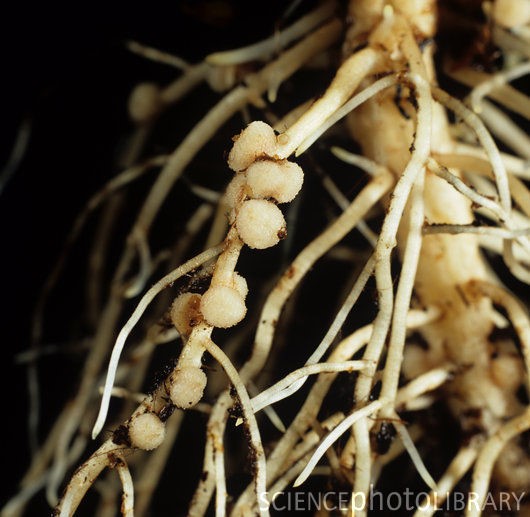
Today’s discussion revolved around the fascinating parallels between root nodules in plants and tumors in animals, with a special emphasis on their structural and functional differences. Using the pea plant as a model, participants explored how nodules formed by nitrogen-fixing bacteria are beneficial, in contrast to root-knot tumors caused by nematodes which hinder plant growth.

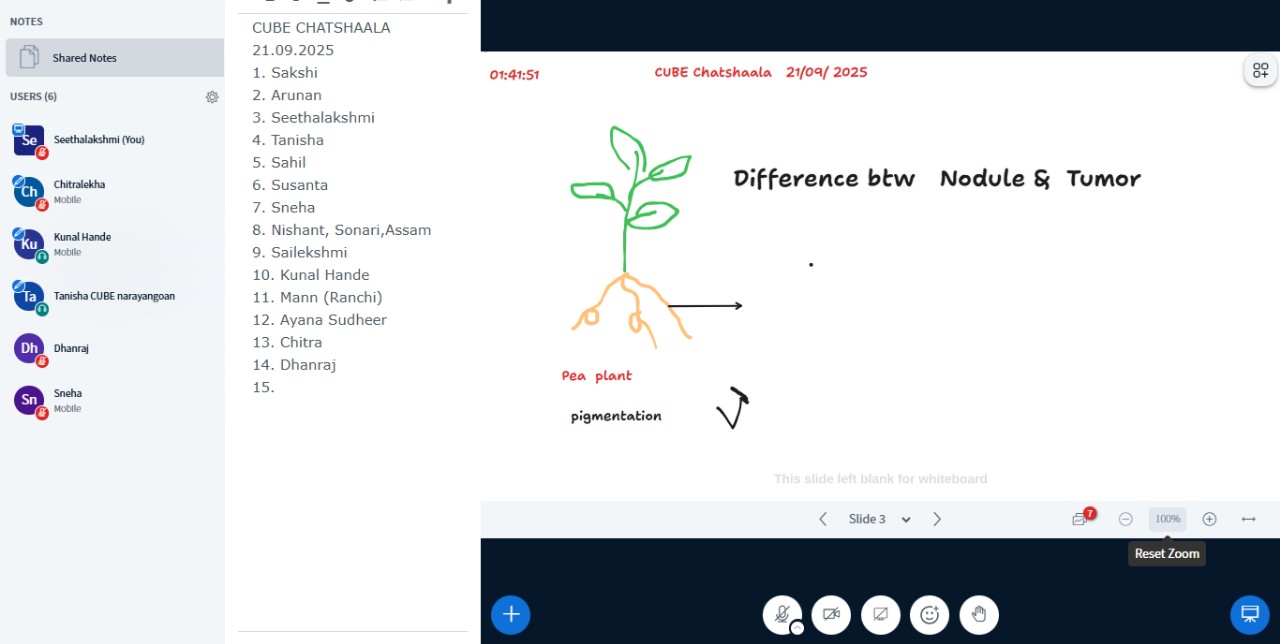
The session connected this with insights from protein synthesis and cancer research at ACTREC (Tata Memorial Centre). Members reflected on how the study of transcription and translation in normal vs. cancer cells helps us understand uncontrolled growth and the molecular underpinnings of tumors.
Highlights included:
-
Root nodules as sites of symbiosis and nitrogen fixation, aided by signaling molecules like flavonoids.
-
Root-knot nematodes as inducers of abnormal swelling resembling tumors in plant roots.
-
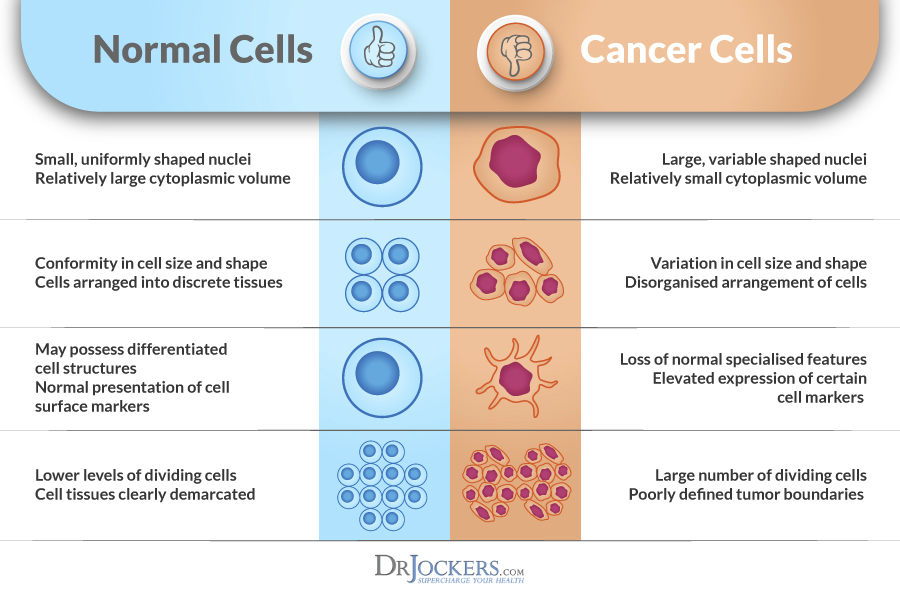
Comparative reflections on normal vs. cancer cells, exploring how mutations disrupt controlled protein synthesis.
-
Linking plant models to broader themes of cell regulation and disease research.
This thought-provoking exchange demonstrated how plant biology can inspire analogies in cancer studies and how simple models like pea plants can offer windows into complex medical challenges.
 Questions for the Community
-
Nodules vs. Tumors: If nodules help plants thrive and tumors harm them, what does this teach us about the line between beneficial growth and destructive growth?
-
 Cell Behavior: Can studying how normal cells turn cancerous give us clues to understand how nematodes manipulate plant root cells into tumors?
 -
 Crossroads of Research: Could agricultural insights on nodules and root-knot diseases inspire new approaches in cancer research?
 -
 Flavonoids as Signals: If flavonoids can signal bacteria to form nodules, could similar chemical signals in humans be responsible for controlling or misdirecting cell growth?
 -
 Bigger Picture: Are we underestimating the role of plants as models in understanding diseases like cancer?
 Reference
-
Walls around tumours — why plants do not develop cancer | Nature Reviews Cancer
-
https://biology.anu.edu.au/sites/prod.biology.sca-lws06.anu.edu.au/files/nodules%2520legume.jpg
-
https://drjockers.com/wp-content/uploads/2016/09/cancer-cells_med-1.jpeg

@Arunan @sakshiconsultant2002 @SN1261 @2020ugchsncnseethala @Ayana_Sudheer @Chitralekha and others.