Today’s CUBE ChatShaala (25/02/2026) centered on the theme “Rising the Dough” and explored the biochemical foundations of fermentation, particularly through the lens of traditional practices such as Sandhana Kalpana. The discussion highlighted how yeast acts on sugars—glucose and fructose—derived from coconut water, leading to ethanol production.
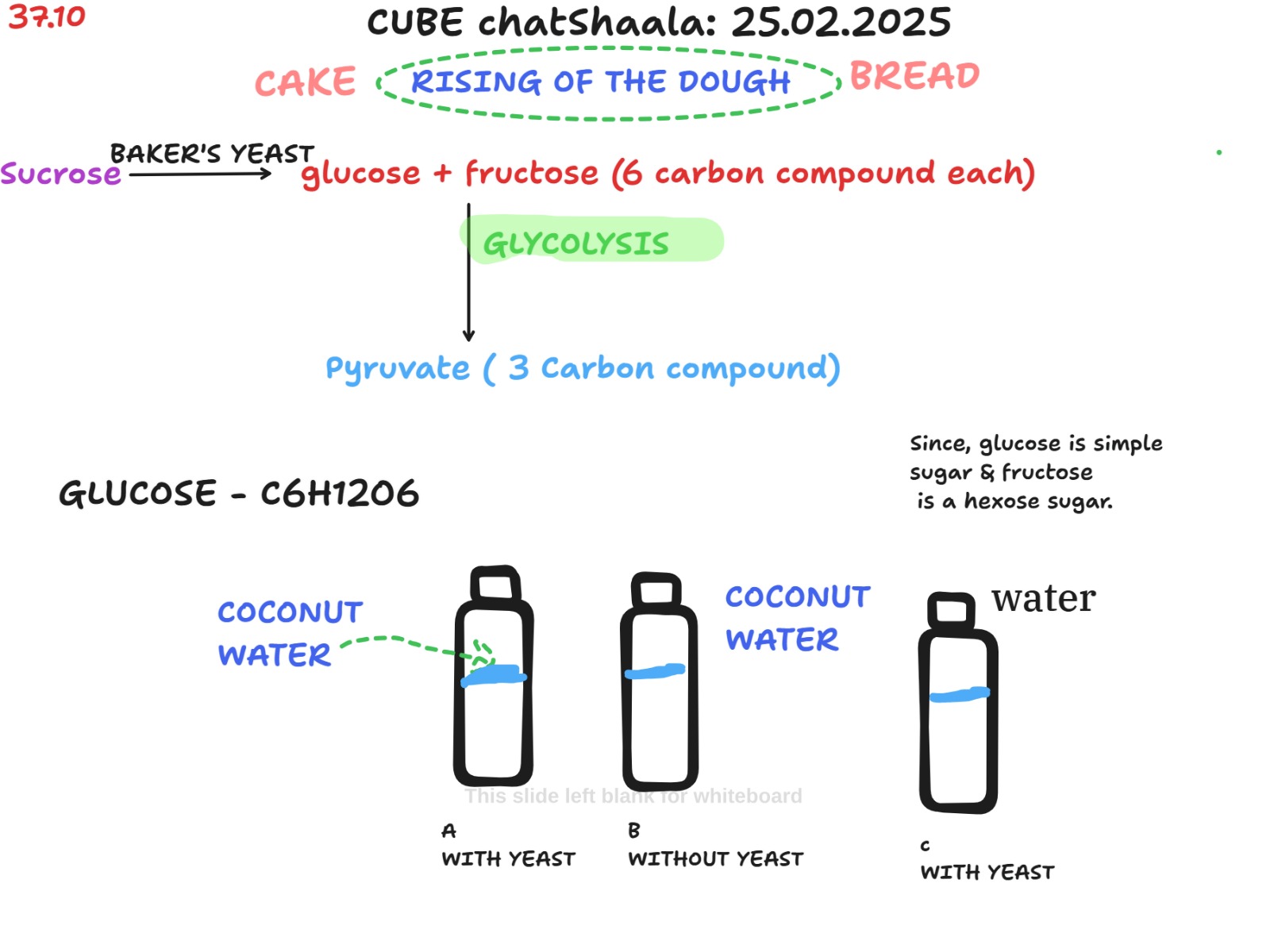
The cubists examined the breakdown of sucrose into glucose and fructose, both hexose sugars, and their subsequent conversion into pyruvate via glycolysis. The session emphasized the role of baker’s yeast in bread and cake-making, linking everyday culinary practices to fundamental biochemistry.
A practical experiment was outlined using three bottles:
Bottle A: Coconut water with yeast (fermentation expected).
Bottle B: Coconut water without yeast (control).
Bottle C: Water with yeast (to test yeast activity without sugar substrate).
This setup encouraged cubists to think critically about variables in fermentation. The conversation also drew connections to cultural practices, such as toddy preparation from coconut water, which involves controlled fermentation with yeast and sugar.
Provocative Questions
Why does yeast require sugars like glucose and fructose for fermentation, and what happens if only water is provided?
How does the traditional Sandhana Kalpana process compare to modern industrial fermentation methods?
Could coconut water serve as a sustainable substrate for bioethanol production?
What cultural significance does toddy hold in regions like Kerala and Goa, and how does this intersect with scientific understanding of fermentation?
How might the nutritional composition of coconut water influence the efficiency of fermentation compared to other substrates?
What I Have Learned
Fermentation is not just a culinary process but a biochemical pathway with cultural and industrial relevance.
Coconut water, though primarily composed of water and carbohydrates, can act as a natural medium for yeast activity.
The breakdown of sucrose into glucose and fructose is a critical step, enabling glycolysis and ethanol formation.
Traditional practices like toddy-making provide real-world examples of fermentation, bridging science with culture.
Experimental setups with controls (like bottles A, B, and C) are essential for validating scientific hypotheses.
TINKE Moments (This I Never Knew Earlier)
The idea that coconut water, a common tropical drink, can be harnessed for fermentation beyond cultural beverages was eye-opening.
Learning that yeast cannot ferment without a sugar source (as in Bottle C) clarified misconceptions about yeast’s role—it is not the yeast alone but the substrate that drives fermentation.
Discovering the dual identity of coconut water—as both a refreshing drink and a fermentation substrate—expanded perspectives on its scientific and cultural importance.
Gaps and Misconceptions
Some participants initially assumed yeast could produce ethanol in plain water, overlooking the necessity of sugars.
There was limited discussion on the nutritional limitations of coconut water (low protein and fat), which could affect fermentation efficiency.
The cultural practice of toddy-making was sometimes conflated with coconut water fermentation, though toddy traditionally comes from coconut sap rather than the water itself.
Coconut water is a great nourishing drink. People pay Rs 40 (or more now that summer is on) for a coconut’s water. Who would use coconut water for ethanol?
Direct and Efficient Production of Ethanol from Cellulosic Material with a Yeast Strain Displaying Cellulolytic Enzymes is an interesting paper. You Cubists can try their technology on a Chaatshala and report please. They “constructed a novel cellulose-degrading yeast strain by genetically codisplaying two cellulolytic enzymes on the cell surface of Saccharomyces cerevisiae”. I could not understand how Escherichia coli “was used as the host strain for the recombinant DNA manipulations”. Maybe cubists can redo the process in their bottles!
Sandhāna Kalpanā refers to the Ayurvedic fermentation process used to prepare medicinal formulations like Āsava and Ariṣṭa. These are self-generated alcoholic preparations that act both as solvents and therapeutic agents.
Key Steps
Preparation of Base Decoction (Kvatha):
Herbs are boiled in water to make a decoction or used in coarse powder form.
Addition of Sweetening Agents:
Jaggery, sugar, or honey is added to provide fermentable sugars.
Fermentation Initiators:
Flowers of Dhataki (Woodfordia fruticosa) are traditionally used as natural yeast.
Fermentation Vessel:
The mixture is placed in earthen jars or wooden vessels, sealed with clay-smeared cloth to allow controlled fermentation.
Fermentation Period:
Kept undisturbed for 30–60 days depending on the formulation.
Completion:
The liquid is filtered, stored, and used as medicine. The naturally generated alcohol extracts active principles from the herbs and preserves the preparation.
Significance
Produces self-generated alcohol that enhances extraction of phytochemicals.
Acts as a preservative, giving long shelf life.
Improves bioavailability and therapeutic potency.
Commonly used in formulations like Dashamula Ariṣṭa, Arjunāriṣṭa, and Drakṣāsava.
Bitter gourd (kaaravellaha, karela, karala, karli, kaippakka, pavakkaay) too is bitter; can we ferment it like cocoa and make karelate?
The cocoa pulp moisture: 74.43%–83.29%, total sugar content: 4.28%–11.91%. Bitter gourd moisture: 88%–90%, total sugar: 1.95%-
Cocoa beans are dried in mats so that moisture content is lowered to 7%.
Karela slices are with 88% to 90 % moisture content are to be dried for 28 to 55 hours to reduce moisture content to 6.84% to 8.27%. (AI found: The bitter gourd slices achieved a final moisture content of 6.84%–8.27% wb after drying from an initial range of 88%–90% wb, within a total elapsed time of 28–55 h.)
Glycemic Index (how quickly blood sugar levels are raised. pure glucose GI 100) is 18 for karela and 51 for cocoa pulp. Since GI indicates the sugar content needed for the fermentation process and karela is deficient in sugar, sugar will have to be added to karela before the drying process.
AI finds: A traditional South Indian snack made from fresh bitter gourd (pavakka/karela). Sliced thin, soaked in spiced buttermilk, and sun-dried to perfection. Buttermilk supplies Lactic Acid Bacteria LAB for fermentation.
To make fermented karela, sun dry (karela slices, sugar and curd) for a few days till the moisture reduces to ~ 7%. To make milk karelate instead of milk chocolate, follow home chocolate making processes (Home made Milk Chocolate ) with fermented karela replacing fermented cocoa bean!
Ingredients for milk karelate
1/2 cup coconut oil 110g
3 Tbsp. whole milk powder 24g
1/3 cup fermented karela powder 35g
3/4 cup powdered sugar 90g (sugar for fermentation was added earlier)
I fermented karela and made karelate but used yeast instead of curd and no sugar. The yeast fungi probably did not get sugar and starved. The karelate was not ok. Hope that sugar and buttermilk fermentation will be better.
 CUBE Chatshaala - Discussion Summary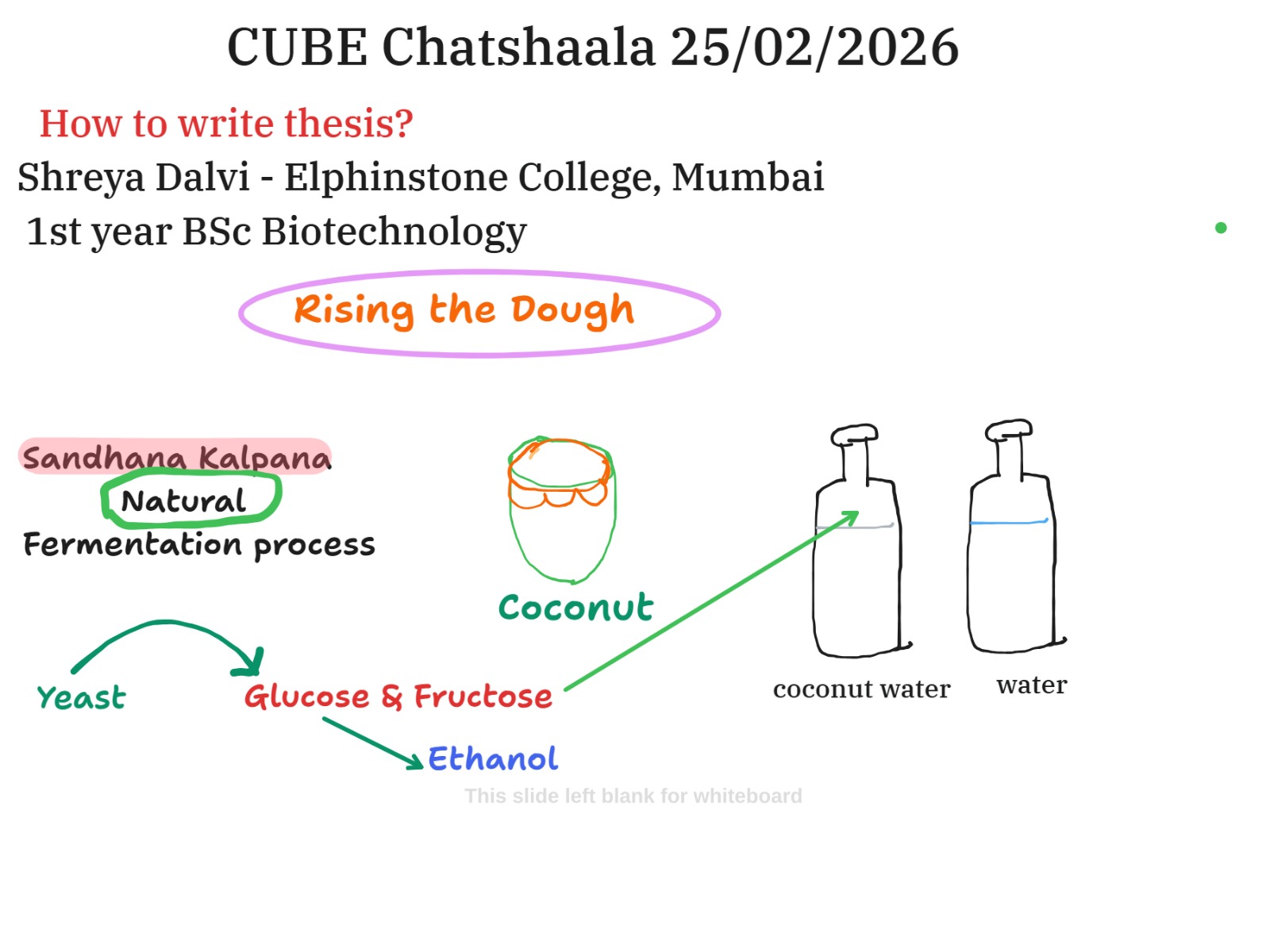
 Provocative Questions
 What I Have Learned
 TINKE Moments (This I Never Knew Earlier)
 Gaps and Misconceptions
 Reference
 Traditional Process of Sandhāna Kalpanā
 Significance