CUBE Chatshaala - Discussion Summary
Date: 08 May 2026
Today’s Chatshaala opened with a deceptively simple question: how big is a fingernail? What began as an informal observation quickly turned into a structured, hands-on measurement exercise that drew out deep thinking about scale, precision, and the tools we use to measure living things.
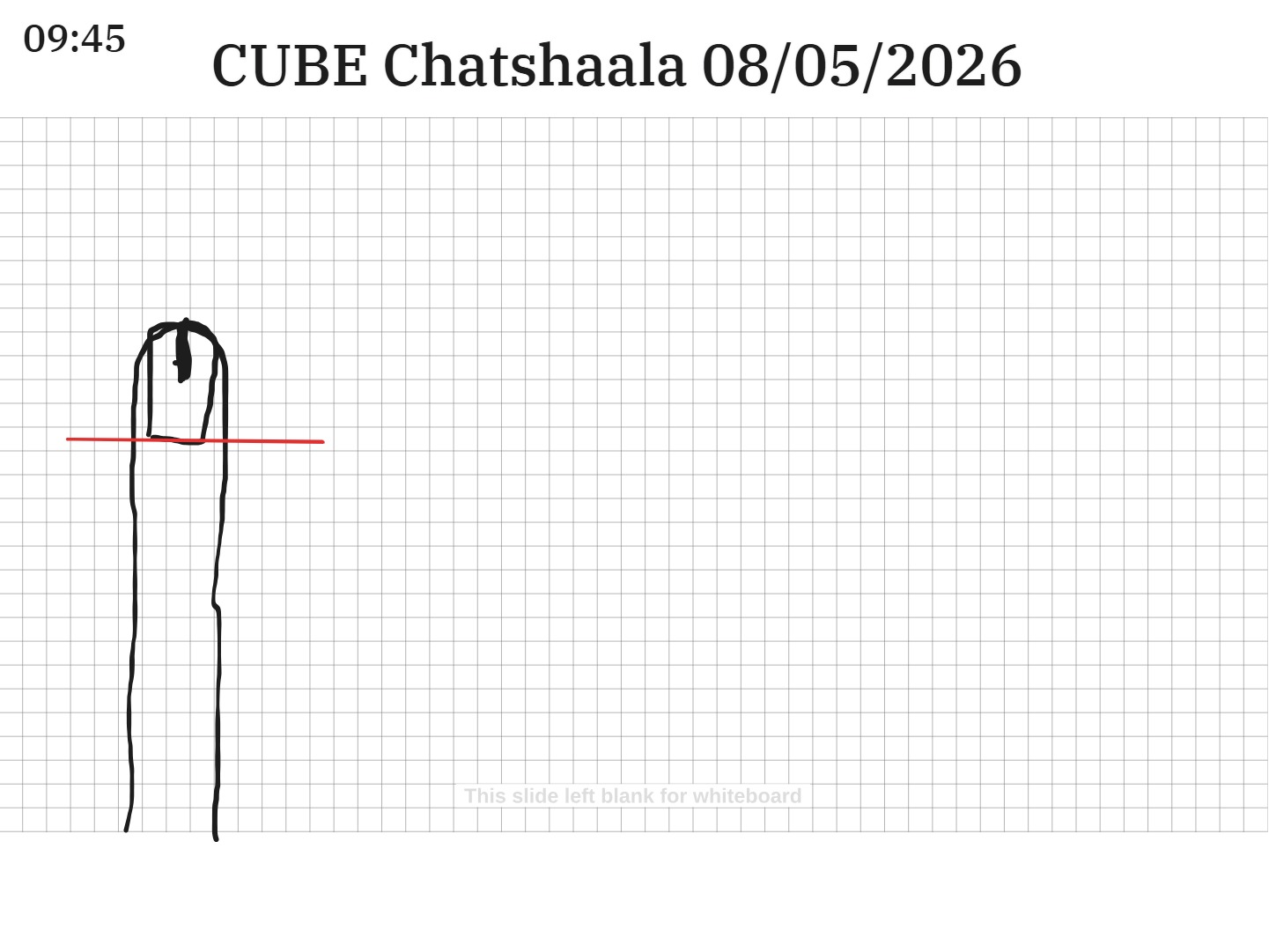
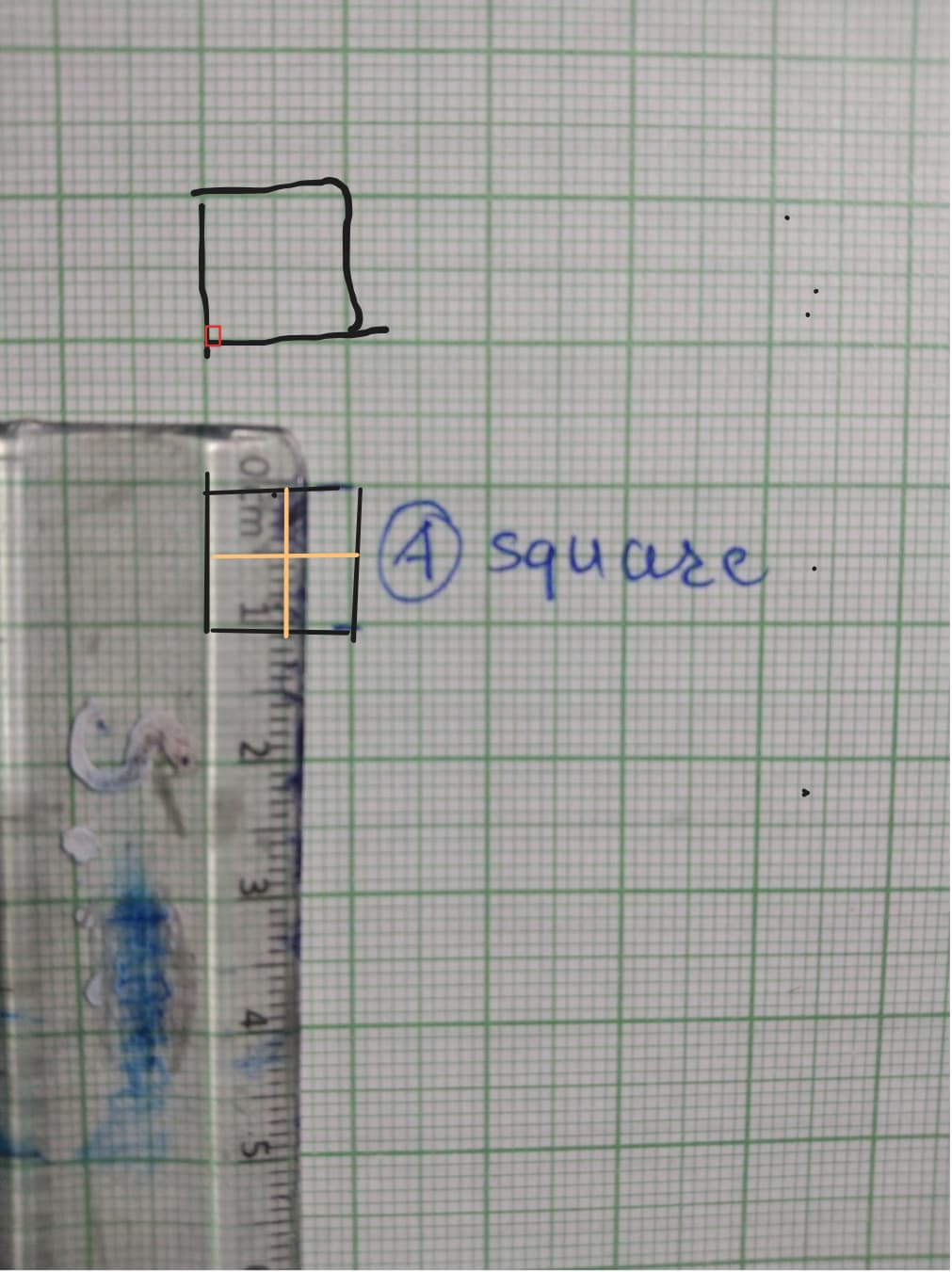
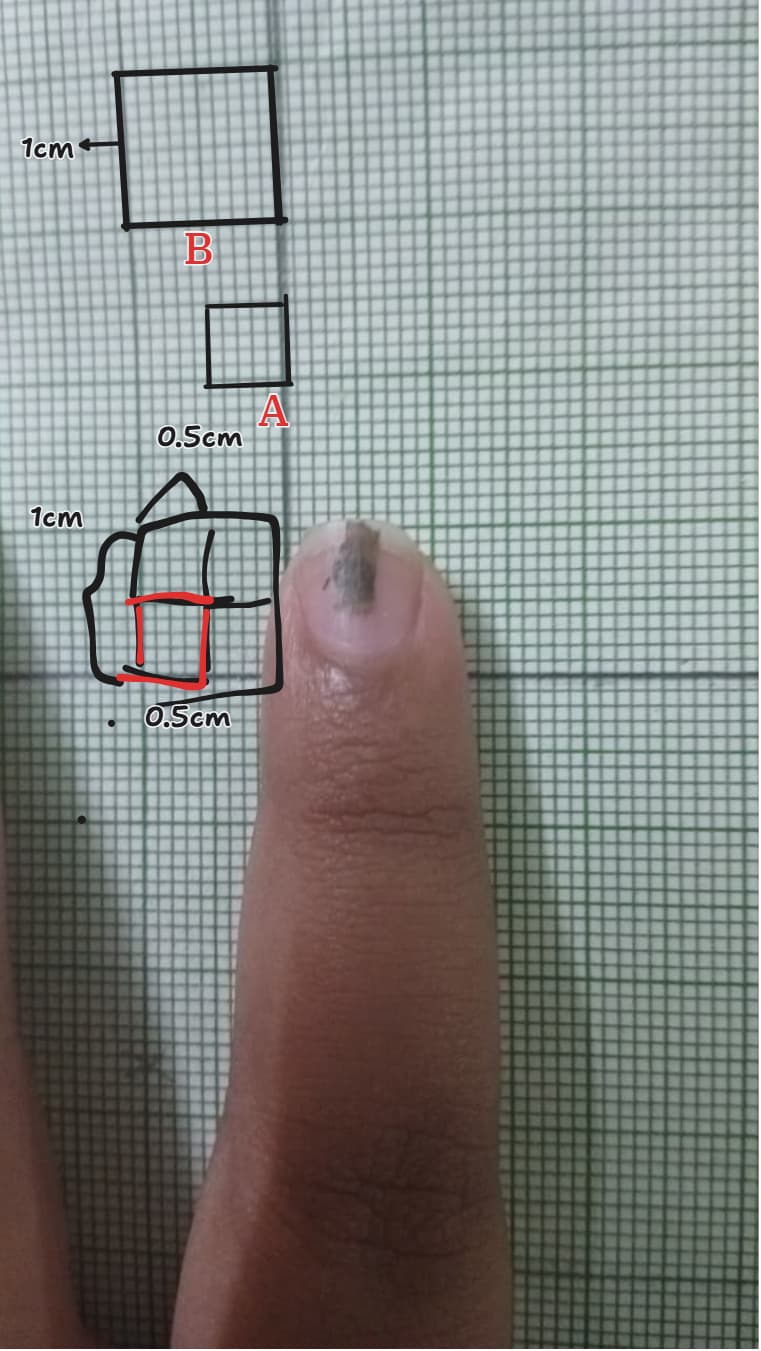
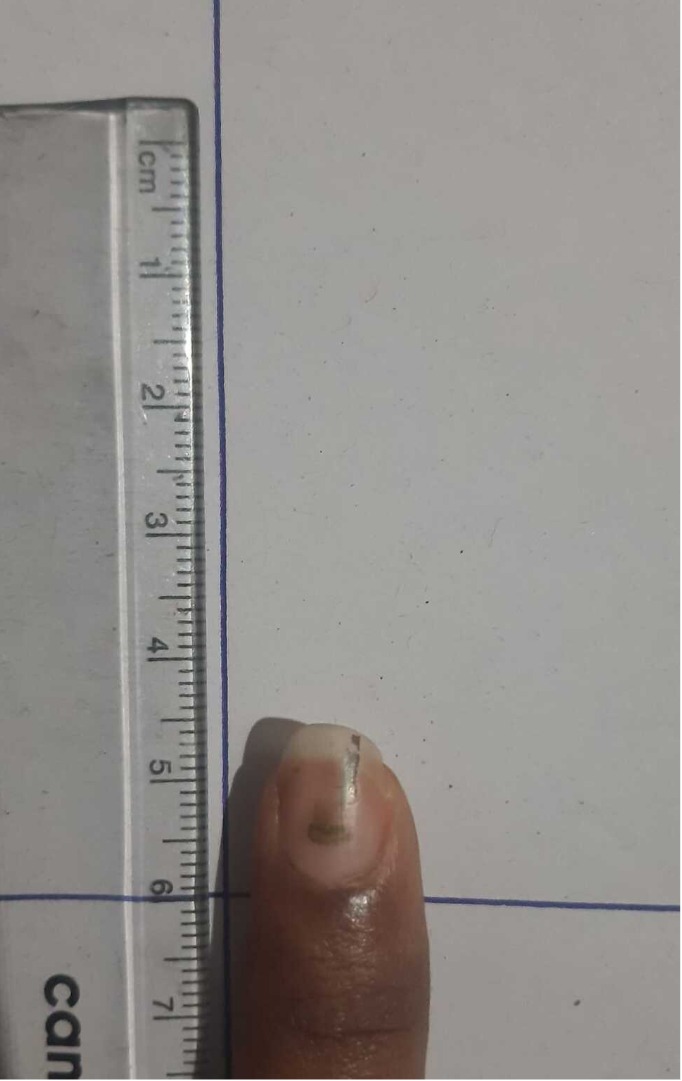
A participant placed their thumb against a ruler on graph paper, revealing that the visible length of the nail — from the tip of the finger to where the nail meets the skin — sits at approximately 1 cm. The width of the same nail was measured at roughly 1 cm as well, making the nail area close to a 1 cm × 1 cm square. This became the reference unit for the rest of the session.
The whiteboard notes (drawn on the digital grid) showed two distinct reference squares labelled A and B. Square A measured 0.5 cm × 0.5 cm (area = 0.25 cm²), while square B measured 1 cm × 1 cm (area = 1 cm²). A third, rougher shape — drawn to represent the actual outline of the thumbnail — was overlaid on the 1 cm grid to help participants visually compare the nail’s irregular shape against these clean geometric benchmarks.
The group also discussed how the nail is not a perfect square — it has a curved top and tapered sides — and so any area estimate using a square is an approximation. The red square marked inside the larger nail outline (visible on the graph paper photo) highlights the “safe” inner zone that is clearly covered, while the region between the red and black outlines represents the uncertain boundary area.
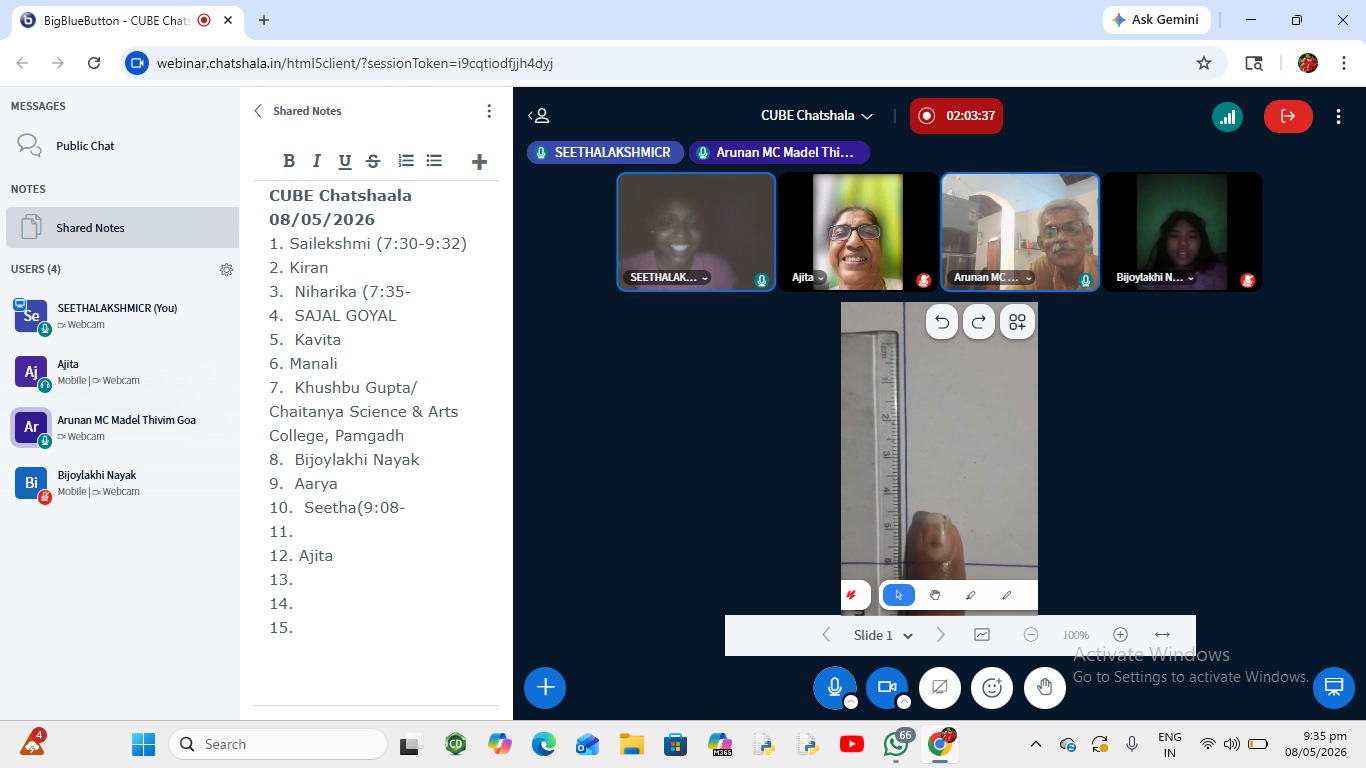
A ruler was used to validate the measurements, with the thumb placed directly against the scale confirming the ~1 cm nail length. This anchored the discussion in observable, repeatable data rather than assumptions.
Key observations
- Thumbnail length (tip to base): approximately 1 cm
- Thumbnail width: approximately 1 cm
- Inner conservatively measured area (red square): approximately 0.5 cm × 0.5 cm = 0.25 cm²
- Outer bounding square B: 1 cm × 1 cm = 1 cm²
- True nail area lies between 0.25 cm² and 1 cm² due to irregular shape
- Graph paper used as a measuring surface — each small square = 1 mm × 1 mm
 Provocative Questions
-
If the fingernail is not a perfect square, what geometric shape would best approximate its true area — and how would you calculate that more precisely?
-
We used a ruler and graph paper today. What would be the limitations of these tools if we wanted to measure the nail area of a newborn — or of a mouse — where the nail might be just 1–2 mm wide?
-
The red square inside the nail outline gives us a minimum estimate, and the outer black square gives a maximum. This is essentially an “upper bound–lower bound” method. Can you think of other biological measurements where this bounding approach is routinely used?
-
Why does it matter whether we measure from the tip of the nail or from where the nail meets the skin? What does each measurement actually tell us biologically?
-
Nails grow at a known average rate (~3 mm per month in humans). If we tracked the area of a single nail weekly using graph paper, could we detect a meaningful growth signal within one month? What would confound our measurement?
-
The “square” label assigned to reference shapes A and B assumes perfect 90° corners and equal sides. How would you verify that your drawn square is actually a square and not a slight rectangle?
 What I Have Learned
Measurement is never purely objective
Even measuring something as familiar as a fingernail requires decisions — where exactly does the nail begin? Do we include the white tip? These choices shape the data, and today, made that visible in a concrete way.
The body as a measuring instrument
Using a fingernail as a unit of measurement is not informal — it is a first step toward building a personal reference scale. Scientists working in the field often rely on body-part references (the width of a thumb, the length of a finger joint) when instruments are unavailable. This session grounded that practice in actual numbers.
Bounding is better than guessing
Instead of trying to calculate the exact irregular area of the nail, the group used inner and outer squares to define a range. This is mathematically sound — it mirrors the integral estimation approach in calculus. The insight is that knowing the range is far more honest than producing a false, precise answer.
Graph paper is an underrated tool
Placing a body part on graph paper and counting squares is a legitimate technique used in dermatology and wound care to estimate surface areas. Today’s session made that connection real and immediate.
 TINKE Moments (This I Never Knew Earlier)
TINKE 1 — The nail outline is not a square
Several participants initially assumed that since the nail looks roughly square, treating it as a 1 cm² area was good enough. The session revealed that the curved top and the concave sides mean the actual area is significantly less than 1 cm². This was a moment of productive correction.
TINKE 2 — Different measurements for “nail length”
There was initial ambiguity about what “length” means — is it the exposed white tip, the full nail plate visible from outside, or the total nail including the part under the skin? Each gives a different number, and each is biologically meaningful in a different context. The session surfaced this confusion and addressed it directly.
TINKE 3 — Ruler placement affects the reading
In one of the images, the thumb is placed beside a ruler to show the ~1 cm mark. But the exact starting point of the ruler against the nail base matters — even a 1 mm error compounds when the total measurement is only 10 mm. Participants began to notice that precision in placement is as important as precision in reading.
TINKE 4 — Area vs. length as distinct biological signals
The group had not initially thought about why the area might be more informative than length alone for nail health or growth studies. This emerged during the session as an open and exciting direction — tracking area change over time could capture both width and length changes simultaneously.
 Gaps and Misconceptions
Gap 1 — No standardised measurement protocol established
The session demonstrated measurement in a general way, but did not settle on a single repeatable protocol. For this to become a real study, the group would need to define: which finger, which hand, which landmark marks the base, and whether the nail is measured dry or freshly washed (nails can be slightly translucent when wet, shifting perceived boundaries).
Gap 2 — Interobserver variability not explored
All measurements today were done by one person. Would two different people, measuring the same nail independently, get the same number? This is the question of interobserver reliability, and it was not tested today. It is a necessary next step before the data can be trusted.
Misconception — “A square of 1 cm covers the nail.”
The whiteboard drawing showing a 1 cm × 1 cm bounding square can give the impression that the nail area is 1 cm². This is the maximum possible estimate, not the actual area. The actual area is smaller because the nail does not fill its bounding square. Future sessions should address this explicitly to prevent the bounding box from being taken as the answer.
Gap 3 — No comparison across individuals
Nail size varies with age, sex, nutrition, and genetics. Today’s session used a single participant’s thumb. To say anything meaningful about “the human thumbnail,” multiple individuals across different demographics would need to be measured. This comparative angle was not discussed and remains an open avenue.
 Photographs during Chatshaala