 CUBE ChatShaala – Meeting Summary
Date: 17 January 2026
Venue & Context: Linked to the curd-making setup during exhibition at Sree Narayana College, Chempazhanthy, engaging school students (Classes 7, 9, and 11)
Theme: Physics, Chemistry, and Biology of Curd Making
Meeting Summary (Formal & Narrative)
Today’s ChatShaala session focused on a seemingly simple everyday practice—curd making—and revealed it as a rich, interdisciplinary scientific process. The discussion was based on whiteboard models and visual slides that compared milk mixed with curd, lemon, and water, demonstrating how subtle changes in composition and pH can have a significant impact on outcomes.
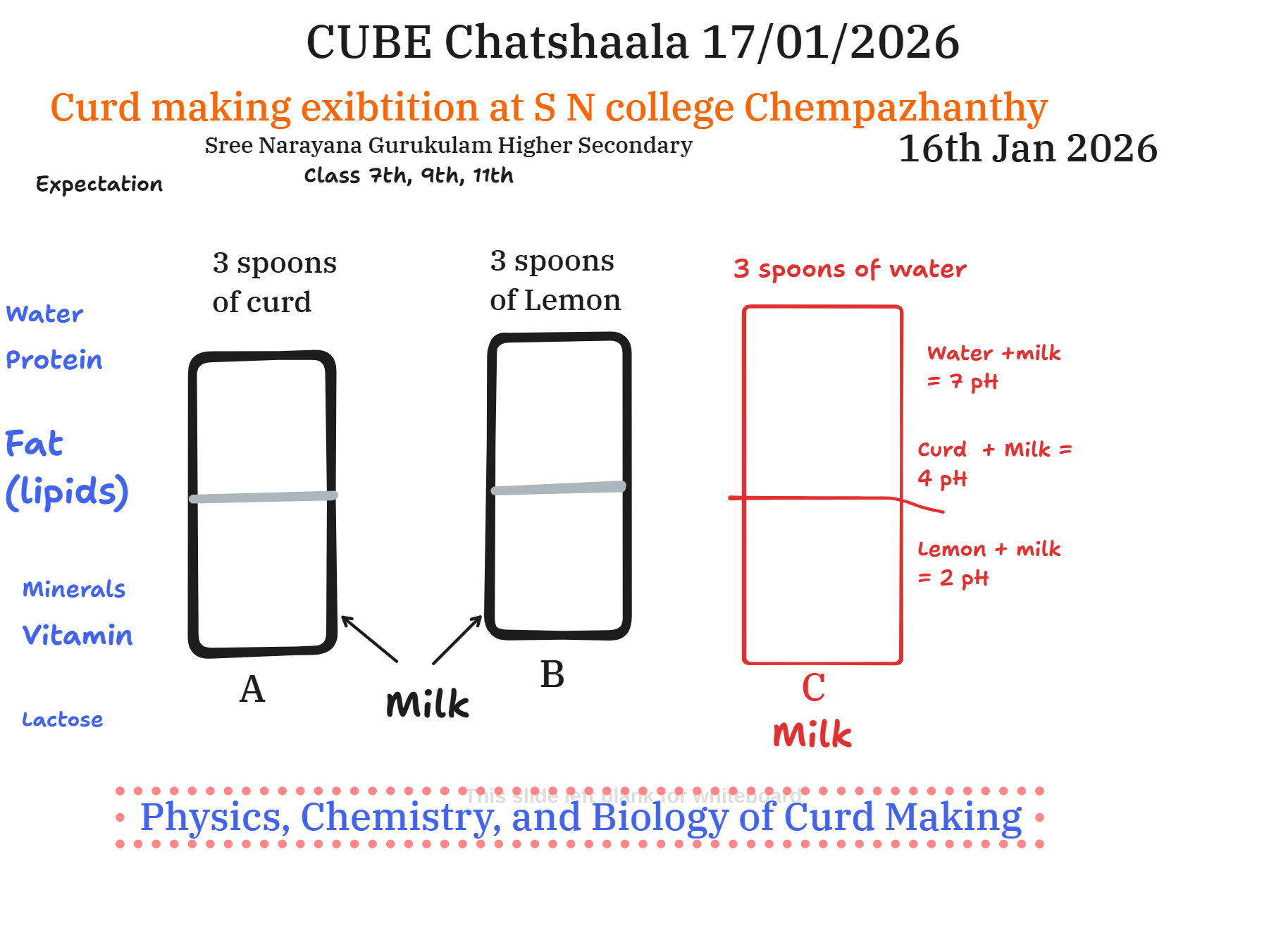
Cubists investigated how acidity affects curd formation from a chemical perspective. When milk and water were mixed, the pH remained near neutral (~7) with no structural changes. However, when lemon was added, the pH dropped significantly (~2), causing rapid protein coagulation. Curd addition raised the pH to around 4, which is close to the isoelectric point of casein, explaining why curd formation is stable and gradual rather than sudden.
The biological dimension emphasized milk as a living system. Lactobacillus bacteria were discussed not only as “agents,” but also as active participants who metabolize lactose into lactic acid, gradually changing the internal environment of milk. This reframed curd production as a time-dependent biological process, rather than an instant chemical reaction.
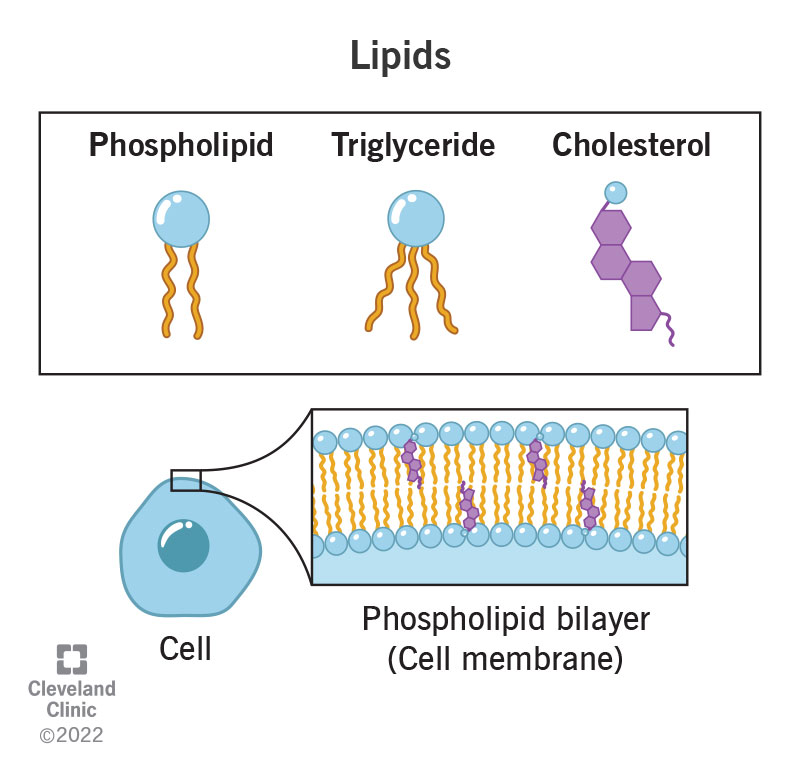
The physics angle emerged from structure and organization—how proteins denature, fats behave as emulsified globules, and lipid components like phospholipids and triglycerides organize themselves. The lipid slide linked food science and cell biology by drawing parallels between milk fat globule membranes and phospholipid bilayers in cells.
Overall, the session demonstrated how kitchen practices can serve as laboratories, allowing students to visualize invisible processes such as pH change, microbial action, and molecular self-assembly.
 What I Learned
-
Curd formation is not a single reaction but a sequence of slow, interconnected changes.
-
pH is not just a number—it determines protein behavior, texture, and stability.
-
Lipids in milk are structurally sophisticated and conceptually linked to cell membranes.
-
Fermentation is as much about time and living systems as it is about chemistry.
 TINKE Moments (This I Never Knew Earlier)
-
Casein proteins coagulate optimally near pH 4, not at extreme acidity.
-
Lemon and curd both sour milk, but the pathway and outcome are fundamentally different.
-
Milk fat globules resemble miniature biological membranes.
-
Curd making mirrors controlled denaturation rather than “spoilage.”
 Gaps & Misconceptions
-
The belief that curd forms simply because milk becomes “sour.”
-
Confusion between fermentation (biological, gradual) and acid curdling (chemical, rapid).
-
Oversimplification of fats as inactive components rather than structured molecules.
-
Viewing bacteria as contaminants instead of collaborators.
 Whiteboard-Inspired Queries
-
If bacteria are working inside milk, at what point does curd stop being a living system?
-
Same milk, same sourness—then why such different textures and flavors?
-
What other daily foods hide complex molecular choreography?
-
How many food transformations are actually pH-driven without us realizing it?
 Provocative Questions to Inspire
-
If curd making is science, who decided it belongs only in kitchens and not classrooms?
-
Are we teaching biology too late, when students already practice it daily?
-
What other “ordinary” habits deserve extraordinary scientific attention?
 Photographs during Chatshaala

This ChatShaala reinforced a central idea: science is not confined to textbooks or laboratories—it quietly unfolds in everyday life, waiting to be noticed, questioned, and understood.
 Reference