 CUBE ChatShaala Summary – 17.08.2025
Topic: Food Preference Test in Caterpillars & Exploring Their Senses
 Highlights of the Discussion
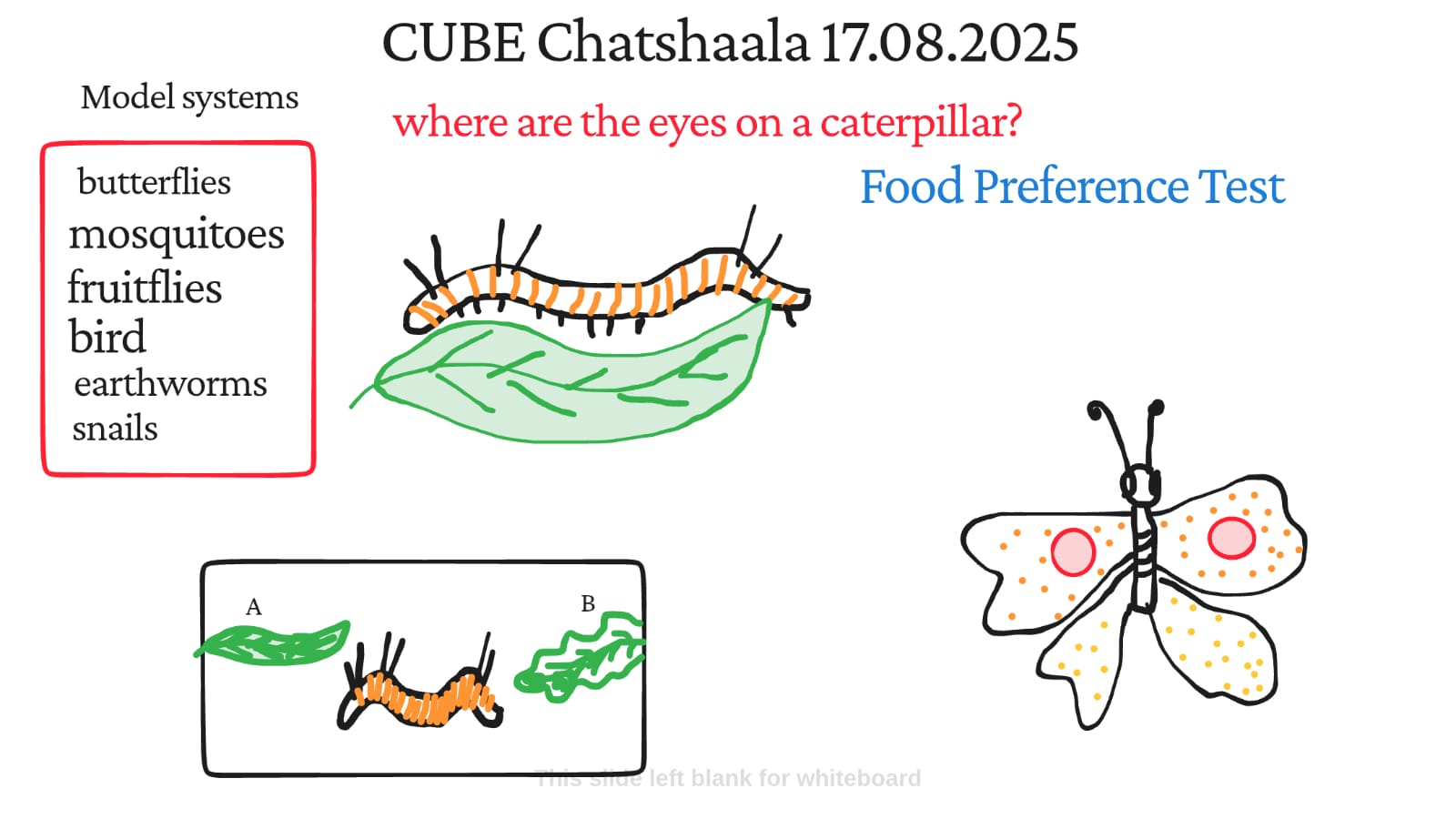
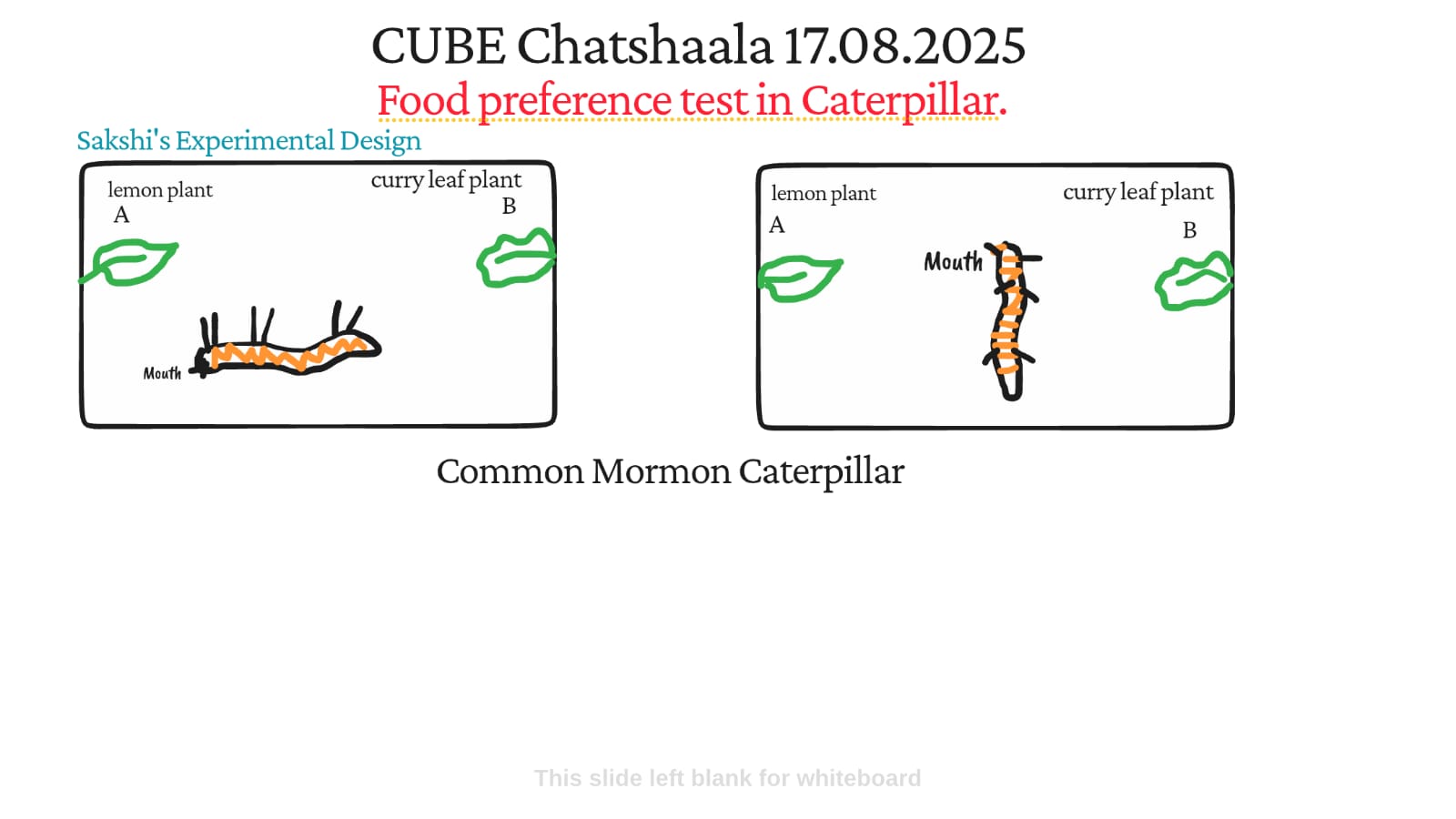
Today’s session centered on fascinating experiments involving food preference in the Common Mormon caterpillar, with participants designing simple yet effective setups to test whether caterpillars show a bias toward lemon plant leaves (Plant A) or curry leaf plant leaves (Plant B).
-
Sakshi’s Experimental Design was presented, showing two conditions:
-
Caterpillar positioned facing lemon leaves (A) vs. curry leaves (B).
-
Caterpillar positioned in reverse, with its mouth directed toward the opposite side, to check if orientation influences choice.
-
-
The discussion also included broader model systems like butterflies, mosquitoes, fruit flies, birds, earthworms, and snails—reminding us how comparative studies can shed light on behavioral biology.
-
A striking observation was raised: “Where are the eyes on a caterpillar?” This question sparked curiosity, highlighting that though caterpillars do possess simple eyes (ocelli), their role in food detection and orientation may be limited compared to other senses like chemoreception and touch.
-
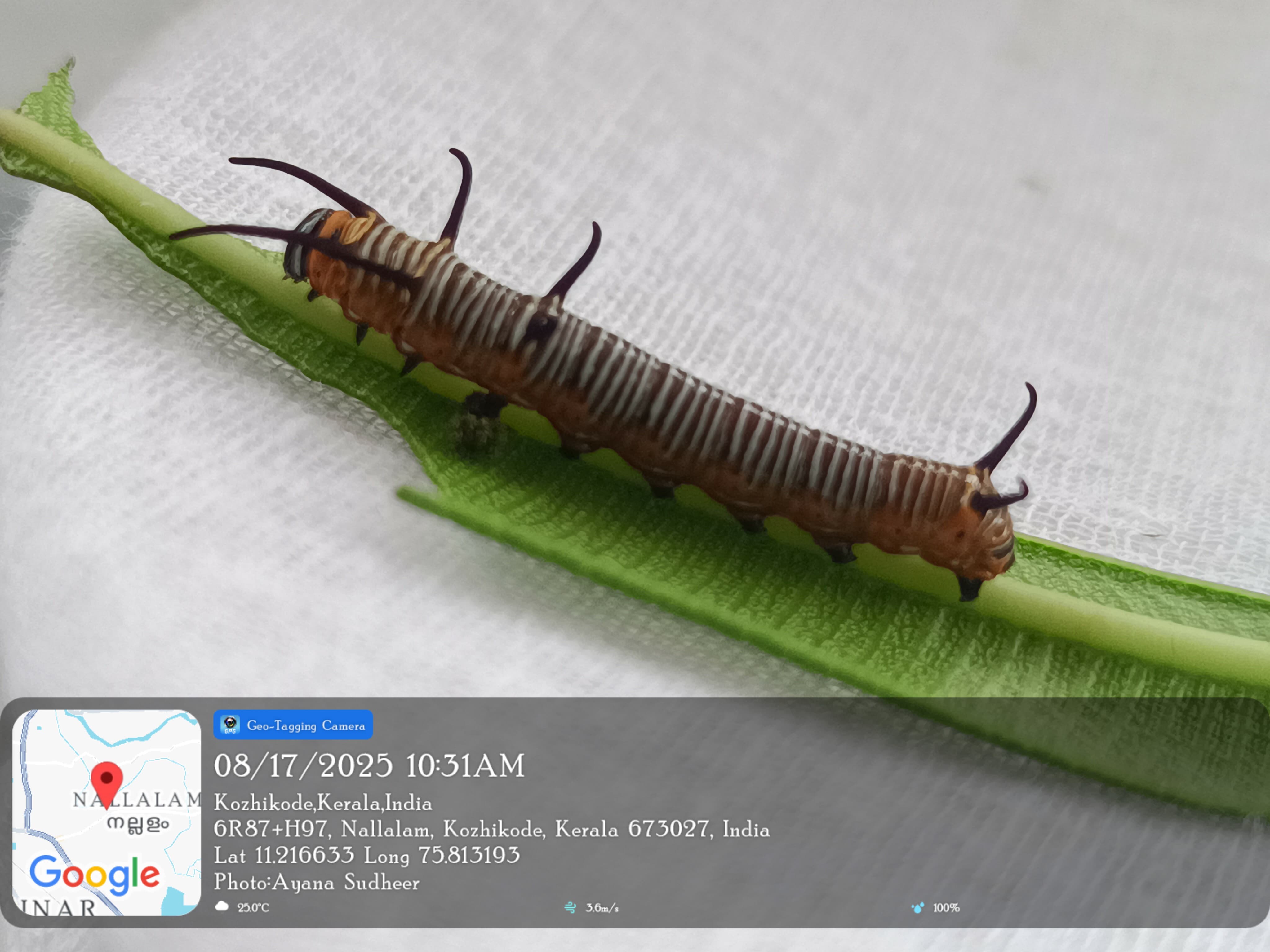
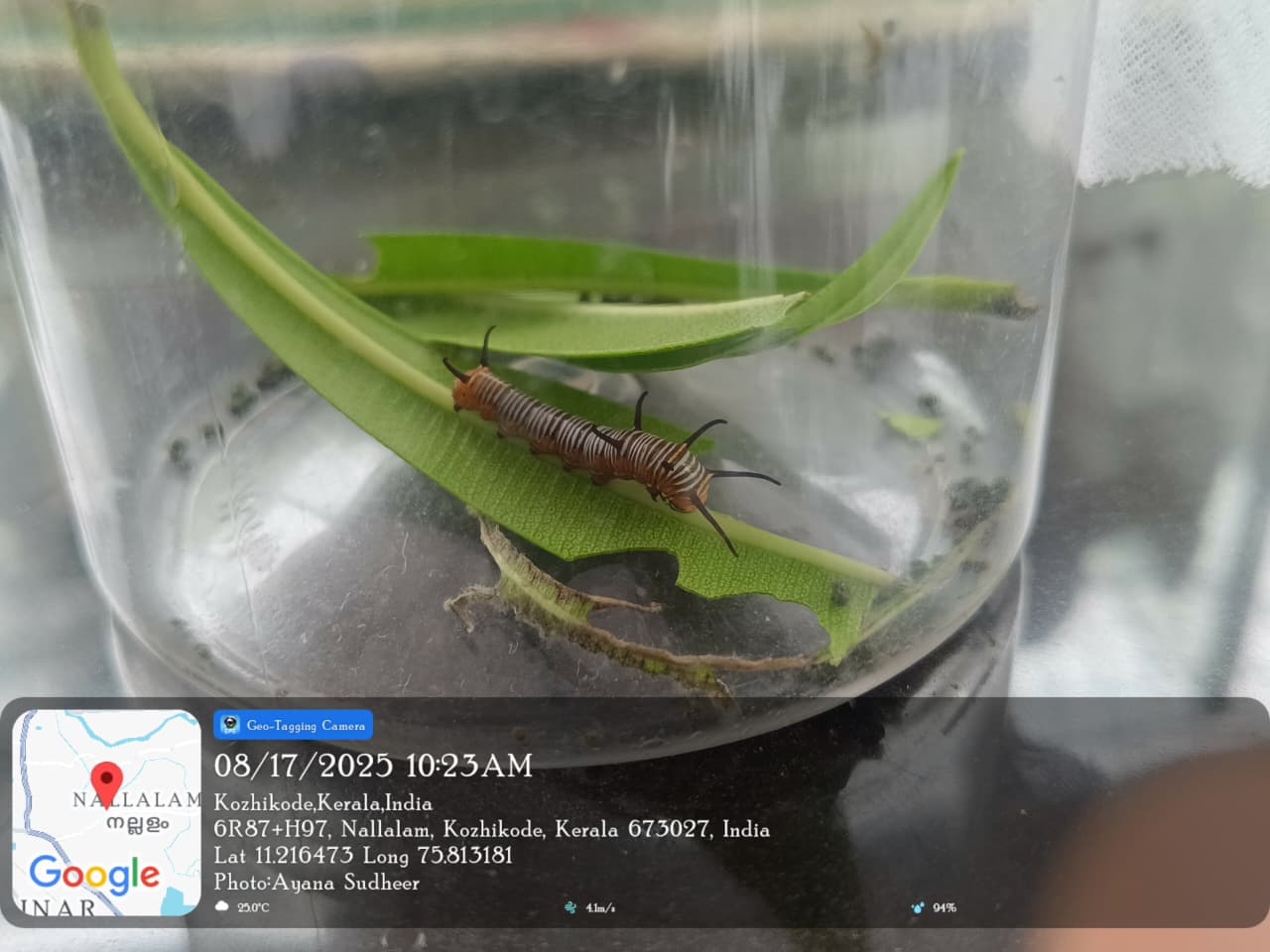
Live observations from Kozhikode, Kerala (shared by Ayana Sudheer), showed a striped caterpillar feeding on leaves inside a container. These direct observations complemented the theoretical designs and made the discussion richer.
 TINKE Moments (This I Never Knew Earlier )
-
Food preference experiments can be controlled with orientation changes, helping to remove bias.
-
Caterpillars might not rely heavily on eyes; instead, they use chemosensory and tactile cues to choose food.
-
The same species of butterfly (Common Mormon) can utilize multiple host plants, raising questions about preference, adaptability, and survival.
-
Citizen scientists can contribute by recording geo-tagged observations, making the data comparable across locations.
 Learning Outcomes
-
I learned how a simple experimental setup (two leaves in a container) can address complex biological questions of choice and preference.
-
I realized that orientation matters—where the caterpillar’s mouth is directed can bias results if not carefully designed.
-
I understood that biology is not only about structures (like where the eyes are) but also about functions and behaviors.
-
Observations from different regions (like Kerala) can strengthen collaborative research across the CUBE network.
 Queries for the Wider Community
 If caterpillars don’t depend much on eyes, what primary sense guides them toward food—smell, taste, or touch?
Could food preference in caterpillars change across their developmental stages (younger instars vs. older instars)?
Do environmental factors (humidity, temperature, time of day) influence caterpillar feeding choices?
What evolutionary advantage does a caterpillar gain by accepting more than one host plant?
 Photographs during Chatshaala

Photographs of Ayana’s steup
 Reference
@KiranKalakotiR @Arunan @SN1261 @Ayana_Sudheer @sakshiconsultant2002 and others.