I did not set out to study a weed. I was only looking at a flowerpot.
In my garden there is a large terracotta pot with a purple-and-green ornamental plant in it. One morning I noticed a thin, delicate plant growing between its leaves, a small stem with feathery side branches that I had never paid attention to. Up close, tiny oval leaves sat in two neat rows along each branchlet. It looked like a miniature fern, but it was not one. It was Phyllanthus, known locally by many names, such as keezharnelli in Malayalam, Bhumi Amla in Hindi, asora lota or asora gos in Assamese, and Bhumyamalaki in Bengali, which had arrived in my pot uninvited.
What it looks like
Phyllanthus is a small, erect, slender herb. Its stem is smooth and green, and its branchlets spread sideways like little feathers. The oblong leaves are arranged alternately, in two rows on either side of each branchlet. This gives the whole branchlet a pinnate look, as if it were a single compound leaf.
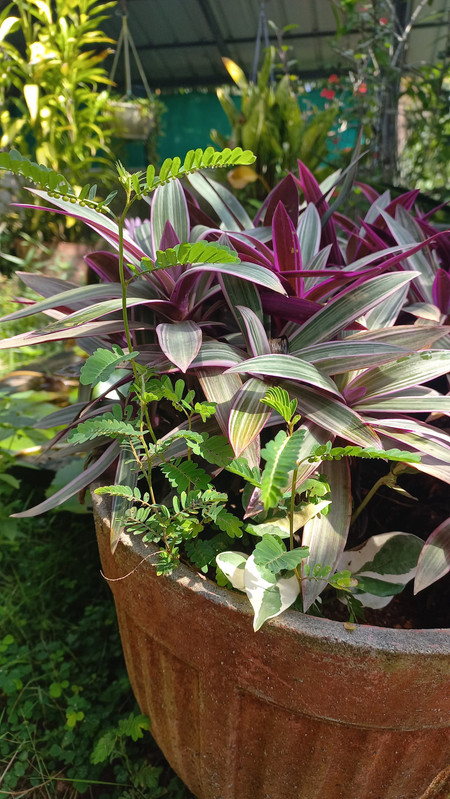
That detail interested me. The arrangement looks pinnate, but the “leaflets” are actually simple leaves sitting on a branchlet. The plant is quietly tricking the eye, which is why careful observation matters more than a quick glance.
The feature that made me sure of the identity is underneath. Tiny, round, green seed capsules hang from the branchlets, directly below the leaf axils. This is how the plant earned its Malayalam name, keezharnelli, roughly “gooseberry underneath.” Once you have seen the row of small green beads beneath the leaves, you cannot mistake it.
Finding it again on campus
A plant seen once can be a coincidence. So I was glad to spot it again at Sree Narayana College Campus, Chempazhanthy, Thiruvananthapuram. At about 10:25 in the morning, I found the same plant—two of them—growing among grasses, small weeds, and other undergrowth in damp, partly shaded soil. The same two rows of leaves and the same hanging capsules told me it was Phyllanthus.
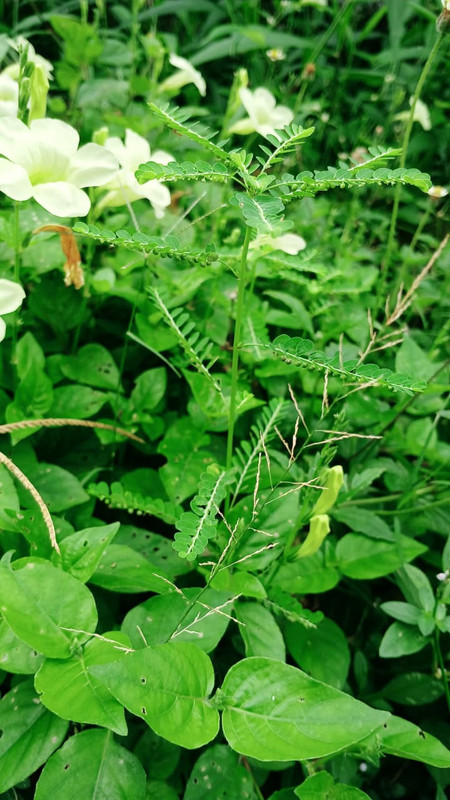
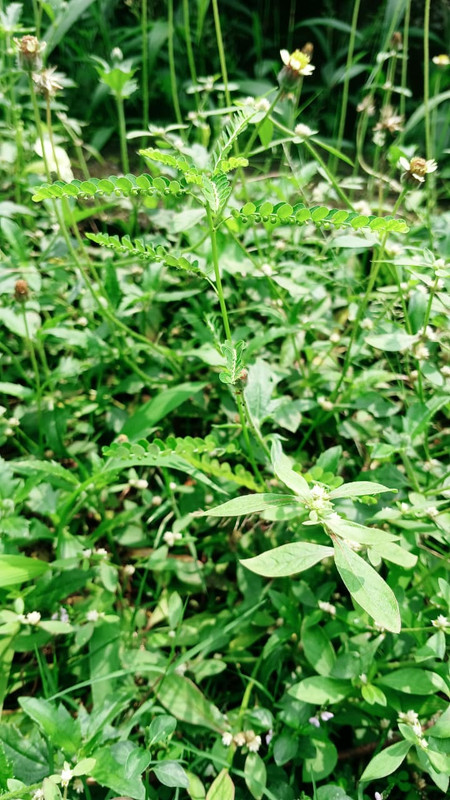
I found it more than once, in different settings: a cultivated pot and the wild undergrowth of a campus. It is a plant that quietly turns up wherever there is a little moisture and a little space.
The surprise: leaves that sleep
The most interesting part came from comparing day and night. In my photographs, the Phyllanthus in the pot looks completely different at two times of day.
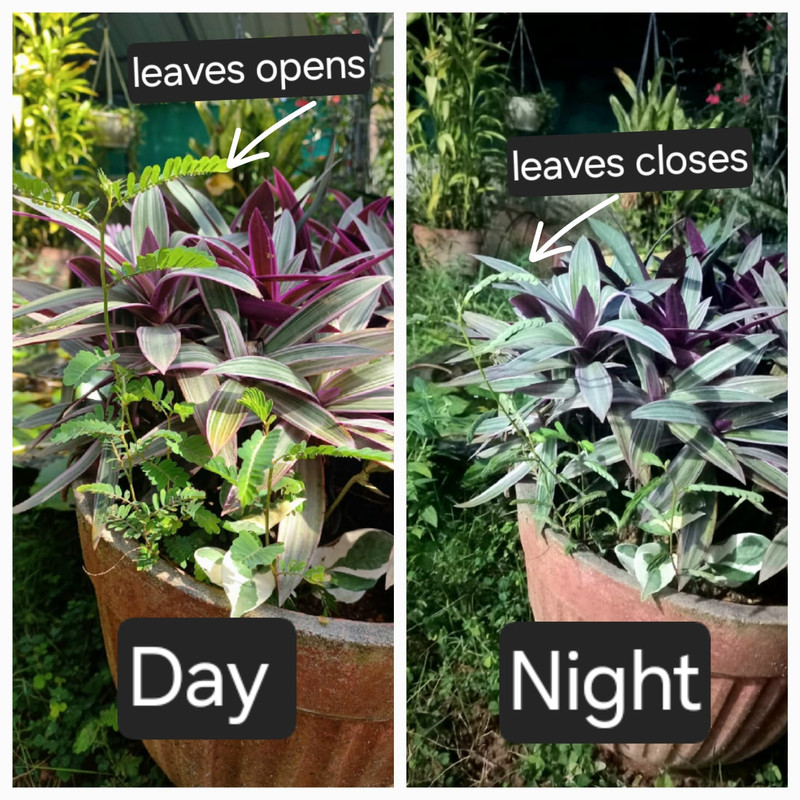
- In daylight, the leaflets spread out flat, open,n and facing the light.
- At night, they fold up along the branchlet, and the whole plant looks narrower and tidier, as if it had tucked itself in.
This is nyctinasty, or “sleep movement.” It is a response to the daily cycle of light and dark, not to a touch, and it is reversible: the leaves close at dusk and reopen at dawn.
The movement is driven by turgor pressure. At the base of the leaves are specialised cells in a structure called the pulvinus. When water moves in and out of these cells, they swell or shrink, and the leaf is pushed open or folded shut. A plant has no muscles, so it manages this movement with water pressure. The timing is guided partly by the plant’s internal circadian clock, which is why such plants keep the rhythm even when conditions change a little.
Why do it at all? There are a few plausible reasons. Open leaves in daylight catch as much light as possible for photosynthesis. Folded leaves at night may lose less water and expose less surface to the cold and to damage. Biologists still discuss the exact benefits, so I would call these good explanations and not settled facts.
Why this matters to me
As a Cubist and a zoology student, I am accustomed to analyzing fine details, and I discovered that this habit is just as rewarding when applied to botany. A plant that had been growing unnoticed in my garden pot revealed itself to have a sophisticated structure, a fascinating nomenclature, and a distinct daily rhythm, all of which transformed my understanding of the “weeds” we often overlook.
It also reminded me that the classroom is not the only place for biology. Pinnate arrangement, circadian rhythms, and turgor pressure are not only chapter headings. They were growing in a flowerpot in my garden and between the weeds on my campus.
This work grew out of the Context2curriculum community, where observations are shared and compared. I am grateful to my collaborators, Manali Bhujade and Aarya Takke, for their encouragement and for the habit of looking more closely. Our small observations are only a beginning, but they have taught me that discovery needs curiosity more than equipment.