 CUBE ChatShaala - Discussion Summary
The CUBE ChatShaala session on 10 February 2026 focused on collaborative analysis of mango flowering data collected across different zones of India during 2020–2021 using the Kobo Toolbox. Cubists , including , Dharmaraj Rathod, and Abhijeet Singh understands the data collection of the mango flowering mapping across India, examined zone-wise variations in flowering patterns, with particular attention to seasonal peaks and regional differences. The discussion highlighted how flower counts varied from August 2020 to 2021 significantly across zones, with Zone 5 showing the highest peak, while Zones 3 and 4 displayed multiple smaller peaks across different months. The Cubist also reflected on the importance of consistent data collection, the challenges of interpreting regional ecological differences, and the need for clear documentation to support long-term comparative studies.
Hypotheses Discussed during Chatshaala by Priti Kanade :
Mango flowering starts in Oct in Thiruvananthapuram Kerala as we move further north in Mumbai, Maharashtra, it starts flowering by Nov, further its starts flowering in Dec in West Bengal and it starts flowering in January in Kashmir which is northernmost part of India
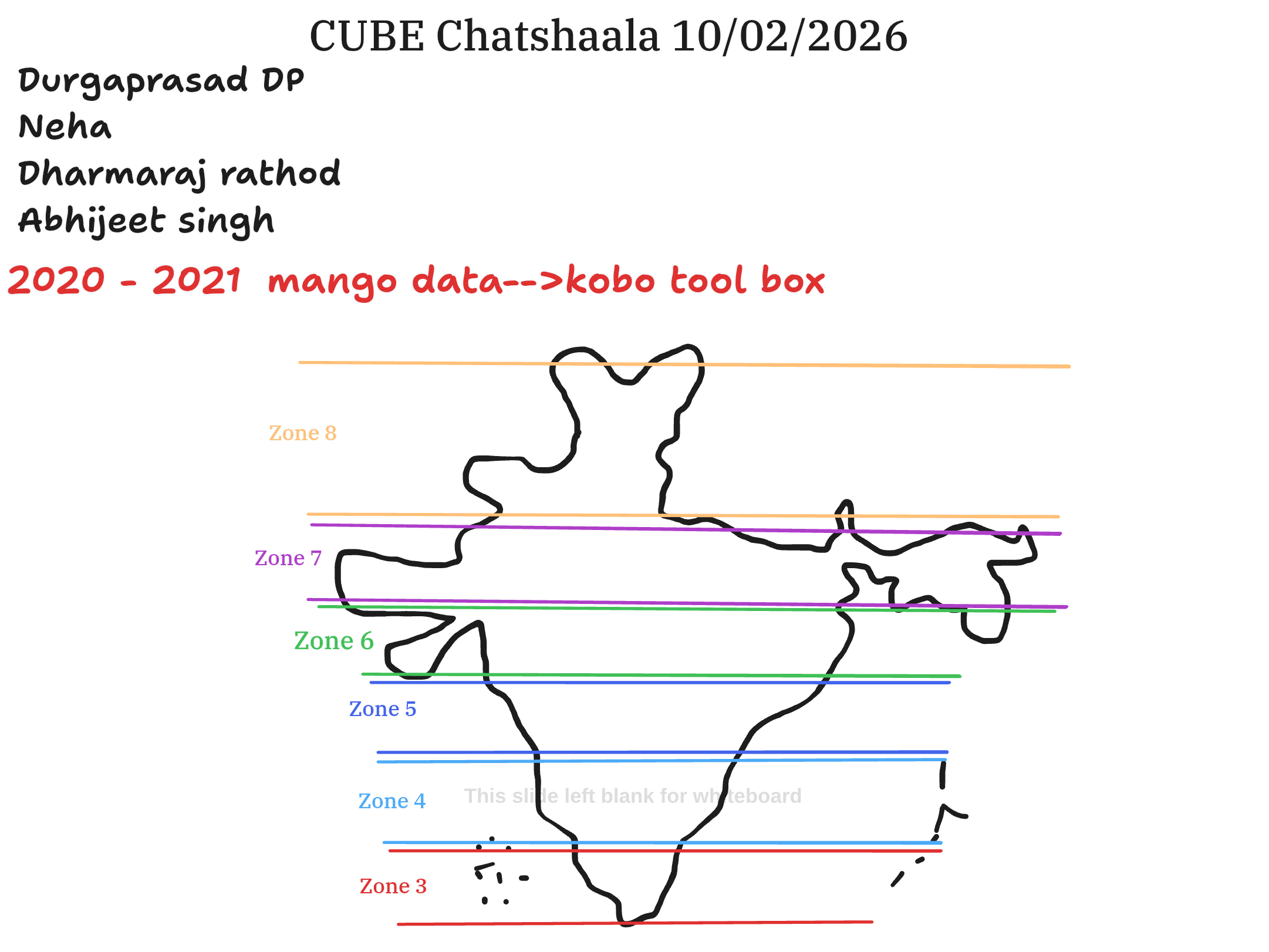
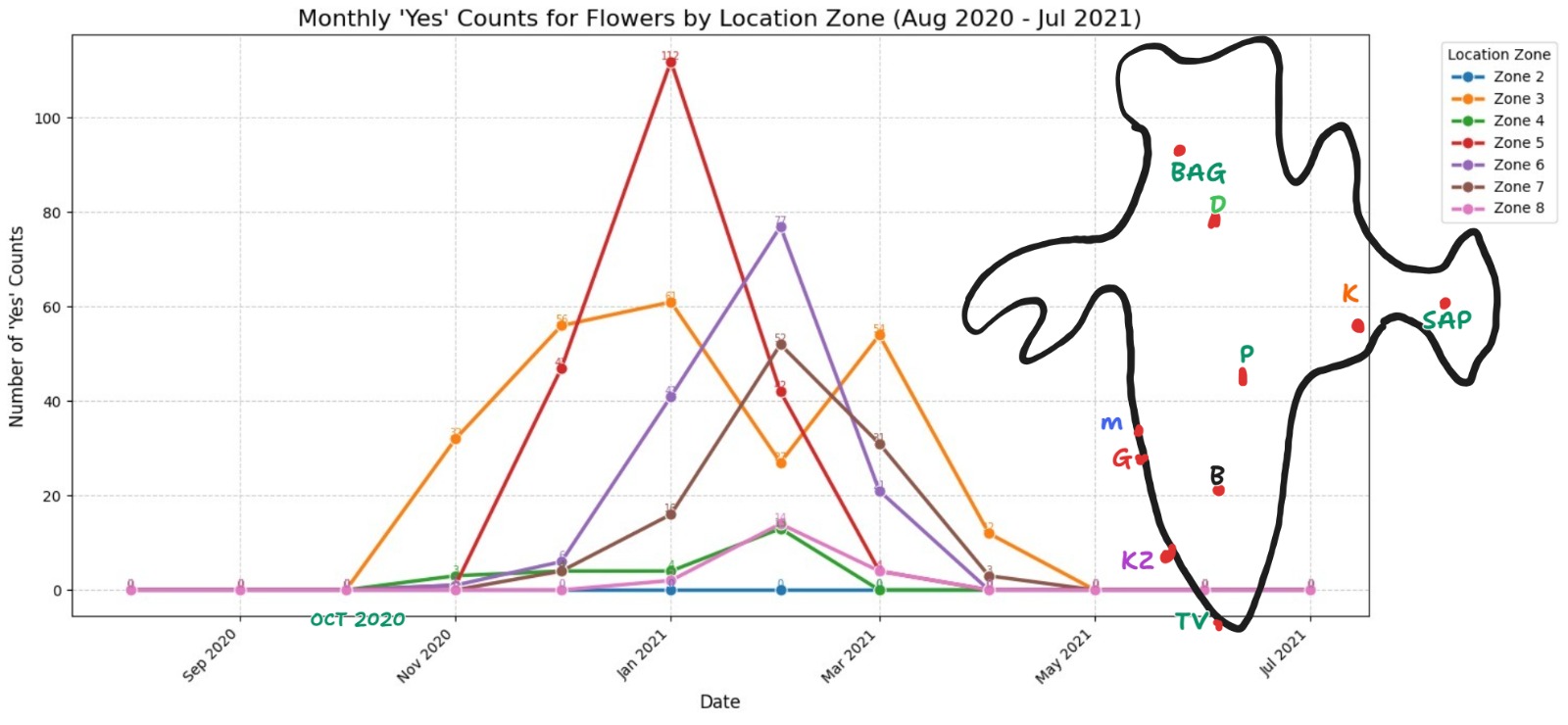
The whiteboard notes emphasized reinforcing the participatory nature of the session. The conversation balanced technical analysis with reflective inquiry, encouraging participants to connect raw data with broader ecological and geographical contexts.
 Provocative Questions
-
Why did Zone 5 exhibit such a sharp peak in January 2021 compared to other zones? Could microclimatic factors or local agricultural practices explain this anomaly?
-
How might differences in flowering patterns across zones influence mango yield and quality in subsequent seasons?
-
What role does community-driven data collection play in ensuring accuracy and reliability across geographically diverse regions?
-
Could the observed peaks in Zones 3 and 4 suggest staggered flowering cycles, and how might this affect pollination dynamics?
-
How can the Kobo Toolbox be further optimized to capture not just “Yes” counts but also qualitative observations that enrich ecological interpretation?
 What I Have Learned
The most important takeaway from this session is the value of collaborative, zone-based data collection in uncovering ecological patterns that might otherwise remain hidden. I learned that peaks in flowering are not uniform across India’s diverse regions, and interpreting these differences requires both quantitative analysis and contextual ecological knowledge. Another key insight is the importance of leaving space—both literally on the whiteboard and figuratively in discussions—for open-ended reflection and collective questioning. This practice ensures that data is not just recorded but meaningfully interrogated.
 TINKE Moments (This I Never Knew Earlier)
-
The sharp contrast between Zone 5’s flowering peak and the more distributed peaks in Zones 3 and 4, revealing unexpected ecological diversity.
-
The potential of simple “Yes” counts to reveal complex seasonal cycles when aggregated across zones.
-
The importance of integrating community observations with formal tools like Kobo Toolbox, bridging grassroots inquiry with structured research.
 Gaps
Gaps
-
Lack of qualitative context: While numerical “Yes” counts are valuable, they miss details such as flower density, tree health, or local climatic conditions.
-
Limited cross-zone comparison: The discussion touched on differences but did not fully explore how zones might interact or influence one another.
-
Documentation gaps: Some data points lacked explanatory notes, making interpretation harder.
 Misconception
A subtle misconception that surfaced was the assumption that flowering peaks directly translate to higher yields. While flowering is a prerequisite, yield depends on multiple factors including pollination success, fruit set, and local environmental stresses. Recognizing this distinction is crucial for accurate ecological and agricultural conclusions.
 Photographs during Chatshaala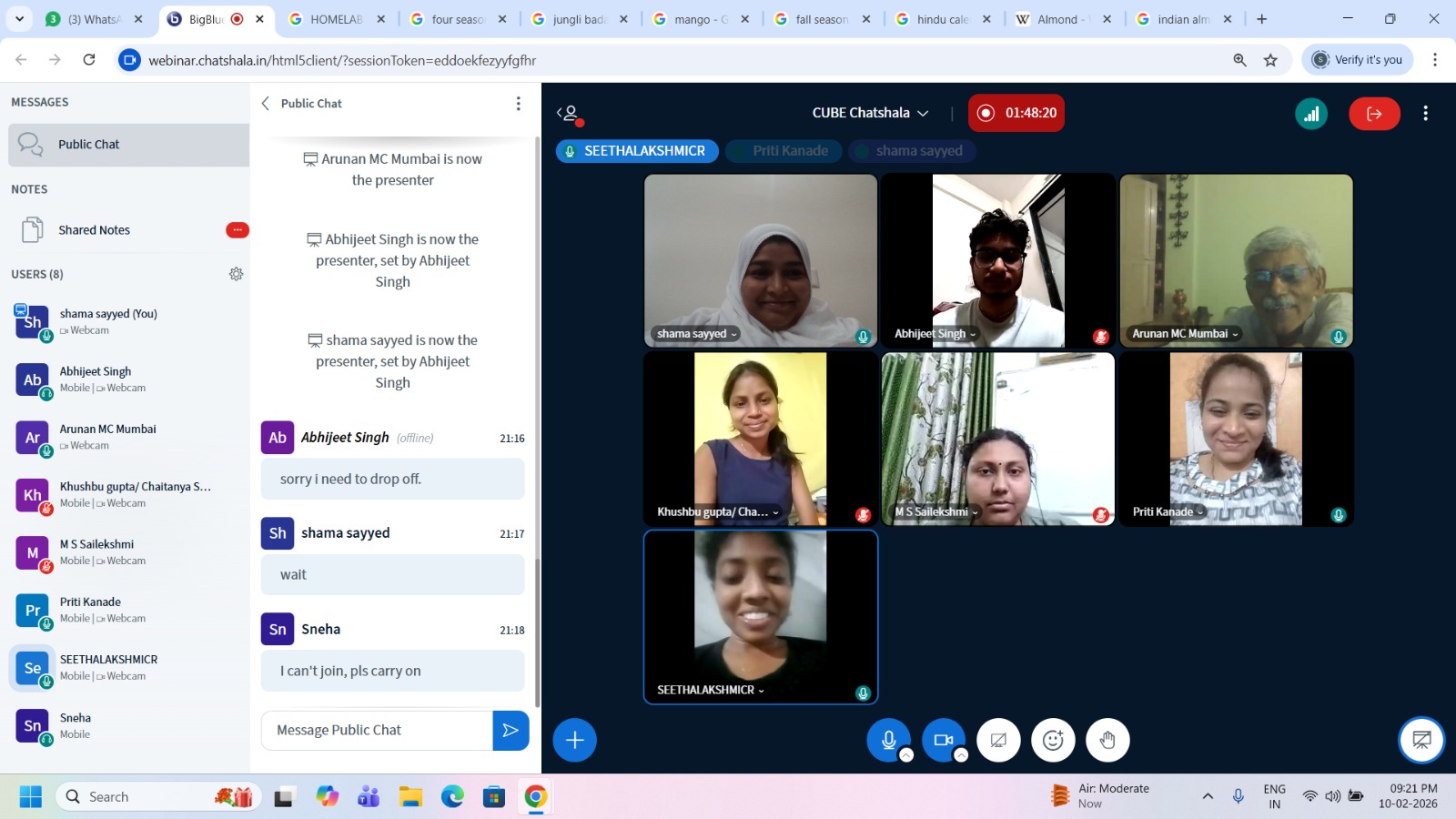
 Reference