 CUBE Chatshaala - Discussion Summary
The section explored the diverse roles of microorganisms in human welfare, focusing on six major areas:
-
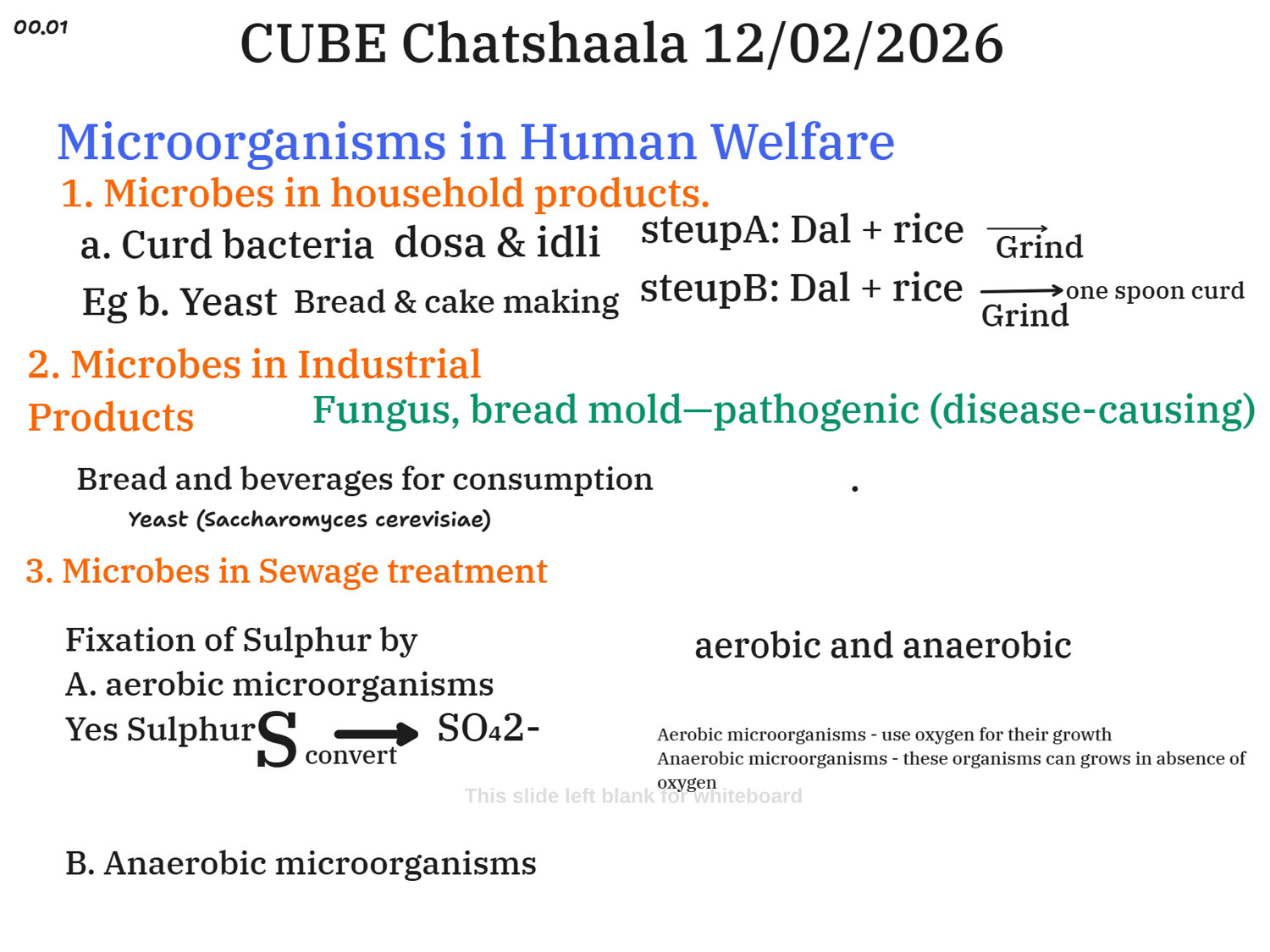
Microbes in Household Products
- The lactic acid bacteria found in curd are essential for the fermentation of dosa and idli batter.
- Yeast is central to bread and cake making, contributing to texture and flavor.
-
Microbes in Industrial Products
- Yeast (Saccharomyces cerevisiae) is used in alcohol and beverage production.
- Certain fungi are involved in industrial processes, though some can be pathogenic.
-
Microbes in Sewage Treatment
- Aerobic microbes oxidize sulfur compounds into sulfates.
- Anaerobic microbes thrive without oxygen, aiding in decomposition and nutrient cycling.
-
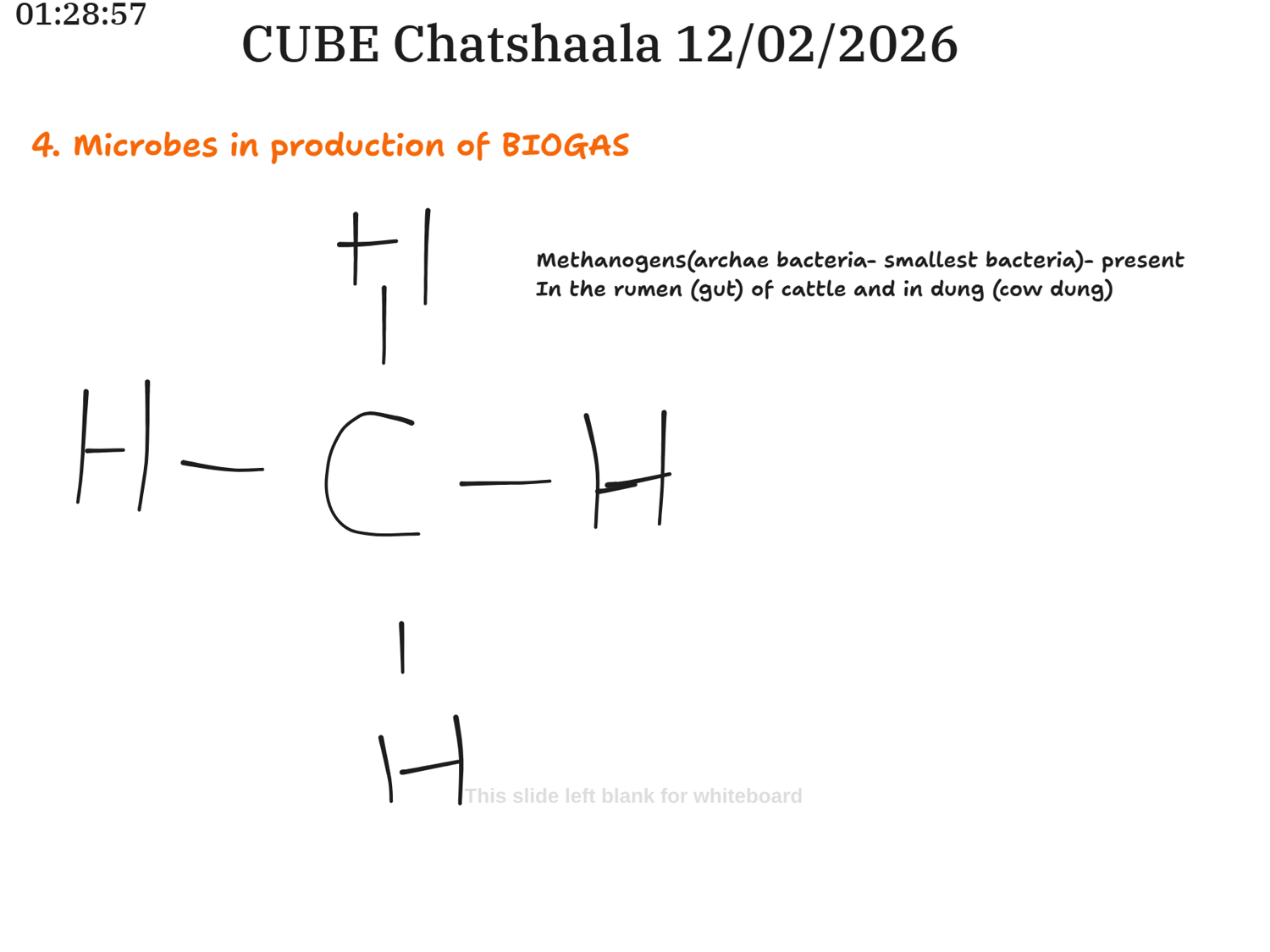
Microbes in Biogas Production
- Methanogens (archaea) found in cattle rumen and dung produce methane (CH₄), a key component of biogas.
-
Microbes as Biocontrol Agents
- Beneficial microbes suppress plant pathogens, reducing reliance on chemical pesticides.
-
Microbes as Biofertilizers
- Nitrogen-fixing bacteria and phosphate-solubilizing microbes enhance soil fertility and crop yield.
The discussion highlighted both practical applications (food, energy, agriculture) and ecological significance (waste management, sustainability).
 Provocative Questions
-
How does the addition of curd bacteria accelerate fermentation in dosa batter compared to natural fermentation?
-
Could methanogens be harnessed more efficiently to produce renewable energy at scale?
-
What are the risks of using pathogenic fungi in industrial processes, and how can they be
mitigated? -
In sewage treatment, how do aerobic and anaerobic microbes complement each other to ensure effective waste breakdown?
-
Can biocontrol agents fully replace chemical pesticides, or do they work best in integrated pest management systems?
-
How might biofertilizers reshape modern agriculture in the face of climate change and soil degradation?
 What I Have Learned
-
Microorganisms are indispensable in everyday life, from food preparation to environmental sustainability.
-
Methanogens represent a fascinating link between microbiology and renewable energy.
-
The balance between beneficial and harmful microbes in industrial contexts requires careful
monitoring. -
Biofertilizers and biocontrol agents offer eco-friendly alternatives to chemical inputs, aligning with sustainable agriculture goals.
 TINKE Moments (This I Never Knew Earlier)
-
Integration Gap: While microbes are powerful tools, discussions revealed uncertainty about how traditional practices (like curd fermentation) can be scientifically optimized for broader use.
-
Energy Potential: The role of methanogens in biogas sparked curiosity but also highlighted the challenge of scaling up biogas plants effectively.
-
Pathogen Risk: The mention of fungi in industrial products raised concerns about contamination and safety protocols.
-
Agricultural Adoption: Despite the promise of biofertilizers, there was recognition that farmers may hesitate to adopt them without clear evidence of yield stability.
 Gaps and Misconceptions
-
Some cubists assumed all fungi used in industry are safe, overlooking pathogenic risks.
-
There was limited discussion on the economic feasibility of biogas production compared to conventional fuels.
-
The role of microbes in sewage treatment was sometimes oversimplified, ignoring the complexity of microbial interactions.
-
A misconception emerged that biofertilizers alone can replace chemical fertilizers, whereas in practice they often need to be part of integrated nutrient management.
 Photographs during Chatshaala
 Reference