CUBE ChatShaala Meeting Summary – 20th July 2025
 Session Overview: Understanding Moina Culture and the Evolution of TCDS
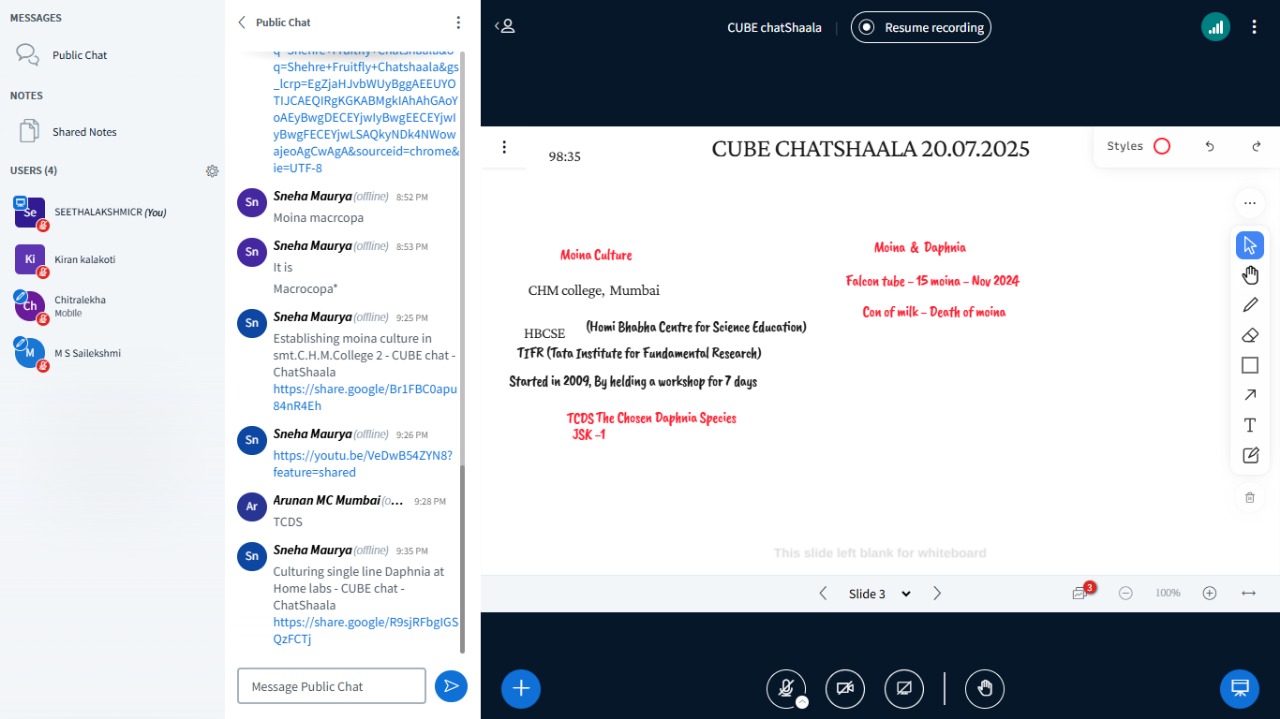
The session commenced with an engaging discussion on the culture and maintenance of Moina, a freshwater zooplankton, often used as a model organism in biological studies. The Moina Culture experiment from CHM College, Mumbai was highlighted, showcasing collaboration with HBCSE (Homi Bhabha Centre for Science Education) and TIFR (Tata Institute of Fundamental Research) .
It was noted that CUBE began its journey in 2009, with a 7-day foundational workshop, eventually evolving into a nationwide collaborative movement.
A central focus of the meeting was the initiative titled:
TCDS – The Chosen Daphnia Species, a grassroots research model driven by undergraduate students. The JSK-1 strain (possibly a specific Moina or Daphnia variant) was referenced, underlining the potential for long-term monitoring and evolutionary tracking across CUBE labs in India.
 Observations from Recent Experiments
Moina and Daphnia species were cultured in Falcon tubes. A batch from November 2024 containing 15 Moina individuals was mentioned.
However, a mortality event occurred when milk was added to the container — suggesting a toxic effect or unsuitable culture condition. This incident prompted a discussion on the importance of controlled environmental variables in microcrustacean culture experiments.
 Geographic and Network Overview
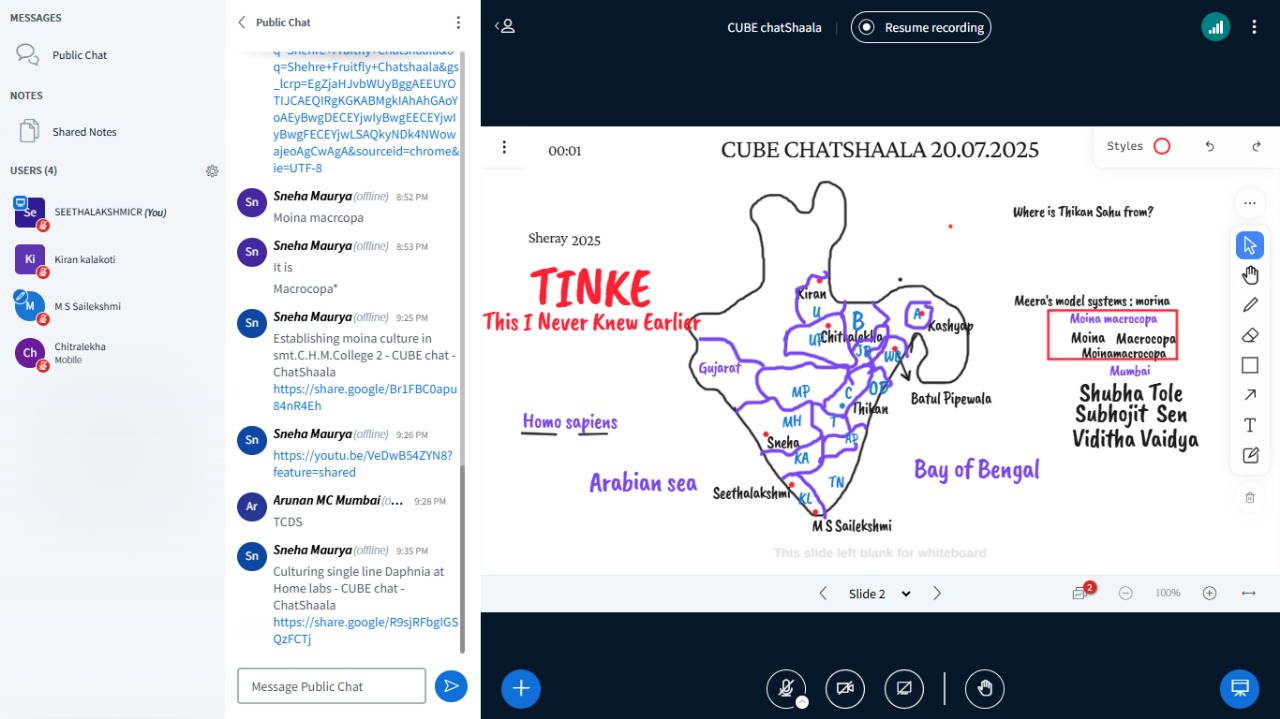
The second slide provided a map of India, pinpointing various CUBE participants across the country. Names such as Batul Pipewala, Seethalakshmi, Kiran, Sneha, and Thilan appeared, indicating a vibrant and geographically dispersed student-led research network.
The model system highlighted for Meera was Moina macrocopa, aligning with the session’s theme of employing accessible organisms to address major biological questions.
 Key Phrases and Themes
TINKER : “This I Never Knew Earlier” — A memorable slogan that captures the spirit of exploration and curiosity driving the CUBE community.
The intersection of Moina studies and neuroscience research, subtly indicated by names like Shubha Tole, Subhojit Sen, and Viditha Vaidya, might suggest interdisciplinary connections forming within the network.
 Questions from Today’s Whiteboard
- Why did the Moina die after milk was added?
- What components in milk might be harmful to freshwater microcrustaceans?
- What makes a Daphnia or Moina species “Chosen”?
- Is JSK-1 genetically or behaviorally distinct from other strains?
- What is the long-term goal of TCDS?
- Are students trying to track evolution or adaptation across labs?
- What criteria are used to choose model organisms in CUBE?
- Are they chosen based on availability, ease of observation, or something else?
- How do regional climates affect Moina culture success?
- For instance, would the same culture conditions work equally well in Kerala and Punjab?
 What I Personally Learned from Today’s ChatShaala
Today’s session beautifully reinforced how local observations and low-cost experiments can drive real biological inquiry. The concept of TCDS — selecting and tracking a species collaboratively across India — is not only scientifically rich but also socially powerful. It mirrors how science can be democratized and decentralized.
The discussion around the death of Moina due to milk was a reminder of the importance of every component in an experimental setup — even seemingly benign ones. Lastly, I was inspired by the map — it shows that science isn’t confined to labs but lives in conversations between students in villages, towns, and cities.
 Reference
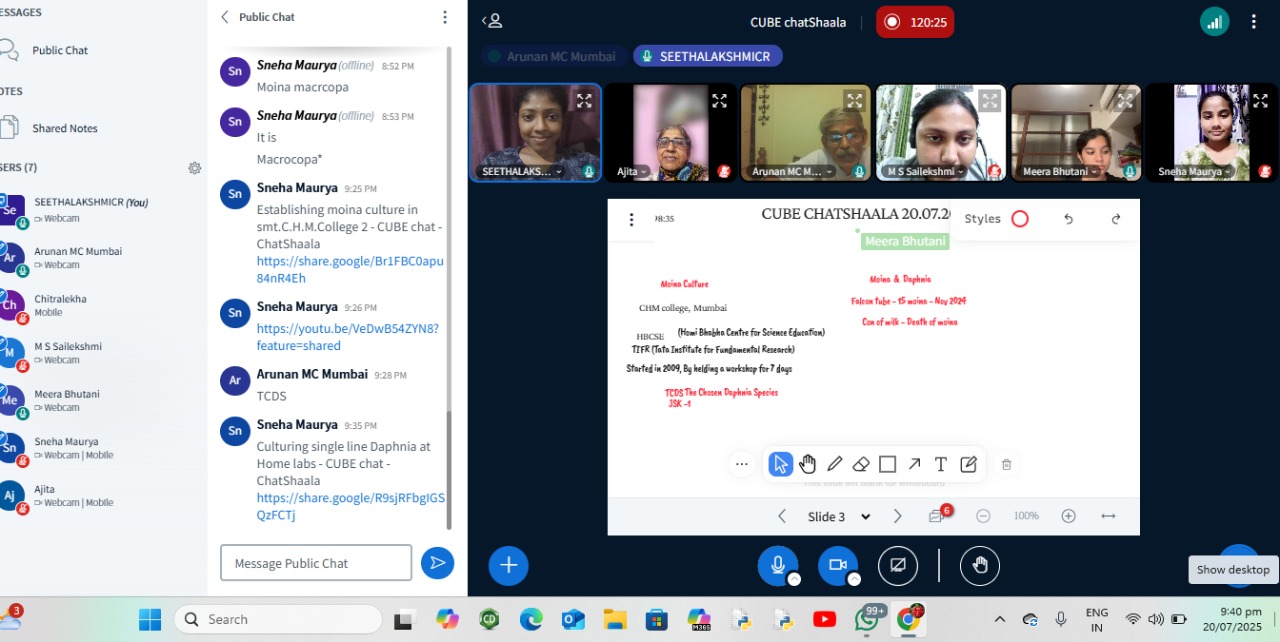
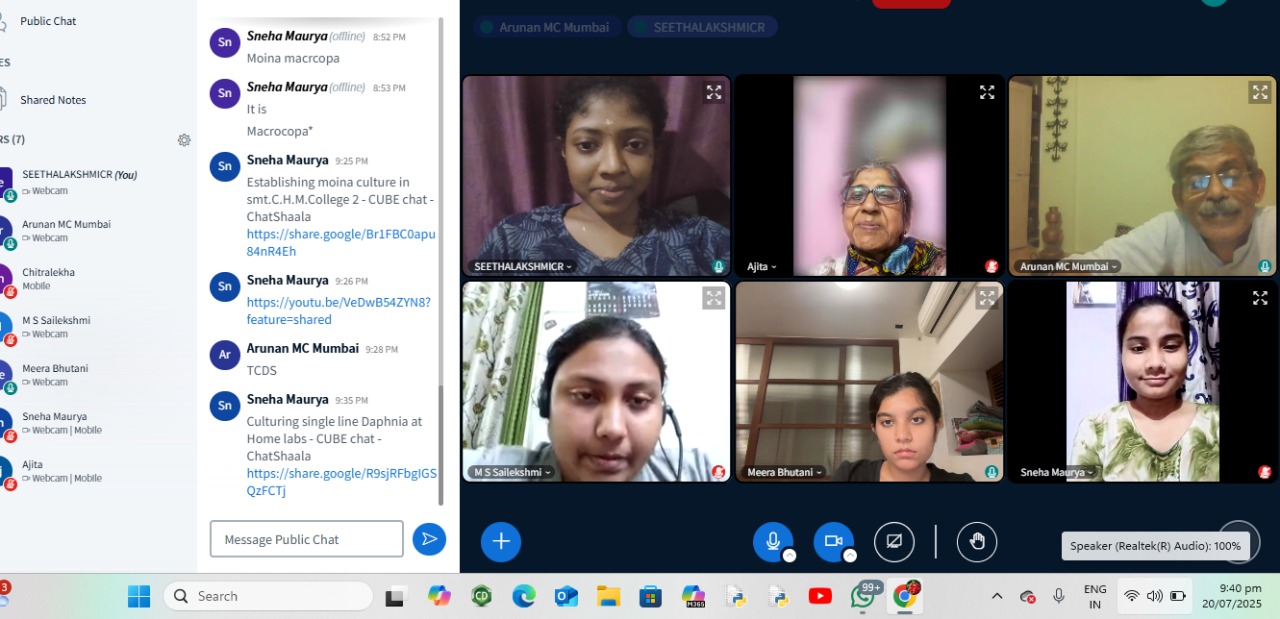
 group photographs during Chatshaala