 CUBE ChatShaala Meeting Summary – 08 December 2025
Theme: Butterfly Gardens in Colleges (NEP 2020 Initiative)
Today’s discussion centered on a fundamental yet often overlooked question: Are butterflies visiting plants only for nectar? This inquiry guided the group toward understanding the dual needs of butterflies—nectar plants for adults and host plants for egg laying and caterpillar development.
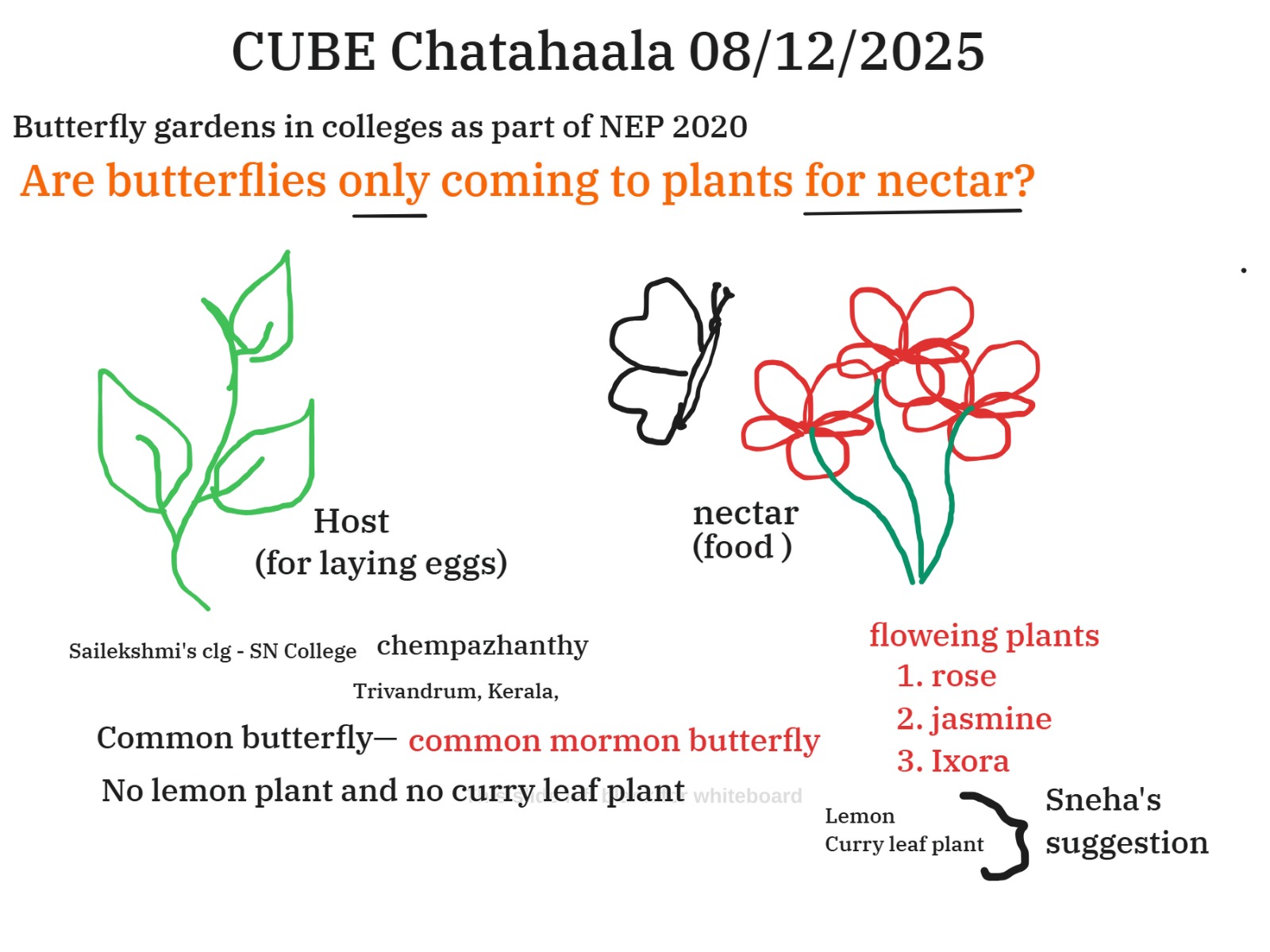
Participants explored observations from Sailekshmi’s campus (SN College, Chempazhanthy, Trivandrum), where the common Mormon butterfly was frequently seen even though lemon and curry leaf, the plant hosts for its caterpillars, were absent. The garden currently has roses, jasmine, and Ixora, all nectar-providing plants, indicating that butterflies may visit for food but lack suitable host plants to complete their life cycle.
Sneha suggested that planting host species like lemon and curry leaf could help attract breeding adults, thus converting the space from a “butterfly visiting garden” into a true “butterfly sustaining garden.”
The discussion clarified that floral abundance alone cannot support butterfly populations. Without host plants, gardens act as temporary feeding stations rather than habitats.
 Key Insights (What I Learned)
-
Adult butterflies need nectar plants, but they cannot lay eggs on these flowering plants unless they serve as hosts.
-
A successful butterfly garden must balance nectar sources and host plants.
-
Butterfly presence alone doesn’t indicate habitat success; egg laying and caterpillar development are the real markers of a functioning ecosystem.
-
Observations from campuses can provide valuable insights into how local species interact with planted flora.
 TINKE Moments (Things I Never Knew Earlier )
-
A butterfly garden without host plants is incomplete—something many institutions overlook.
-
The common Mormon butterfly depends on a narrow group of plants from the Rutaceae family, such as citrus and curry leaf.
-
Seeing butterflies doesn’t guarantee breeding; they might simply be “nectar tourists.”
 Gaps and Misconceptions Identified
-
Misconception: Butterflies come only for nectar.
Clarification: They also seek specific host plants to lay eggs. -
Gap: Many gardens focus only on flowering plants without considering the ecological requirements of the butterflies they hope to attract.
-
Misconception: Any plant-rich environment automatically supports butterfly life cycles.
Reality: Host specificity is extremely high among butterfly species. -
Gap: Lack of documentation of egg-laying behavior and caterpillar presence on campuses.
 Provocative Questions for the Community
-
Are our college butterfly gardens truly supporting butterfly life cycles, or merely offering them quick snacks?
-
If host plants are missing, can we still claim to have a butterfly-friendly campus?
-
Are we planting flowers for butterflies, or just for aesthetics?
-
Should we evaluate butterfly gardens by the number of flowers—or by the presence of eggs and larvae?
-
Have we matched our campus plant choices to the butterflies we commonly observe?
 Photographs during Chatshaala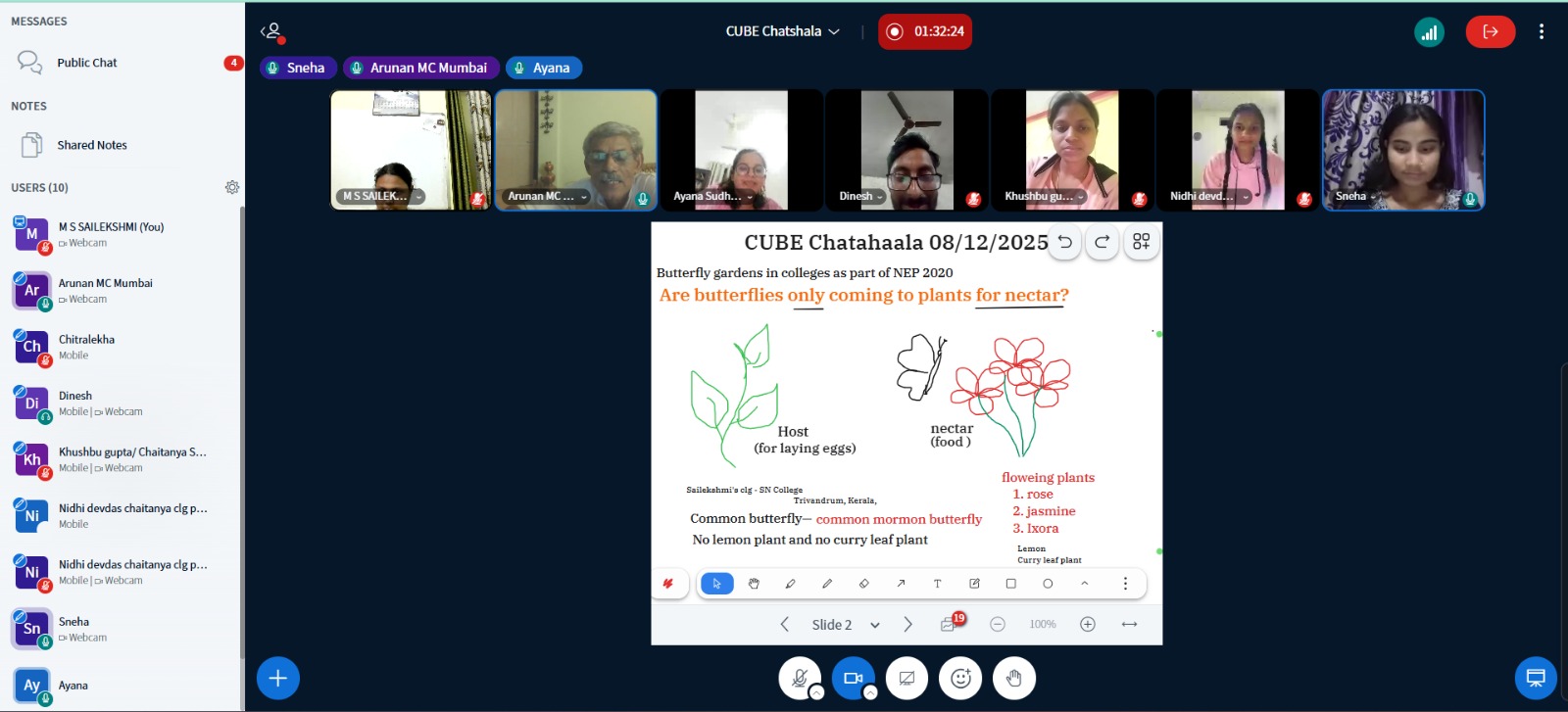

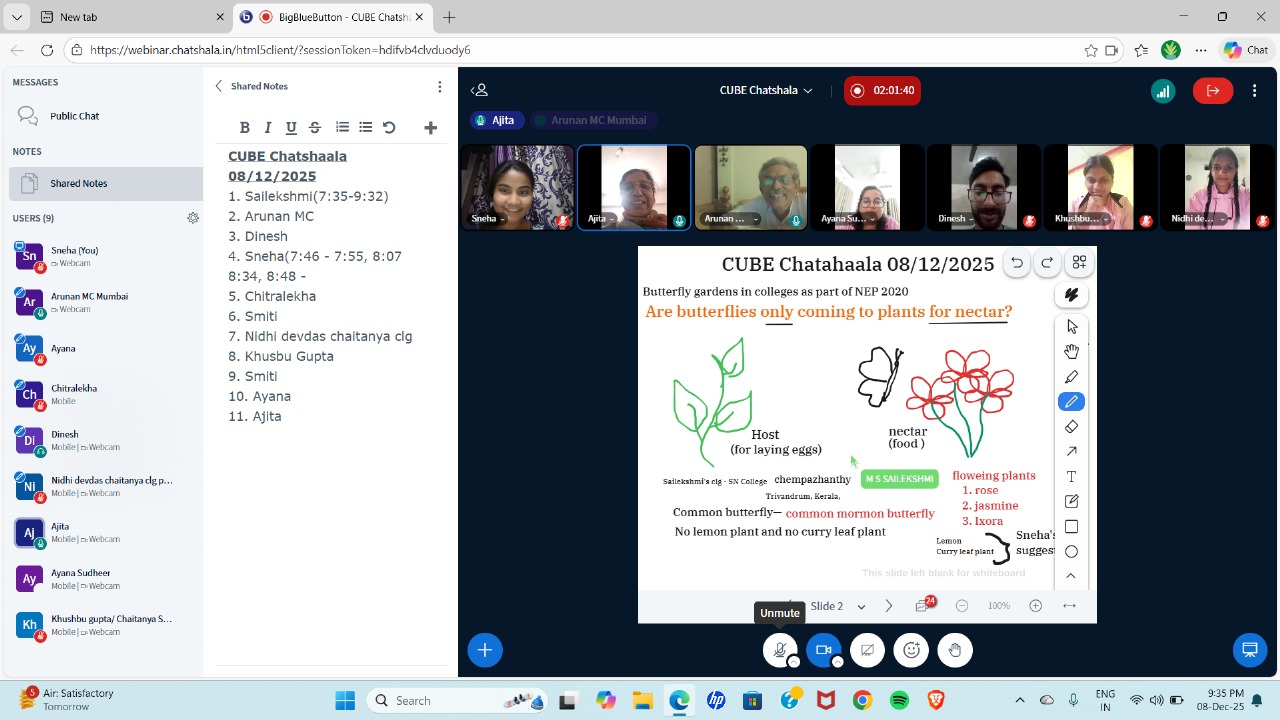
 Reference