 CUBE ChatShaala – Discussion Summary (06 August 2026)
Participants: Sailakshmi, Manali Bhujade, Chaudhary Shamsiya, Arunan Sir, Ashfan Shaikh, Pushkar Agiwle, Chitralekha, Niharika Baghari, Mayur, Himanshu Joshi, Divya, Ray, Dhananjay Dinesh Patil, Aarya Takke, and Kashyap.
The ChatShaala focused on developing a HomeLab system for growing leguminous plants to observe root nodules, which contain nitrogen-fixing bacteria. The discussion emphasized selecting suitable plant species such as soybean, green gram, and fenugreek for root nodule studies. Mustard was also listed in the setup but served as a comparison because it is a non-leguminous plant and does not normally develop root nodules.
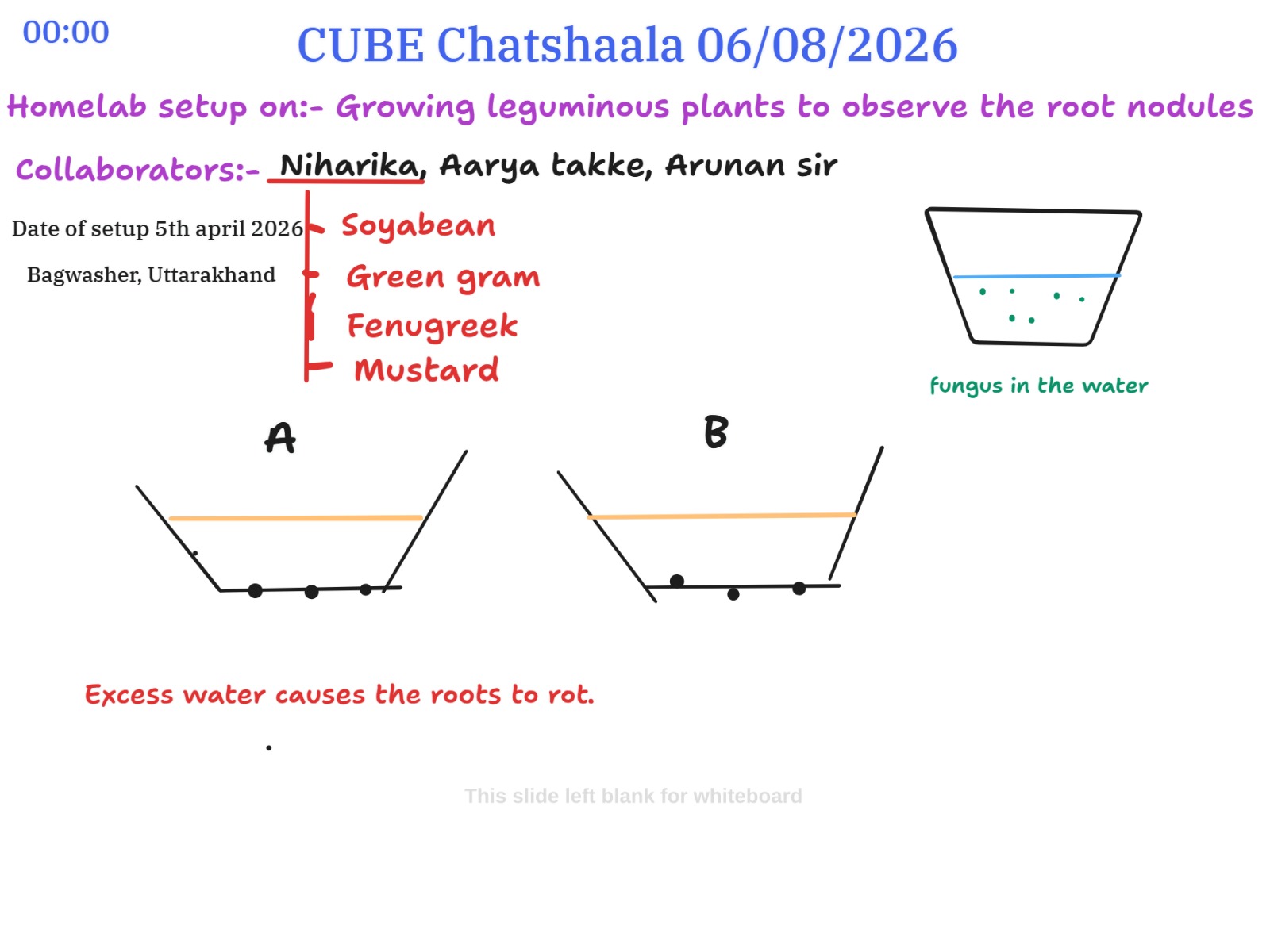
A major part of the discussion was about maintaining the correct water level in the growth container. The whiteboard illustrated different container arrangements and highlighted that excess water leads to root rot by reducing oxygen availability around the roots. Participants discussed keeping the medium moist rather than waterlogged so that healthy roots and nodules can develop.
Another important observation was the appearance of fungal growth in standing water. This served as a reminder that stagnant water creates favorable conditions for fungal contamination, which can interfere with plant growth and biological observations. Proper drainage, careful watering, and regular monitoring were emphasized as simple but effective preventive measures.
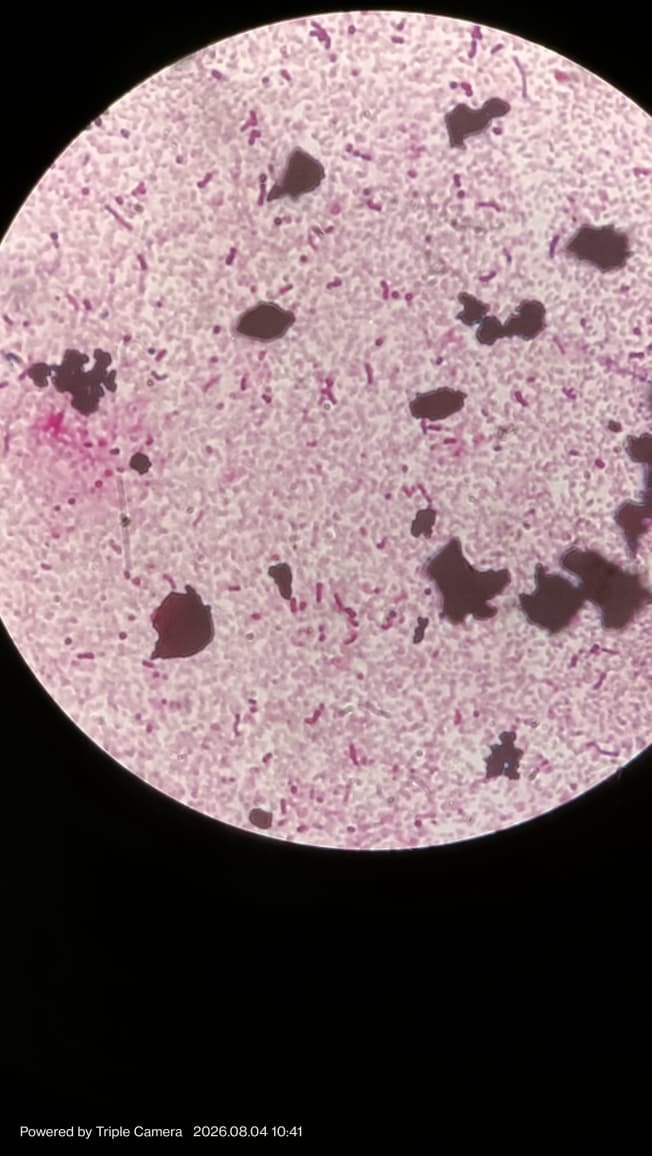
The session also connected plant observations with microbiological investigations. The microscopic image discussed during the meeting showed rod-shaped bacteria consistent with earlier work on root nodules, reinforcing how microscopic observations complement HomeLab experiments. Rather than treating microscopy and plant cultivation as separate activities, the discussion encouraged integrating both approaches to better understand plant–microbe interactions.
Overall, the meeting reflected the CUBE philosophy of learning biology through simple, low-cost, collaborative investigations that encourage observation, questioning, experimentation, and discussion rather than following fixed laboratory recipes. This approach aims to bridge the gap between classroom biology and authentic biological research.
 Provocative Questions
-
Why do legumes form root nodules while mustard does not?
-
How does excess water reduce oxygen availability to roots?
-
What changes occur inside a root nodule when the soil becomes waterlogged?
-
Which leguminous plant produces visible root nodules most rapidly under HomeLab conditions?
-
How can fungal contamination be minimized without using chemical fungicides?
-
Can root nodules continue fixing nitrogen if the roots begin to rot?
-
What microscopic characteristics distinguish Rhizobium from other soil bacteria?
-
How would root nodule formation differ in nutrient-rich soil compared with nitrogen-poor soil?
-
Which environmental factors—temperature, moisture, light, or soil type—most strongly influence nodule formation?
-
How can citizen scientists across different CUBE centres compare their observations using standardized methods?
 What I Have Learned
Root nodules develop only when healthy legume roots interact successfully with nitrogen-fixing bacteria.
Maintaining the correct moisture level is critical; excessive watering can damage roots before nodules develop.
Standing water encourages fungal growth, making careful watering an essential part of every HomeLab experiment.
Simple experimental setups can generate meaningful biological observations when they are carefully monitored.
Microscopic examination strengthens field observations by revealing the microorganisms associated with root nodules.
Scientific learning becomes more effective when participants continuously observe, question, discuss, and improve their experimental methods together.
 TINKE Moments (This I Never Knew Earlier)
- Water Management
A small mistake in watering can completely change the outcome of the experiment.
This highlighted the importance of controlling environmental variables rather than focusing only on plant growth.
- Fungus as an Indicator
Fungal growth was not merely a contamination problem; it became an indicator that the experimental conditions were unsuitable.
Such unexpected observations can provide valuable scientific clues.
- Connecting HomeLab with Microscopy
Observing plants in the HomeLab and then examining bacteria microscopically demonstrated how different methods complement each other in biological research.
- Choosing the Right Model Organism
Comparing legumes with a non-legume such as mustard helps clarify the biological significance of root nodules and encourages hypothesis-driven learning.
 Gaps
Gaps
-
The exact composition of the growing medium was not discussed.
-
No standardized watering schedule was presented.
-
Methods for confirming that nodules contain active nitrogen-fixing bacteria were not explained.
-
Quantitative measurements such as nodule number, size, or plant growth were not defined.
-
Procedures for preventing contamination under HomeLab conditions need further discussion.
 Misconceptions
" More water helps plants grow faster."
- Excess water often reduces oxygen around roots, leading to root rot instead of healthy growth.
“All plants produce root nodules.”
- Root nodules are characteristic of many legumes and are generally absent in plants such as mustard.
“Any bacteria found near roots are nitrogen-fixing bacteria.”
- Many different microorganisms inhabit the root zone; only specific symbiotic bacteria form effective nitrogen-fixing nodules.
“Fungal growth is always harmless.”
- Fungal contamination can alter experimental conditions, damage seedlings, and reduce the reliability of observations.
 Photographs during Chatshaala

 Reference