 CUBE ChatShaala - Discussion Summary
Date: 29th April 2026
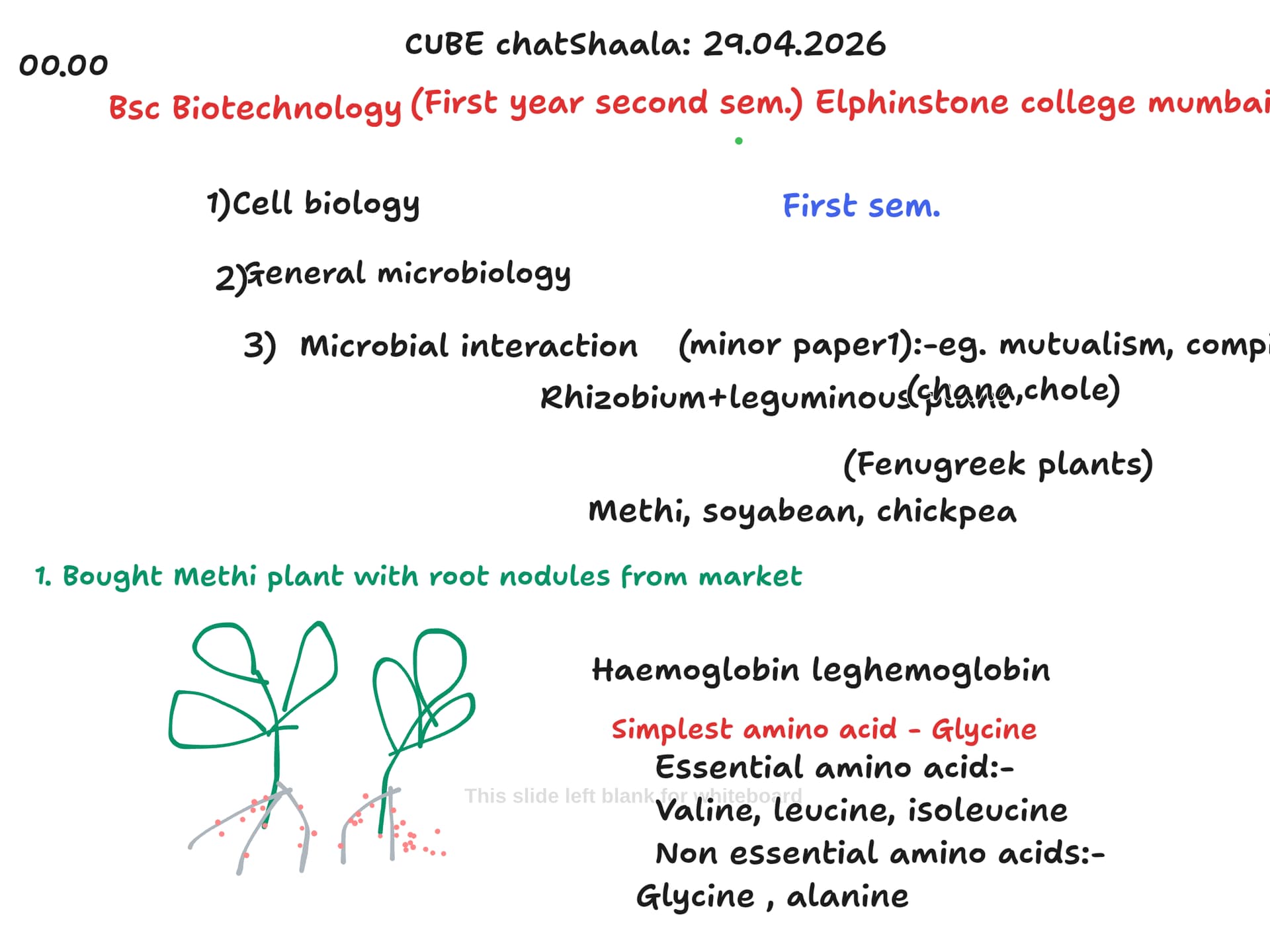
The session opened with a clear focus on foundational topics for first‑year BSc Biotechnology students: cell biology, general microbiology, and microbial interactions, with particular emphasis on the mutualistic relationship between Rhizobium bacteria and leguminous plants. Participants reviewed classroom notes and a simple field- and home-lab plan that tied theory to practice.
Key points covered:
-
**Mutualism between Rhizobium and legumes.**The group discussed how Rhizobium forms root nodules on leguminous hosts (examples cited: fenugreek/methi, chickpea, soybean, green gram). ** A purchased methi plant with visible root nodules was used as a concrete example to illustrate nodule formation and nitrogen fixation.
-
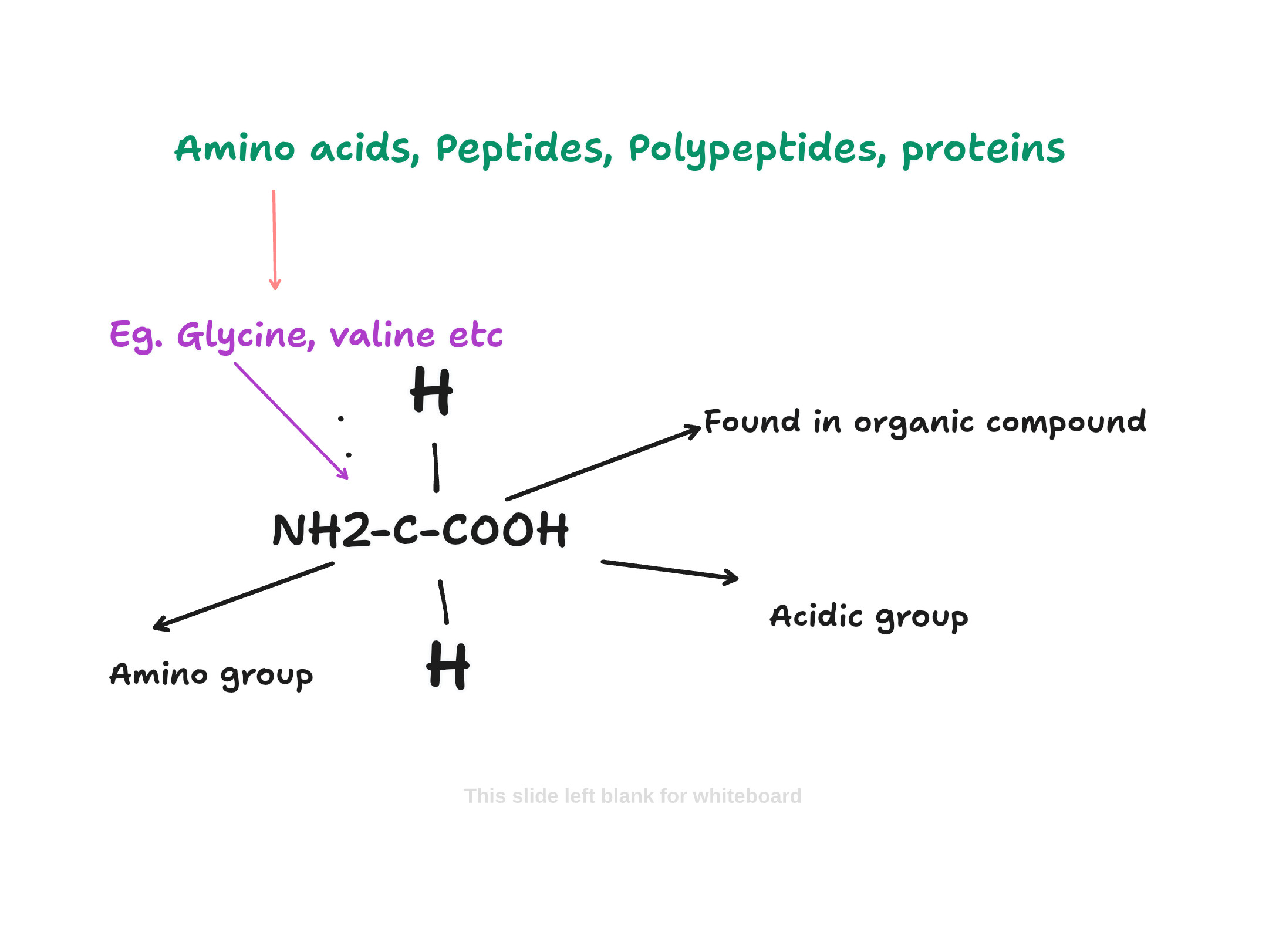
Biochemical context. The discussion linked plant–microbe interaction to biochemistry by contrasting hemoglobin and leghemoglobin, and by reviewing amino acid basics: the general amino acid structure (amino group, central carbon, carboxyl group), examples such as glycine (noted as the simplest amino acid), and lists of essential (valine, leucine, isoleucine) versus non‑essential (glycine, alanine) amino acids.
-
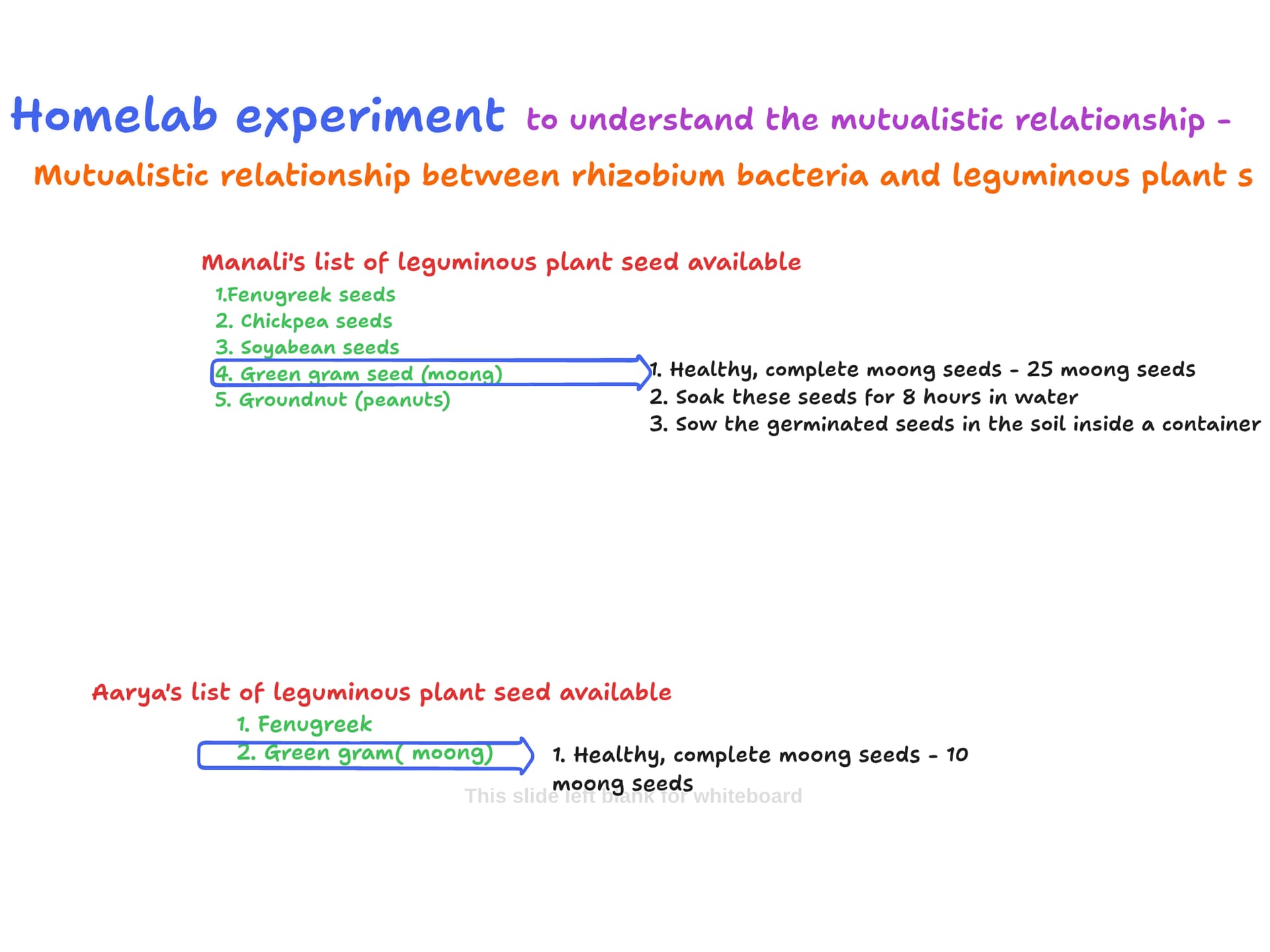
Home‑lab experiment plan. Two students’ seed inventories (Manali and Aarya) were compared to design a simple germination and planting experiment to observe mutualism: seed selection (fenugreek, moong/green gram, chickpea, soybean, groundnut), seed preparation (soaking seeds for ~8 hours), germination, and sowing in containers. The plan emphasized hands‑on observation of nodulation and plant health.
-
Practical sketches and notes. Simple diagrams of methi plants with root nodules were used to reinforce visual understanding. The group also discussed observational markers (root nodule appearance, plant vigor) and basic experimental steps for a home setting.
Overall, the meeting balanced conceptual review with an accessible experimental plan, aiming to help students observe nitrogen fixation and connect molecular concepts (amino acids, leghemoglobin) to ecological interactions.
Provocative Questions
-
How would you design a simple, low‑cost control to demonstrate that observed root nodules are the result of Rhizobium activity rather than another soil factor?
-
If leghemoglobin functions to bind oxygen in nodules, what measurable physiological differences would you expect between nodulated and non‑nodulated plants under the same soil nitrogen conditions?
-
Which experimental measurements (beyond visual observation) could you implement at home to quantify nitrogen fixation or plant nitrogen status?
-
How might the amino acid composition of plant tissues change in response to effective nodulation, and what sampling strategy would reveal that change?
-
What are the ethical and biosafety considerations when handling soil and seed material for home experiments, and how can they be addressed without specialized lab equipment?
 What I Have Learned
-
Concrete linkage of theory and practice: Seeing a real methi plant with nodules made the abstract concept of symbiotic nitrogen fixation tangible and clarified how microbial interactions manifest physically.
-
Simplicity of home experiments: A well‑planned home experiment—proper seed selection, soaking, germination, and container planting—can yield meaningful observations about plant–microbe mutualism when paired with careful notes and simple controls.
-
Biochemical connections matter: Introducing leghemoglobin alongside amino acid basics helped bridge molecular biology and ecology, reinforcing that proteins and small molecules underpin physiological outcomes in symbioses.
-
Importance of experimental design: Even for a home setup, thinking about controls, replication, and measurable outcomes is essential to draw reliable conclusions.
-
Communication and documentation: Sketches, lists, and stepwise procedures on the whiteboard improved shared understanding and made it easier to assign tasks and follow up.
 TINKE Moments (This I Never Knew Earlier)
-
Triggering Insight — Visible Nodulation as a Teaching Pivot
The discovery and display of a methi plant with root nodules served as a pivotal teaching moment. It transformed a textbook concept into a live demonstration, prompting immediate questions about nodule structure, function, and formation timing. This moment highlighted the pedagogical value of physical specimens. -
Noted Knowledge Gap — Distinguishing Hemoglobin and Leghemoglobin
While leghemoglobin was mentioned, the session revealed uncertainty about its biochemical role and how it differs structurally and functionally from animal hemoglobin. This gap suggests a need for a short focused mini‑lecture or reading assignment on oxygen affinity, heme chemistry, and gene expression in nodules. -
Key Error/Weakness — Lack of Defined Controls and Quantitative Measures
The home‑lab plan emphasized germination and visual observation but lacked explicit controls (e.g., sterilized soil, uninoculated seeds) and quantitative endpoints (e.g., plant biomass, chlorophyll content, simple nitrate tests). This omission limits the experiment’s ability to attribute observed effects specifically to Rhizobium activity. -
Knowledge Gap — Identification and Verification of Rhizobium
There was no clear plan for verifying that nodules contain Rhizobium (versus other microbes). This is a practical and conceptual gap: students need accessible methods to confirm symbiont identity or, at a minimum, to acknowledge the limitation and interpret results cautiously. -
Operational Challenge — Reproducibility in a Home Setting
Variability in seed quality, soil composition, and environmental conditions was recognized but not systematically addressed. This TINKE moment points to the need for standardized protocols and replication to improve reliability.
 Gaps and Misconceptions
-
Missing experimental controls. The plan should explicitly include negative controls (seeds in sterilized soil or soil treated to reduce native rhizobia) and positive controls (known inoculated seeds) to support causal claims.
-
Overgeneralization about amino acids. Listing amino acids as simply “essential” or “non‑essential” without context can mislead; essentiality depends on the organism and dietary context. Clarify that these classifications refer to human dietary essentials and differ across species.
-
Assumption that nodules always indicate active nitrogen fixation. Nodules can form without effective fixation; activity should be inferred cautiously and, where possible, supported by additional measures (e.g., plant nitrogen status, nodule color, and internal structure).
-
Verification of microbial identity. There was no plan for confirming that Rhizobium is the nodule occupant. Even simple acknowledgments of this limitation and suggestions for future lab verification (microscopy, culture, or molecular tests) are important.
-
Biosafety and contamination risks. Handling soil and seeds carries contamination and safety considerations that were not fully addressed; basic hygiene, safe disposal, and avoiding the release of non‑native microbes should be discussed.
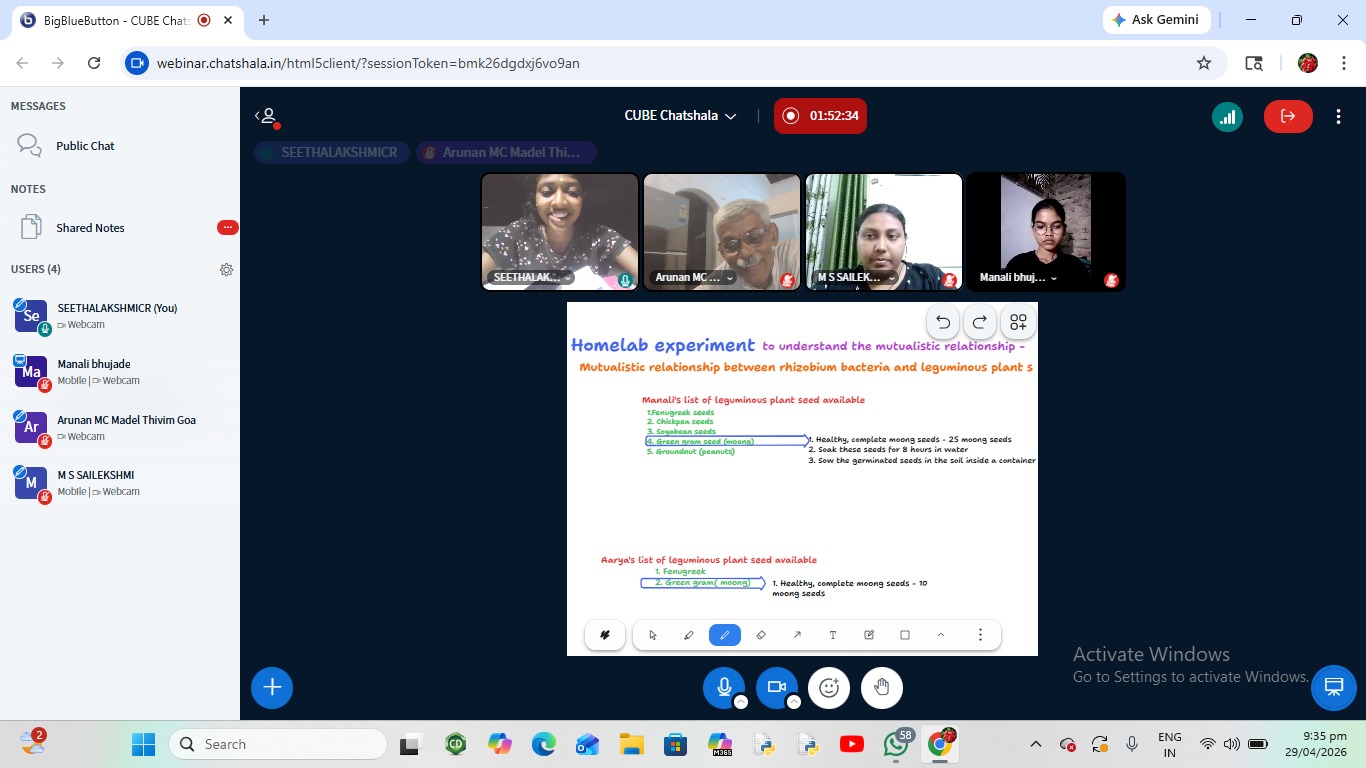
 Photographs during ChatShaala
 Reference