CUBE ChatShaala - Discussion Summary
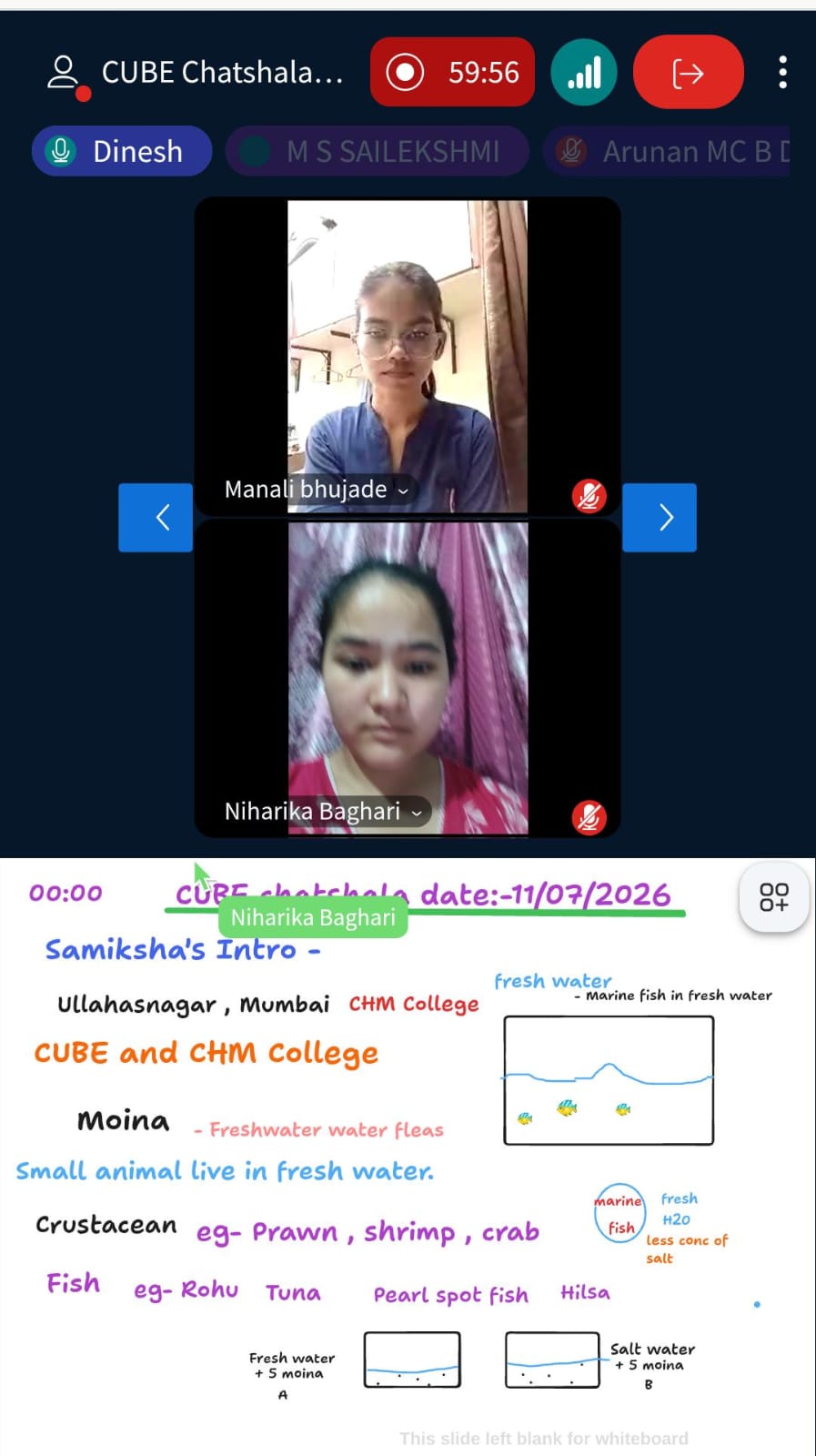
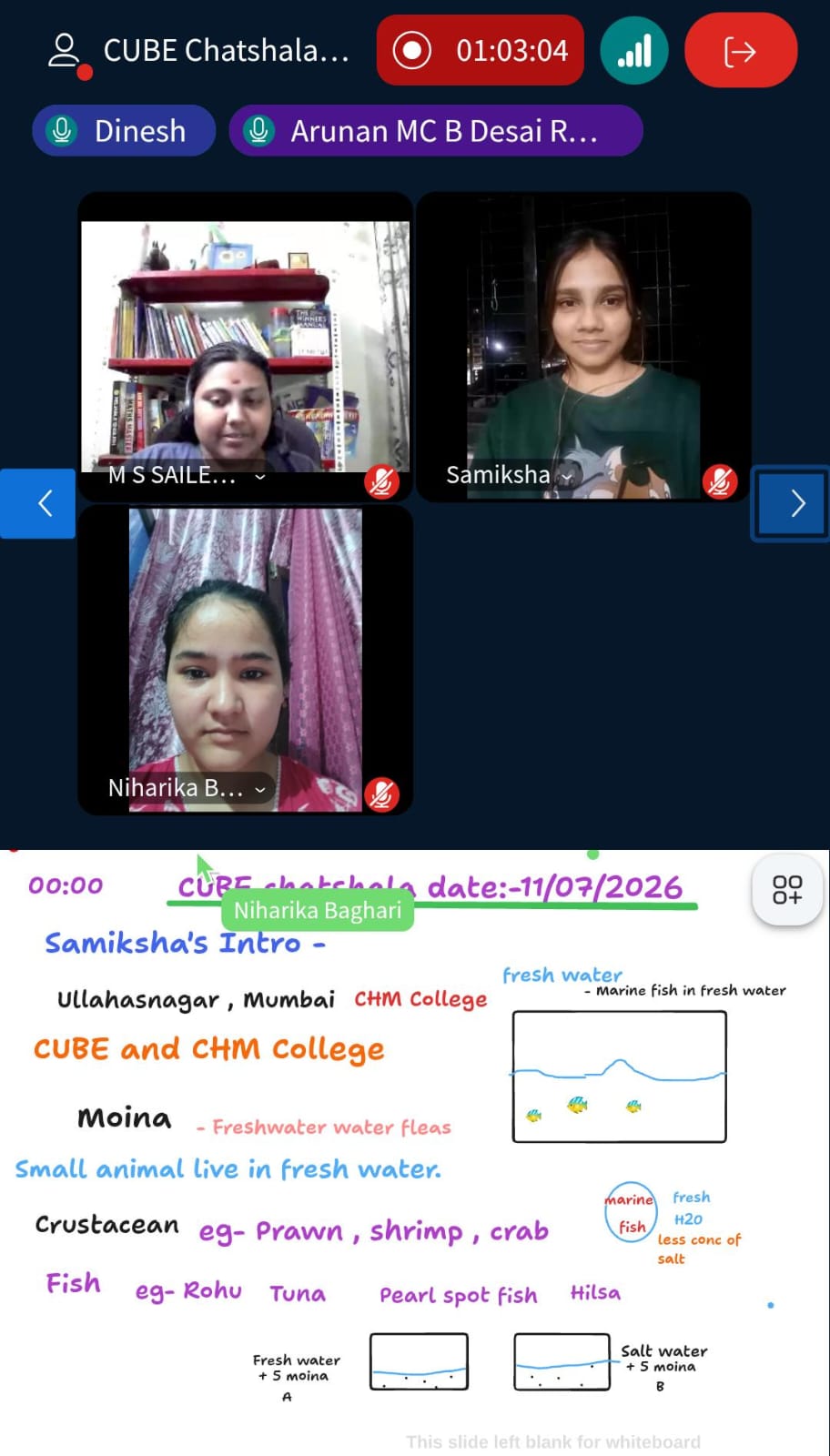
The July 11th, 2026 session of CUBE ChatShaala opened with Samiksha introducing herself and her institution, CHM College in Ulhasnagar, Mumbai, marking a new point of collaboration between CUBE and CHM College. This connection traces back to earlier work by CUBE members who had collected Moina samples from a pond on the CHM College campus, and today’s session picked up that thread to explore the biology of this small but scientifically rich organism.
The participants began by establishing what Moina actually is: a tiny freshwater crustacean belonging to the group Cladocera, closely related to the more widely known water flea, Daphnia. Its taxonomic placement was laid out in detail, moving from Kingdom Animalia down through Phylum Arthropoda, Subphylum Crustacea, Class Branchiopoda, Order Cladocera, to Genus Moina. Beyond its classification, the discussion touched on why this organism matters in practice, particularly its role as a live feed source for fish larvae and aquarium fish, valued for its high protein content and regular use in aquaculture settings.
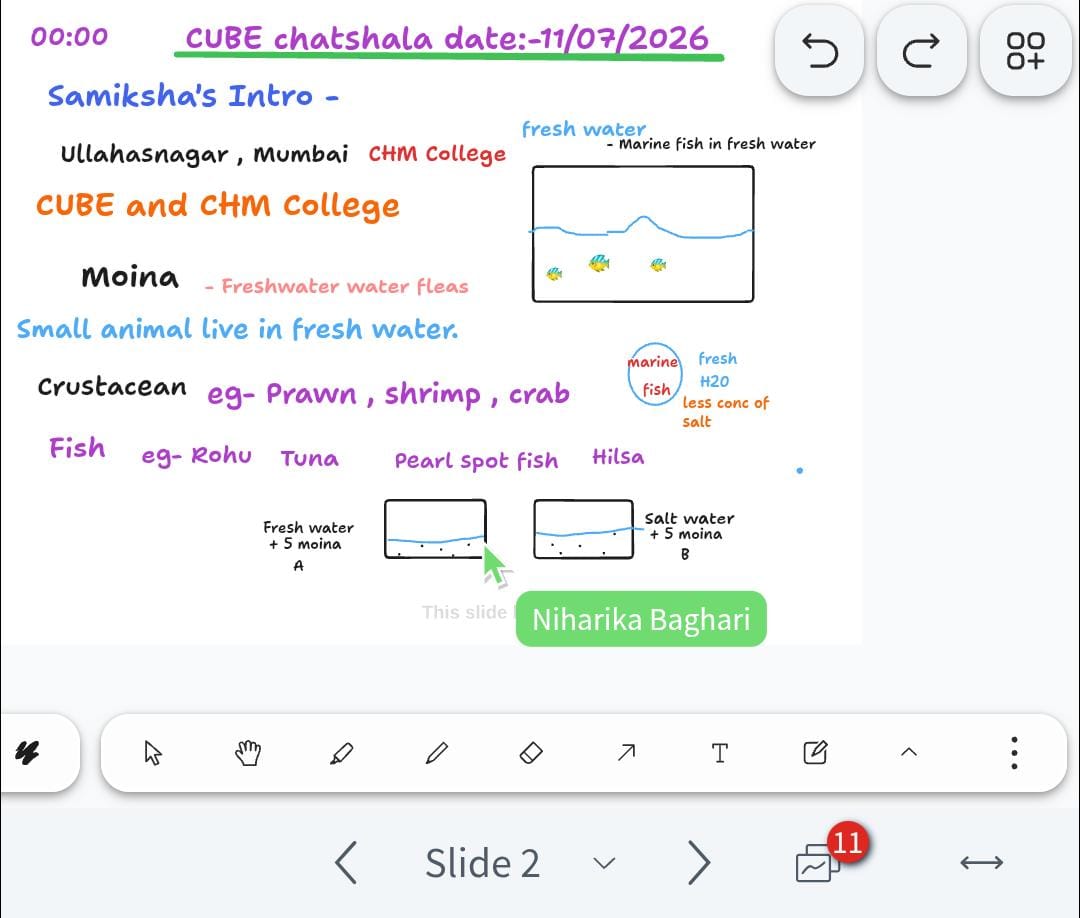
From here, the conversation shifted to a comparative exercise on fish and crustaceans across different aquatic environments. Examples such as Rohu, Tuna, Pearl Spot fish, and Hilsa were used to illustrate the range of fish adapted to varying salinities, while Prawn, Shrimp, and Crab served as familiar crustacean examples. The whiteboard captured a proposed experimental setup: placing five Moina in fresh water (Set A) and five Moina in salt water (Set B), setting the stage for an observational comparison.
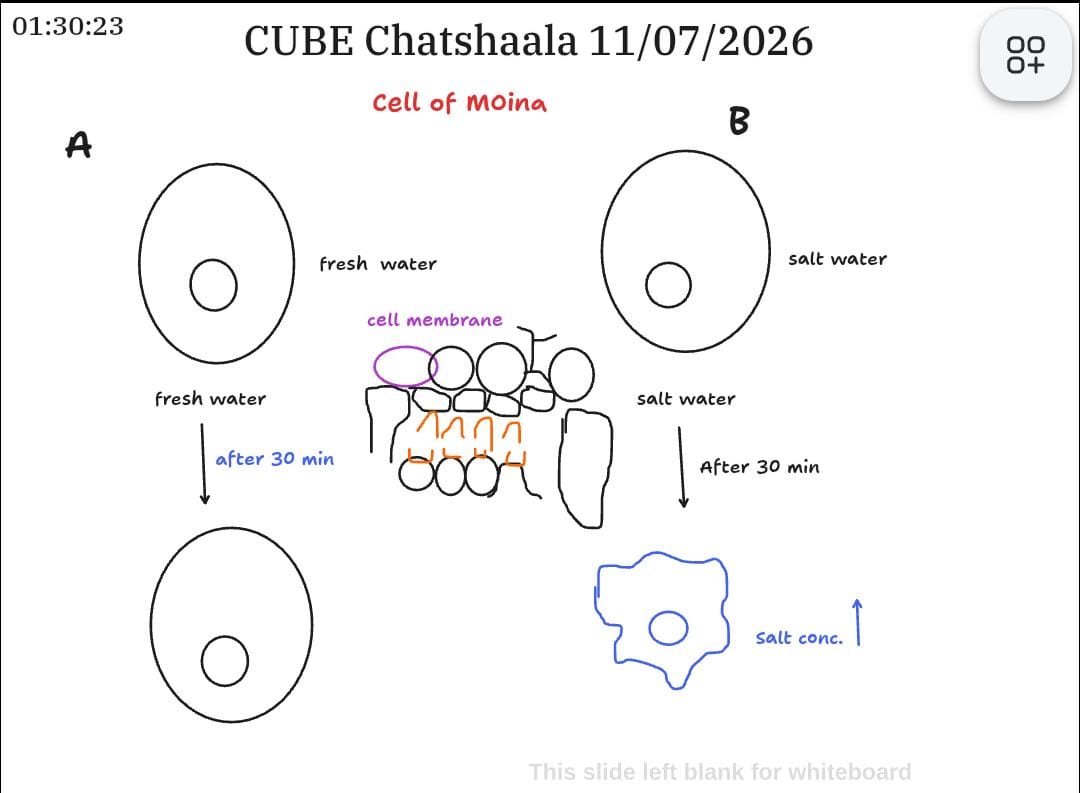
The most substantial portion of the discussion centred on osmoregulation. The participants worked through why marine fish cannot survive in fresh water and, conversely, why freshwater fish cannot survive in marine or salt water. This led to an explanation of hyperosmotic shock as the underlying reason freshwater organisms struggle when placed in a saltier environment. To make this concrete, the session included a cellular-level diagram showing Moina cells in fresh water versus salt water. In fresh water, the cell was shown retaining its normal rounded shape even after thirty minutes. In salt water, however, the cell was depicted losing water and shrinking into a shrivelled, irregular form after the same time interval, with rising salt concentration outside the cell drawing water out through the cell membrane. This visual served as a clear, tangible way of connecting the abstract concept of osmosis to an observable biological outcome.
Overall, the session combined a taxonomic and ecological introduction to Moina with a deeper mechanistic look at osmoregulation, using a simple comparative experiment and cell diagrams to ground the discussion in something participants could visualise and, potentially, test themselves.
 Provocative Questions
-
If Moina cells shrink and lose their shape in salt water due to water leaving the cell, what specific structural or physiological adaptations allow marine crustaceans like prawns and crabs to thrive in that same high-salinity environment?
-
The experiment proposes placing five Moina each in fresh water and salt water. What measurable, observable changes would we expect to see in the salt water group within the first thirty minutes, and how might we design controls to ensure the changes are due to salinity alone?
-
Given that Moina is Y used as live feed in aquaculture precisely because of its nutritional value, does its sensitivity to salinity limit where and how it can be farmed at scale?
-
Hyperosmotic shock explains why freshwater fish die in salt water, but pearl spot fish and hilsa are known to tolerate brackish conditions. What physiological features might allow these species to bridge the gap between freshwater and marine environments?
-
If a fish cell and a Moina cell both face hyperosmotic stress, would we expect identical responses, or do differences in cell membrane structure and body-level osmoregulatory organs (like gills or kidneys) change the outcome?
 What I Have Learned
This session offered a genuinely useful way of connecting a small, easily overlooked organism to a much larger biological principle. Moina, often just seen as fish feed, turned out to be an excellent entry point for understanding osmoregulation because its response to changing salinity is fast and visually striking at the cellular level. I found it particularly valuable to see the concept of hyperosmotic shock explained not just in the abstract, but through a direct before-and-after comparison of a cell’s shape in fresh water versus salt water.
The taxonomic breakdown of Moina also reinforced how useful it is to place an organism within its proper classification before discussing its biology, since understanding that it belongs to Cladocera and is closely related to Daphnia immediately tells us something about its size, habitat, and ecological role. Finally, linking this small-scale cellular phenomenon to real-world examples like Rohu, Tuna, and Hilsa helped bridge the gap between microscopic mechanism and the larger, more familiar world of fish biology.
 TINKE Moments (This I Never Knew Earlier)
The clearest TINKE moment, “This I Now Know Explicitly,” from this session was around the mechanism of hyperosmotic shock itself. Before this discussion, the idea that freshwater fish “cannot survive” in salt water may have been understood only as a general fact. Through the cell diagram of Moina, this became explicit: water moves out of the cell when the external salt concentration rises, causing the cell to shrink and deform. What was previously an implicit, almost intuitive assumption became a clearly articulated cellular mechanism.
A second TINKE moment emerged around the classification of Moina. Recognising it explicitly as a crustacean, specifically within Cladocera and closely related to Daphnia, rather than simply calling it a “small water organism,” reflects a shift from casual familiarity to precise taxonomic understanding.
 Gaps and Misconceptions
One gap in the session is that while the cellular diagram clearly illustrates what happens to a Moina cell in salt water, the discussion did not fully address what happens to the cell membrane’s transport proteins or specific channels during this process, leaving the mechanism at a descriptive rather than a molecular level. Additionally, the proposed experiment comparing five Moina in fresh water versus five in salt water was outlined conceptually but not yet accompanied by a clear protocol for measuring or recording outcomes, such as time intervals for observation, survival rates, or criteria for what counts as visible stress or shrinkage. There is also a slight risk of oversimplification in extending the Moina cell example directly to whole-organism fish physiology, since fish possess specialised osmoregulatory organs, such as gills and kidneys, that operate differently from a single unprotected cell, and this distinction would benefit from further clarification in a future session.
 Photographs during Chatshaala
- Screenshot 2026-07-11 203554
- https://jumpshare.com/s/ZhPh81BZENwpZfsGLsn6
- https://cdn.phototourl.com/free/2026-07-11-d1158562-a3bc-4bd6-a4be-ab0b3a8a1041.jpg
- https://cdn.phototourl.com/free/2026-07-11-e293c682-e00c-41ce-947c-d592fdd04592.jpg
 Referance