 CUBE ChatShaala – Discussion Summary
Today’s ChatShaala (06/03/2026) centered on the theme of “Seasonomics”—a creative blend of season and omics, highlighting the systematic collection and analysis of seasonal data to understand biological and ecological patterns.
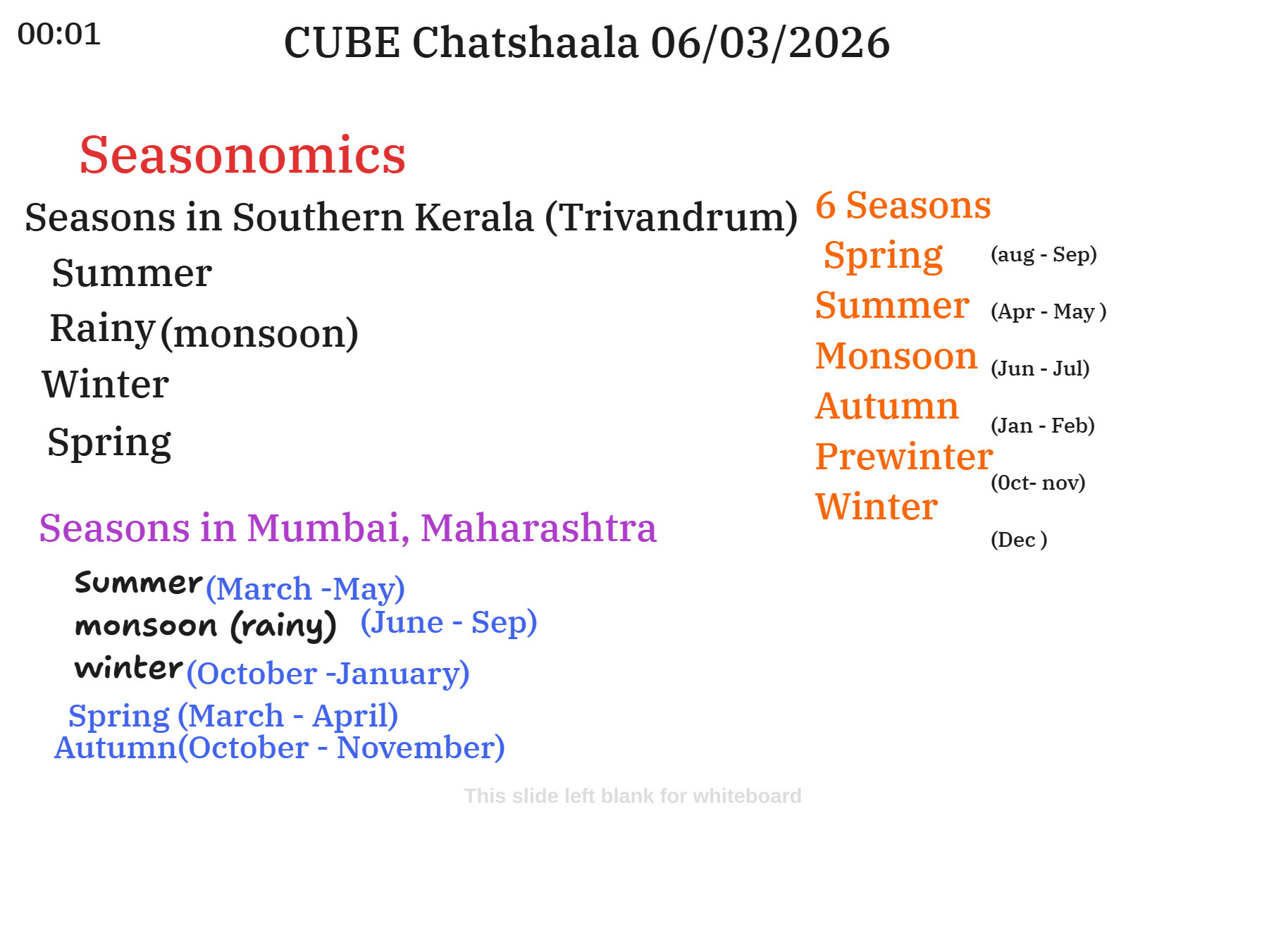
The discussion began with a comparison of seasonal classifications across regions, particularly Southern Kerala (Trivandrum) and Mumbai, Maharashtra. Cubists noted differences in how seasons are locally defined and experienced, with Kerala recognizing four main divisions (summer, rainy, winter, and spring), while Mumbai includes an additional autumn season alongside the more familiar summer, monsoon, winter, and spring.
The conversation then expanded to a broader framework of six seasons, each mapped to specific months:
- Spring (Aug–Sep)
- Summer (Apr–May)
- Monsoon (Jun–Jul)
- Autumn (Jan–Feb)
- Prewinter (Oct–Nov)
- Winter (Dec)
This comparative exercise emphasized how cultural, climatic, and ecological contexts shape seasonal classification.
The cubists also explored the concept of Seasonomics, drawing parallels with genomics and other “omics” sciences. Just as genomics involves large-scale data analysis of genetic material, seasonomics involves systematically tracking seasonal phenomena—such as tree cycles (leaf sprouting, flowering, and fruiting) and animal behaviors (feeding, interactions, and migrations)—to uncover patterns and generate insights.
Connections were made to broader cultural and scientific references, including **Vivaldi’s “The Four Seasons," which artistically interprets seasonal changes, and the role of data-driven approaches in ecology and environmental science.
 Provocative Questions
-
How do regional differences in defining seasons influence ecological research and public understanding of climate?
-
Could Seasonomics become a standardized framework for comparing biodiversity patterns across India’s diverse climates?
-
What parallels exist between seasonomics and genomics in terms of data collection, complexity, and interpretation?
-
How might cultural representations of seasons enrich scientific approaches to Seasonomics?
-
In what ways could citizen science contribute to building large datasets for Seasonomics?
-
Does the six-season model provide deeper ecological insights than the traditional four-season framework?
 What I Have Learned
The most important takeaway from today’s session is that seasons are not universal categories but regionally contextual phenomena. While textbooks often present a fixed seasonal cycle, lived experiences and ecological realities vary widely.
I also learned that Seasonomics offers a powerful lens for integrating cultural knowledge, ecological observation, and scientific data analysis. By treating seasonal changes as datasets, we can uncover patterns in plant growth, animal behavior, and even human cultural practices.
Finally, the discussion highlighted the importance of interdisciplinary thinking—bridging science, art, and local knowledge systems to make ecological learning more engaging and meaningful.
 TINKE Moments (This I Never Knew Earlier)
-
Regional Season Classifications – I had not realized that Kerala and Mumbai define seasons differently, with Mumbai including autumn while Kerala does not. This challenges the assumption of a uniform seasonal framework across India.
-
Six-Season Model – The idea of six distinct seasons mapped to specific months was new and thought-provoking, offering a richer ecological perspective than the conventional four-season model.
-
Seasonomics as an “Omics” Science – Framing seasonal observation as an “omics” discipline was a novel insight, linking ecology to the broader scientific tradition of large-scale
data analysis. -
Cultural Integration—The connection between scientific seasonality and artistic works like Vivaldi’s Four Seasons opened up new ways of thinking about how culture and science can inform each other.
 Gaps and Misconceptions
-
Uniformity Assumption: Many participants initially assumed that seasons are universally defined, but today’s discussion revealed significant regional variation.
-
Data Collection Challenges: While Seasonomics is conceptually powerful, practical methods for systematic data collection (especially citizen-driven) remain underdeveloped.
-
Overlooking Cultural Dimensions: Scientific discussions often neglect cultural interpretations of seasons, yet these perspectives can provide valuable context for ecological research.
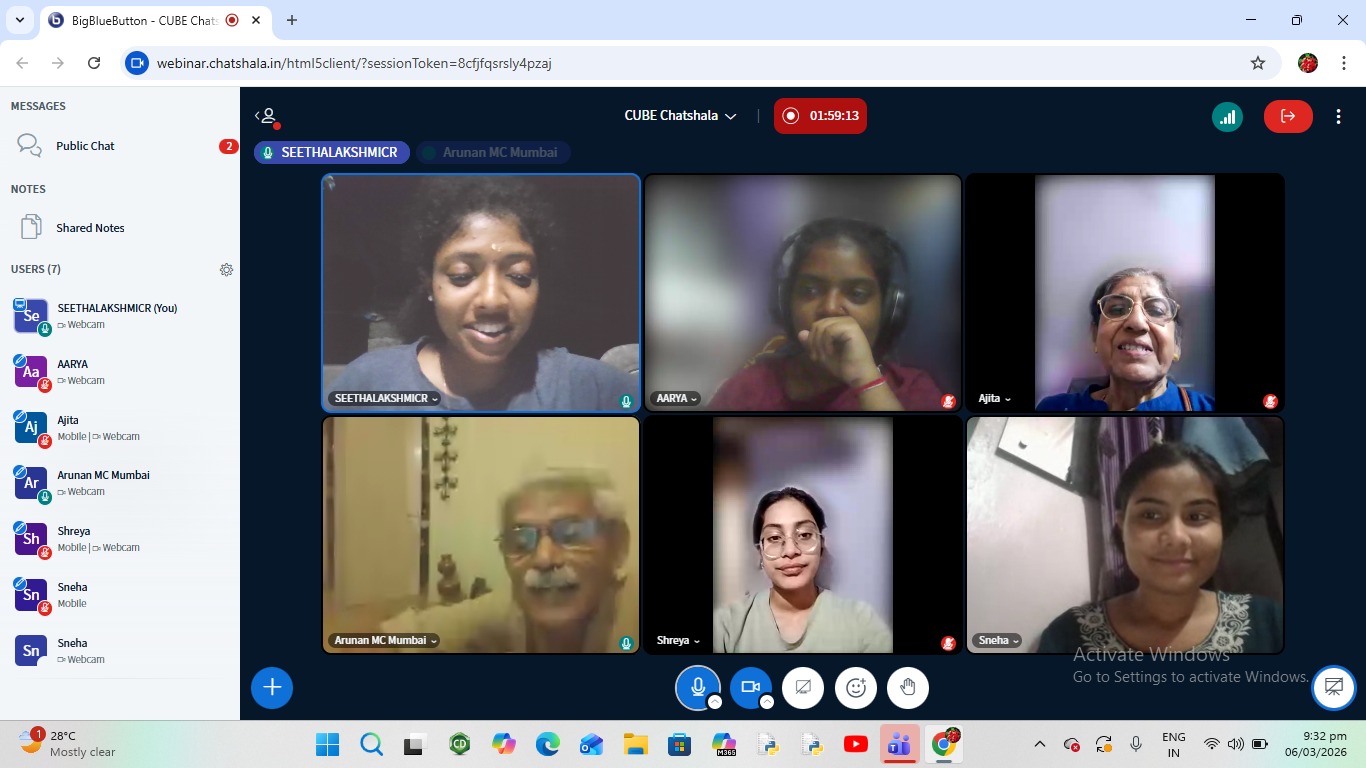
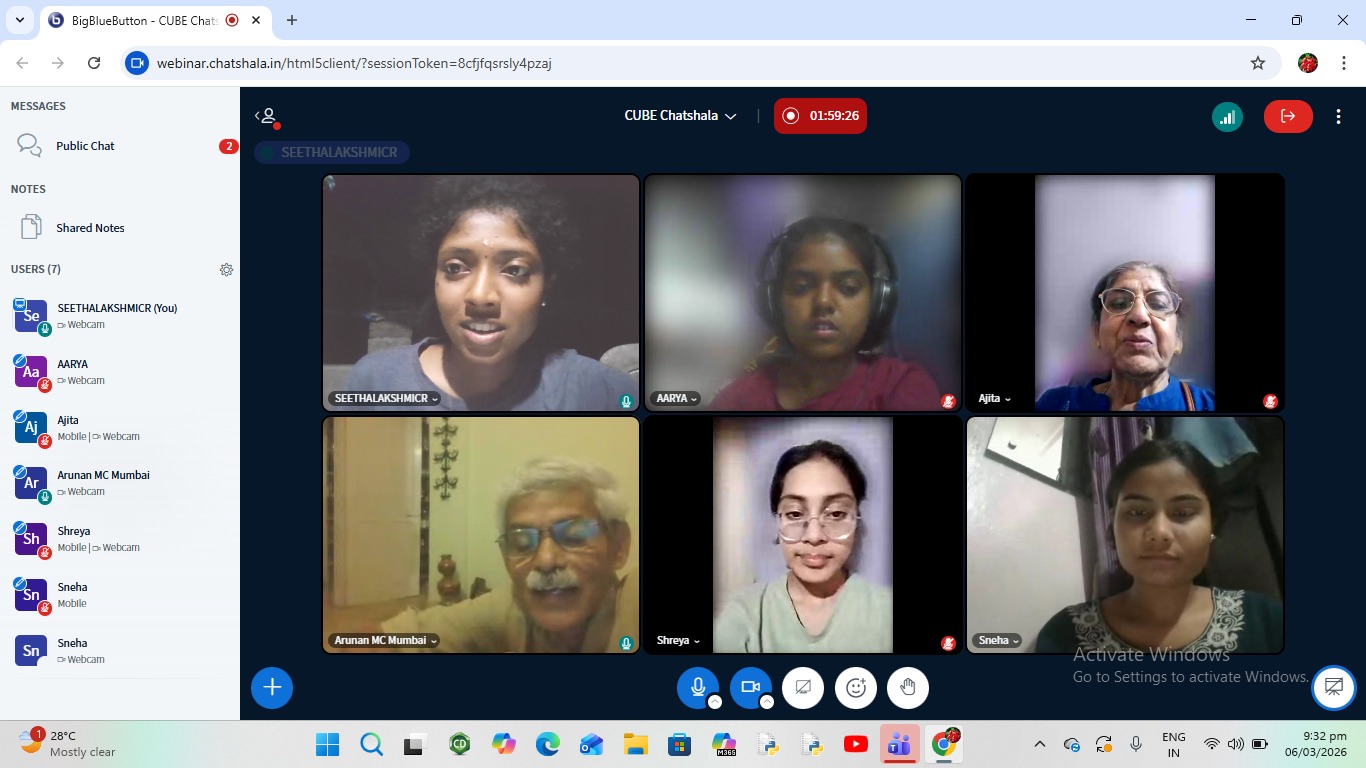
 Photographs during Chatshaala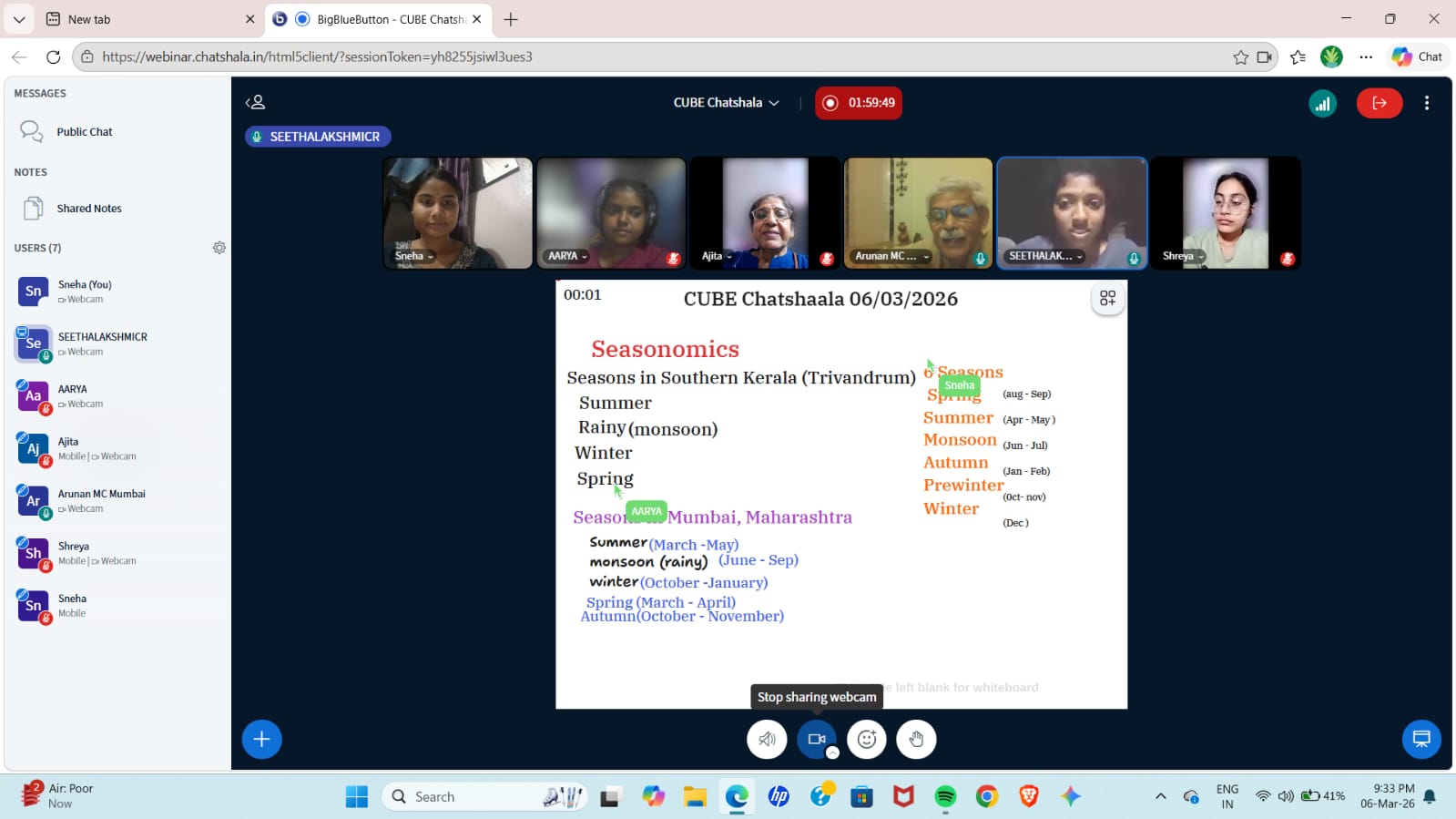
 Reference