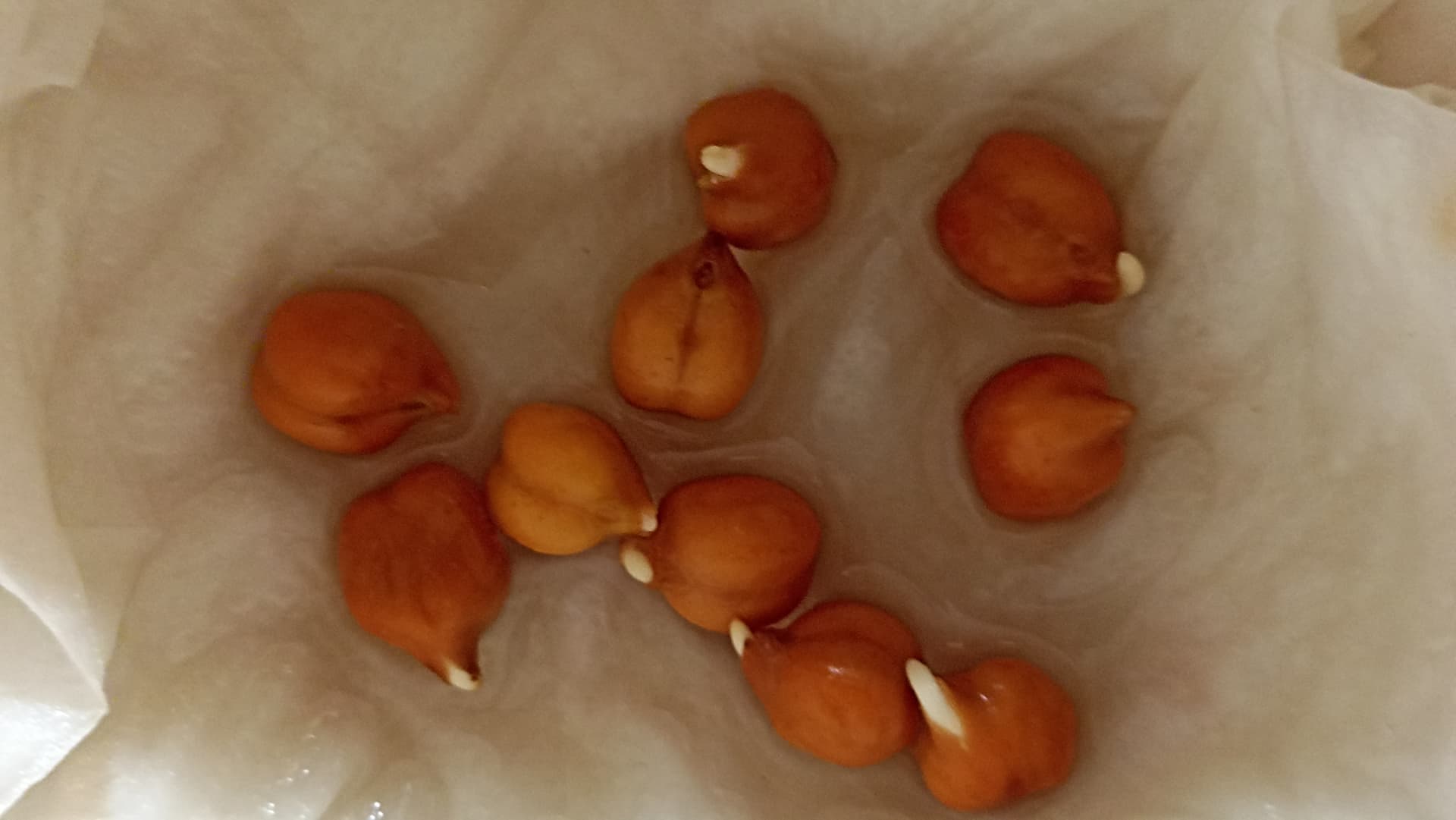
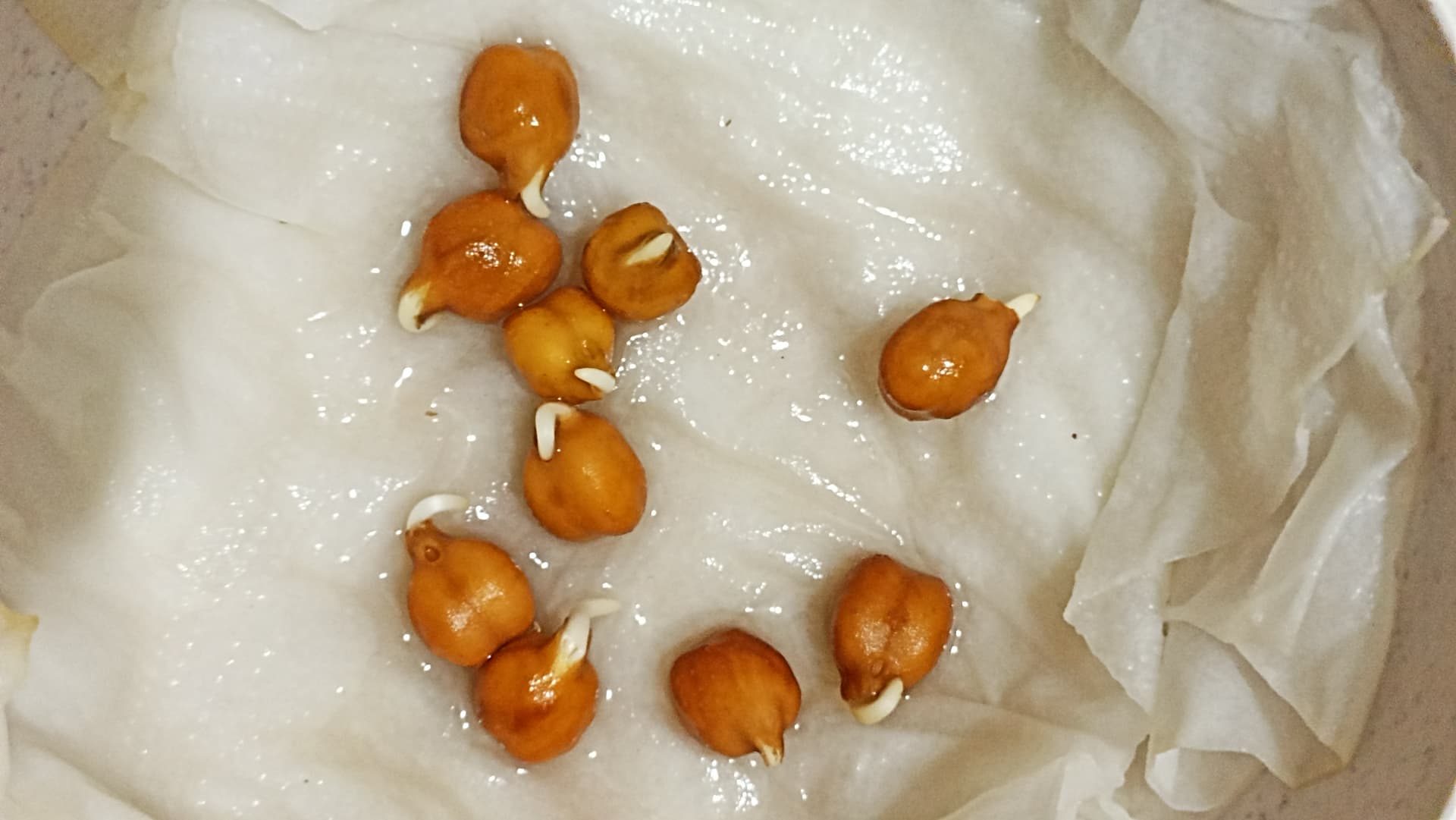
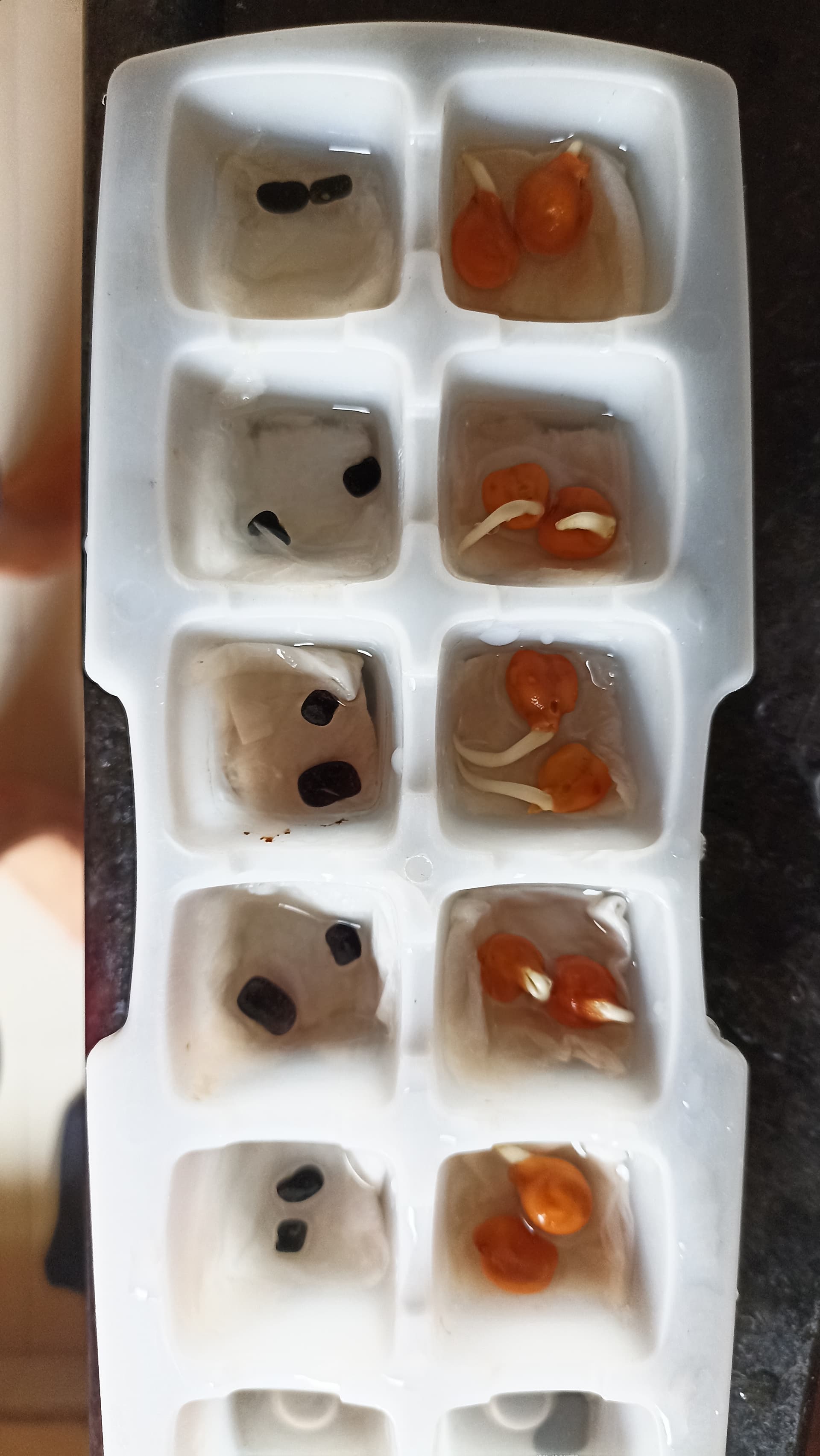
[10:34 am, 18/4/2024] Arunan Sir: What is the reasoning behind your hypothesis on Bengal Gram Seed germination? @Abhijeet Singh
What is your interpretation after getting the results? @Abhijeet Singh
[10:37 am, 18/4/2024] Arunan Sir: Is there any reference to prove that Fresh Bengal Gram seeds do not germinate, unlike Old Bengal Gram Seeds?
Let’s get some reference link, to move forward in our study. @Abhijeet Singh
[10:39 am, 18/4/2024] Arunan Sir: How are you sure that Fresh Bengal Gram seeds show Dormancy in Seed Germination? @Abhijeet Singh
[10:42 am, 18/4/2024] Abhijeet Singh: My reasoning behind bengal gram seeds germination is the study Conducted by CUBE Sapekhati group.
In chatshaala we were discussing their study so I think as far as i remember in bengal gram they were getting Maximum germination in 3rd or 4th day.
So i thought of taking 4 day for the peak in no. of. Seeds Germinated.
[10:47 am, 18/4/2024] Abhijeet Singh: So the expectation Bengal gram seeds which were soaked for 8 hours and then transferred to Moist tissue paper was that I will get maximum germination by the 4th day.
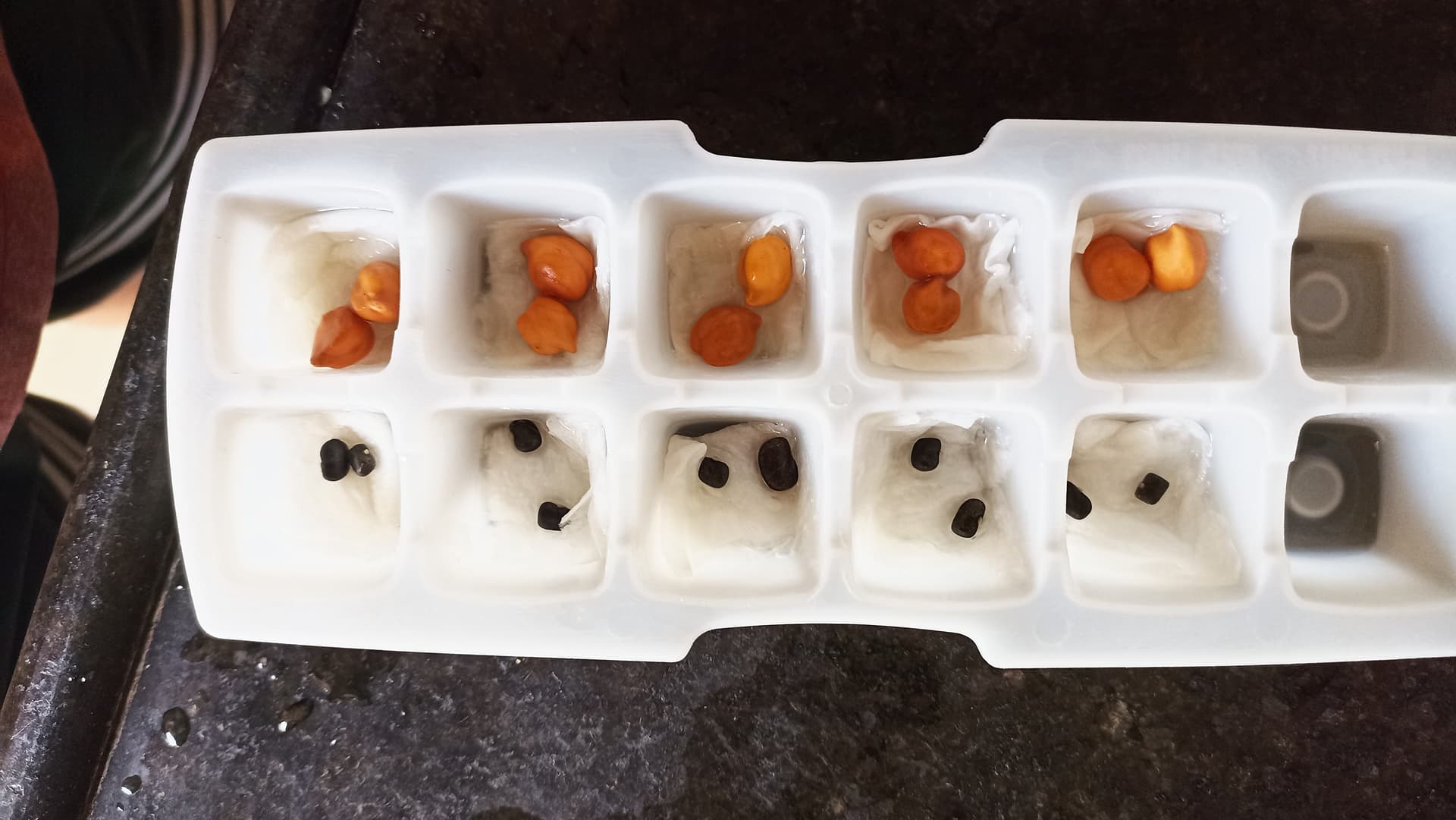
But i got 90% Germination in 44 hours. That is close to 2 days.
This indicates the seeds high viability and rapid response to the conditions provided for Germination process.
[10:49 am, 18/4/2024] Abhijeet Singh: On the other hand
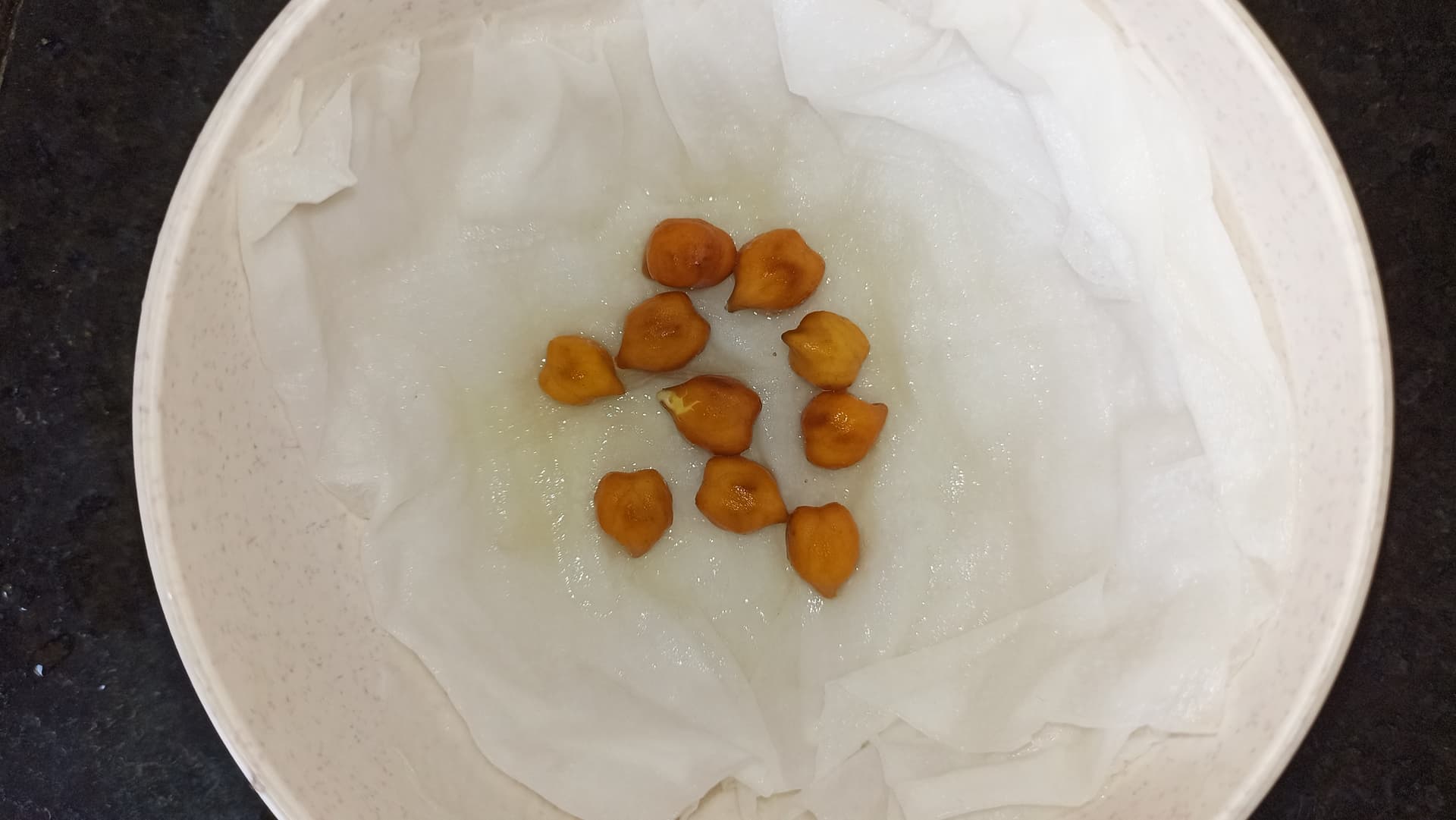
The seeds which were not soaked in water and directly placed on moist tissue paper gave 100% Germination in 28 hrs
[10:50 am, 18/4/2024] Abhijeet Singh: No I’m not saying fresh Bengal gram seeds will show dormancy.
In fact I’m saying that we don’t know if it will show dormancy.
So to compare or to find out if at all there is dormancy in fresh vs old Bengal Gram seeds.
[11:00 am, 18/4/2024] Abhijeet Singh: Legume seed dormancy has been altered during the domestication process, resulting in
non-dormant seeds with a testa that is readily permeable for water. Ultimately, this provides fast and
uniform germination, in contrast to dormant seeds of the wild progenitor. To date, germination and
seed dormancy were studied mostly in relation to two types of cultivated chickpea: kabuli and desi.
Cultivated chickpea seeds imbibed readily within 24 h,
while the germination percentage of wild chickpea at various times was 36% (24 h), 46% (48 h), 60%
(72 h) and reached 100% only after 20 day.
https://www.mdpi.com/2073-4395/11/11/2292
[11:03 am, 18/4/2024] Abhijeet Singh: What is your comments on this @Theertha CUBE @Lakshmy Cube @Chitralekha Ma’am Cube.
The ones we have at our homes are domesticated varieties?
Theertha: Abhijeet I think the green gram ,Bengal gram & other ( pulses and cereals)that is there in the kitchen we can’t called as seeds these are Grains.
https://www.researchgate.net/figure/The-difference-between-seed-and-grain_tbl6_275652925
[12:15 pm, 18/4/2024] Arunan Sir: This is wonderful,a clear TINKE moment for me.
Thanks @Theertha CUBE
Let’s learn like this stepwise.
What do you say? @Abhijeet Singh @Lakshmy Cube
[12:17 pm, 18/4/2024] Abhijeet Singh: So how do we categorise these items into Grains, Cereals, Pulses and seeds?
[12:21 pm, 18/4/2024] Abhijeet Singh: The word grain is usually used for the edible seeds of a cereal grass, such as rice, barley, or corn (maize). A cereal grass’s fruits—the fleshy or dry ripened ovaries of a flowering plant that contain seeds—are also often referred to as grains.
Technically, most grains are actually a type of fruit with a seed that is difficult to separate without milling. The scientific name for this type of fruit is caryopsis.
So, depending on how the word is used, grain can mean just the seed or the seed with the fruit attached to it. (It doesn’t help that grain is also used as the name of the type of plant that produces grains.) In everyday usage, though, grain and seed refer to much the same thing
https://www.britannica.com/story/what-is-the-difference-between-a-grain-and-a-seed
[12:22 pm, 18/4/2024] Abhijeet Singh: Grains are the ones which mostly come from the grass if the poaceae family.
The reproductive part of a grass is the grain which is fruit inside which is an embryo and an endosperm and all of this is covered inside a seed husk.
[12:22 pm, 18/4/2024] Abhijeet Singh: This is what I think
[12:23 pm, 18/4/2024] Chitralekha Ma’am Cube: This is a book chapter and probably not peer reviewed. Not very correct.
Seed and grain terms are often used interchangeably. But scientifically, seed is the fertilised ovule of any seed bearing plant. Grain is a term used for cereal fruits, seed + fruit wall covered with the hard bracts/glumes.
[12:28 pm, 18/4/2024] Theertha CUBE: But these pulses and cereals we brought from market for eating purpose is not used for agriculture purpose,why ?
[12:32 pm, 18/4/2024] Chitralekha Ma’am Cube: They can be used for agricultural purposes; why not? In olden days, farmers would set aside part of the harvest for sowing in the next year, and the rest is used for consumption.
[12:33 pm, 18/4/2024] Chitralekha Ma’am Cube: I suppose even now farmers do that.
[12:38 pm, 18/4/2024] Theertha CUBE: I don’t think so.
The pulses and cereals we brought from market is not commonly used for agriculture purpose.
Farmers majorly collecting seeds from institute/industry,mainly the certified seeds.(Checked with viability,stored properly etc.)
In southern regions ,tamilnadu agriculture University, is the most common one .other than that ICAR ,krishibhavan are the major sources for seeds.
Ofcourse we need reliable references to claim this.lets search and find out.
[1:16 pm, 18/4/2024] Abhijeet Singh: How are these certifications done? Which are the parameters taken into account?,
[1:27 pm, 18/4/2024] Abhijeet Singh: What I have studied in my seed technology paper is that
There are major 3 parameters.
- Physical
- Genetic
- Physiological condition of the seed.
Sampling is done from the seed lot and government agencies and committees carry out grading of seeds on above mentioned parameters and uniform quality seeds are packaged and sold.
And a few of them might be used by farmers for agriculture.
But I’m still not of the opinion that all farmers source seeds through this method. They can do the grading as well from the traditional techniques.
Therefore seeds can be sourced through central and state certification agencies as well as from the own lot of seeds produced.
[2:37 pm, 18/4/2024] Chitralekha Ma’am Cube: Agree. These institutes provide certified seeds of specific varieties and quality especially in cross pollinating crops but that doesn’t mean that the harvested seeds can’t be used for growing the next season crop. Also then the farmers need not to buy the seeds from the institutes. Most farmers with small cultivable land save part of their harvest so as not to spend money in buying the seeds again. I don’t see any reason why the harvested seeds/grains can’t be used for cultivation. Do they not germinate?
Arunan sir: Very interesting and almost neglected area
How do we explain Seeds Dormancy in this context? @Theertha CUBE @Chitralekha Ma’am Cube
How does @Abhijeet Singh find the Seed Technology paper, in this context?
What are the practical components of Seed Technology paper?
Is Testing Dormancy a topic?
What else? @Abhijeet Singh


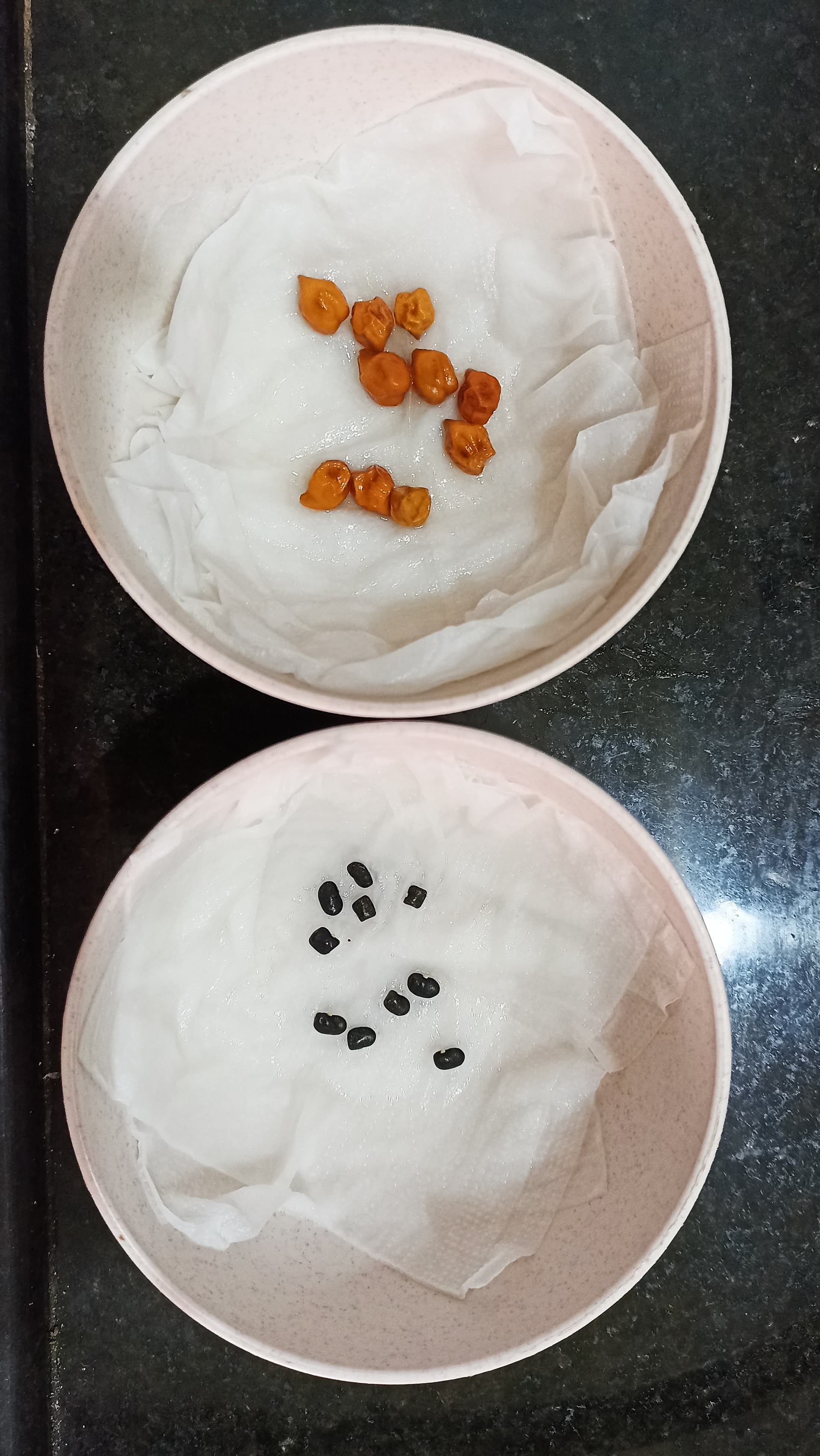

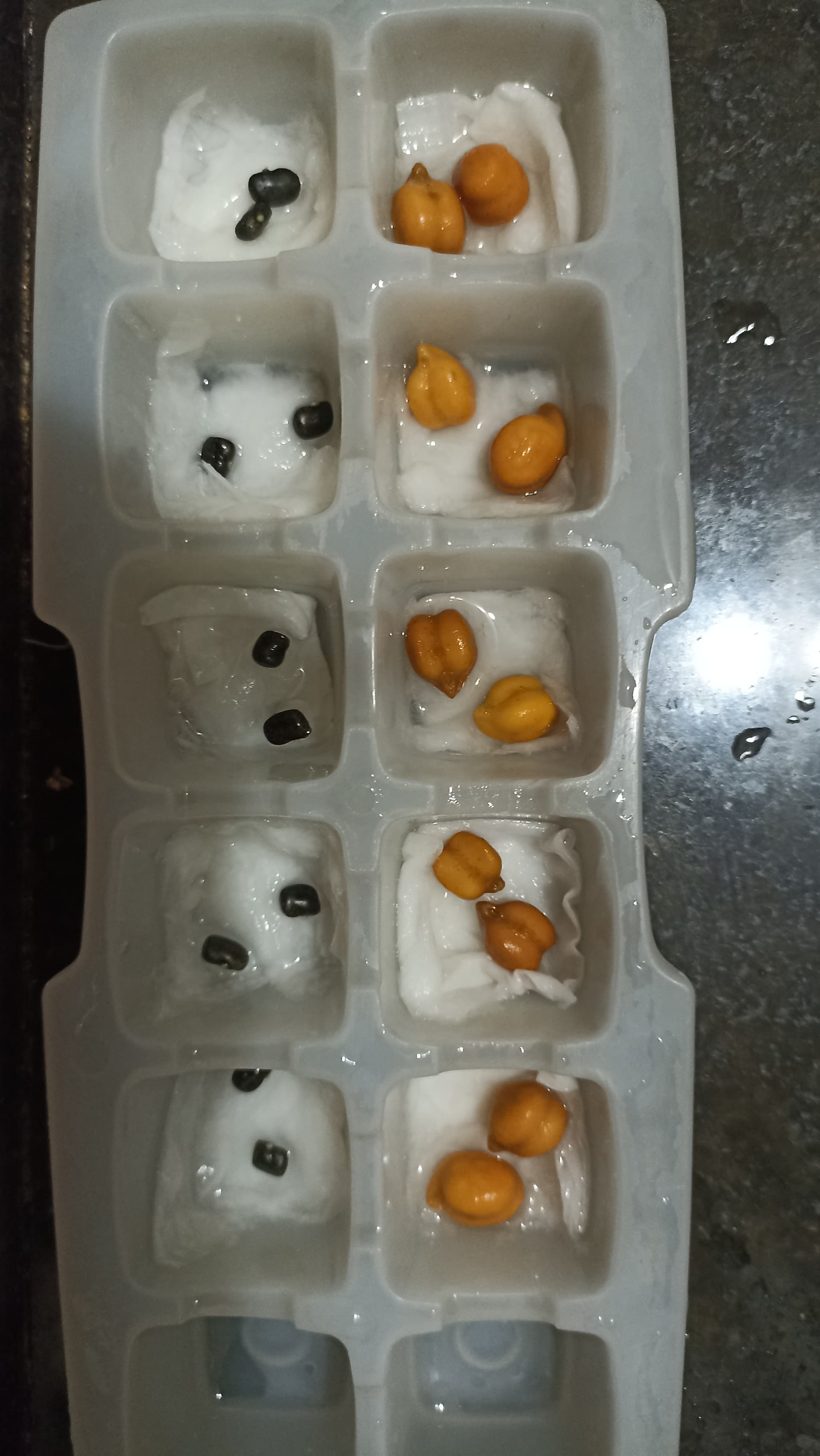
 UPDATE: Now at 9pm i have removed them from Water. And kept in Moist tissue paper.


 @Abhijeet Singh
 @Abhijeet Singh