CUBE Chatshaala - Discussion Summary
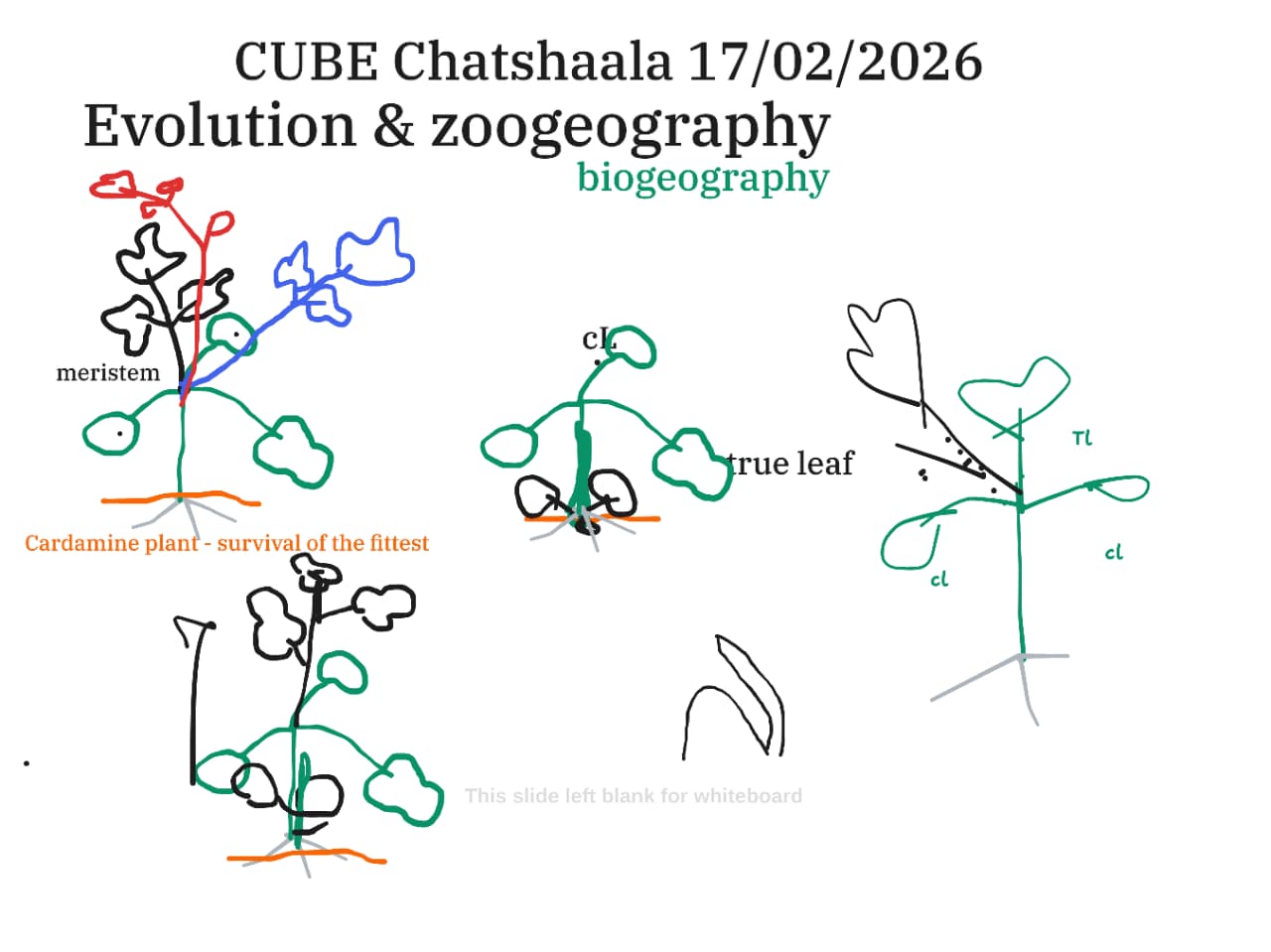
Today’s CUBE ChatShaala (17/02/2026) focused on evolution and zoogeography, with a particular emphasis on biogeography and plant survival strategies. The central case study was the Cardamine plant, used to illustrate how evolutionary adaptations enable survival in diverse and challenging environments.
Key points discussed included:
-
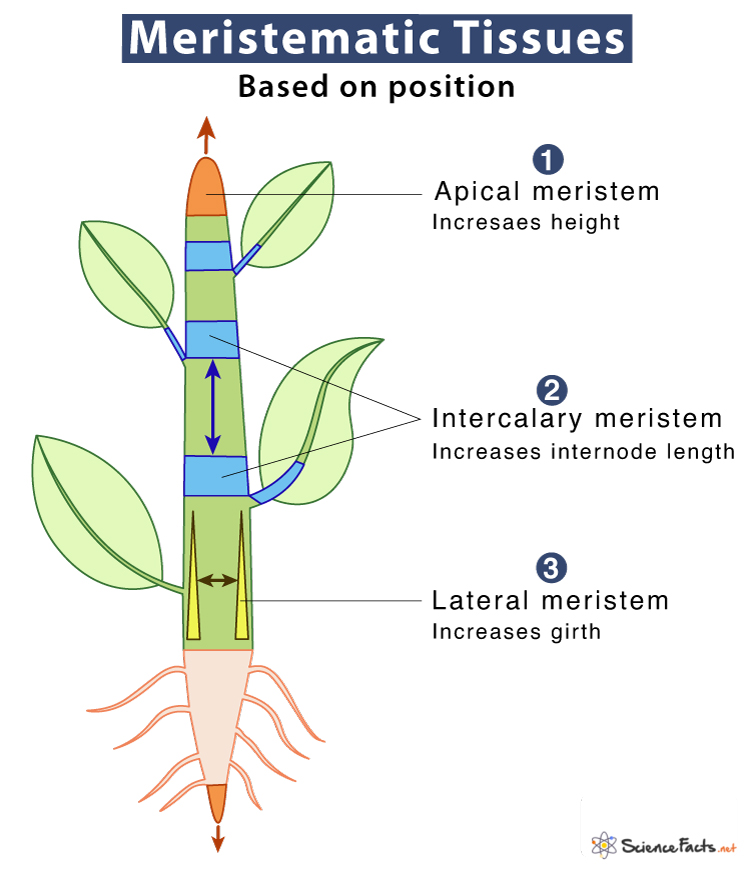
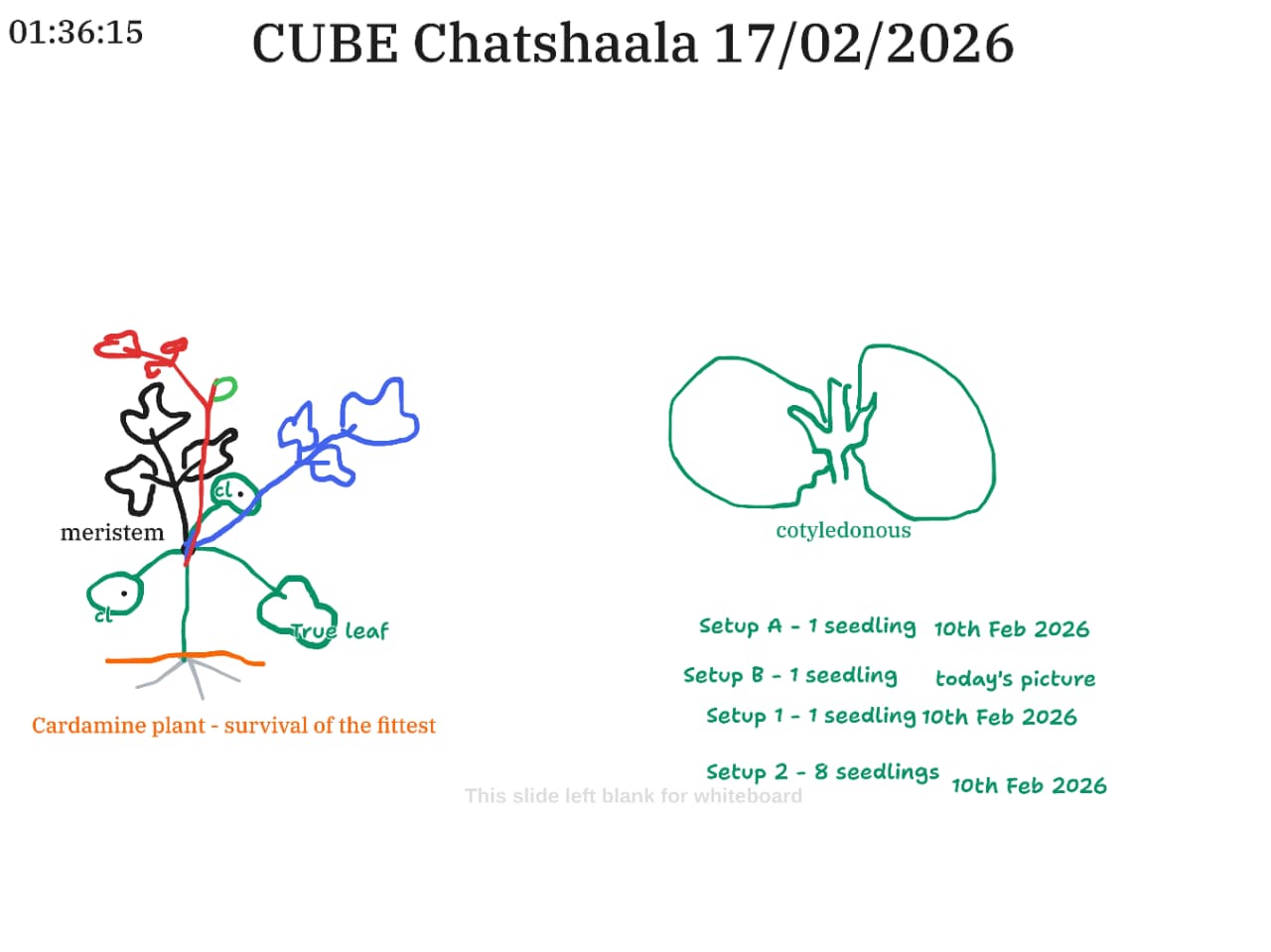
Plant Anatomy & Growth: Diagrams highlighted meristematic tissue, cotyledons (CL), and true leaves (TL), showing stages of seedling development.
-
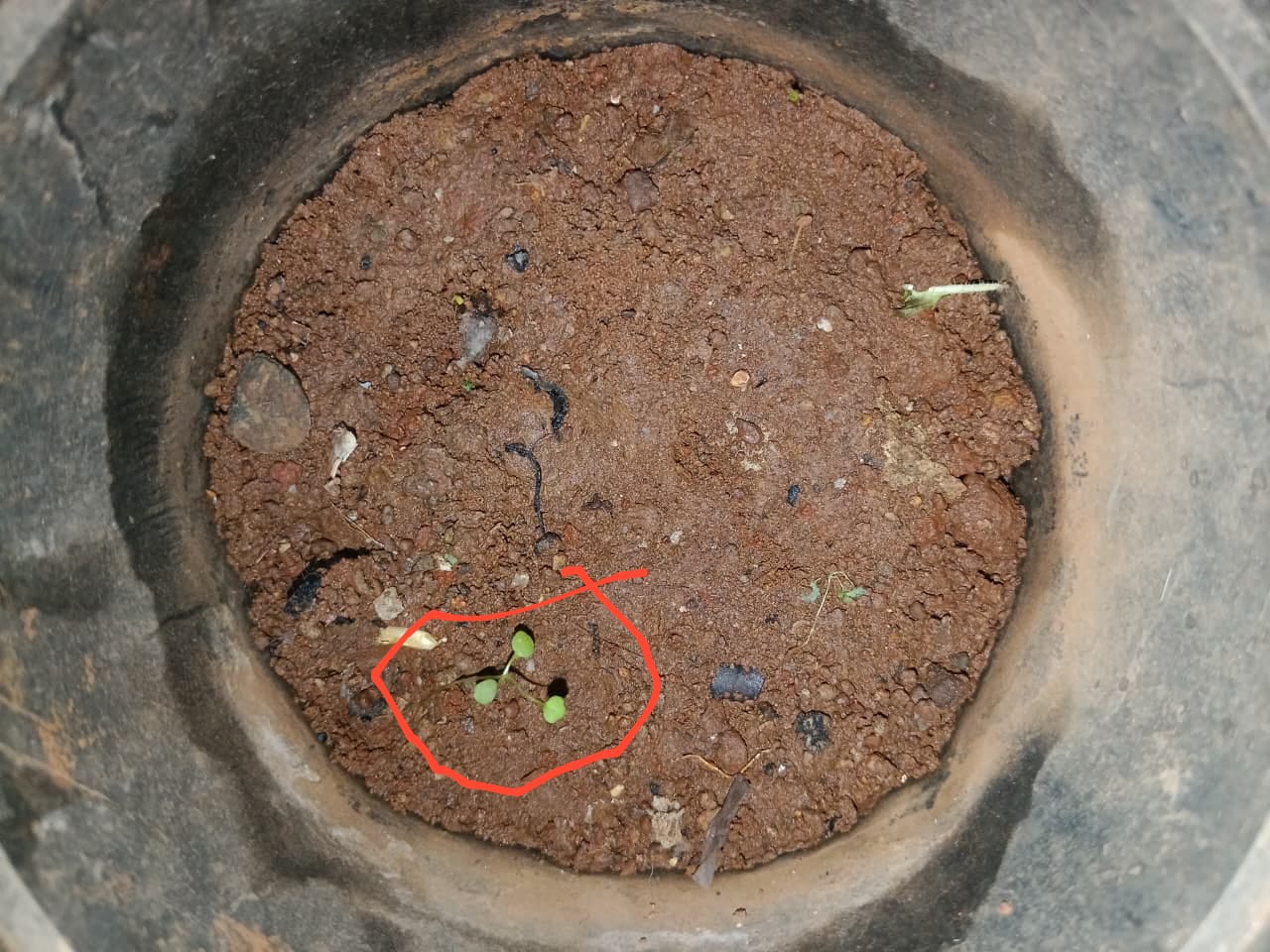
Experimental Setups: Comparisons were made between seedlings grown individually versus in groups, noting differences in competition, growth rate, and resilience.
-
Survival Strategies of Cardamine:
- Explosive seed dispersal allows wide colonization.
- Rapid life cycle ensures reproduction before external threats intervene.
- Resilience in harsh conditions (poor soil, cold, cracks).
- Chemical defense (mustard oils) deters herbivores.
-
Educational Integration: Visual aids such as plant diagrams and videos of seed germination were used to connect theory with observation.
-
Broader Context: The discussion linked plant strategies to evolutionary principles like “survival of the fittest,” emphasizing adaptation as the driver of distribution and success.
 Provocative Questions
-
How does explosive seed dispersal in Cardamine compare to dispersal strategies in other plant families (e.g., wind- or animal-mediated)?
-
In what ways does the rapid life cycle of Cardamine challenge traditional notions of ecological succession?
-
Could chemical defenses like mustard oils influence not only herbivory but also microbial interactions in the soil?
-
What parallels can be drawn between plant resilience in cracks and urban ecology, where species adapt to human-made environments?
-
How might studying cotyledon versus true leaf development help us understand evolutionary trade-offs in seedling survival?
-
If Cardamine thrives in poor soil, what does this suggest about its potential role in ecological restoration or invasive spread?
 What I Have Learned
-
Adaptation is multifaceted: Cardamine’s survival depends not on one trait but on a suite of strategies working together.
-
Seedling competition matters: The difference between single and group setups highlights how density influences growth outcomes.
-
Meristematic tissue is central: As the growth region, it embodies the plant’s evolutionary capacity to regenerate and adapt.
-
Evolutionary principles are observable: Survival of the fittest is not abstract—it can be seen in everyday plants like Cardamine.
-
Educational tools enhance clarity: Diagrams and time-lapse videos make complex biological processes accessible and engaging.
 TINKE Moments (This I Never Knew Earlier)
-
Noticed: The striking difference in growth between single seedlings and groups, raising questions about competition and resource allocation.
-
Knew: That meristematic tissue is vital for growth, but today’s discussion reinforced its evolutionary importance beyond simple development.
-
Experienced: A deeper appreciation for how small plants embody large evolutionary principles, making abstract concepts tangible.
 Gaps and Misconceptions
-
Misconception: Some participants assumed explosive seed dispersal guarantees survival. In reality, dispersal increases chances but does not ensure establishment.
-
Gap: Limited discussion on how environmental pressures (climate change, urbanization) might alter the effectiveness of these survival strategies.
-
Misconception: Viewing chemical defense only as protection against herbivores, without considering broader ecological interactions.
-
Gap: More exploration is needed on how Cardamine’s strategies compare with other invasive or resilient species in different ecosystems.
 Reference