 CUBE ChatShaala—Discussion Summary
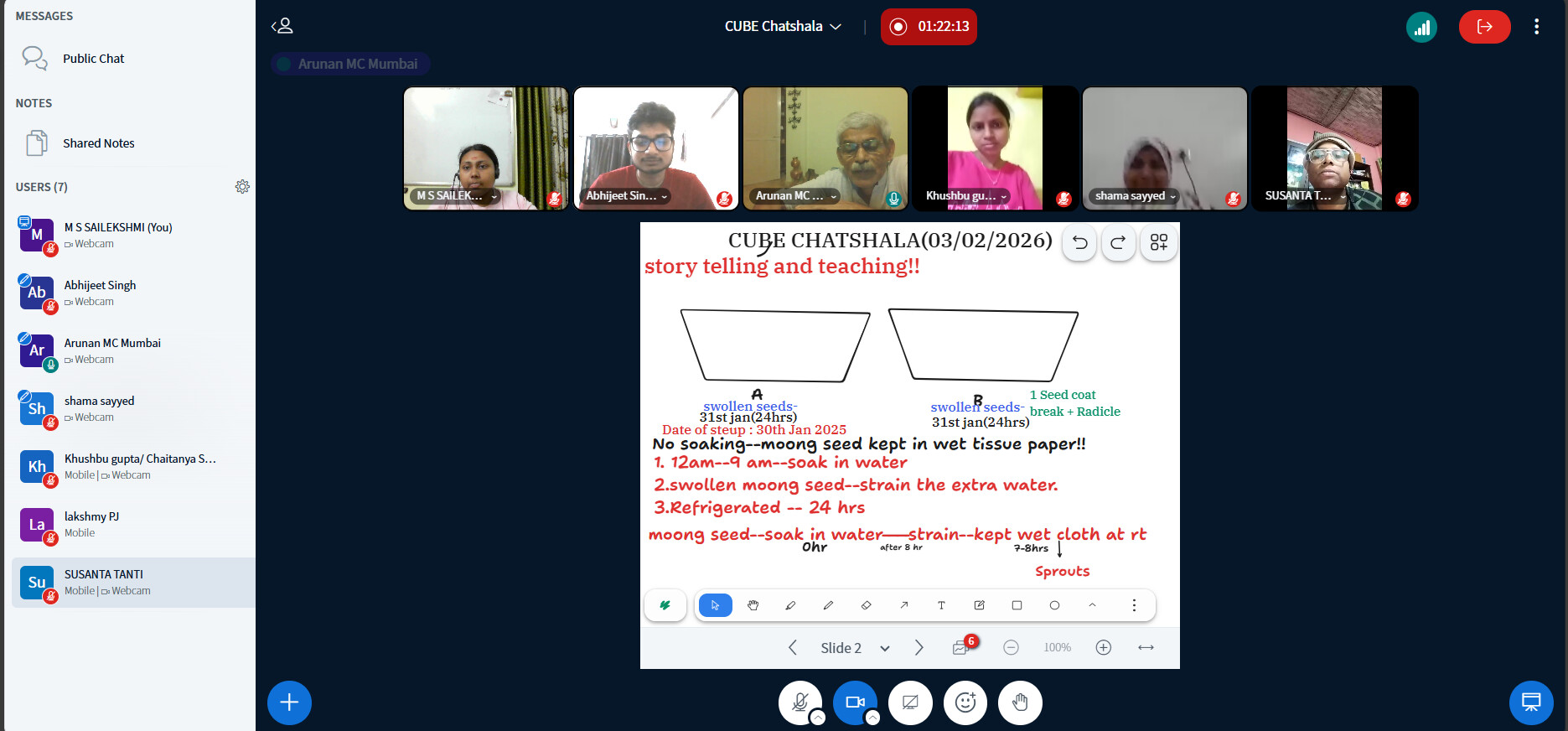
The CUBE ChatShaala session held on 03 February 2026 was a vibrant and collaborative exploration of biological processes and nutritional science, with active participation from twelve contributors. The meeting began with Sailekshmi leading a hands-on discussion about moong seed germination and the great evolution. Cubists examined the timeline and conditions influencing sprouting, including soaking durations, refrigeration effects, and the emergence of the radicle. Two containers (A and B) were compared to highlight the visible changes in seed morphology after 24 hours, emphasizing the role of moisture and temperature in initiating germination.
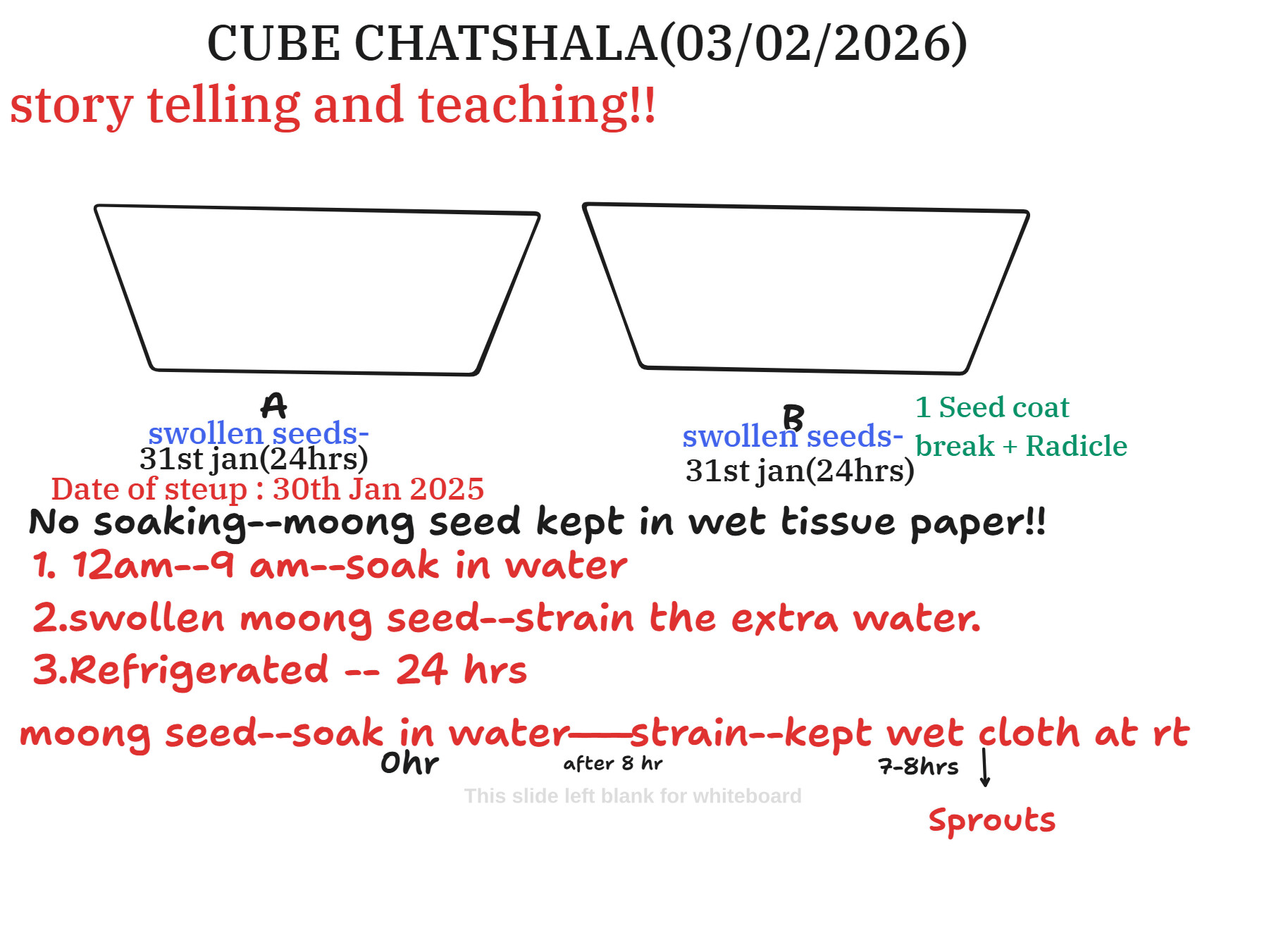
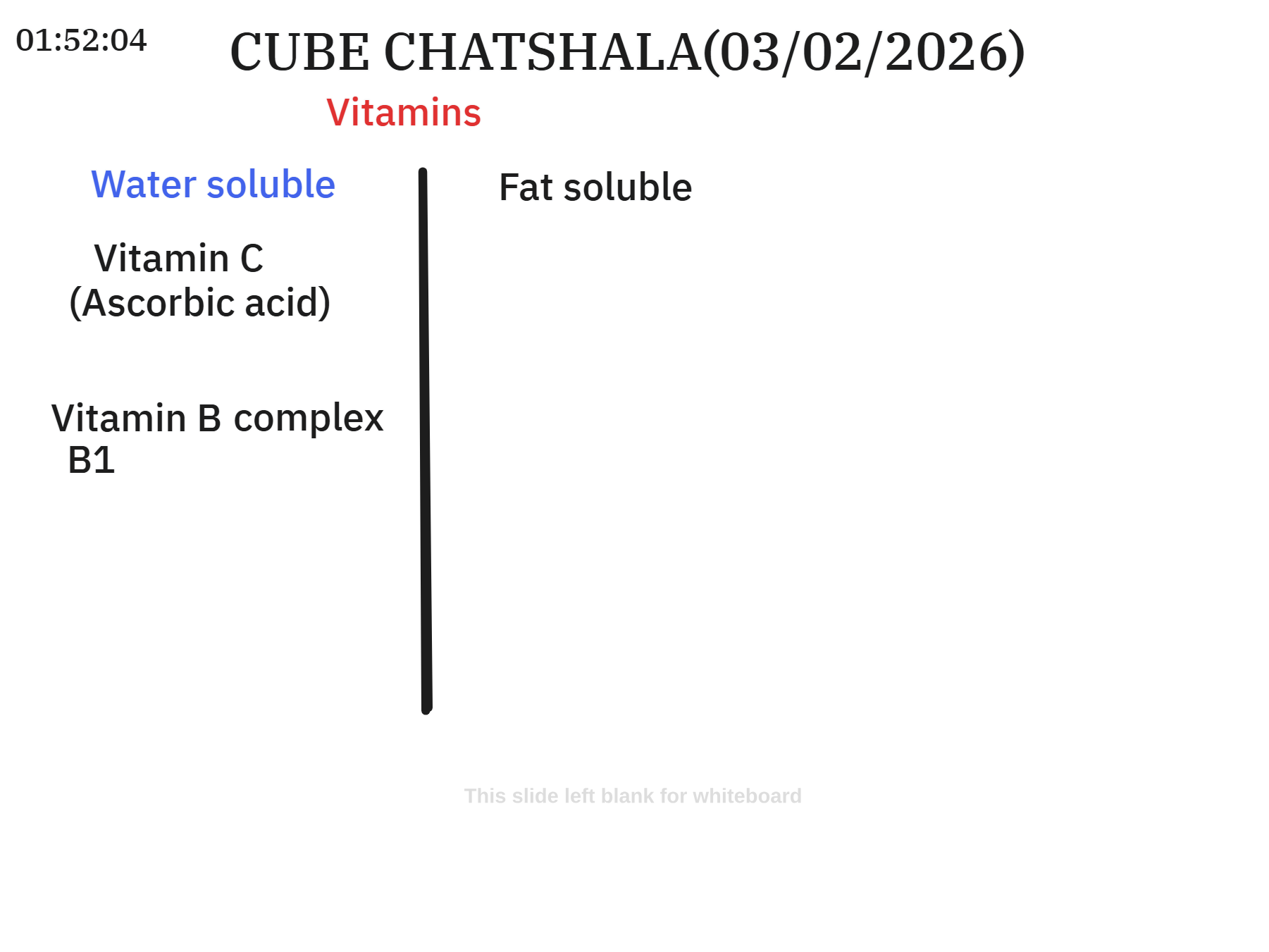
Shama and Sailekshmi contributed to the pedagogical framing of the experiment, encouraging storytelling as a method for teaching scientific concepts. Shama soaked moong seeds in the water from 12am to 9am, removing the excess water and keeping them in the fridge for 24 hours. Similar to Abijeet, he stated that his mother would soak moong seeds in water for 8 hours, strain the excess water, and wrap them in a cloth for 7-8 hours. The session transitioned into a classification activity led by Sneha and Seethalekshmi, focusing on vitamins. A whiteboard slide was used to categorize vitamins based on solubility: water-soluble vitamins such as vitamins C and B1 were listed, while the fat-soluble category was intentionally left blank for participant input, fostering interactive learning.
The meeting emphasized inquiry-based learning, peer engagement, and the importance of visual aids in science education. The ChatShaala concluded with reflections on how simple experiments and collaborative discussions can deepen understanding and spark curiosity.
 Provocative Questions
-
What physiological changes occur in moong seeds during the first 8 hours of soaking, and how do these changes influence germination?
-
Why might refrigeration delay or alter the sprouting process, and what does this suggest about seed metabolism?
-
How does the breaking of the seed coat and emergence of the radicle signal the transition from dormancy to active growth?
-
What are the key differences between water-soluble and fat-soluble vitamins in terms of absorption and storage in the human body?
-
Why might the vitamin B complex be grouped together, and how do individual B vitamins differ in function?
-
How can storytelling enhance the retention of scientific concepts in classroom settings?
-
What role does peer-led experimentation play in developing scientific thinking among students?
 What I Have Learned
Today’s ChatShaala reinforced the value of experiential learning in science education. I learned that moong seed germination is a dynamic process influenced by hydration, temperature, and time. Observing the emergence of the radicle after 24 hours provided a tangible marker of biological activity. The classification of vitamins based on solubility clarified how nutrients behave differently in the body, with water-soluble vitamins requiring regular intake due to limited storage. Most importantly, I saw how collaborative inquiry and visual storytelling can transform abstract concepts into engaging, memorable lessons.
 TINKE Moments (This I Never Knew Earlier)
-
Seed Setup Confusion: Some participants initially misunderstood the soaking timeline, assuming refrigeration was part of the germination phase rather than a control step. This prompted a clarification on experimental design and variable isolation.
-
Vitamin Classification Gap: The fat-soluble vitamin section was left blank, which led to a brief pause in discussion. This moment highlighted the need for prior knowledge or prompts to guide classification tasks.
-
Radicle Identification: There was uncertainty in identifying the radicle in container B, which sparked a deeper conversation about seed anatomy and the visual cues of germination.
These moments were not setbacks but opportunities to refine understanding and correct misconceptions through dialogue.
 Gaps and Misconceptions
-
Misconception: Refrigeration was believed by some to accelerate sprouting, when in fact it slows metabolic activity.
-
Gap: The fat-soluble vitamins (A, D, E, K) were not discussed, leaving a gap in the nutritional classification exercise.
-
Misconception: All B vitamins were considered identical, overlooking their distinct roles (e.g., B1 for energy metabolism, B12 for nerve function).
 Photographs During Chatshaala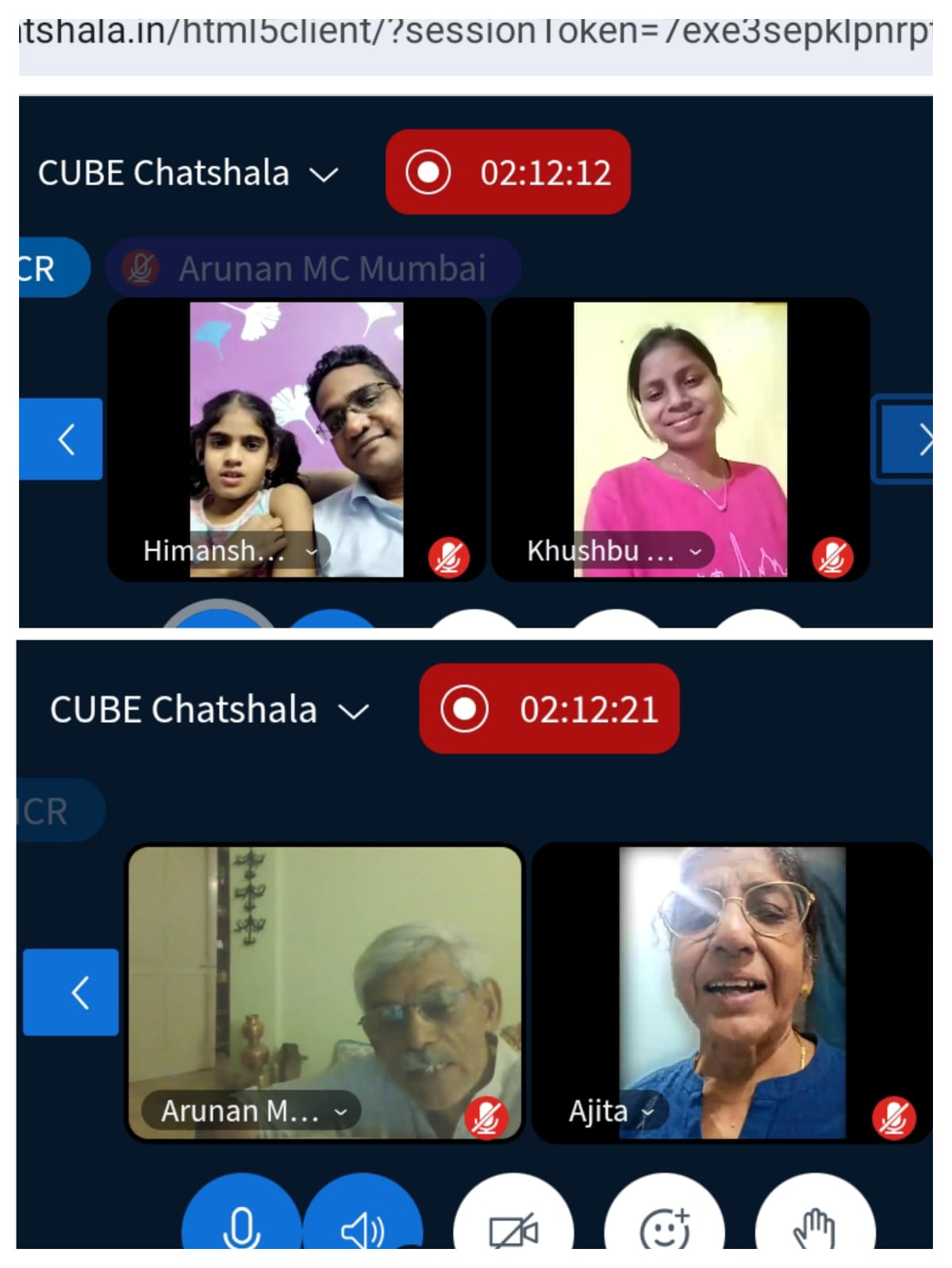
 Reference