 CUBE Chatshaala - Discussion Summary (28.03.2026)
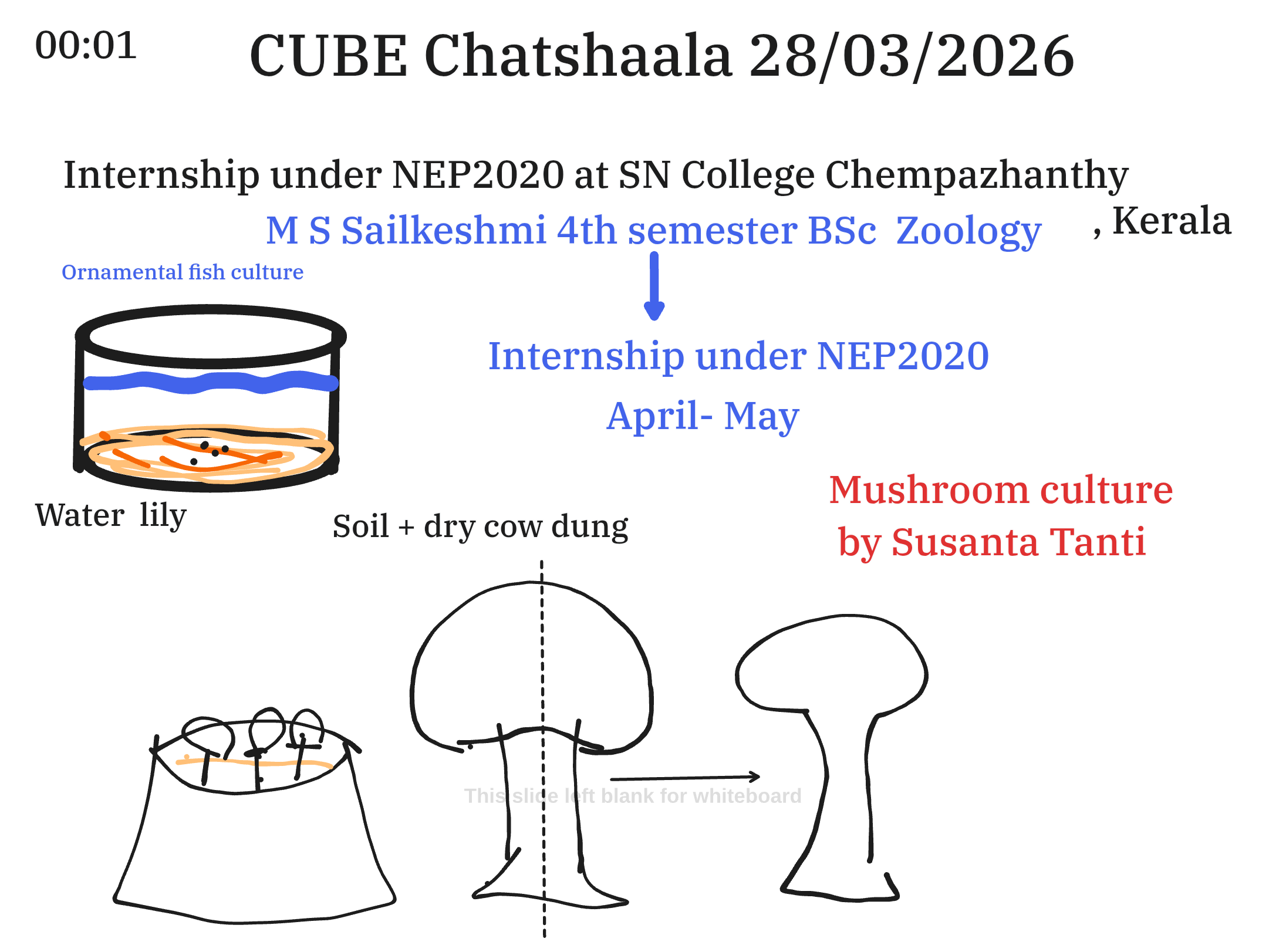
The session opened with an overview of internship placements at SN College Chempazhanthy (April–May 2026), highlighting projects in ornamental fish culture and water lily propagation. This was followed by a focused module on mushroom cultivation, led by Susanta Tanti and Khusbhu Gupta. Key practical inputs included substrate materials (rice husk, paddy straw, soil, and dry cow dung, as well as vermicompost) and step-by-step notes on producing and multiplying mycelium and grain spawn for inoculation.
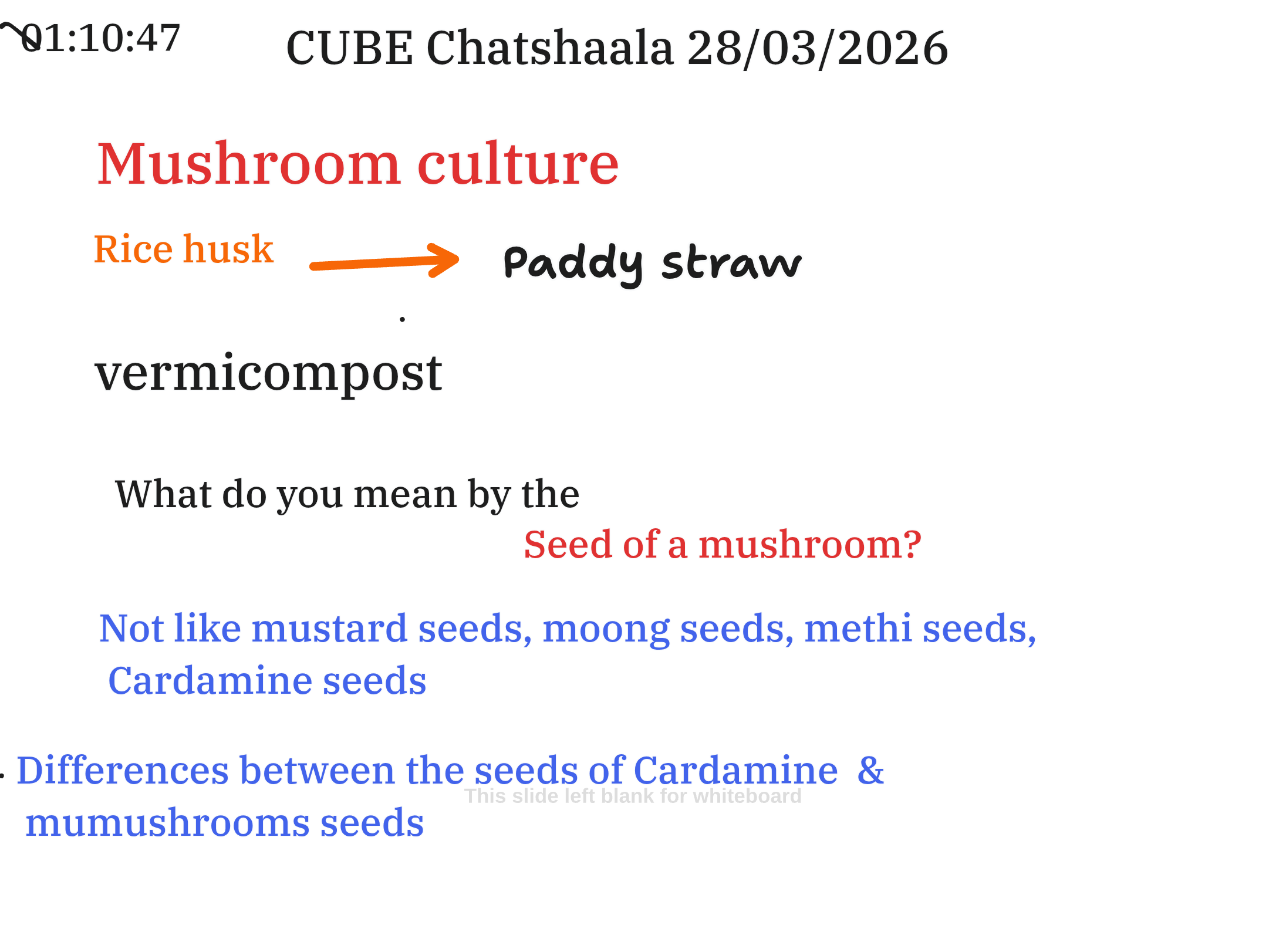
A central conceptual discussion addressed the question “What do we mean by the seed of a mushroom?” Participants contrasted plant seeds (mustard, moong, methi, Cardamine) with fungal reproductive units, clarifying that mushrooms reproduce via spores and mycelial networks, not botanical seeds. This distinction was reinforced with authoritative background on mushroom form and life cycle.
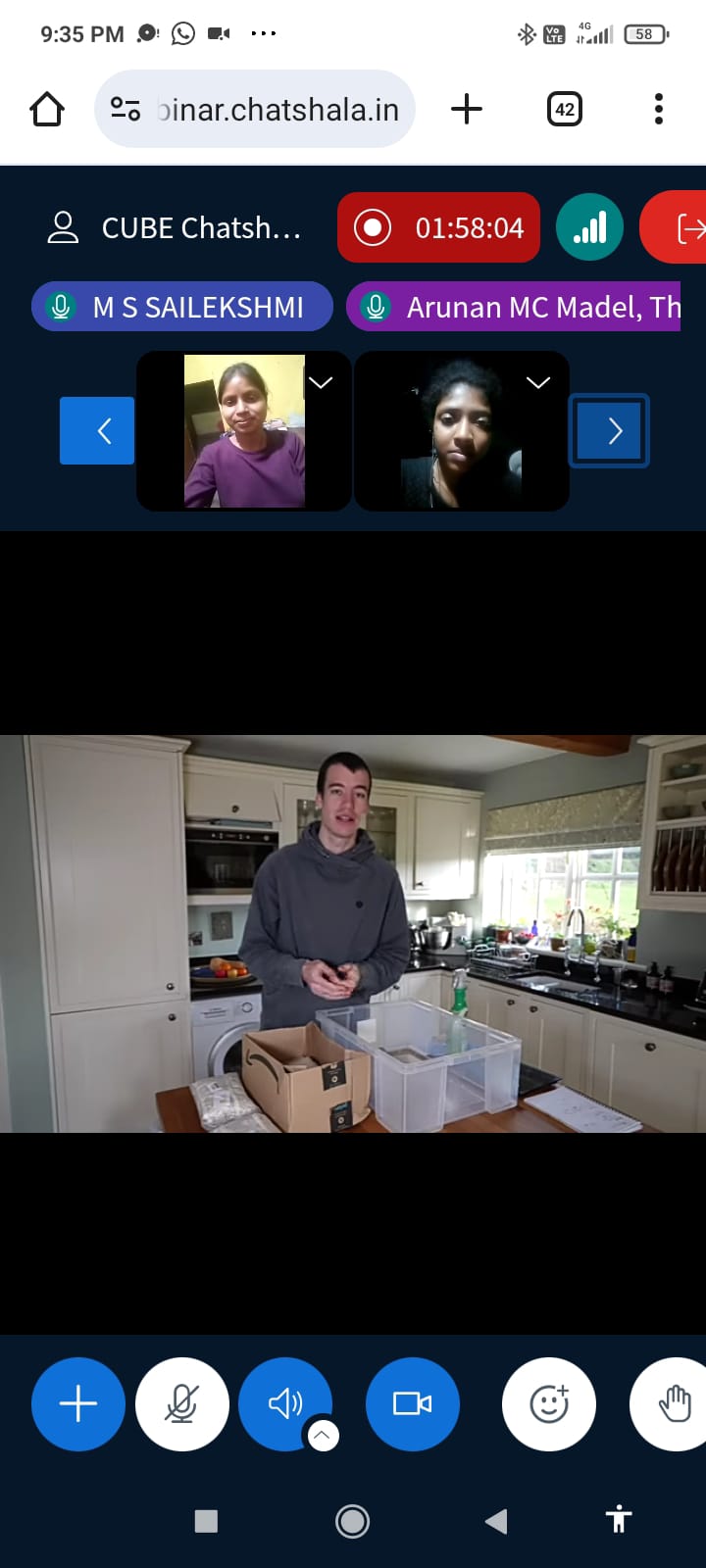
Practical demonstrations and references emphasized low‑tech, accessible cultivation methods: using pasteurised or sterilised grain spawn, maintaining sterile technique for jar spawn, and simple fruiting setups (cardboard, bottles, or bags) suitable for small‑scale student projects. Contamination control, temperature management, and substrate selection for species‑specific preferences were recurring themes.
 Provocative Questions
-
How would you design a low‑cost, student‑run protocol to produce sterile grain spawn reliably in a college lab with limited equipment?
-
What measurable criteria should determine whether a substrate (rice husk vs paddy straw vs sawdust) is optimal for a chosen mushroom species?
-
How can internship projects integrate aquaculture (ornamental fish) and aquatic plants (water lily) with mushroom cultivation to create circular, resource‑efficient systems?
-
What safeguards and training are necessary to prevent food‑safety risks when students grow edible mushrooms for consumption?
 What I Have Learned
-
Mushrooms are fungal sporophores; they do not produce botanical seeds. Understanding spores and mycelium is essential before attempting cultivation.
-
Grain spawn production is a critical intermediate step that multiplies mycelium under controlled, sterile conditions before inoculating bulk substrate.
-
Simple, low‑skill fruiting methods (cardboard boxes, bottles) can yield reliable results for outreach and teaching, but sterile technique and contamination monitoring remain non‑negotiable.
TINKE Moments (This I Never Knew Earlier)
-
Terminology Tension: The “seed vs spore” confusion was a pivotal moment—clarifying this removed a major conceptual barrier and redirected practical planning.
-
Sterility Realization: When participants saw how contamination colors indicate failure, the group recognized that process control (pressure‑cooking, filtered lids) is as important as substrate choice.
-
Scale‑up Challenge: Translating a small jar‑based protocol to batch production highlighted gaps in equipment, space, and waste handling—an operational TINKE requiring institutional support.
 Gaps, and Misconceptions
-
Misconception: Treating mushroom “seeds” like plant seeds. Correction: Use spores/mycelium terminology and explain the life cycle.
-
Gap: Clear SOPs for sterilization and contamination response were missing; drafting concise lab protocols and safety checklists is a priority.
 Photographs during ChatShaala



 Referance