 CUBE Chatshaala - Discussion Summary
The CUBE Chatshaala session on October 7, 2026, brought together 11 Cubists representing 7 regional centers—spanning Uttarakhand, Maharashtra, Kerala, Chhattisgarh, and Uttar Pradesh—to evaluate frugal microbiology techniques, low-cost culturing methods, and optical microscopy.



The discussion opened by exploring alternative microbial culture media. Participants examined why boiled potato slices function as an effective solid nutrient medium for bacterial growth, contrasting starch-rich natural substrates with standardized synthetic media. The conversation then shifted to practical procedures for isolating nitrogen-fixing Rhizobium bacteria using fenugreek (methi) plants. The consensus protocol outlined several steps: soaking fenugreek seeds overnight, sowing them in soil, waiting approximately one month for root nodule development, sterilizing the outer nodule surface using mercuric chloride (HgCl2), washing thoroughly with distilled water (D/W), and crushing the nodules using clean forceps. Liquid growth formulations were also examined, specifically Yeast Extract Mannitol Broth (YEMB), where yeast extract serves as the nitrogen source and mannitol (or mannose) provides the primary carbon source. Broader observational challenges were raised, including tracking microbial growth on a chapati left exposed for two days and evaluating BT crop samples collected from Manali’s site.
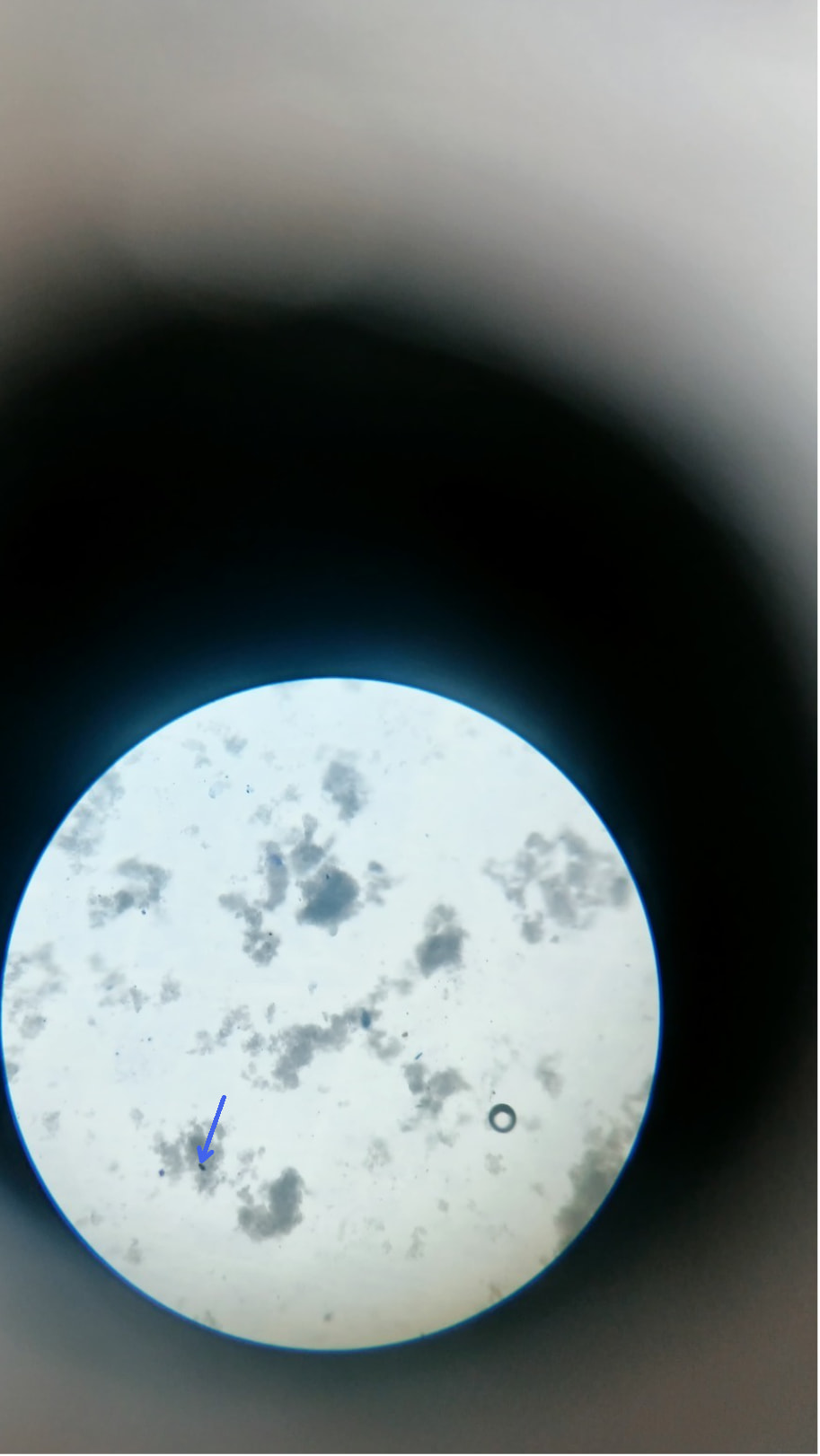
A central focus of the meeting was M.S. Sailekshmi’s experiment aimed at visualizing curd bacteria (Lactobacillus) under an optical microscope. Sailekshmi shared her initial procedure: placing curd in a Petri plate, transferring a drop onto a watch glass, and applying a drop of methylene blue. The group critically reviewed this methodology alongside field-of-view images and quadrant/streak diagrams. They analyzed how core structural components of the microscope—including the eyepiece, tube, coarse and fine focus knobs, objective lenses, stage, condenser, aperture diaphragm, reflector mirror, and base—interact with sample thickness and staining techniques to influence overall optical clarity.
 Provocative Questions
-
Nutrient Availability: What specific metabolic enzymes allow bacteria to utilize complex starches in a boiled potato slice compared to simple carbon sources like mannitol in synthetic Yeast Extract Mannitol Broth?
-
Sterilization Safety: Given that mercuric chloride (\text{HgCl}_2) poses toxicity risks in decentralized home setups, what household-accessible reagents could achieve effective surface sterilization of root nodules without damaging internal plant or bacterial cell structures?
-
Sample Preparation Geometry: Why does placing curd on a curved watch glass with methylene blue fail to yield distinct cellular resolution under higher objective magnifications compared to a classic heat-fixed glass slide smear?
-
Illumination Physics: How do manual adjustments of the aperture diaphragm and condenser height modify light scattering to enhance contrast when viewing bacterial cells stained with methylene blue?
What I Have Learned -
Accessibility of Alternative Media: Kitchen staples like boiled potato slices provide an accessible, starch-rich solid growth medium, demonstrating that basic bacterial culturing does not always require high-cost commercial agar.
-
Methodical Isolation Protocols: Isolating biological nitrogen-fixers like Rhizobium requires a strict chronological sequence—from germinating seeds and harvesting root nodules to surface decontamination and sterile crushing—to prevent soil contaminants from obscuring the target organism.
-
Impact of Specimen Thickness on Optics: Applying methylene blue directly to raw curd on a watch glass creates a thick, three-dimensional suspension. Light cannot pass through dense protein-fat matrices evenly, proving that proper thin-smear preparation is critical for clear optical visualization.
-
Systematic Microscope Alignment: Optical resolution depends on more than just lens power; fine-tuning the light path using the condenser, aperture diaphragm, and reflector mirror is essential for resolving fine microbial details.
 TINKE Moments (This I Never Knew Earlier)
-
TINKE Moment 1: Thick Wet Suspensions vs. Heat-Fixed Thin Smears
- Context: Sailekshmi attempted to view curd bacteria by placing a drop of curd on a watch glass and mixing it directly with methylene blue dye.
- Challenge/Insight: Observing a wet drop on a curved watch glass creates a thick layer where light gets scattered by milk lipids and proteins. This prevents individual bacterial rods from coming into a single focal plane.
- Actionable Improvement: Transition from watch glass preparations to standard flat slides. Dilute the curd in clean water, spread a thin film across the slide, air-dry, heat-fix, stain, and gently rinse before viewing under high magnification.
-
TINKE Moment 2: Re-evaluating Hazardous Reagents in Frugal Labs
- Context: The standard protocol recorded on the board specified mercuric chloride (HgCl2) for surface-sterilizing root nodules.
- Challenge/Insight: Mercuric chloride is a heavy-metal toxin that presents severe handling and disposal challenges for home-based or decentralized student laboratories.
- Actionable Improvement: Replace hazardous salts with accessible, lower-toxicity alternatives such as 70% ethanol or diluted sodium hypochlorite (household bleach), followed by thorough rinses with sterile distilled water (D/W).
 Gaps and Misconceptions
-
Improper Vessel Selection for Microscopy: Using a watch glass instead of a flat microscope slide. Watch glasses lack the uniform flatness required for high-magnification objective lenses, rendering working distance adjustments unstable and preventing the use of coverslips or oil immersion lenses.
-
Omitting the Fixation Step: Adding dye directly to wet, unfixed cells. Without air-drying and heat-fixing, bacterial cells remain suspended and drift during observation, while undigested fat globules block light transmission.
-
Carbon Source Terminology in Broth Media: The board listed “Mannitol - Mannose” under YEMB components. While both are hexose derivatives, mannitol is a sugar alcohol specifically chosen for YEMB because Rhizobium metabolizes it efficiently without causing rapid medium acidification, whereas substituting mannose can alter growth kinetics depending on the strain.
 Photographs during ChatShaala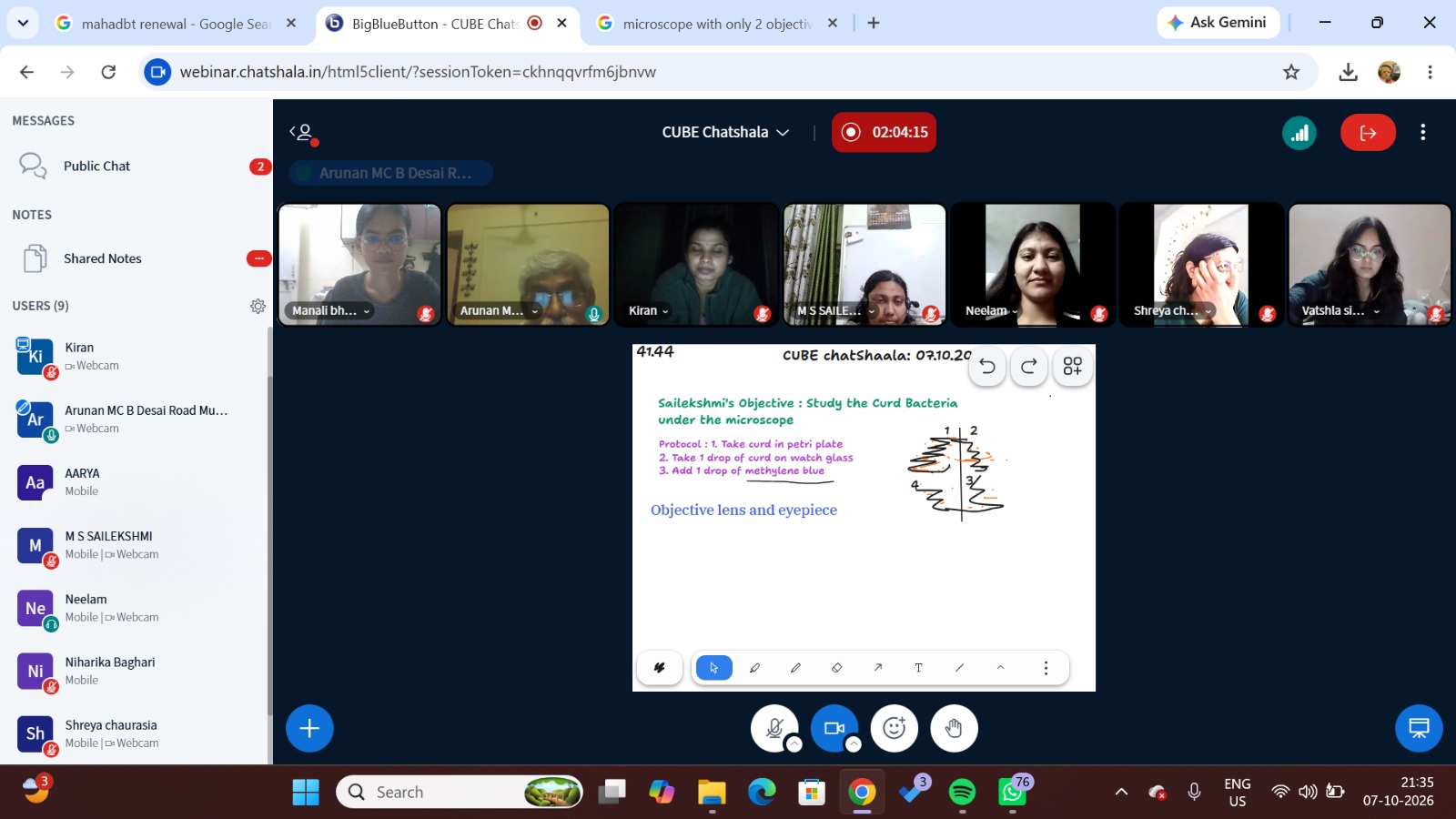
 Reference