CUBE Chatshaala - Discussion Summary
The CUBE ChatShaala session held on February 2, 2026, offered a rich exploration of foundational microbiology and biochemistry concepts through interactive discussion and visual aids. The session began with an introduction to microorganisms, emphasizing the distinction between pathogenic and non-pathogenic types. Cubists investigated how microbes affect everyday phenomena such as food spoilage and fermentation, using milk-based setups to demonstrate microbial activity. Setup A (milk + water) emitted a foul smell, indicating spoilage, while Setup B (milk + curd) produced a sour smell, characteristic of fermentation. Setup C (plain milk) served as a control.
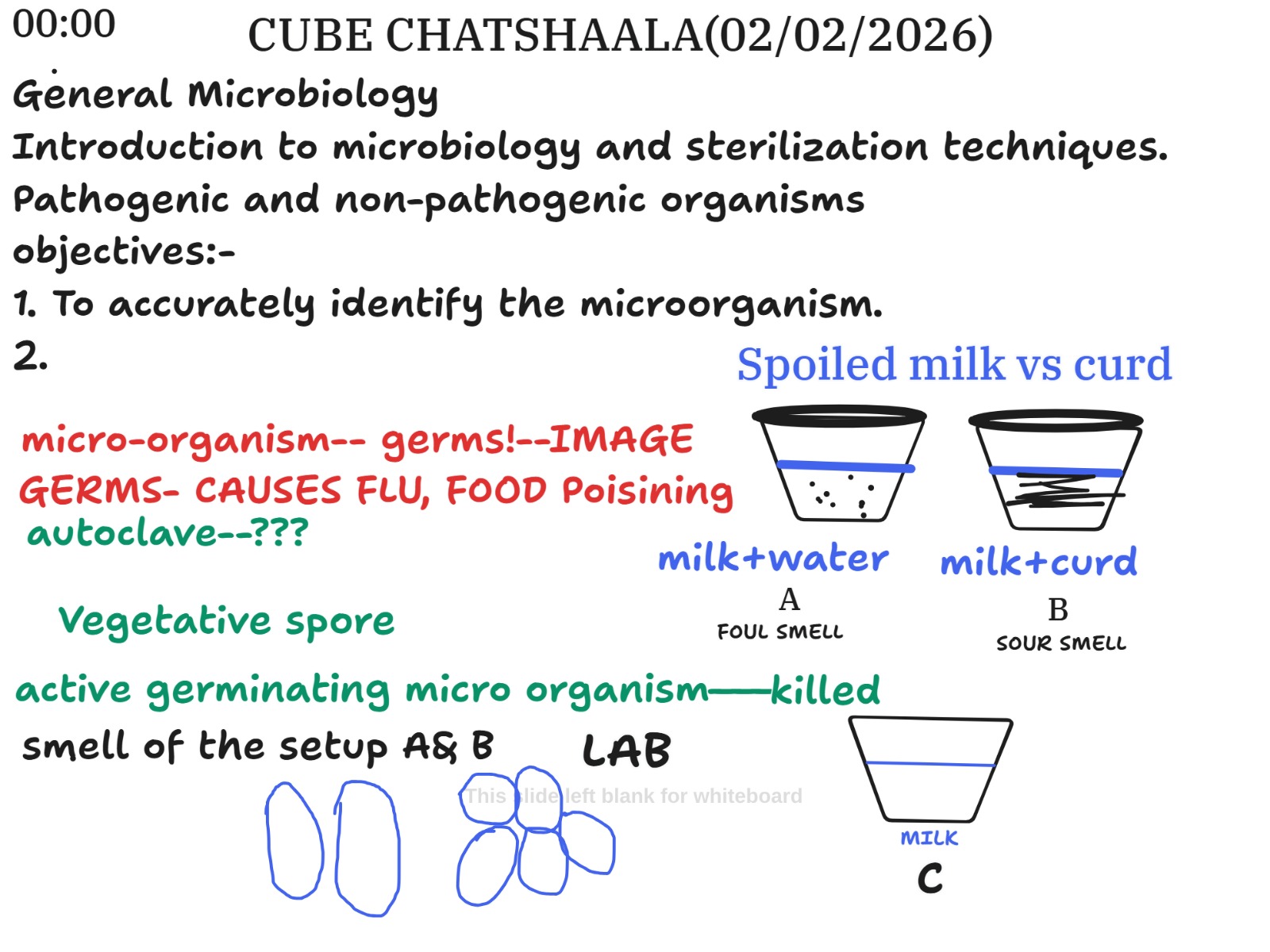
The conversation then shifted to sterilization techniques, particularly the role of autoclaving in eliminating vegetative spores—active, germinating microorganisms that are typically more vulnerable to heat. This led to a discussion on laboratory practices and the sensory cues (like smell) that help identify microbial presence.
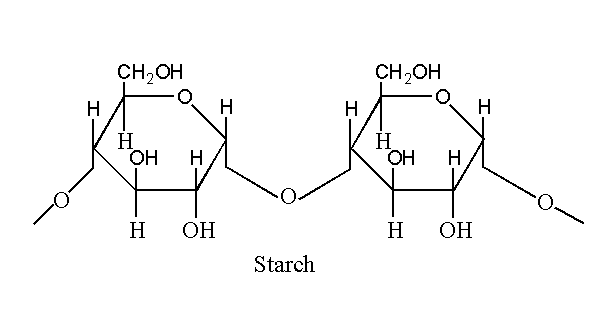
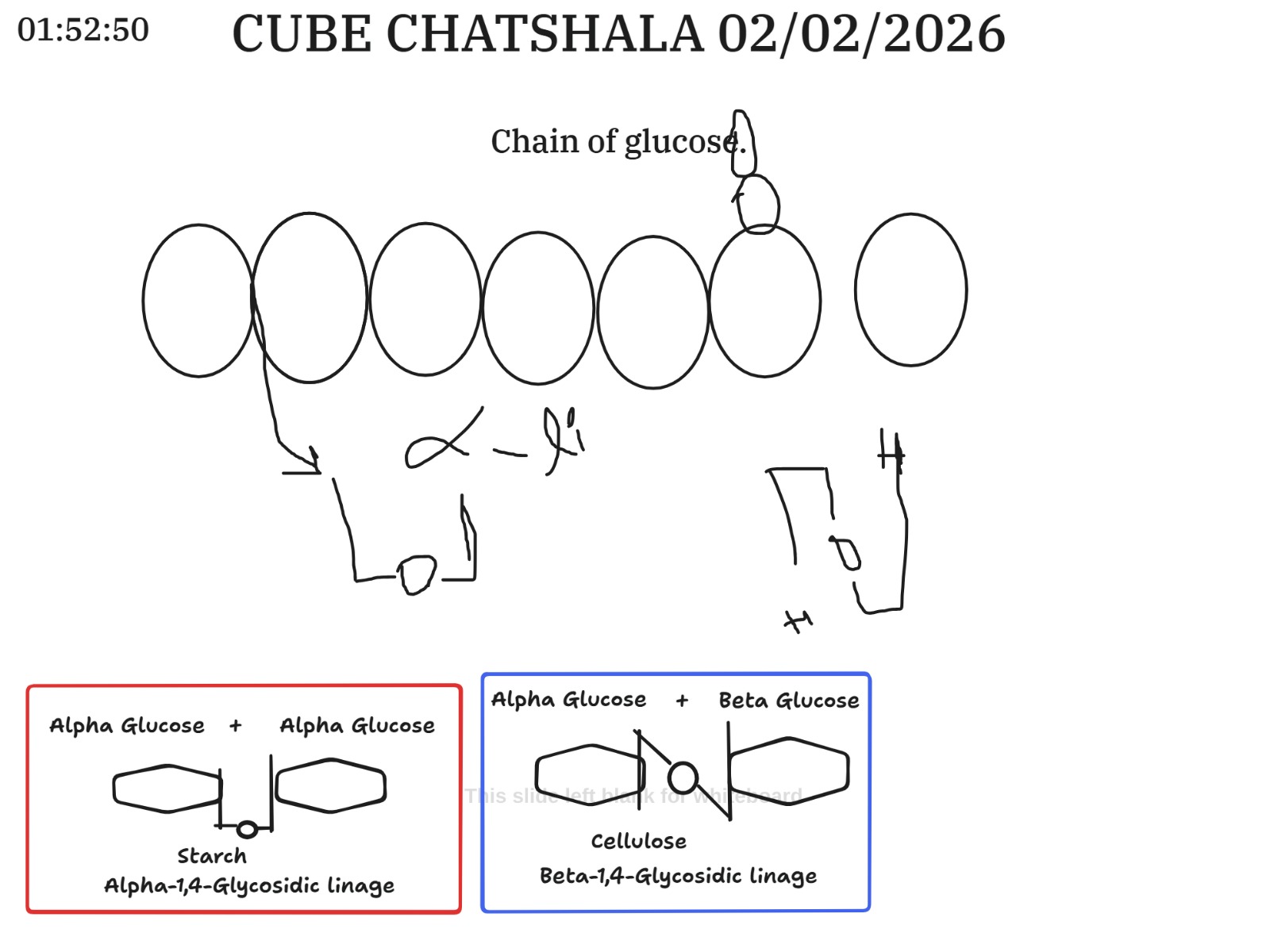
In the second half of the session, the focus turned to biochemistry, specifically the structural differences between polysaccharides. Diagrams illustrated how chains of glucose molecules form starch and cellulose. Starch is composed of alpha-glucose units linked via alpha-1,4-glycosidic bonds, while cellulose consists of alternating alpha and beta-glucose units connected by beta-1,4-glycosidic bonds. These structural differences explain why starch is digestible by humans, whereas cellulose is not.
The session was marked by active participation, curiosity, and a hands-on approach to learning, blending theoretical knowledge with practical observation.
 Provocative Questions
-
Why does the combination of milk and curd produce a sour smell, while milk and water result in a foul odor?
-
What makes vegetative spores more susceptible to autoclaving compared to dormant spores?
-
How can we use sensory cues like smell to differentiate between types of microbial activity in a lab setting?
-
What implications do glycosidic linkages have on the digestibility of polysaccharides like starch and cellulose?
-
Could altering the glycosidic bond in cellulose make it digestible for humans? What would be the biochemical consequences?
-
How do pathogenic and non-pathogenic microorganisms interact in mixed cultures, and what determines dominance?
-
In what ways can understanding microbial fermentation improve food preservation techniques?
 What I Have Learned
Today’s ChatShaala session deepened my understanding of how microorganisms influence both health and food systems. I learned that not all microbes are harmful—some, like those in curd, play beneficial roles in fermentation. The concept of vegetative spores and their vulnerability to heat clarified how sterilization works in lab environments. Additionally, the biochemical distinction between starch and cellulose, rooted in their glycosidic linkages, helped me appreciate why certain carbohydrates are digestible while others are not. The use of visual diagrams and real-world examples made these concepts more tangible and memorable.
 TINKE Moments (This I Never Knew Earlier)
-
Understanding Autoclave Mechanisms: While autoclaving was mentioned, the exact parameters (temperature, pressure, duration) and how they affect different microbial forms were not fully explored.
-
Microbial Identification Techniques: The session emphasized the importance of identifying microorganisms but did not delve into specific methods like staining, culturing, or genetic sequencing.
-
Role of Beta-Glucose in Cellulose: The biochemical implications of beta-glucose in cellulose structure were touched upon but merit deeper exploration, especially regarding enzyme specificity and digestion.
 Gaps and Misconceptions
-
Incomplete Objective Listing: The slide listed only one objective—accurate identification of microorganisms—without elaborating on the second. This left a gap in understanding the full scope of the session’s goals.
-
Misconception About Smell as Sole Indicator: While smell is a useful cue, relying solely on it for microbial identification can be misleading. Other factors like visual changes, pH shifts, and microbial assays are essential for accurate analysis.
-
Simplified View of Glycosidic Linkages: The diagrams effectively showed the difference between alpha and beta linkages, but the broader implications—such as enzymatic breakdown and structural rigidity—were not fully addressed.
 Photographs from Chatshaala

 Reference
-
https://www.sciencedirect.com/science/article/abs/pii/S1359511325000601
-
🍋 Culture Clash: Lemon vs Curd – The Ultimate Fermentation Face‑off!
-
Yeast Extract: Characteristics, Production, Applications and Future Perspectives - PMC
-
https://researchoutreach.org/wp-content/uploads/2020/10/shutterstock_1424439167.jpg
-
https://themasterchemistry.com/wp-content/uploads/2022/08/image-26.png