 CUBE ChatShaala Summary – 14.08.2025
Topic: Reproduction in Chlorohydra – Budding vs Fragmentation
Presented by: Mamta, CHM College, Ulhasnagar, Mumbai
Location of Observation: Ulhasnagar, Maharashtra, India
Organism Studied: Chlorohydra (Hydra viridissima)
Objective: To investigate and compare two modes of reproduction in chlorohydra—budding and fragmentation—under laboratory conditions.
Summary of Discussion
The session focused on Mamta’s ongoing study on Chlorohydra housed in dechlorinated (DC) water, with a population of around 45–50 individuals. The research aimed to observe reproduction through budding (development of new hydras from a growth on the parent) and fragmentation (regeneration from severed body parts).
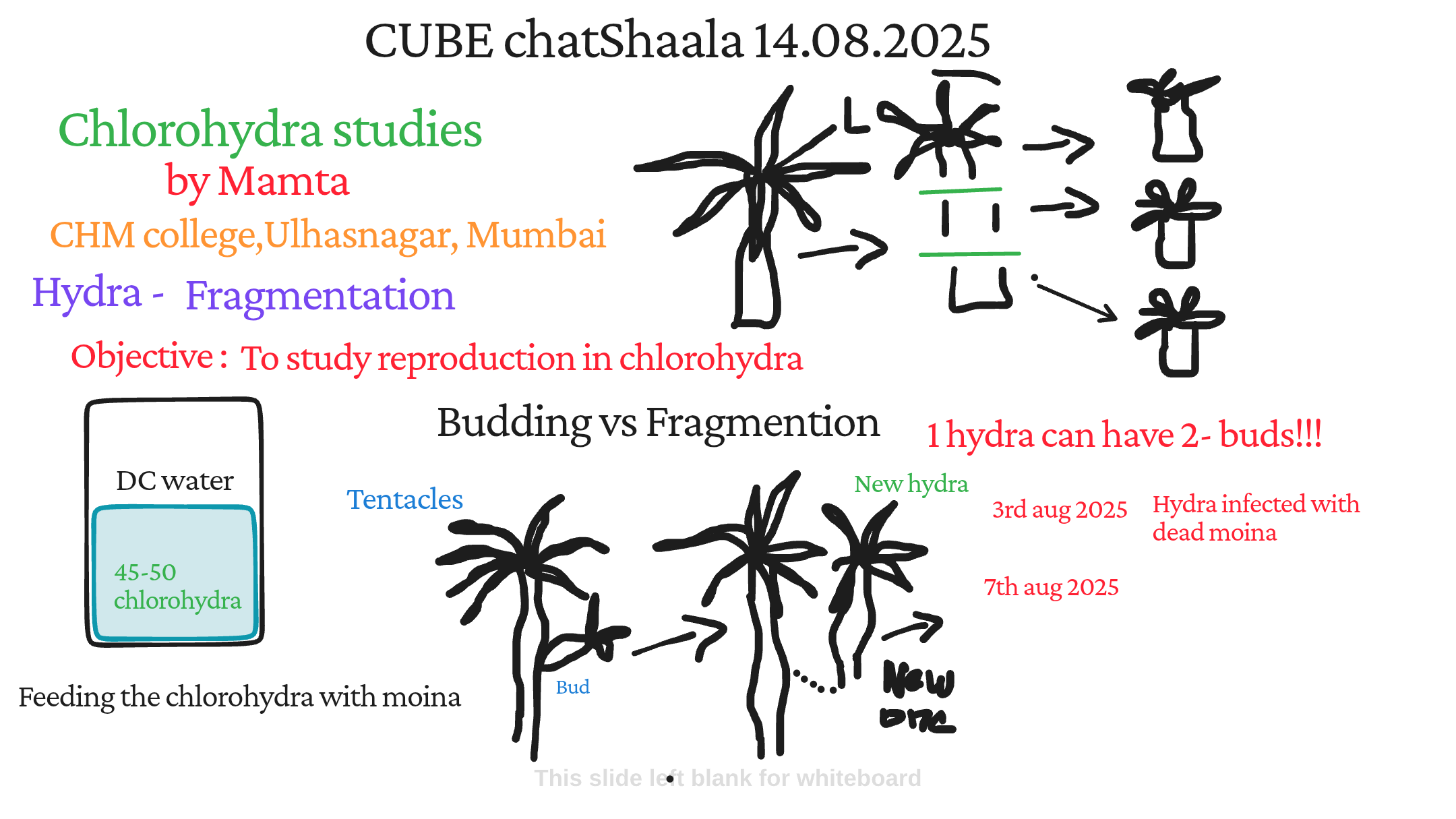
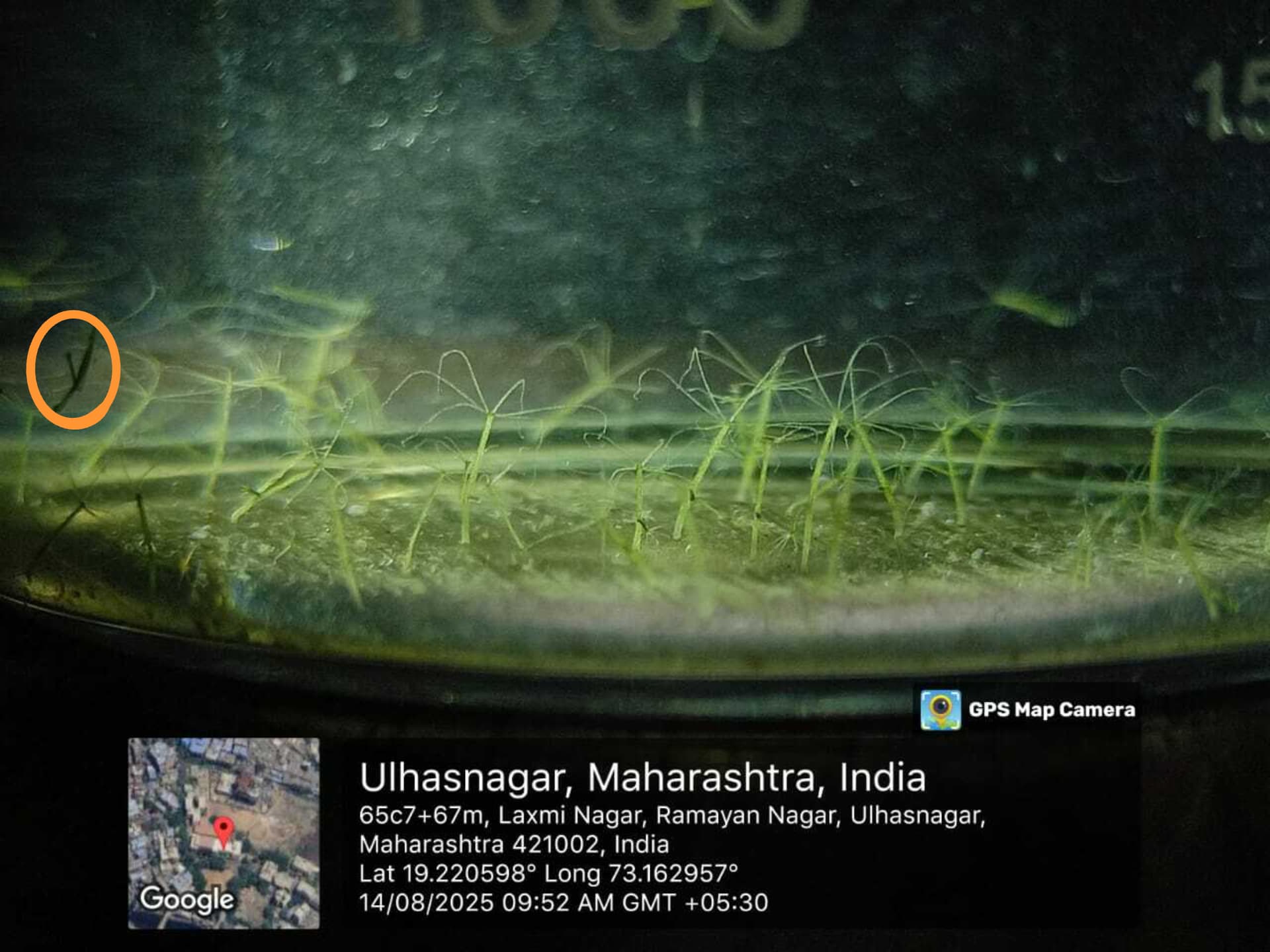
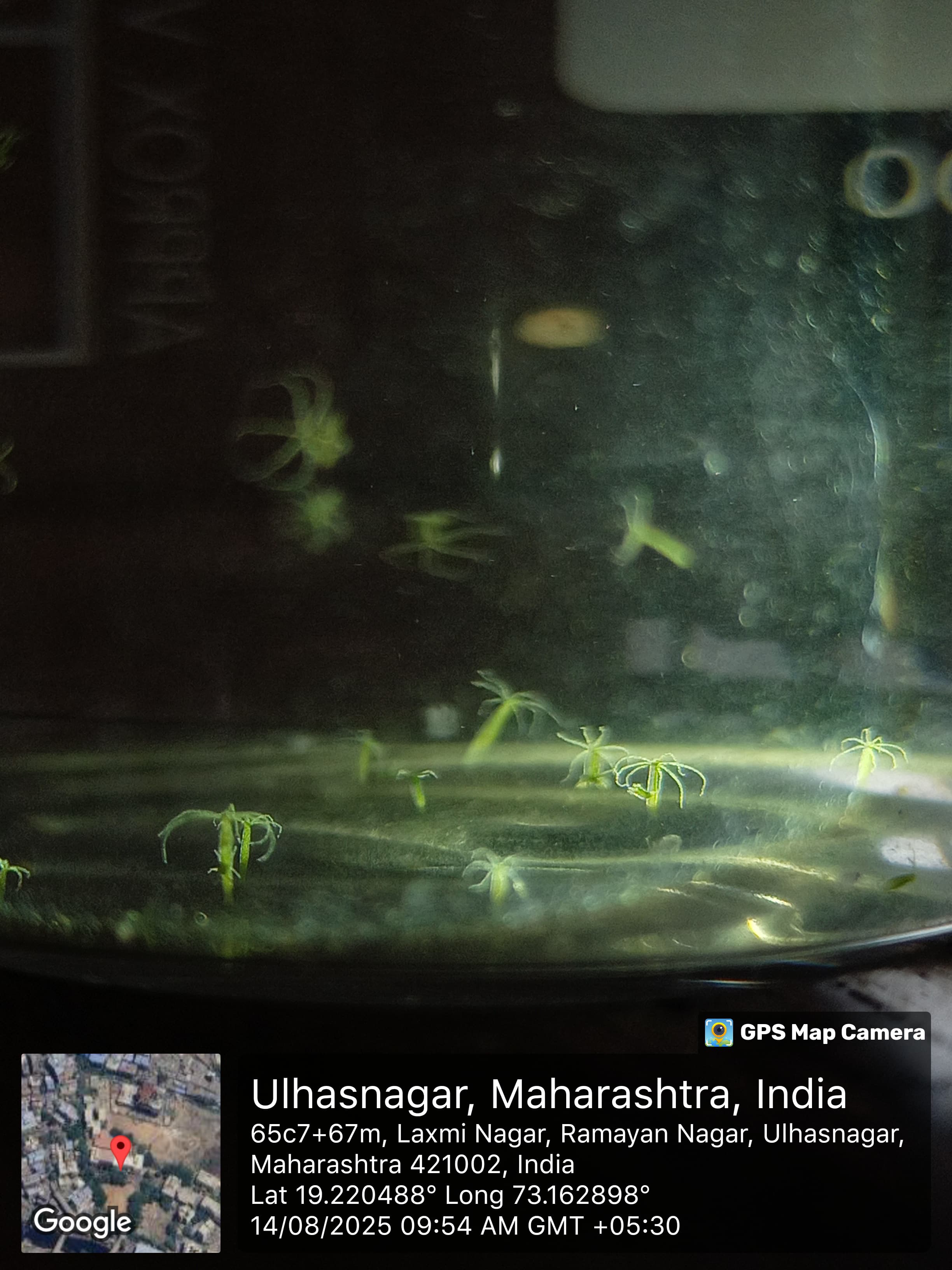

Visual documentation confirmed the presence of healthy hydras, some carrying two simultaneous buds, which challenges the common perception that budding usually occurs one at a time. The process was tracked over several days:
-
3rd Aug 2025: Initial observations, including hydra infected after feeding with dead Moina.
-
7th Aug 2025: New buds emerging and some fragment recovery noticed.
Budding was illustrated as a gradual protrusion near the mid-body, developing tentacles before detaching. Fragmentation involved the hydra body being split into sections—each potentially regenerating into a full organism.
Feeding experiments with Moina (a freshwater microcrustacean) provided insights into how diet and prey condition (alive vs. dead) might influence hydra health and reproduction.
Key Observations & Learning Points
-
Multiple Budding in a Single Hydra: One hydra can develop more than one bud at a time, suggesting higher reproductive efficiency under favorable conditions.
-
Fragmentation as a Viable Mode: Even body sections without a complete structure can regenerate into new hydras.
-
Feeding Impact: Prey quality appears to affect hydra vitality—dead Moina possibly leading to infection or reduced activity.
-
Population Maintenance: A relatively small tank can support a high density of hydras if water is clean and feeding is regulated.
 TINKE Moments (Things I Never Knew Earlier )
-
 Hydra viridissima can sustain two concurrent buds, a fact not often emphasized in basic zoology texts.
 -
 Fragmentation in hydras is not just accidental damage recovery—it can serve as a natural reproductive strategy.
 -
 Prey freshness matters—feeding with dead organisms might have unintended health consequences.
 -
 Despite being small, hydras can maintain high population densities without aggressive competition if environmental conditions remain optimal.
 Queries to Spark Curiosity
-
 If one hydra can make two buds at a time, how fast could a population multiply in just one month?
 -
 Does fragmentation always produce identical clones, or can regeneration introduce variation?
 -
 Which is more energy-efficient for hydra—budding or fragmentation?
 -
 Does feeding with live prey vs. dead prey change not just health, but also the speed of reproduction?
 References
-
Hydra: Reproduction (Budding and Sexual), Regeneration, Immortality
-
The effect of temperature on asexual reproduction in Hydra vulgaris - PMC
@KiranKalakotiR @SN1261 @2020ugchsncnseethala @sakshiconsultant2002 @ajitadeshmukh13 and others.