CUBE ChatShaala – Discussion Summary
Today’s CUBE ChatShaala session, held on 10 August 2026, brought together Sailekshmi, Aarya Takke, Manali Bhujade, Kiran Kalakoti, Arunan MC, Sujal Darekar, and Niharika Baghari for a discussion that moved fluidly between bacterial biology, home-lab microscopy, and two ongoing citizen-science experiments in biofertilizer and biopesticide preparation.
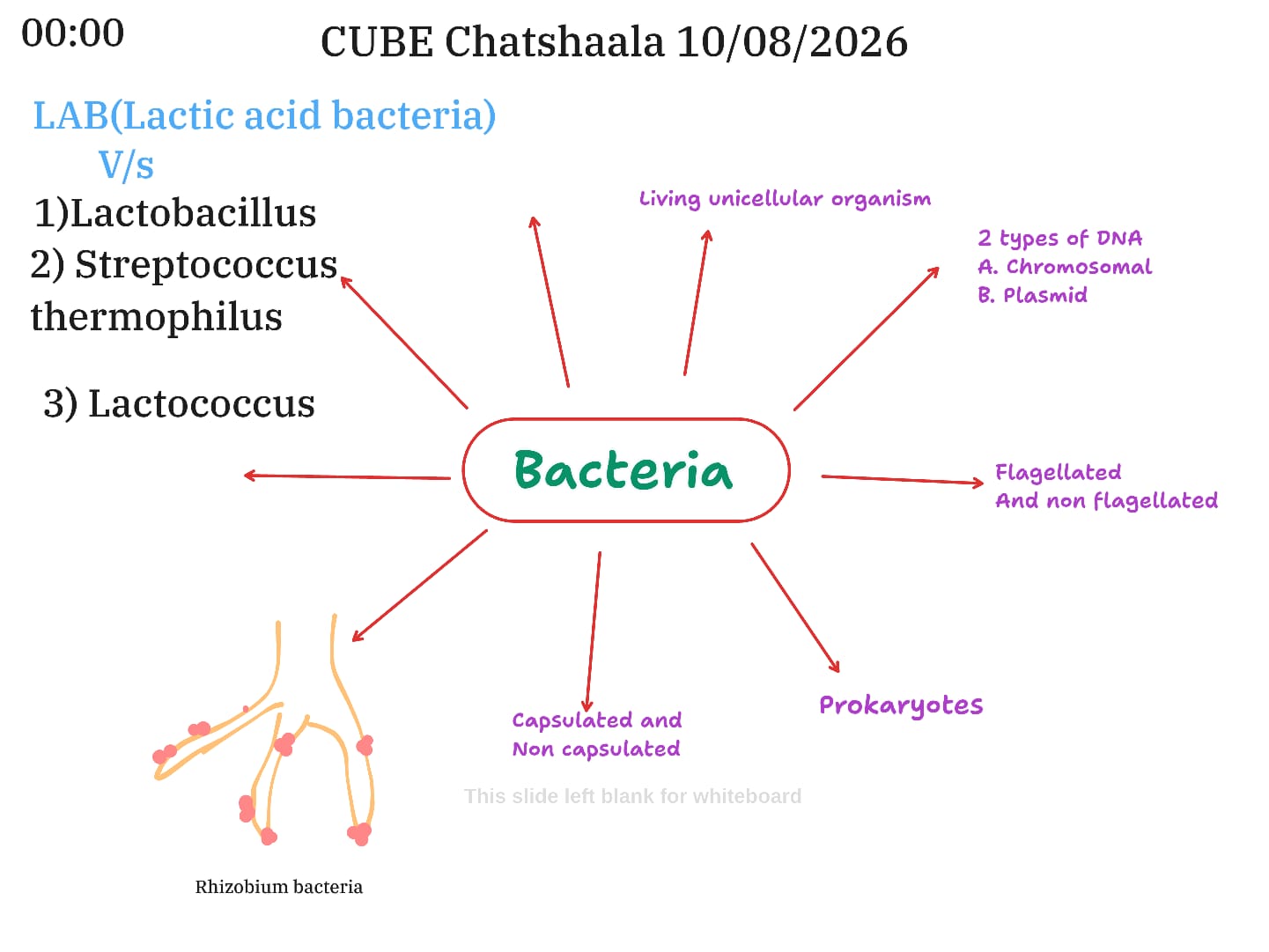
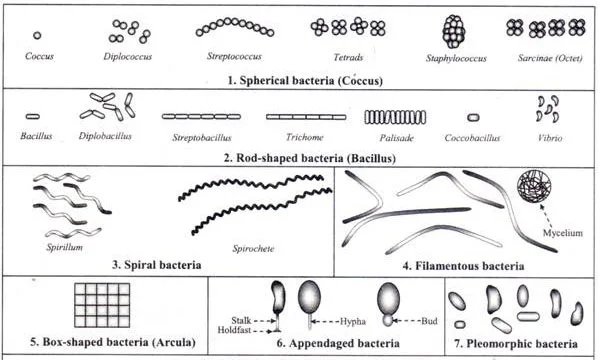
The session opened with a broad look at bacteria as a domain of life, using a mind-map style whiteboard to organise the discussion. The participants established bacteria as living unicellular organisms and prokaryotes, meaning they lack a membrane-bound nucleus. A useful point raised was that bacterial genetic material exists in two distinct forms: the main chromosomal DNA that carries the essential genes for survival, and plasmid DNA, which are smaller, separate circular pieces of genetic material that bacteria can exchange with one another, often carrying traits like antibiotic resistance. The conversation also covered structural variation among bacteria, distinguishing flagellated species (which possess whip-like appendages for movement) from non-flagellated ones, as well as capsulated versus non-capsulated forms, where the capsule acts as a protective outer layer that also helps bacteria evade immune detection in a host.
From this general framework, the discussion narrowed to lactic acid bacteria, comparing three familiar genera: Lactobacillus, Streptococcus thermophilus, and Lactococcus. These organisms were discussed in the context of curd and yogurt fermentation, where they convert lactose into lactic acid, lowering the pH of milk until the casein proteins coagulate and form curd. It was noted that Streptococcus thermophilus and Lactobacillus species are the classic yogurt-starter pairing, while Lactococcus lactis is more closely associated with cheese and buttermilk production. Rhizobium bacteria were brought in as a contrasting example, a soil-dwelling, nitrogen-fixing genus that forms a symbiotic relationship with the roots of leguminous plants. The participants discussed how Rhizobium colonises root hairs and stimulates the formation of nodules, small swellings on the root system where the bacteria convert atmospheric nitrogen into ammonia that the plant can use, receiving carbohydrates and shelter from the host in return.
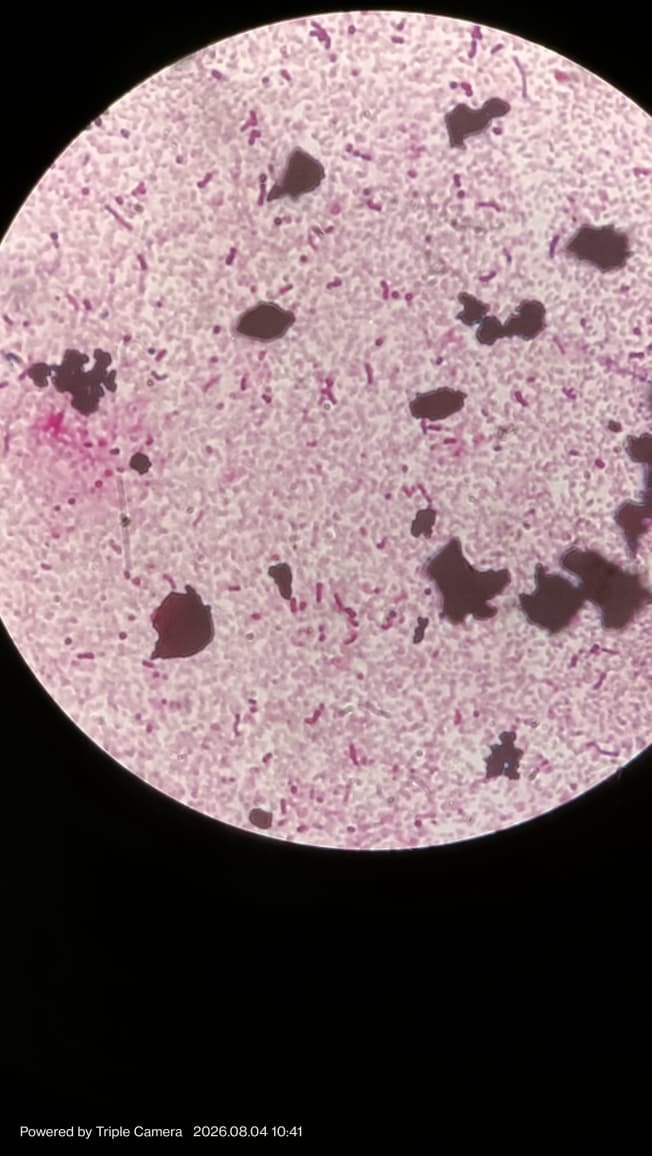
A highlight of the session was the microscopy observation, where a curd sample was examined under a compound microscope at what appeared to be high magnification. Rod-shaped and clustered bacterial forms were visible against the pink-stained background, consistent with the mixed morphology expected in a curd culture containing both rod-shaped Lactobacillus and coccoid Streptococcus cells. Circles were drawn directly on the captured image to mark specific cells of interest, a simple but effective way of directing group attention during a live observation.
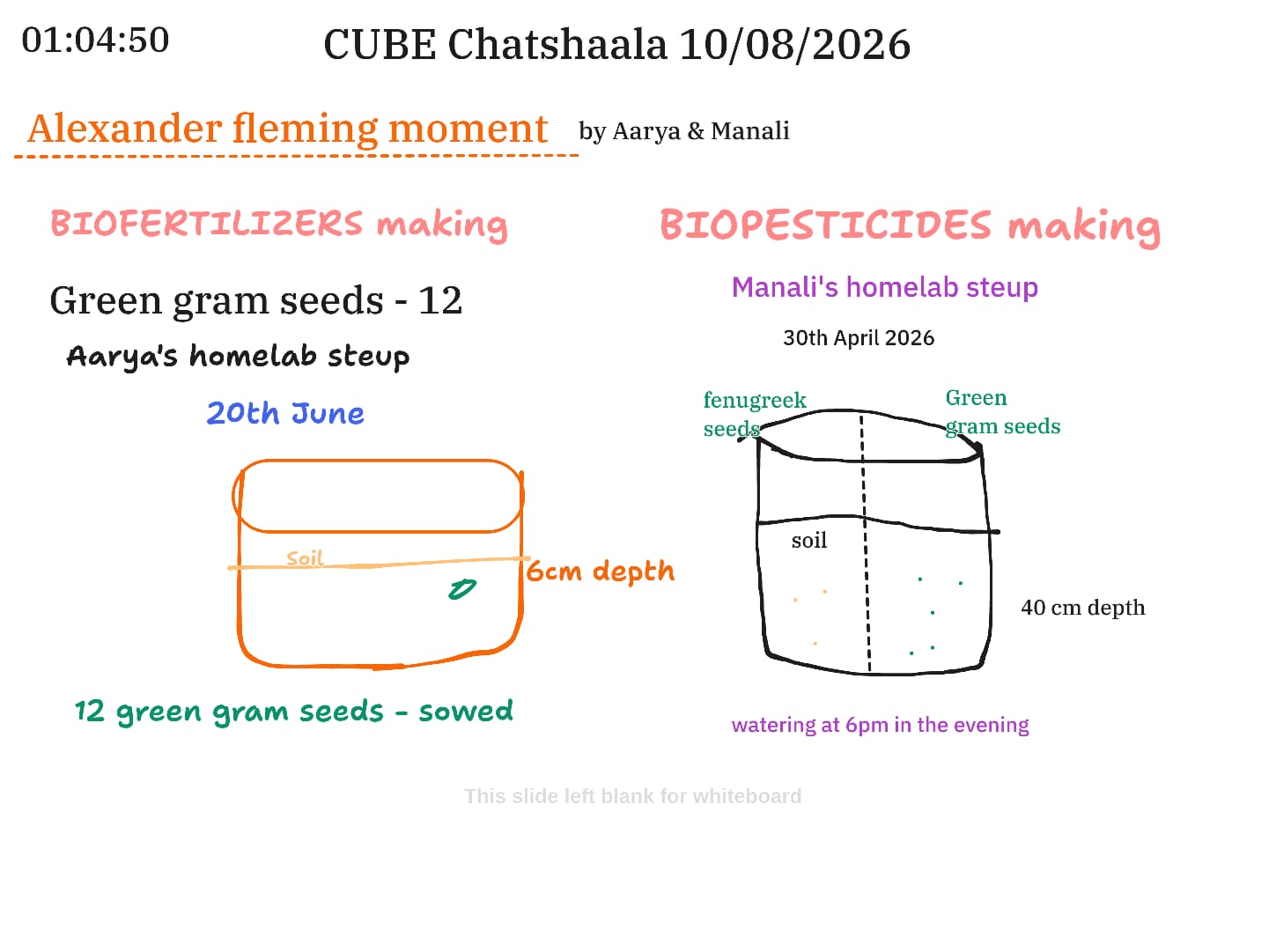
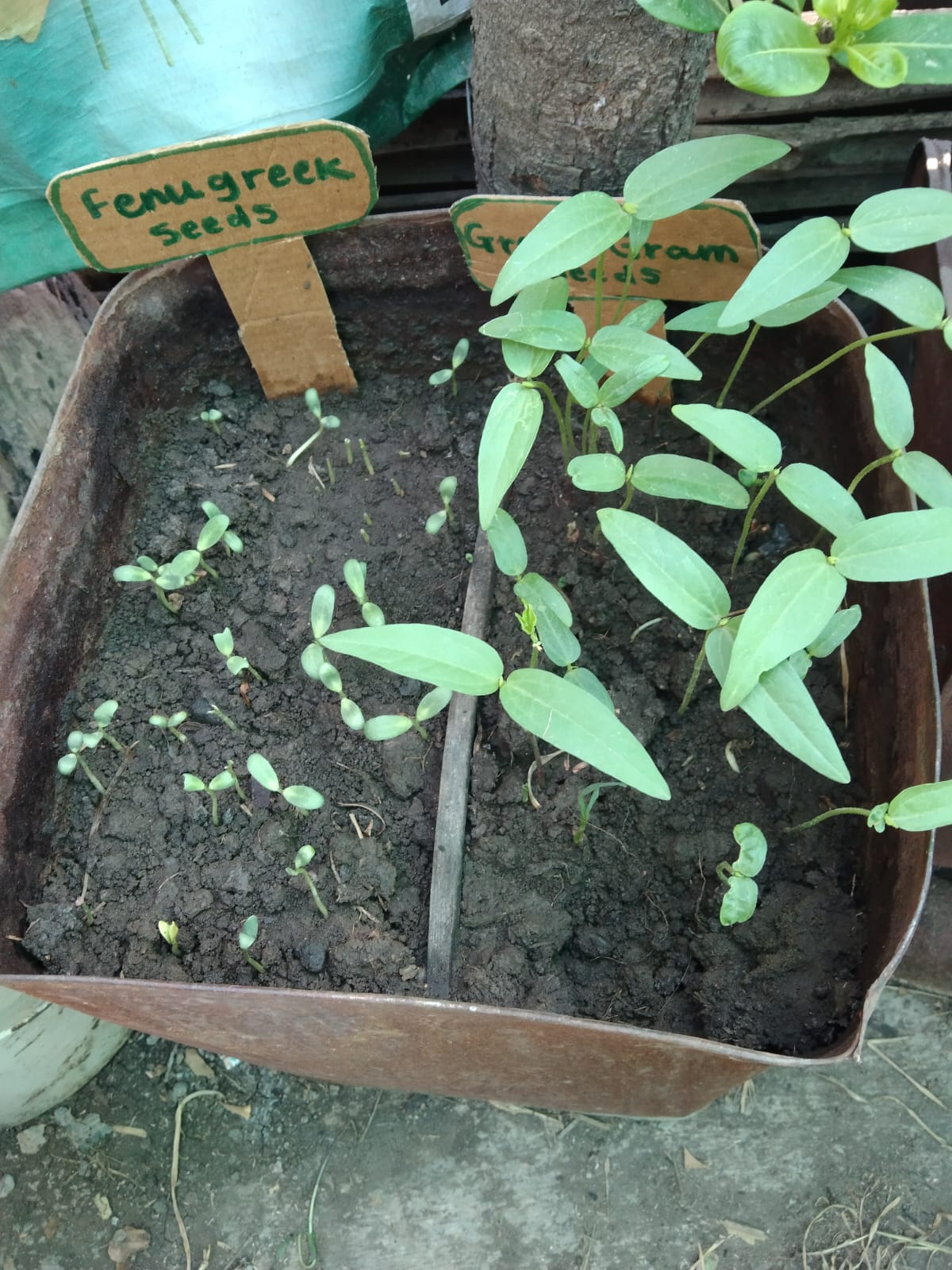
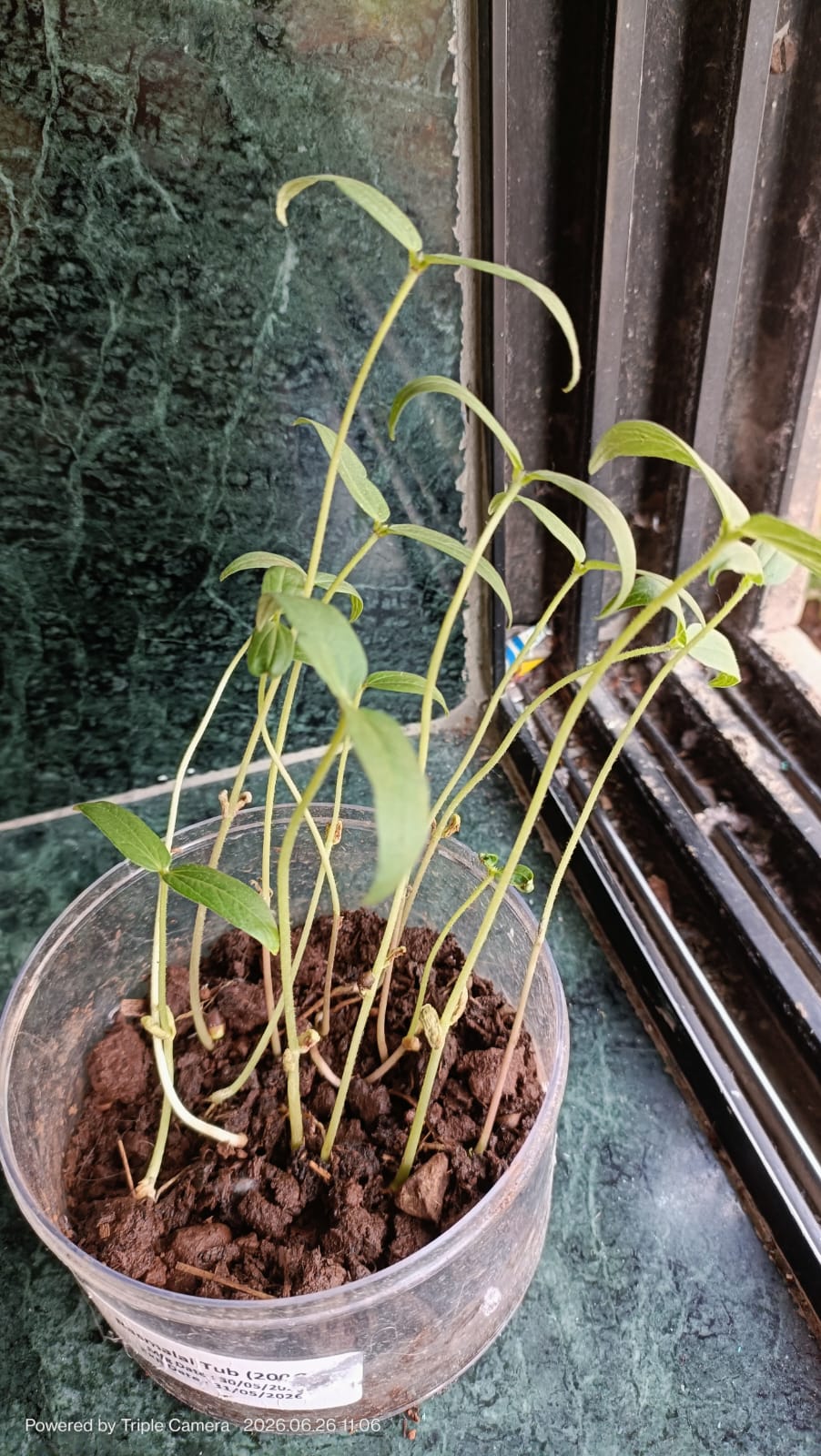
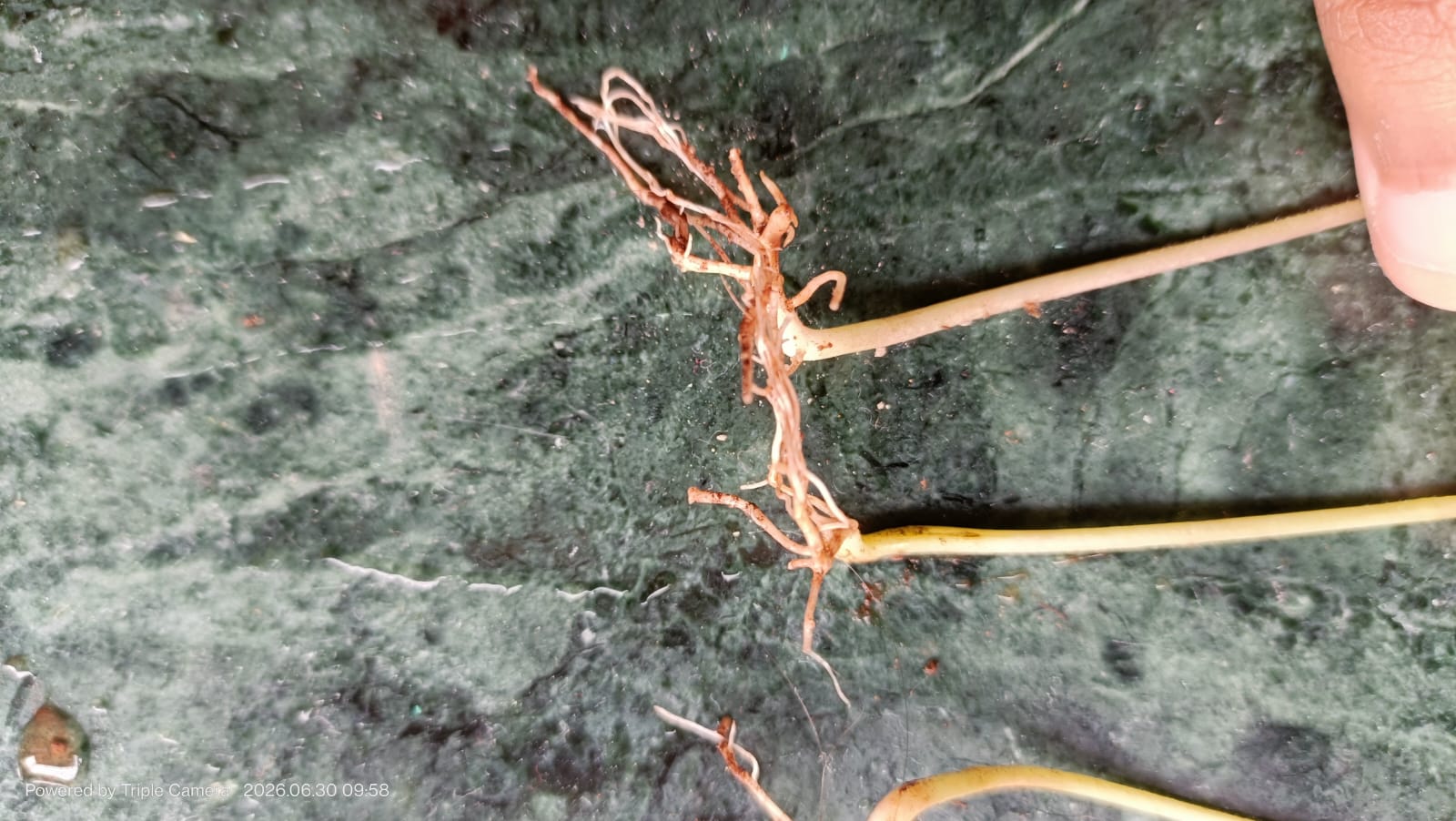
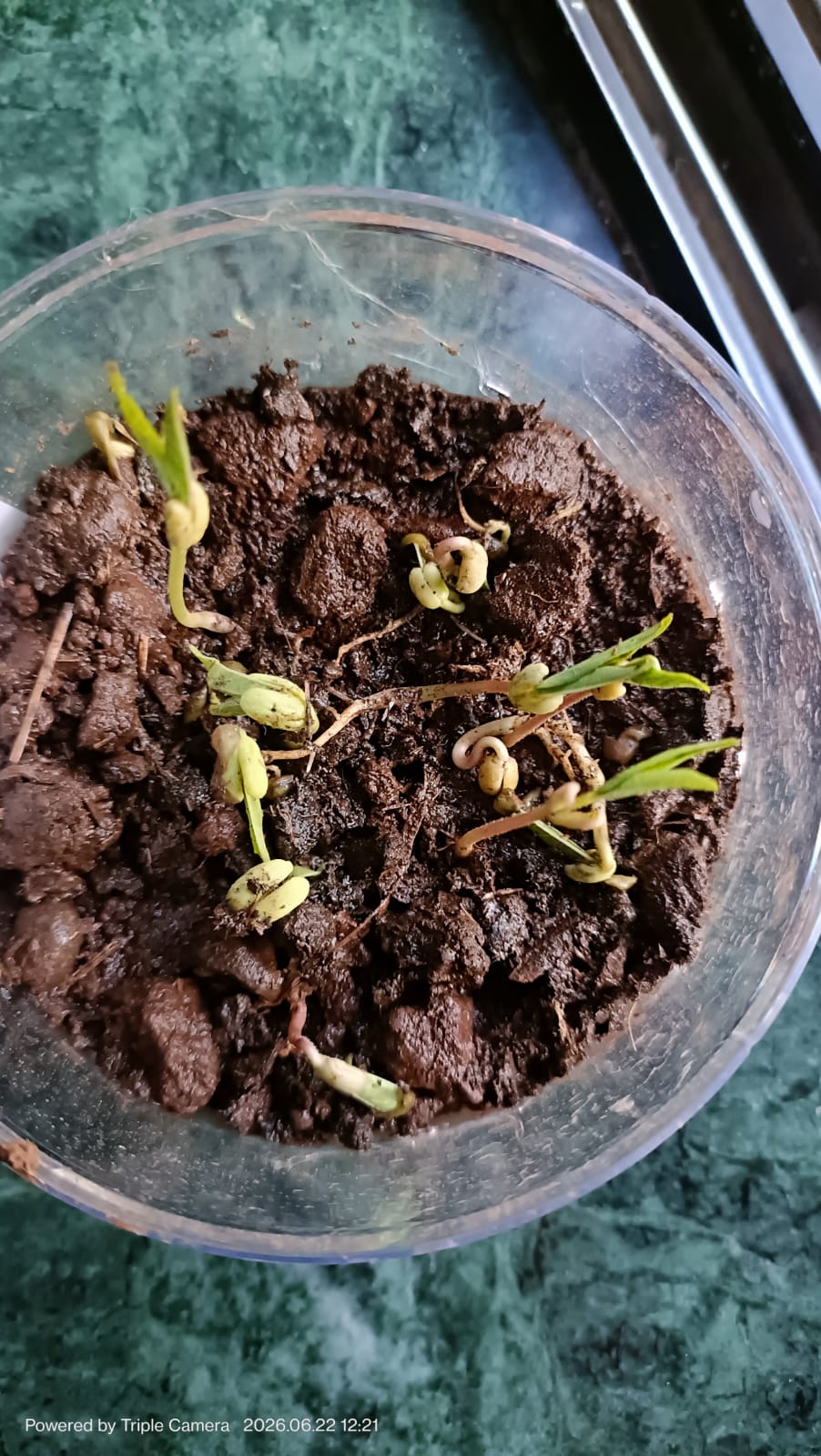
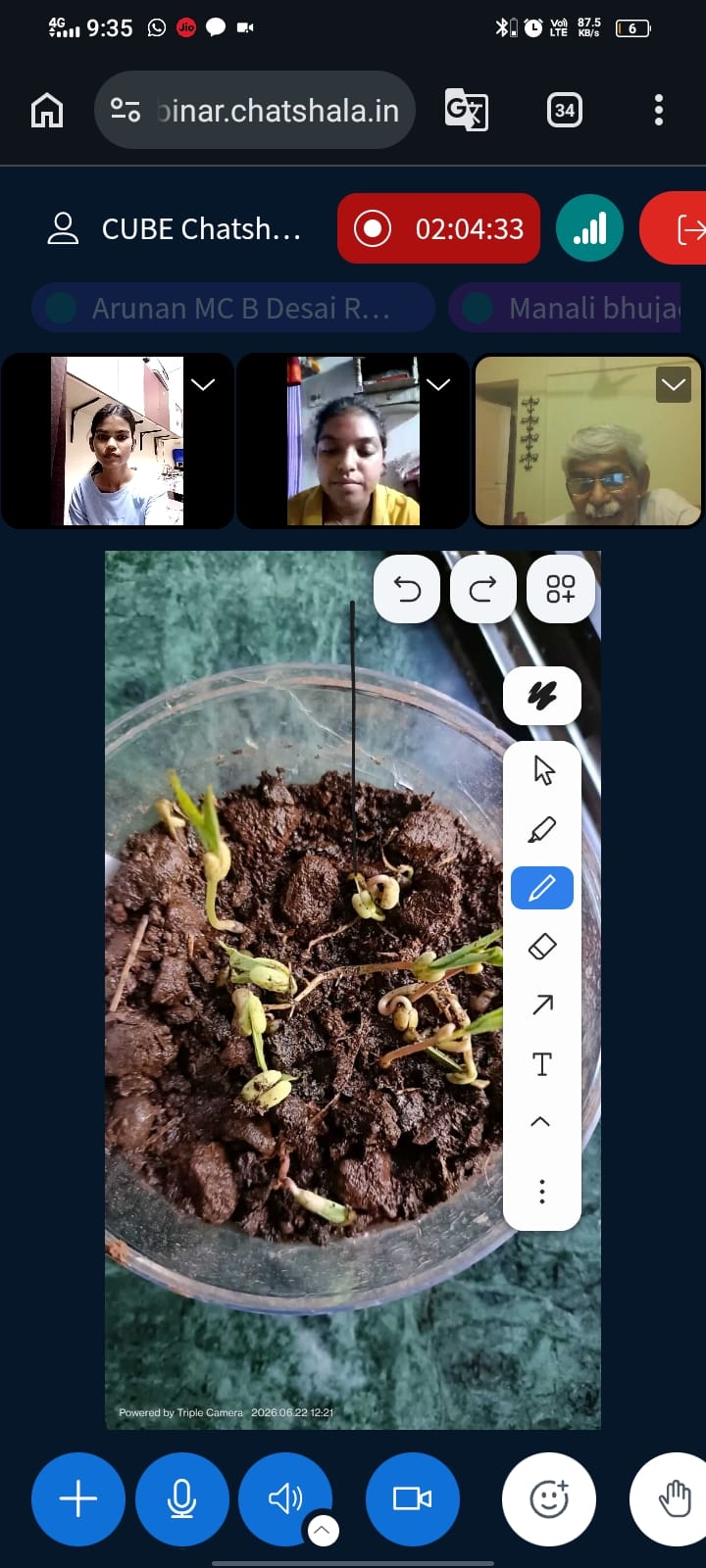
The second half of the session shifted to what the group affectionately called the “Alexander Fleming moment,” presented by Aarya and Manali, referencing the spirit of accidental or exploratory discovery that runs through good experimental science. Aarya shared her home-lab setup for biofertilizer preparation, begun on 20th June, where twelve green gram seeds were sown at a soil depth of six centimetres. Manali presented her parallel biopesticide setup from her home lab, started on 30th April, using a container divided down the middle to sow fenugreek seeds on one side and green gram seeds on the other, both at a considerably greater depth of forty centimetres, with a consistent watering routine at six in the evening. Photographs shared during the session showed the progression of these experiments, from early sprouting stages with pale, curled cotyledons still holding onto their seed coats, through to more developed seedlings with fully unfurled leaves reaching toward available light.
Overall, the session tied together theoretical bacterial classification with two hands-on applications, fermentation science observed directly under the microscope, and soil-based bacterial symbiosis explored through ongoing seed-growth experiments.
 Provocative Questions
-
Both Lactobacillus and Rhizobium are bacteria that engage in close relationships with other organisms, one with humans through fermented food, the other with plants through root nodules. What does this tell us about how differently “symbiosis” can look depending on which kingdom a bacterium partners with?
-
Aarya’s biofertilizer setup used a soil depth of six centimetres, while Manali’s biopesticide setup used forty centimetres. What effect might sowing depth alone have on germination speed and seedling vigour, independent of the seed type itself?
-
If plasmid DNA can move between bacteria and carry traits such as antibiotic resistance, what similar risks or benefits might arise when biofertilizer and biopesticide preparations are made at home without controlled sterility?
-
The curd sample under the microscope showed a mixture of cell shapes. How confident can we really be in visually distinguishing Lactobacillus from Streptococcus thermophilus using morphology alone, without additional staining or biochemical tests?
-
Manali’s setup split fenugreek and green gram seeds within the same container. What kind of competitive or cooperative interactions might occur between two different plant species sharing the same soil and water source?
-
Rhizobium needs to be gram-negative and largely non-flagellated once inside root tissue to sustain its symbiosis, while remaining flagellated and motile in free soil. What does this shift suggest about how bacteria adapt their own physical structure to suit different environments?
 What I Have Learned
Sitting through today’s discussion reminded me how much bacterial diversity gets flattened when we think of “bacteria” as one uniform category. The mind-map exercise at the start of the session did a good job of pulling apart that assumption, showing how something as fundamental as the presence of a capsule or a flagellum can define very different survival strategies. I found the plasmid versus chromosomal DNA distinction particularly clarifying. It is easy to think of bacterial genetics as fixed, but the fact that plasmids move between cells independently of reproduction reframes bacteria as far more genetically fluid than most textbook diagrams suggest.
The comparison between Lactobacillus, Streptococcus thermophilus, and Lactococcus also gave me a much clearer sense of why specific bacterial combinations are used for specific fermented foods. It is not arbitrary. Each genus brings a slightly different fermentation profile, temperature preference, or flavour outcome, which is why yogurt and cheese rely on different starter cultures despite both being lactic acid fermentations at their core.
What stayed with me most, though, was seeing Aarya and Manali’s home-lab work laid out side by side. There is something genuinely motivating about watching an experiment unfold over months, from a bare tray of soil to a tangle of reaching seedlings. It is a good reminder that citizen science is not about instant results. It is about patience, observation, and being willing to record what actually happens rather than what you expected to happen.
 TINKE Moments (This I Never Knew Earlier)
The first concerned the structural difference between Rhizobium’s free-living and symbiotic states. Many participants had understood Rhizobium simply as a “nitrogen-fixing soil bacterium,” without appreciating that its physical form changes depending on context, flagellated and motile when free in the soil, but largely losing that flagellation once established within a root nodule. Making this explicit sharpened everyone’s understanding of bacteria as organisms capable of real structural adaptation, not just chemical adaptation.
The second TINKE moment arose from the microscopy exercise. There had been an implicit assumption that identifying bacterial genera under a standard light microscope would be relatively straightforward, based on shape alone. Working directly with the curd sample made it explicit that morphology can only take an observation so far. Rods and clusters can look superficially similar across different genera, and without staining techniques or biochemical confirmation, visual identification remains an educated guess rather than a certainty. This was a useful corrective to any overconfidence in casual home microscopy.
A third moment came from comparing Aarya’s and Manali’s setups directly. It became explicit that seed depth is not a trivial detail but a variable worth tracking deliberately, since the same seed types treated at six centimetres versus forty centimetres depth may show meaningfully different germination timelines. This nudged the group toward thinking more rigorously about controlling and recording setup variables in future home-lab work, rather than treating depth as an afterthought.
 Gaps and Misconceptions
A few open gaps remain from today’s session. The microscopy discussion did not include staining confirmation, such as a Gram stain, which means the bacterial identifications made from the curd sample remain visual and provisional rather than confirmed. It would strengthen future sessions to pair any live microscopy observation with at least a basic staining protocol where feasible.
There is also a gap in cross-referencing the two home-lab experiments against each other with shared metrics. Aarya’s and Manali’s setups differ in seed type, depth, start date, and container design, which makes direct comparison difficult. A shared observation template, tracking germination date, seedling height, and leaf count at fixed intervals, would allow the group to draw firmer conclusions when these experiments are eventually written up together.
Finally, a lingering point of potential confusion is the distinction between biofertilizer and biopesticide preparation methods, since both experiments currently use similar seed-based setups. It would be worth the group clarifying, in a future session, precisely which biological mechanism is expected to confer fertilizing versus pest-deterrent properties in each case, so that the underlying science is not conflated simply because the physical setups look alike.
 Photographs during Chatshaala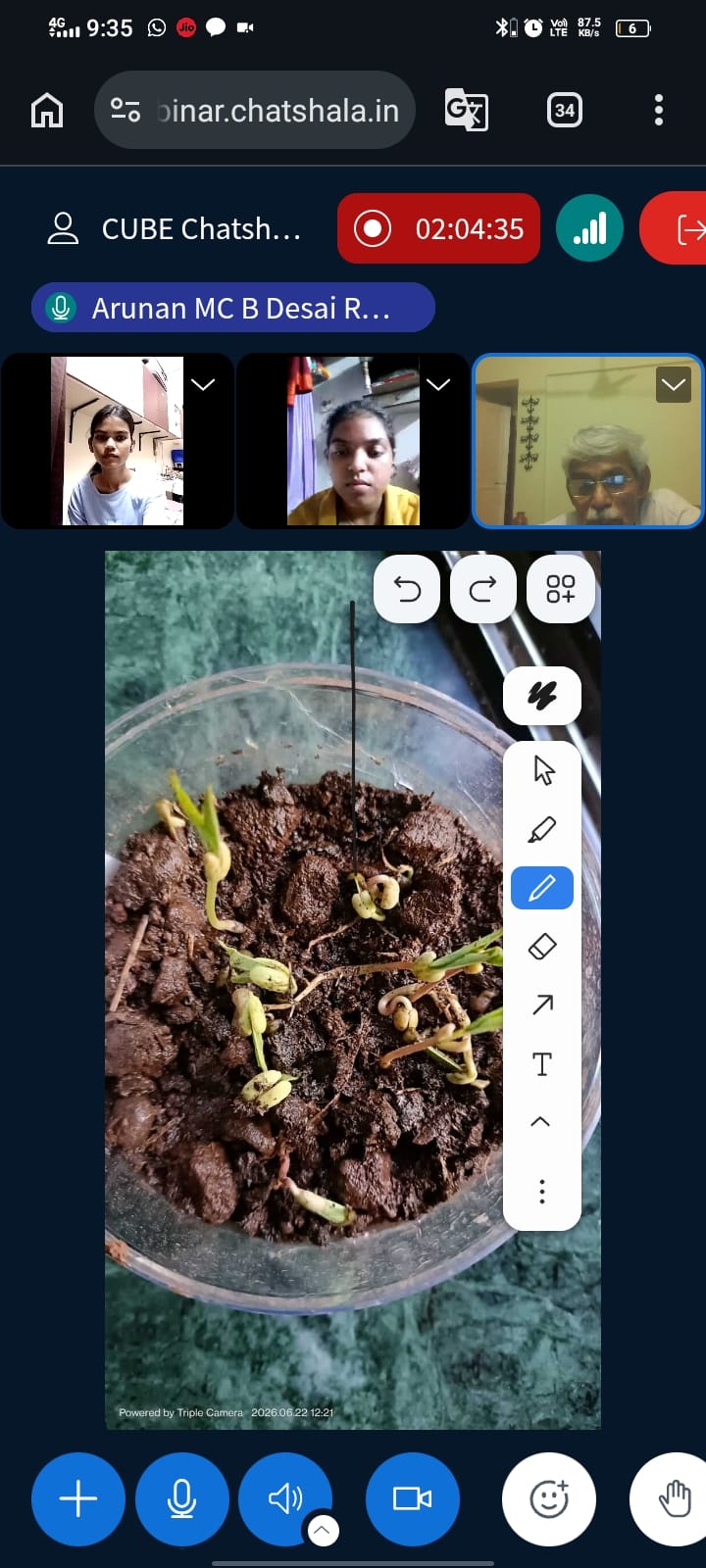
 Referance