 CUBE ChatShaala – Discussion Summary
Date: 23 January 2026
Theme: Genetic Engineering Across Scales – From Hydra to Bt Cotton
1. Objective of the Session
The objective of this ChatShaala was to connect foundational biological experiments with modern genetic engineering applications, while emphasizing how scientific knowledge is produced, validated, and communicated. The session deliberately moved between organisms (Hydra, plants, bacteria) to show continuity in scientific thinking rather than isolated facts.
2. Key Discussions and Insights
A. Hydra and Regeneration Studies
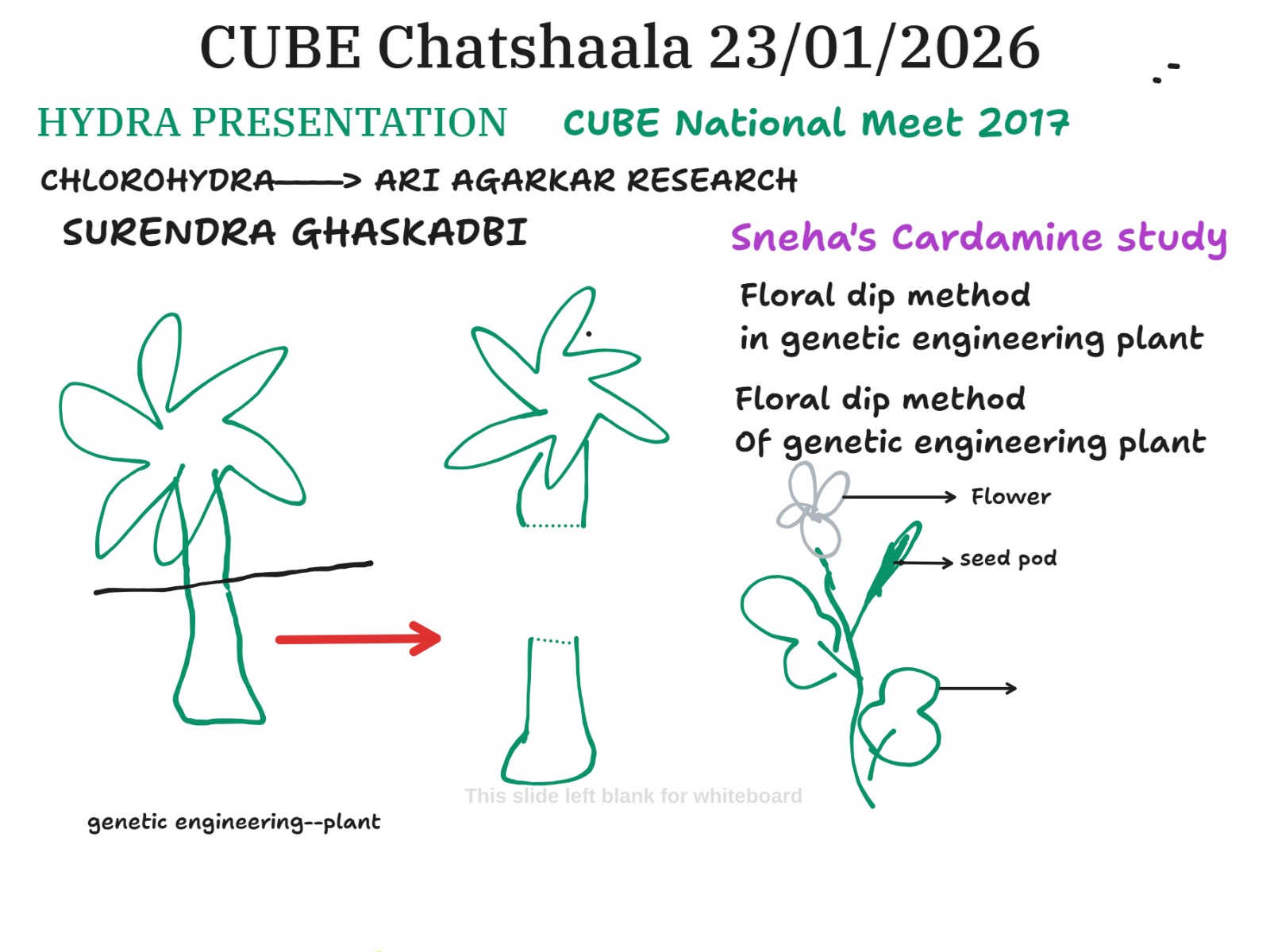
The session opened with a discussion on Hydra, which was a presentation during CUBE meet 2017 by Shama , focusing on classic regeneration experiments linked to early biological research traditions, including work associated with Indian research institutions such as the Agharkar Research Institute.
Hydra was used as a conceptual model to demonstrate:
- Cellular plasticity
- Pattern formation
- How simple organisms inform complex genetic questions
This set the tone that pond ecosystem culture, not just laboratory tools.
B. Floral Dip Method in Plant Genetic Engineering
A major segment focused on Sneha’s Cardamine study, highlighting the floral dip method.
Key points clarified:
- Genetic transformation occurs at the flowering stage, not in mature seed pods.
- The method allows stable gene integration passed on through seeds.
- Visual labeling of flower → seed pod helped correct common misunderstandings about where transformation actually occurs.
This discussion bridged conceptual biology and practical laboratory methodology.
C. Bacillus thuringiensis and Bt Cotton
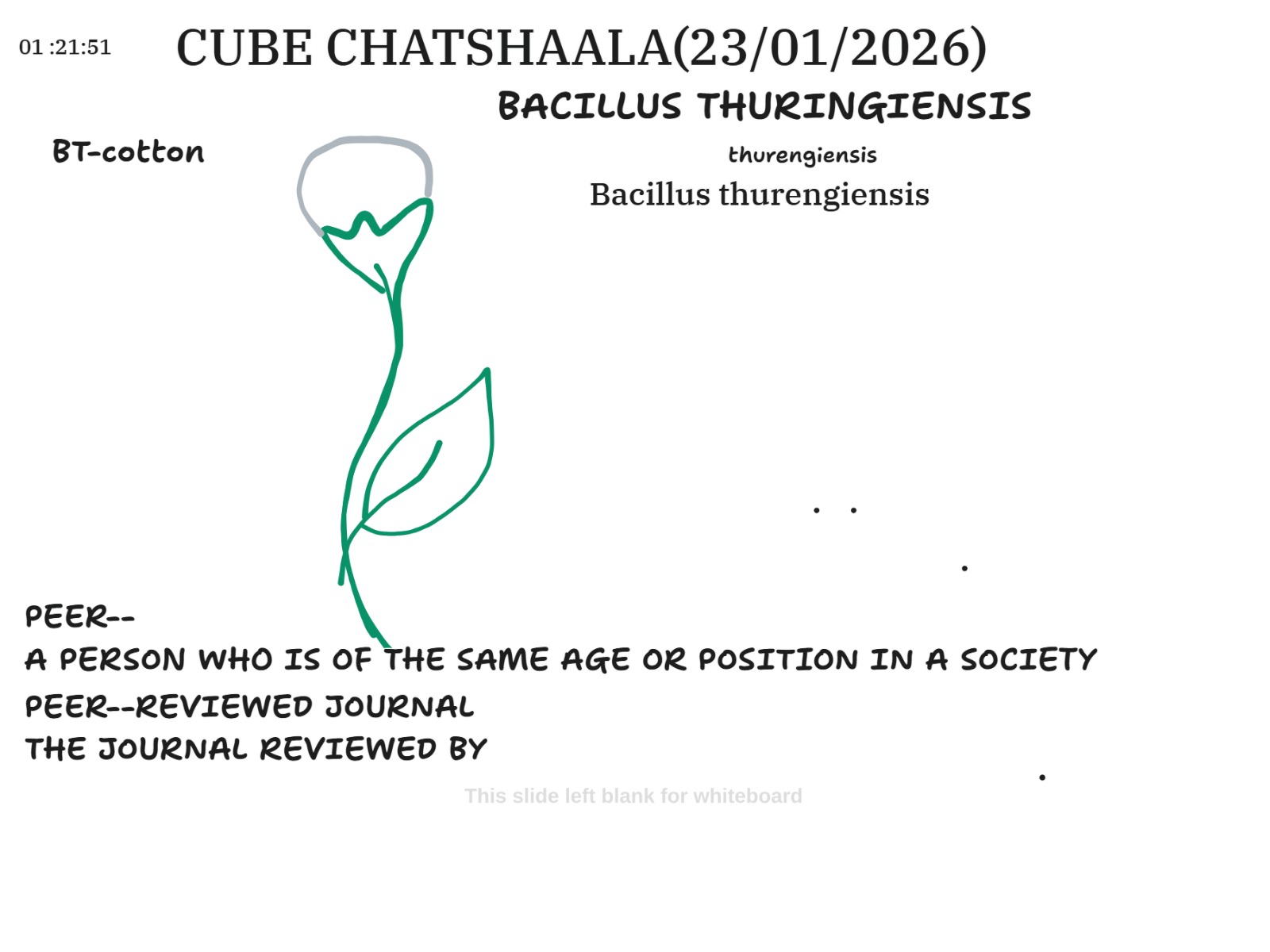
The discussion then moved to Bacillus thuringiensis (Bt) and its application in agriculture. Key clarifications included:
- Bt is a bacterium, not a chemical pesticide.
- Bt cotton expresses specific Cry proteins toxic to target insect pests.
- The genetic modification is in the plant genome, not a surface coating.
This segment reinforced how microbial genes are repurposed for crop protection.
D. Peer Review and Scientific Validation
A short but important conceptual discussion addressed peer review:
- A peer is someone of comparable expertise, not just age or status.
- Peer-reviewed journals ensure scrutiny, reproducibility, and credibility.
- Scientific claims gain strength through community evaluation, not authority.
This grounded the biological discussions in the process of science itself.
 What I Learned (Explicit Takeaways)
-
Genetic engineering is a continuum, not a modern shortcut.
-
Techniques like the floral dip method are elegant because they exploit natural biological stages.
-
Bt cotton represents gene-level precision, not blanket intervention.
-
Scientific trust is built through peer review, not popularity or virality.
 TINKE Moments (This I Never Knew Earlier )
-
Realizing that flowers, not seeds, are the true gateway for heritable genetic change in plants.
-
Seeing Hydra not as a textbook organism, but as a historical foundation for regeneration biology.
-
Understanding that Bt technology is preventive biology, not reactive chemistry.
-
Recognizing peer review as a filter for error, not a barrier to innovation.
 Gaps and Misconceptions
Misconception 1:
“Bt cotton is sprayed with bacteria.”
Correction: Bt genes are integrated into the plant genome.
Misconception 2:
“Genetic engineering happens at the seed stage.”
Correction: Transformation often targets flowers or meristematic tissues.
Misconception 3:
“Peer review means approval by seniors.”
Correction: It means evaluation by qualified equals.
 Provocative Public-Facing Questions
-
If one dip can change a plant’s genetic future, what does that say about nature’s own engineering?
-
If genes come from bacteria already in the ecosystem, where does ‘unnatural’ begin?
-
And why does that choice matter for public science?
-
Have we ignored simple organisms for too long?
 Closing Reflection
This ChatShaala did not merely explain techniques.
It reframed genetic engineering as a dialogue between nature, experimentation, and collective scrutiny. The session successfully moved cubists from memorization to mechanistic understanding and critical questioning—the exact outcome scientific education should aim for.
 Photographs during Chatshaala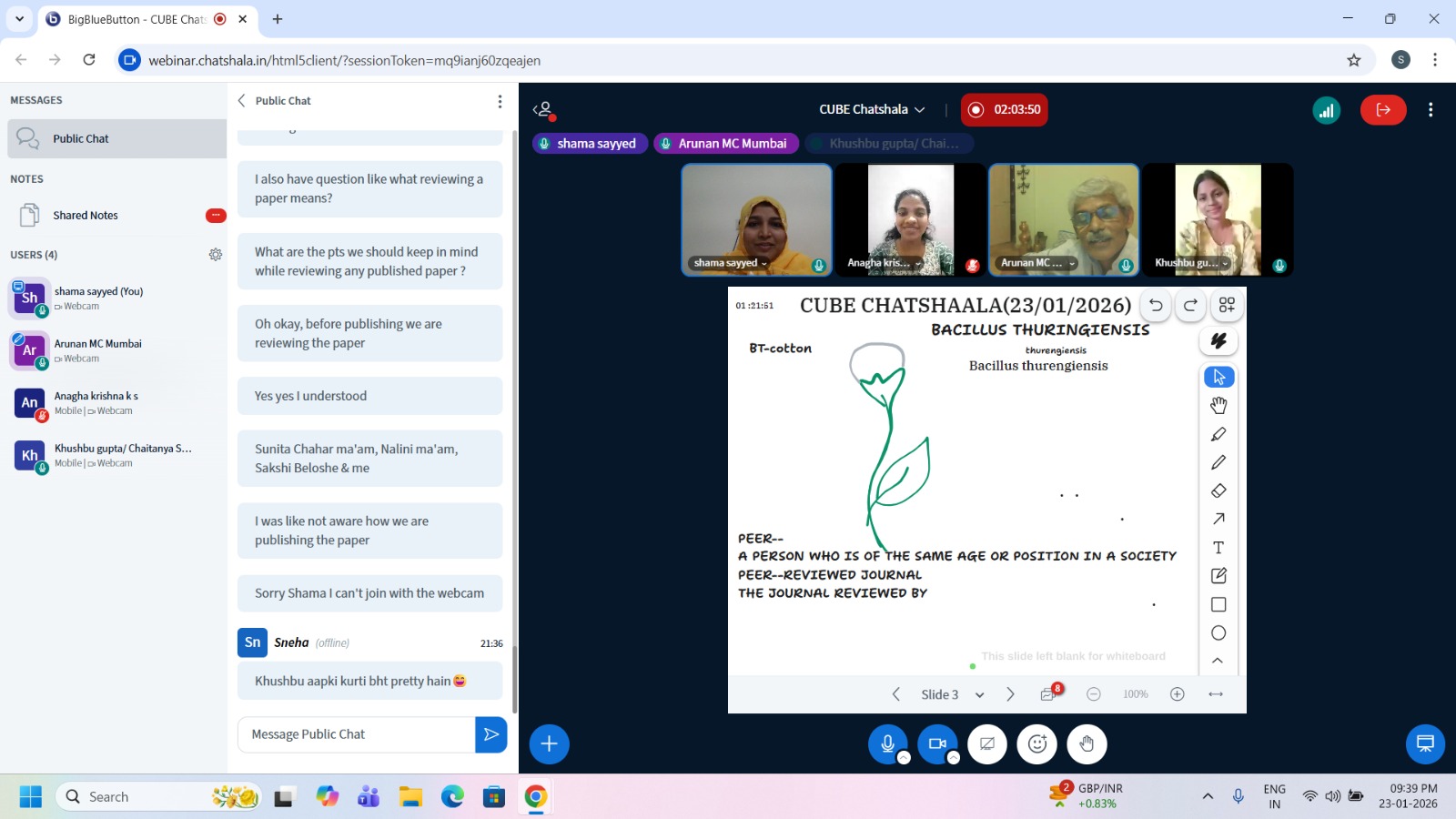
 Reference