 CUBE ChatShaala Summary – 01.08.2025
 Meeting Summary
The session focused on the multi-disciplinary science of curd formation, linking molecular biology, food science, and chemistry. The discussion centered on casein micelles, rennet action, and the structure of proteins involved in milk coagulation.
 Key Highlights
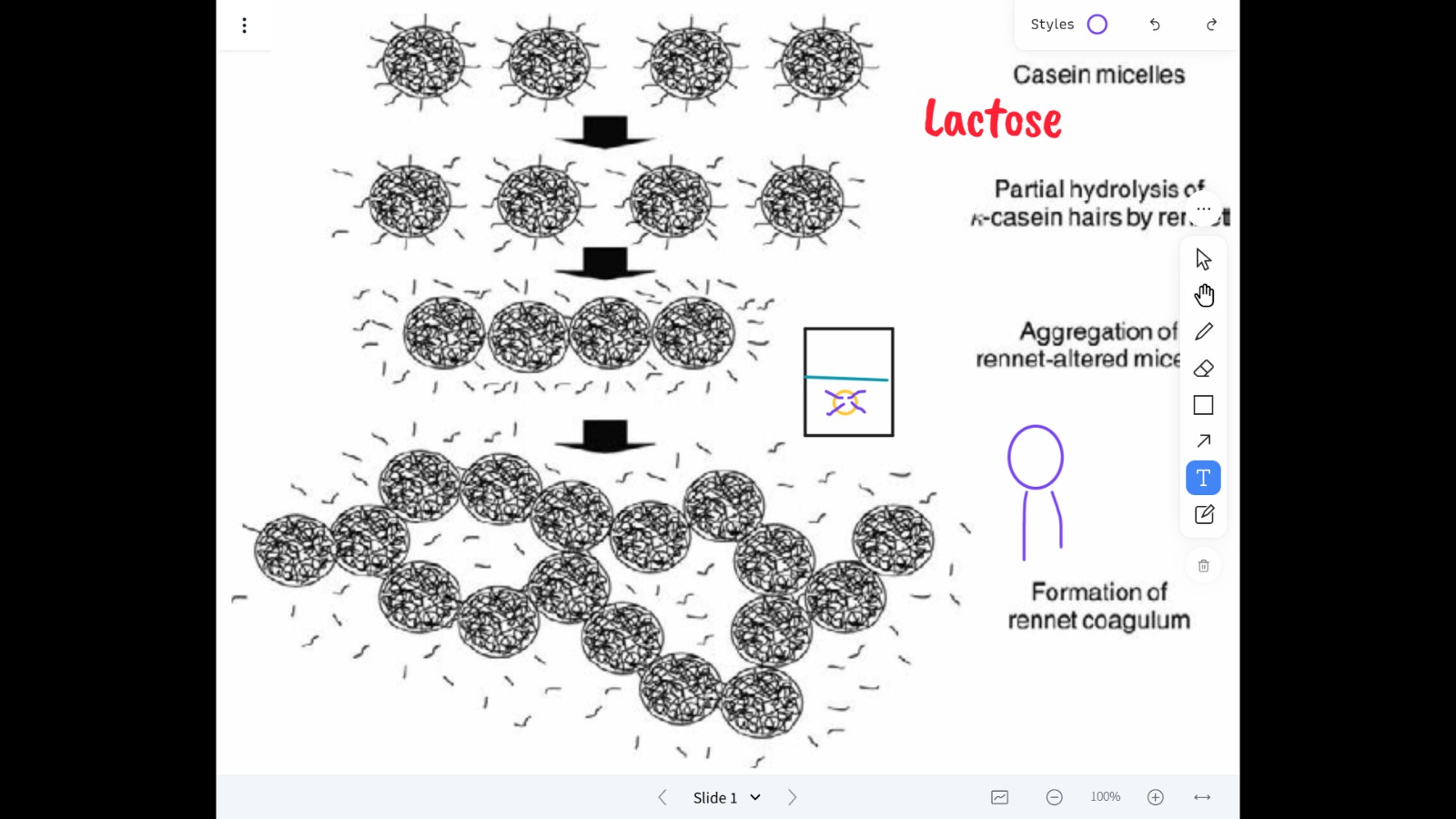
Casein Micelles : These are spherical aggregates of milk proteins (caseins), suspended in milk. Their stability in solution depends on the outer layer of casein , which prevents aggregation.
Rennet Coagulation: The enzyme rennet cleaves casein, leading to aggregation of casein micelles and formation of a gel-like curd structure. A step-by-step visual diagram was used to illustrate this transformation.
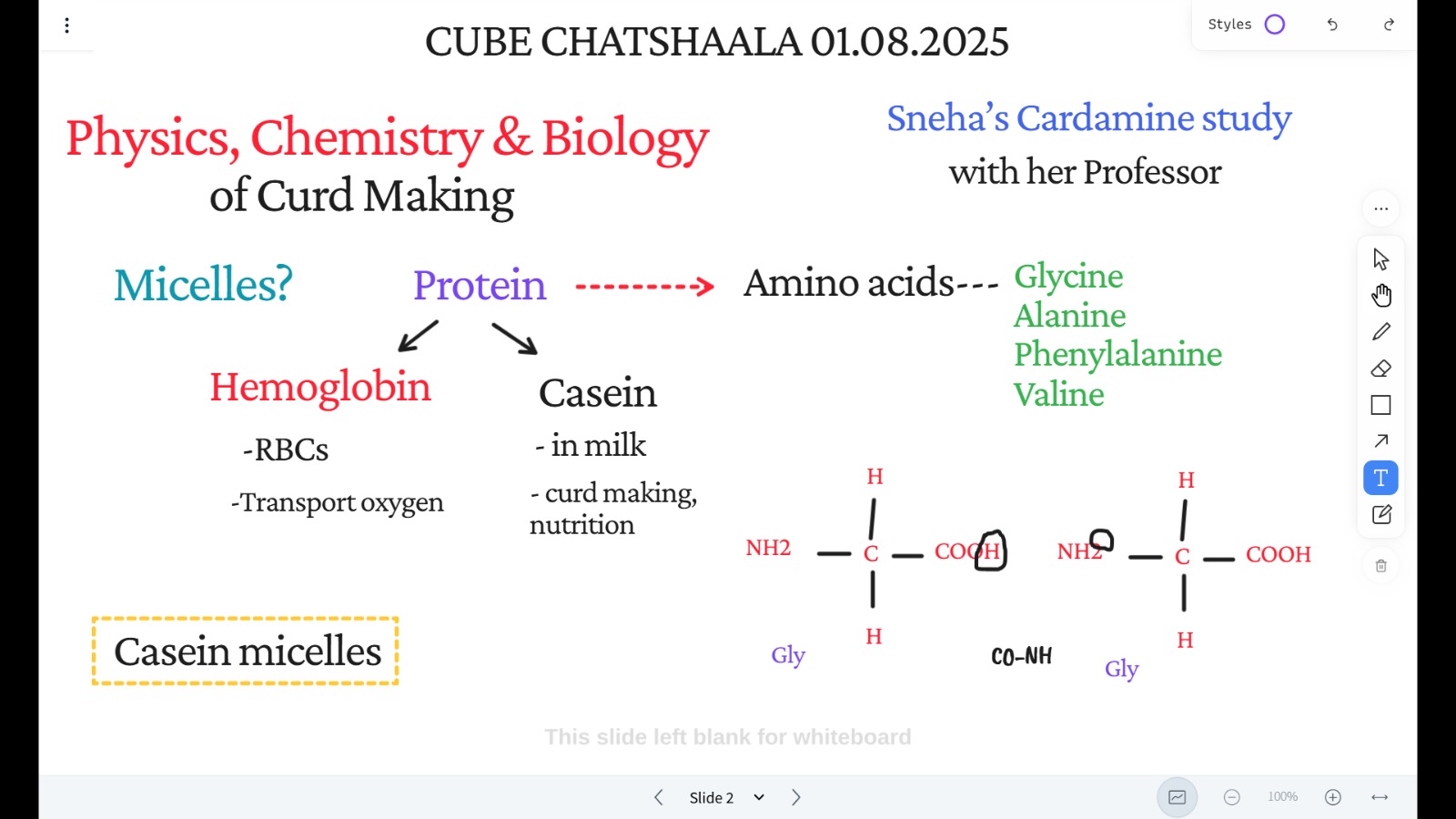
Chemical Foundations: Proteins such as casein are composed of amino acids like glycine, alanine, phenylalanine, and valine. Their interaction during curdling was compared to that in other proteins like hemoglobin, giving an integrated view of protein chemistry.
A structural formula of glycine was shown to connect molecular structure to the behavior of proteins during curdling.
Sneha’s Cardamine study was also briefly mentioned, linking her field observations to lab-like molecular inquiries.
 Provocative Questions of today’s Chatshaala
-
 Is lemon just curdling milk—or is it pretending to be a starter culture?
 -
 If micelles are so stable, what really makes them collapse into curd?
 -
 Can understanding milk proteins lead us to new materials or medicines?
 -
 Is curd a food—or a microbial technology passed through generations?
 -
 If every curd has a different taste, does that mean each one has a unique ecosystem?
 My Personal Learning (Reflection)
Today’s session made me realize that even common kitchen processes involve complex biochemical phenomena. I used to think curdling was simply a result of sourness. But now I understand that proteins like casein are engineered at the molecular level to maintain milk stability, and only with specific enzymatic or acidic triggers do they clump into curd. The role of micelle structures and amino acids made me appreciate how everyday actions are tied to invisible, elegant science.
I also learned that not knowing something is not a weakness—it is the beginning of scientific thinking. We were all asking: What exactly is a micelle? And that honest not-knowing turned into a rich conversation.
 TINKE Moments (Things I Never Knew Earlier)
-
 Casein forms micelles in milk – not just floating proteins, but structured, stable assemblies.
 -
Casein is key to milk’s stability – like a protective layer that keeps proteins from clumping.
-
 Rennet cuts casein, triggering a cascade that turns liquid into gel. This is controlled enzymology.
 -
Curd is a living system – formed not just by acid but by interacting biology and chemistry.
-
Everyday foods are molecular experiments – each bowl of curd is a successful lab test in protein chemistry.
@Arunan @SN1261 @sakshiconsultant2002 @2020ugchsncnseethala @KiranKalakotiR @Chitralekha @akanksha and others.