 CUBE Chatshaala (06/02/2026) - Discussion Summary
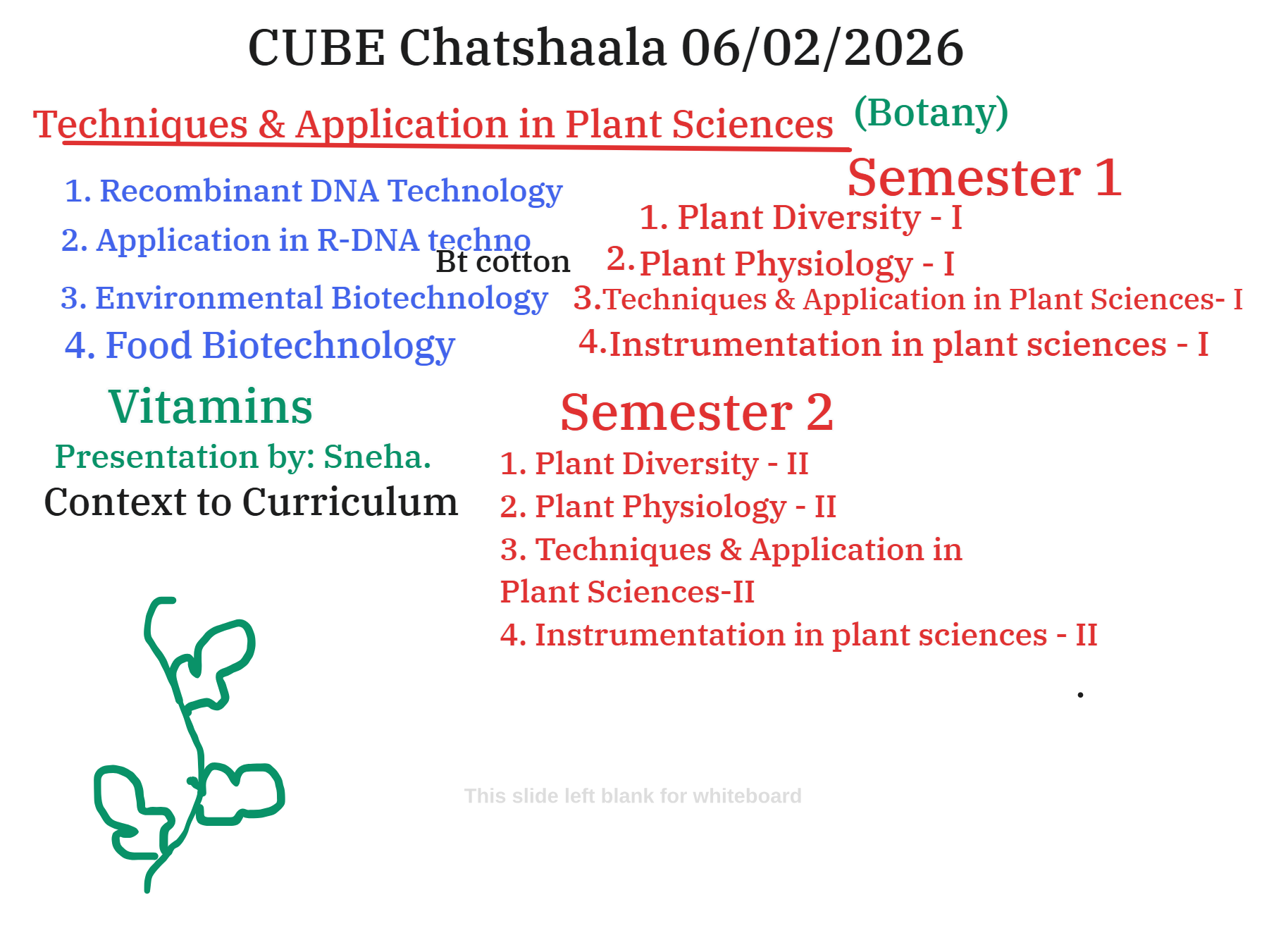
The session focused on techniques and applications in plant sciences, with particular emphasis on recombinant DNA technology, environmental biotechnology, and food biotechnology. A case study on Bt cotton was discussed to illustrate the practical implications of genetic engineering in agriculture.
Summary – CUBE ChatShaala (06/02/2026)
A presentation on vitamins by Sneha provided insights into their biochemical roles and relevance in plant and human health. The curriculum context was revisited, mapping semester-wise topics such as Plant Diversity, Plant Physiology, and Instrumentation in Plant Sciences, ensuring alignment between theoretical foundations and applied biotechnology.
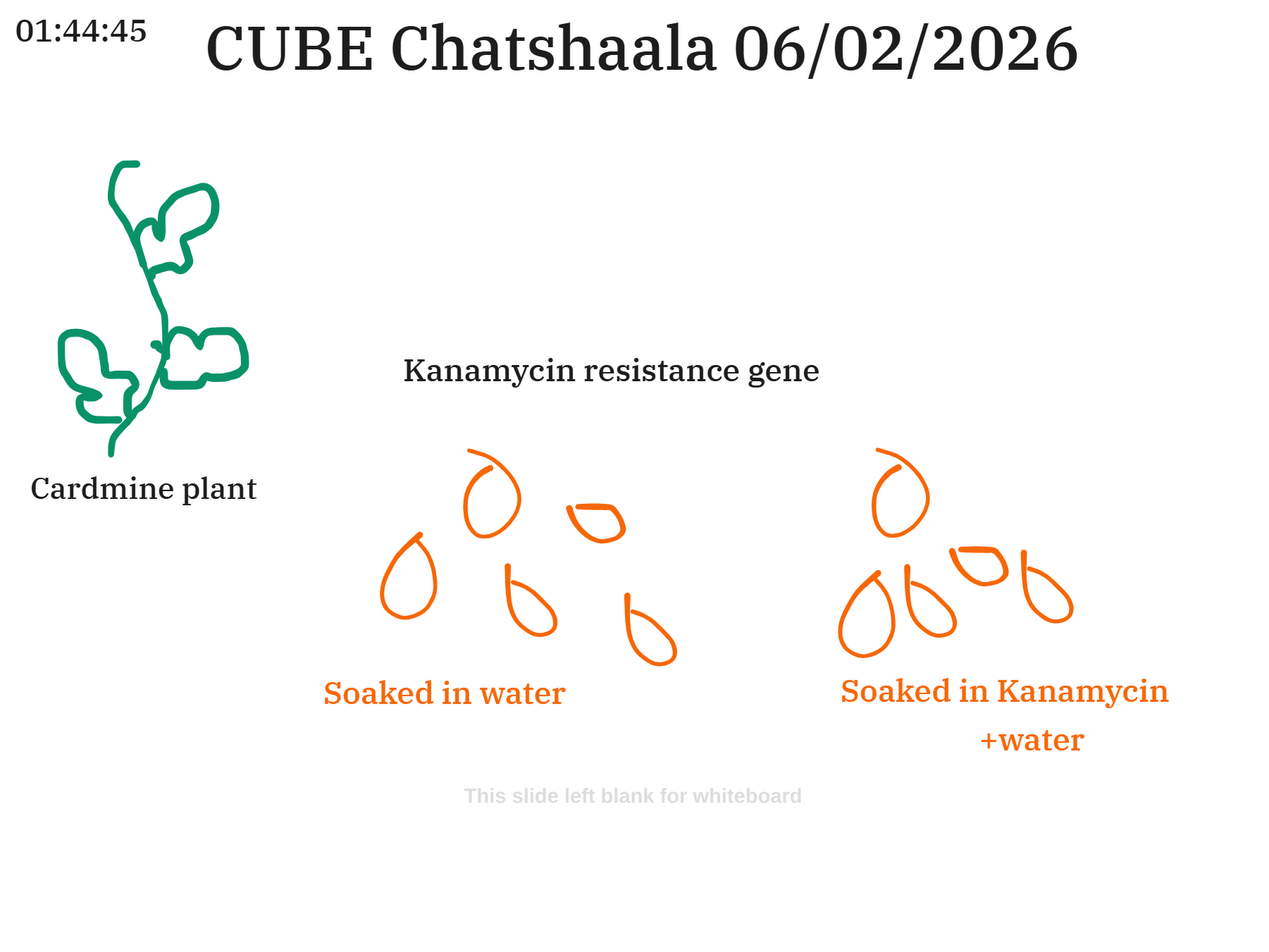
The second half of the meeting examined an experimental design involving Cardamine plants and the kanamycin resistance gene. Seeds soaked in water were compared with seeds soaked in a kanamycin solution, highlighting the principle of selective markers in genetic transformation. This experiment was used to provoke discussion on how resistance genes are employed in biotechnology to identify successful transformations.
 Provocative Queries for the CUBE Community
-
Should the use of antibiotic resistance genes in plant biotechnology be reconsidered in light of environmental and ethical concerns?
-
Has the introduction of genetically modified cotton truly solved farmers’ problems, or has it created new ecological challenges?
-
Could vitamins play a more significant role in plant physiology than we currently acknowledge?
-
How can instrumentation and modern techniques bridge the gap between traditional botany and cutting-edge biotechnology?
 What I Learned
-
Recombinant DNA technology is not just a laboratory tool but a transformative force in agriculture and food security.
-
Selective markers like the kanamycin resistance gene are crucial for identifying successful genetic modifications, though they raise questions about biosafety.
-
Bt cotton remains a controversial yet instructive example of biotechnology’s impact on society.
-
Vitamins, often overlooked in plant sciences, have multifaceted roles that extend beyond
human nutrition. -
Curriculum design in plant sciences must balance foundational knowledge with applied techniques to prepare students for real-world challenges.
 TINKE Moments (This I Never Knew Earlier)
-
The use of antibiotic resistance genes as markers is ingenious but potentially problematic if transferred unintentionally to other organisms.
-
Bt cotton demonstrates how biotechnology can simultaneously empower and challenge agricultural systems.
-
Vitamins are not merely dietary supplements; they are integral to plant metabolic pathways.
-
The curriculum’s emphasis on instrumentation signals a shift toward a more experimental and technology-driven approach to botany.
Gaps and Misconceptions Identified
- Misconception: Many assume Bt cotton eliminates all pest problems; in reality, secondary pests often emerge.
- Gap: Limited discussion on the ecological consequences of antibiotic resistance genes in soil and microbial communities.
- Misunderstanding: Vitamins are often thought of only in human health contexts, neglecting their essential roles in plant physiology.
- Curricular Gap: While techniques are emphasized, ethical and ecological dimensions of biotechnology need stronger integration into teaching.
 Photographs during Chatshaala

 Reference