CUBE Chatshaala - Discussion Summary
Date: January 25, 2026
Purpose: To investigate an accidental observation of a moth on drying clothes and compare insect morphology (moth vs. butterfly vs. ant vs. fruit fly).
Key Decisions: The group decided to shift from simple observation to a “viewpoint of the moth” inquiry to understand the biological motivations behind the insect’s behavior.
Main Takeaways
-
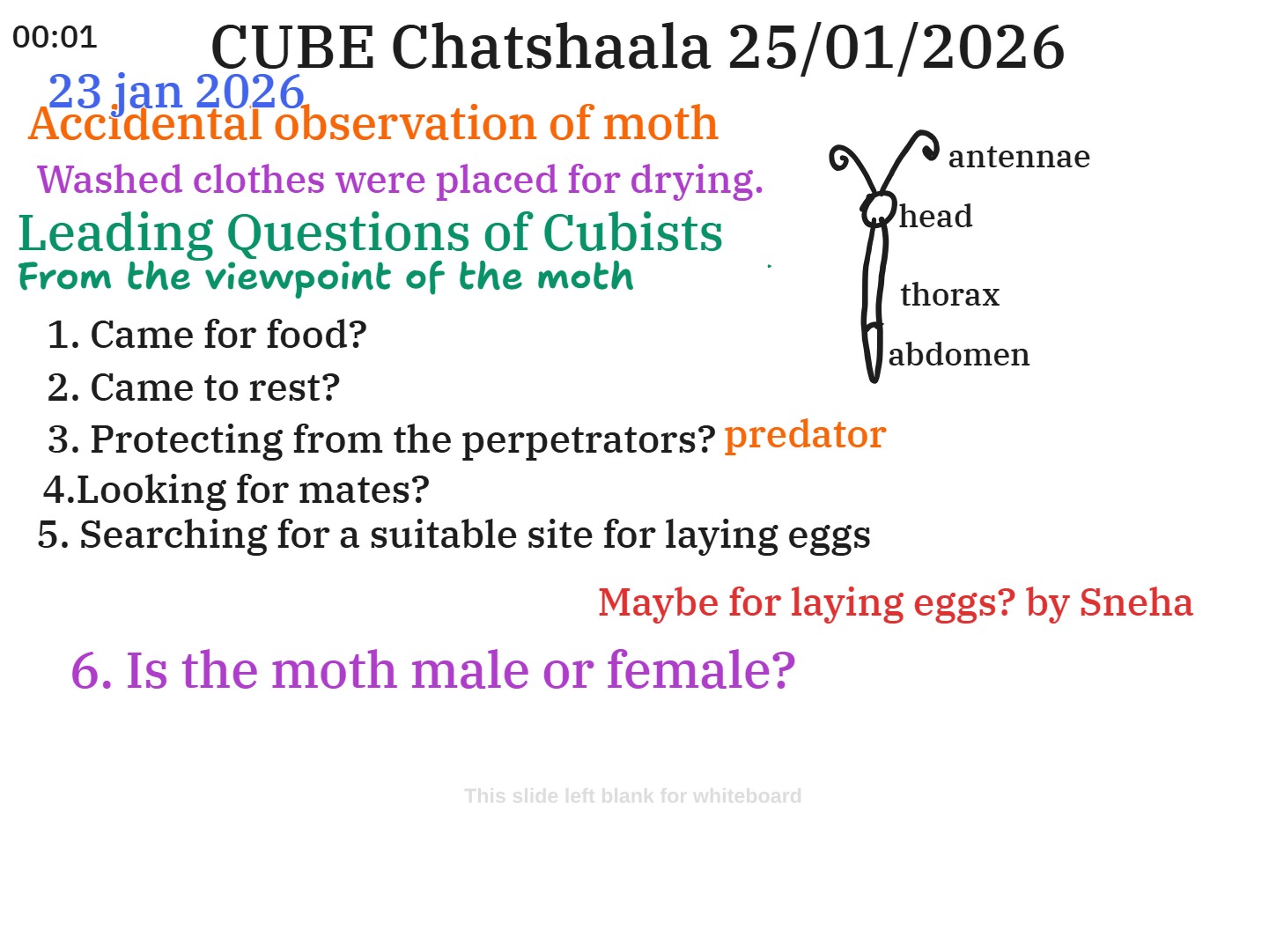
Behavioral Hypotheses: The session prioritized asking why the moth was present, ranging from seeking nourishment to finding a suitable oviposition (egg-laying) site.
-
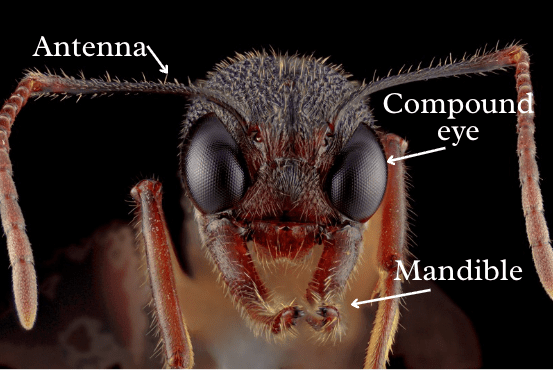
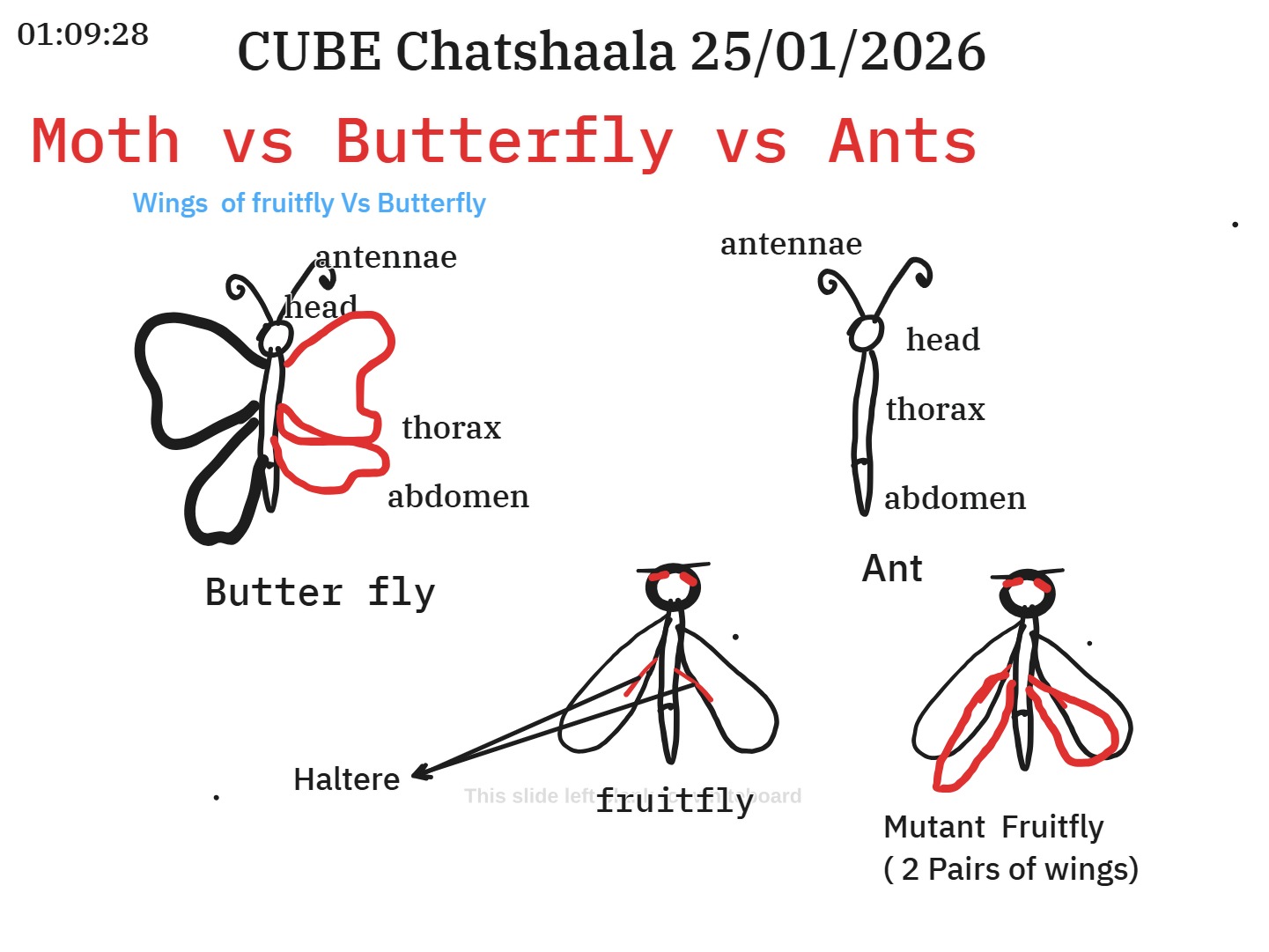
Morphological Comparison: Participants used diagrams to identify the structural segments
(head, thorax, abdomen) and appendages (antennae, wings) across different insects. -
Observation-Driven Inquiry: The “accidental” discovery of a moth on laundry served as a catalyst for a broader discussion on insect ecology.
Conclusions
-
Gender Identification: Determine the morphological markers to distinguish between male and female moths.
-
Habitat Analysis: Investigation into why “washed clothes” specifically might attract moths (moisture, scent, or surface texture).
 Whiteboard-Based Follow-Up Questions
-
If the moth came for food (as suggested in Question 1), what specific substances on “washed clothes” would provide nutritional value?
-
Question 3 mentions “protecting from predators.” Does the color or texture of the laundry provide better camouflage than natural foliage?
-
Looking at the diagram comparing the fruit fly and butterfly, how does the ratio of wing size to body size (thorax/abdomen) affect their flight patterns?
-
The sketches show different antennae styles for the ant and butterfly. How do these different shapes help the moth or ant “smell” its environment?
-
If the clothes are a “suitable site for laying eggs,” what happens to the larvae once the clothes are moved or worn?
-
The whiteboard compares Butterfly, Ant, and Fruit Fly. Based on the “Accidental Observation,” what specific physical features would we need to add to a new sketch to definitively label it a “Moth”?
 TINKE Moments (This I Never Knew Earlier)
-
Takeaways & Insights: Real-world observations (laundry) are just as scientifically valuable as lab experiments when filtered through “Leading Questions.”
-
Next steps & key learnings: The next phase requires moving from “what” we see to “how” we prove it—specifically regarding the sex of the moth.
-
Exit criteria: Successful identification of the moth species and a confirmed explanation for its attraction to the drying area.
 Gaps and Misconceptions
-
Terminology Gap: The term “perpetrators” was used in the notes when referring to “predators.”
-
Correction: In biological contexts, “predator” is the accurate term for an organism that hunts another; “perpetrator” is a legal/behavioral term usually reserved for human actions.
-
Morphological Omission: The sketch of the “Ant” includes wings.
-
Clarification: While reproductive ants (alates) have wings during nuptial flights, the majority of ants observed (workers) are wingless. It is important to specify which caste is being drawn.
-
Niche Overlap: The question “Came for food?” regarding a moth on clean laundry.
-
Clarification: Most adult moths have vestigial mouthparts or drink nectar. They are unlikely to find “food” on clean laundry unless attracted by salts in sweat or specific floral detergents.
 What I Learned
Through this session, I learned that the CUBE approach emphasizes the “viewpoint of the organism.” By stepping into the moth’s perspective, we move away from human-centric observation and begin to understand the ecological pressures—like predation, reproduction, and resource acquisition—that govern insect behavior in domestic spaces.
 Photographs during Chatshaala
 Reference