Date: 30 October 2025
Collaborators: Sailekshmi & Sneha
Objective
To study and compare the germination and early seedling development of fenugreek (A) and mustard (B) seeds under similar moist conditions using the tissue paper method.
Method
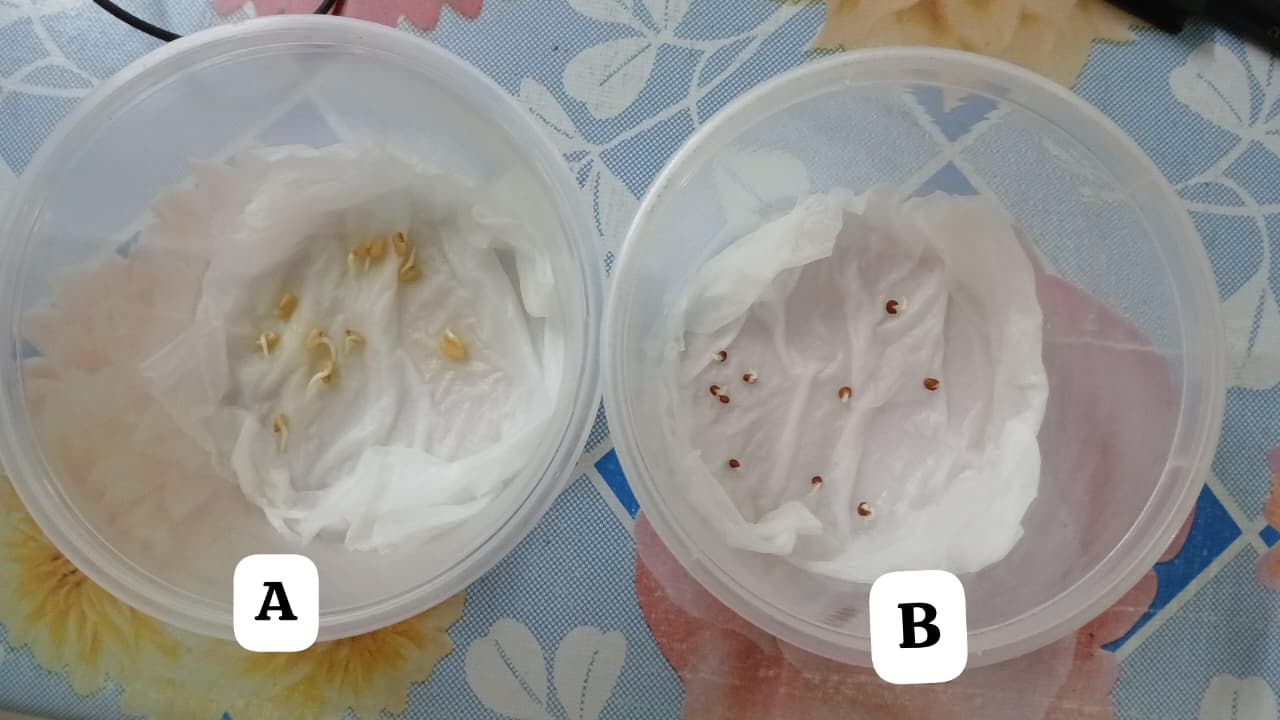
Ten seeds of each type were soaked overnight and placed in separate plastic containers lined with moist tissue paper. Observations and photographs were recorded at 24-hour intervals to monitor the progress of germination.
Expectation
It was expected that both seed types would show radicle emergence within 24 hours, followed by shoot growth and cotyledon expansion in subsequent days.
Results (After 96 Hours)
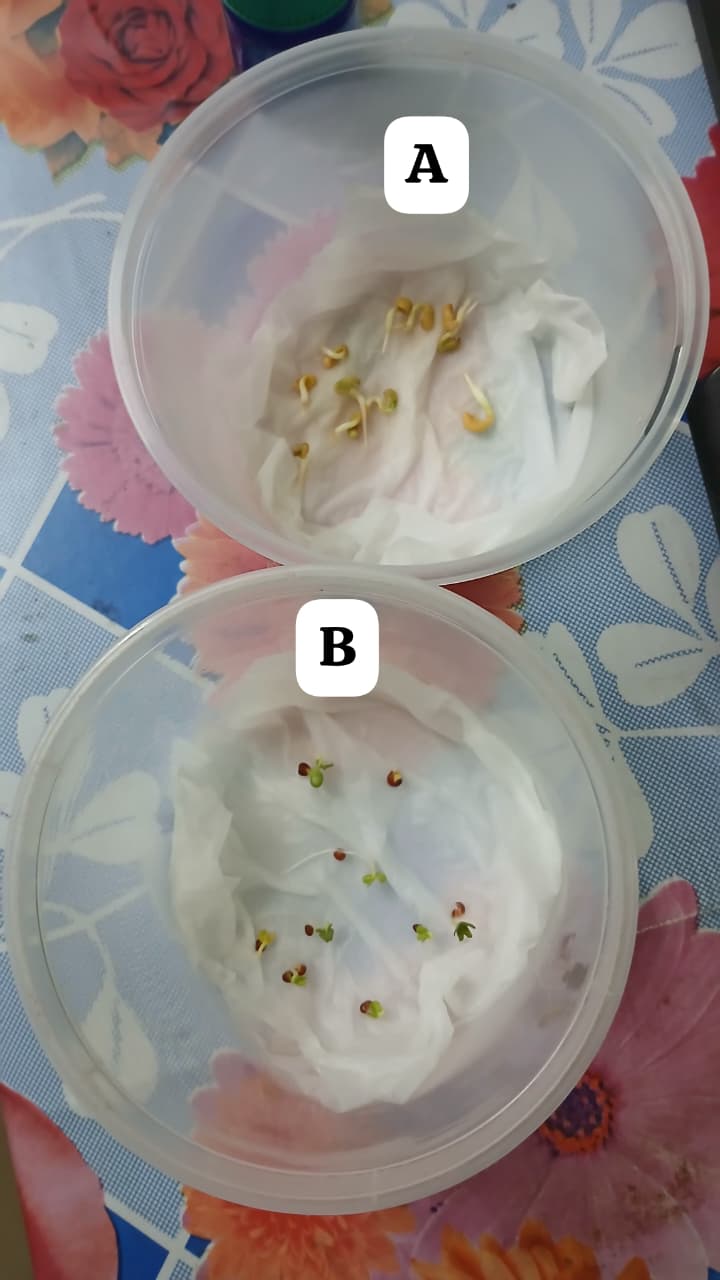
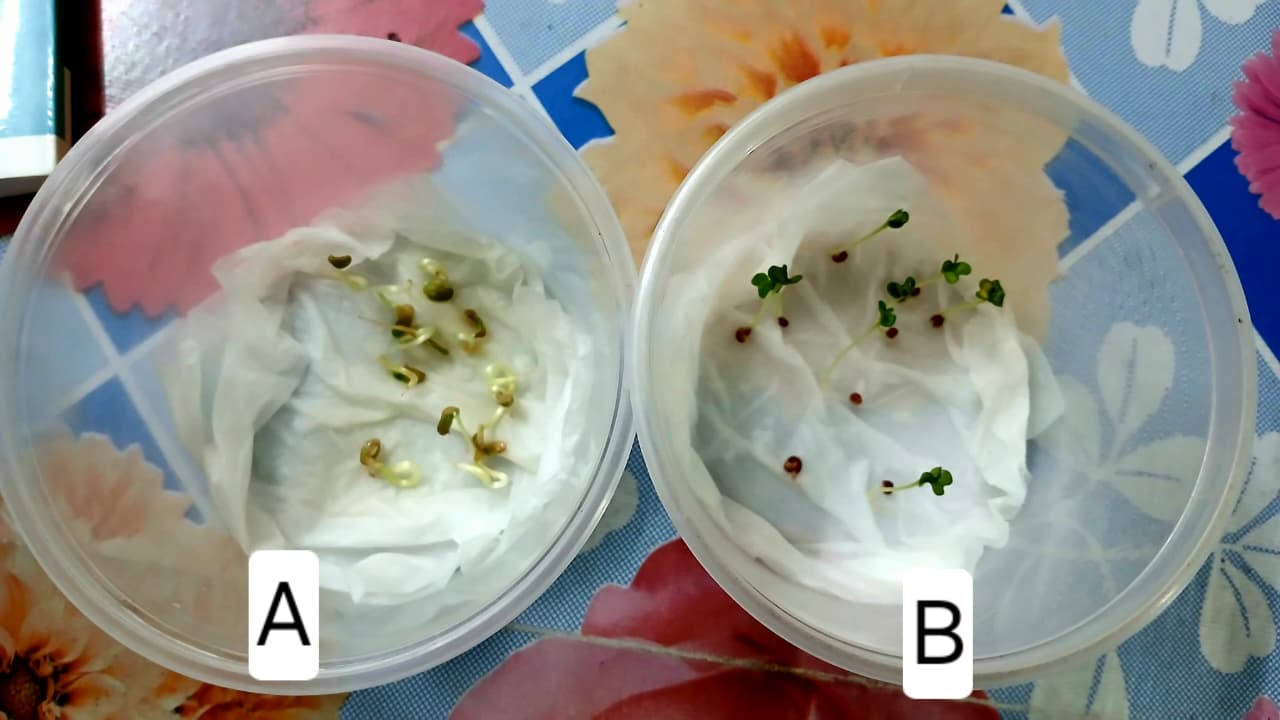
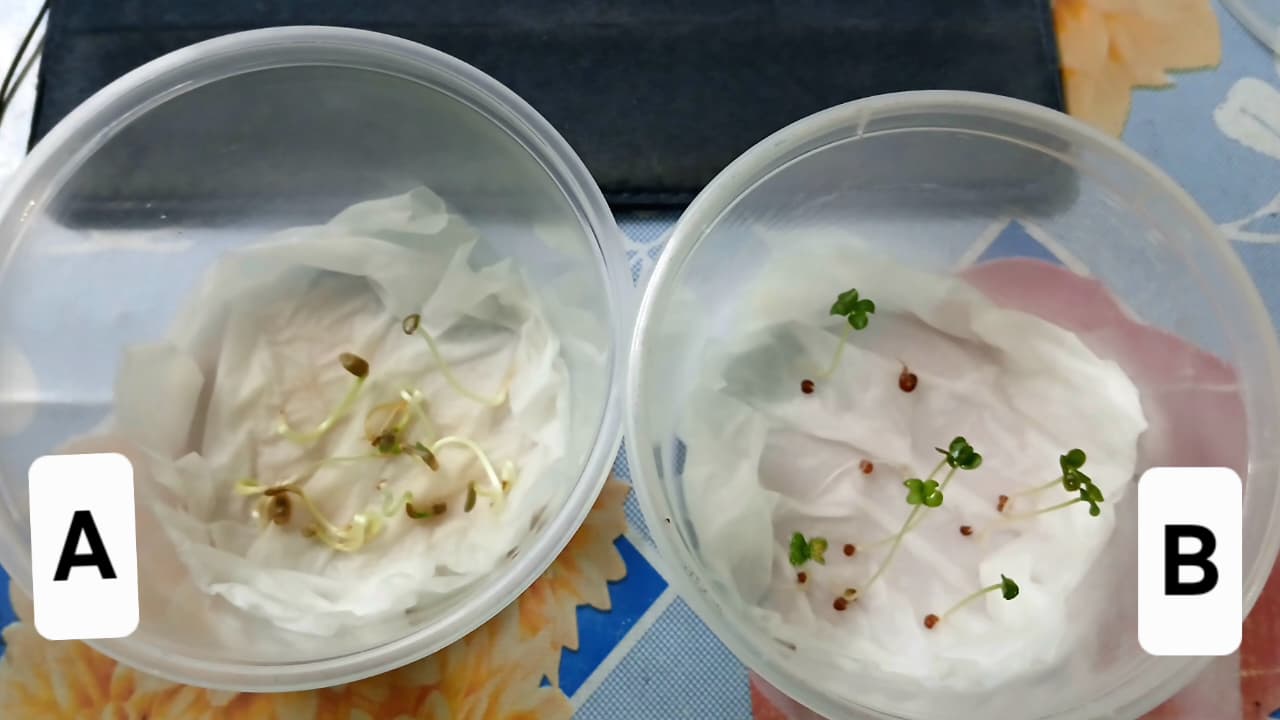
- Fenugreek (A): 9 out of 10 seeds germinated (90% germination). The seedlings showed long, curved radicles and early signs of plumule development.
- Mustard (B): 8 out of 10 seeds germinated (80% germination). The seedlings displayed upright growth with well-developed green cotyledons.
Interpretation of Results
Fenugreek exhibited vigorous root elongation, showing its adaptation for stronger anchorage and nutrient absorption. Mustard, on the other hand, showed rapid shoot and leaf emergence, indicating a quicker transition towards photosynthesis.
The difference highlights species-specific strategies—fenugreek invests early energy in root growth, while mustard emphasizes shoot development.
Comparison with Sneha’s Cardamine Study
Compared to Cardamine seeds studied by a Sneha , which showed only 20–30% germination after 48 hours, both fenugreek and mustard demonstrated faster and more successful germination. This may be due to their larger seed size and nutrient reserves, allowing better moisture retention and quicker metabolic activation.
Conclusion
Both fenugreek and mustard are ideal for school-level germination studies due to their high germination rate, visible seedling development, and clear differences in growth patterns. Such comparative studies enhance our understanding of plant diversity and adaptive growth strategies even within simple home-based experiments.
Reference
- Study of morphological parameters and germination index of Trigonella foenum-graecum L. | Journal of Drug Delivery and Therapeutics
- https://www.researchgate.net/publication/350734472_Influence_of_Sugar_Mill_Effluent_on_Germination_and_Growth_of_Fenugreek_Trigonella_foenumgraecum_and_Mustard_Brassica_nigra?utm_source=chatgpt.com
- Germination - Wikipedia