 CUBE Chatshaala - Discussion Summary
Date: 9 November 2026
The evening session opened at about 7:30 pm with Manali Bhujade and Niharika Baghari as the first presenters. Kiran and Arunan sir, Nishant Sonari, Prithviraj, Kiran Varma, Sailekshmi, Susanta Tanti, and Khushbu Gupta took part. The presenter role changed hands often, with Niharika, Susanta, Sailekshmi, Kiran Varma, and Kiran each taking a turn.
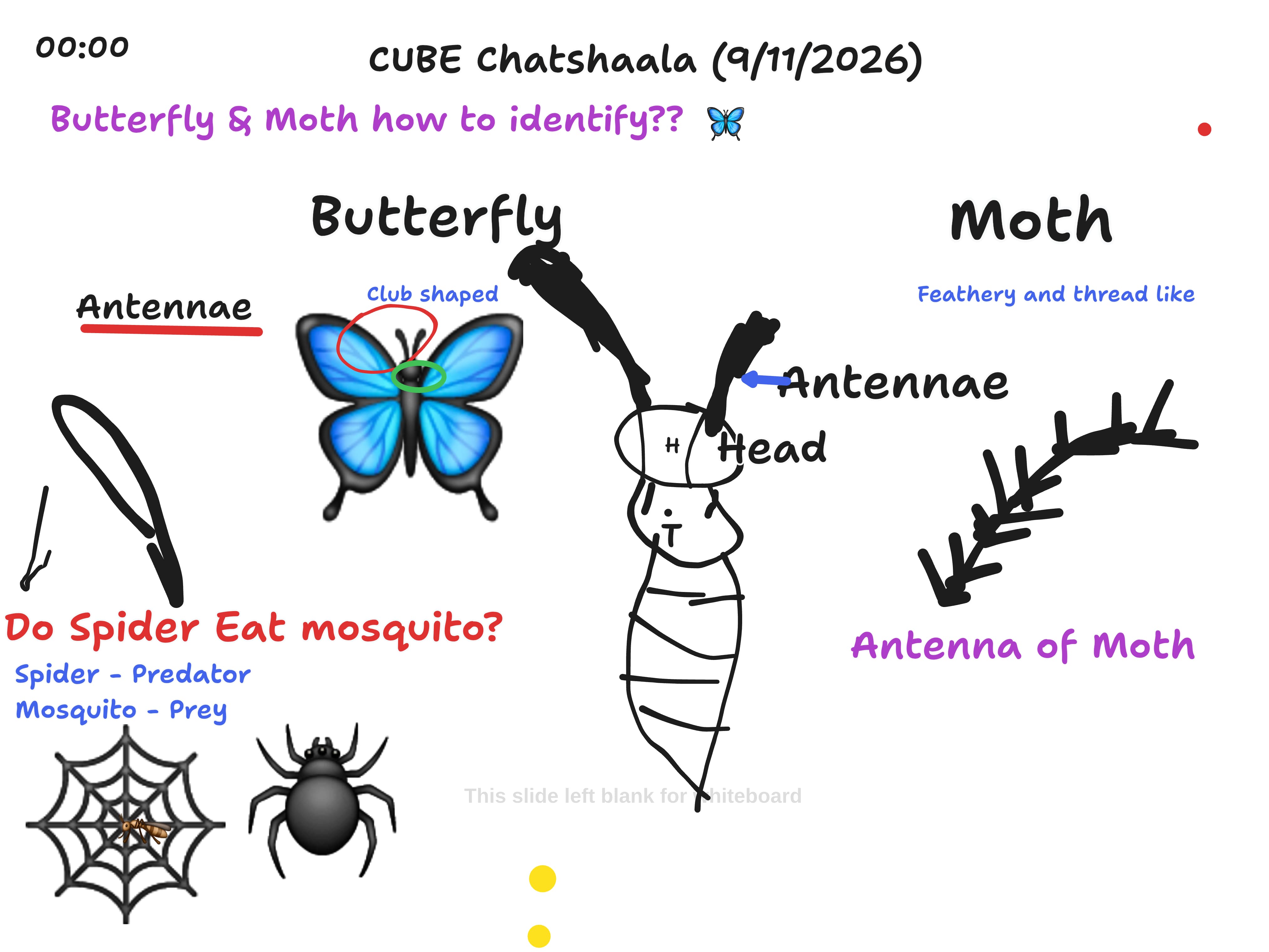

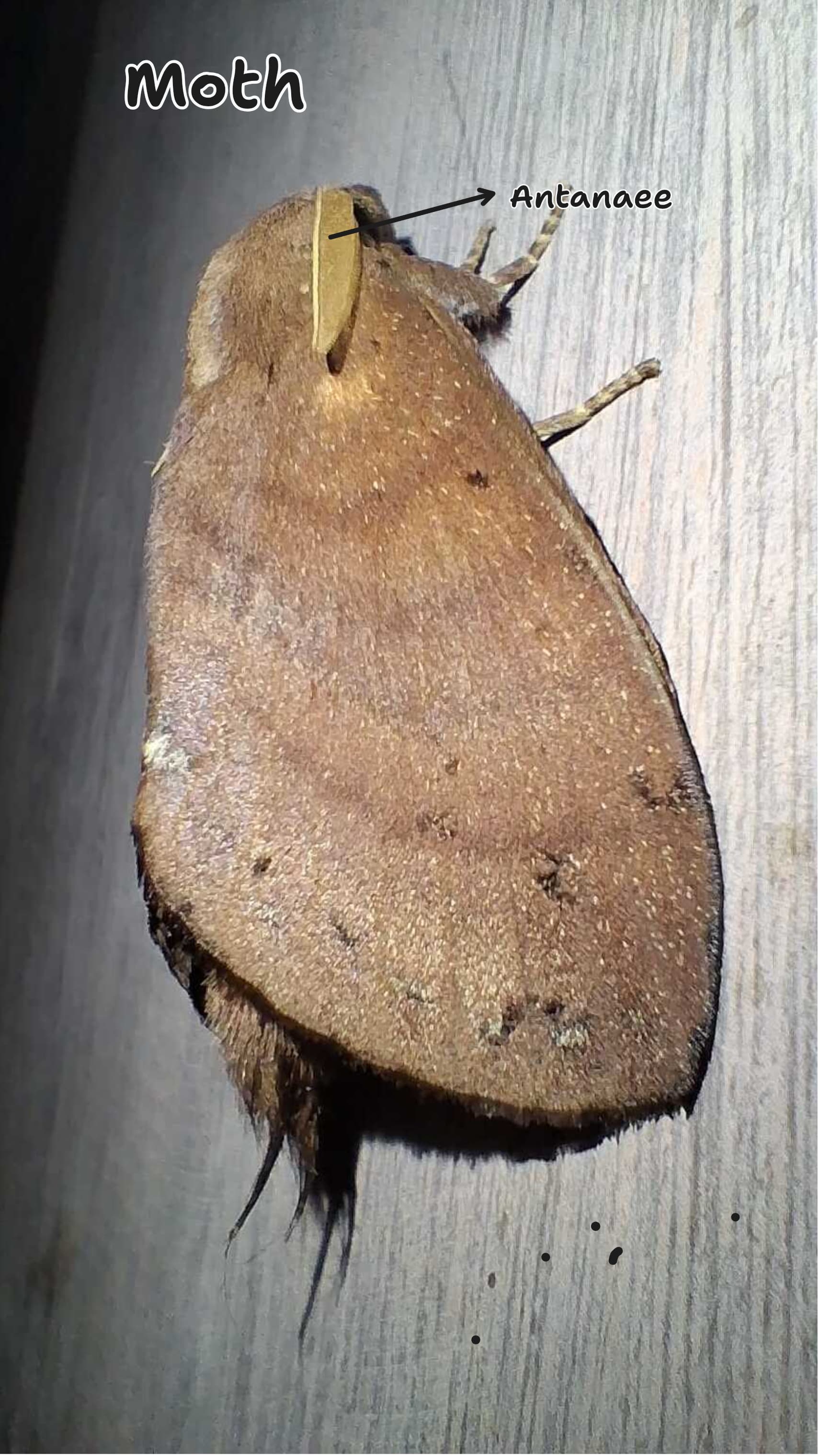
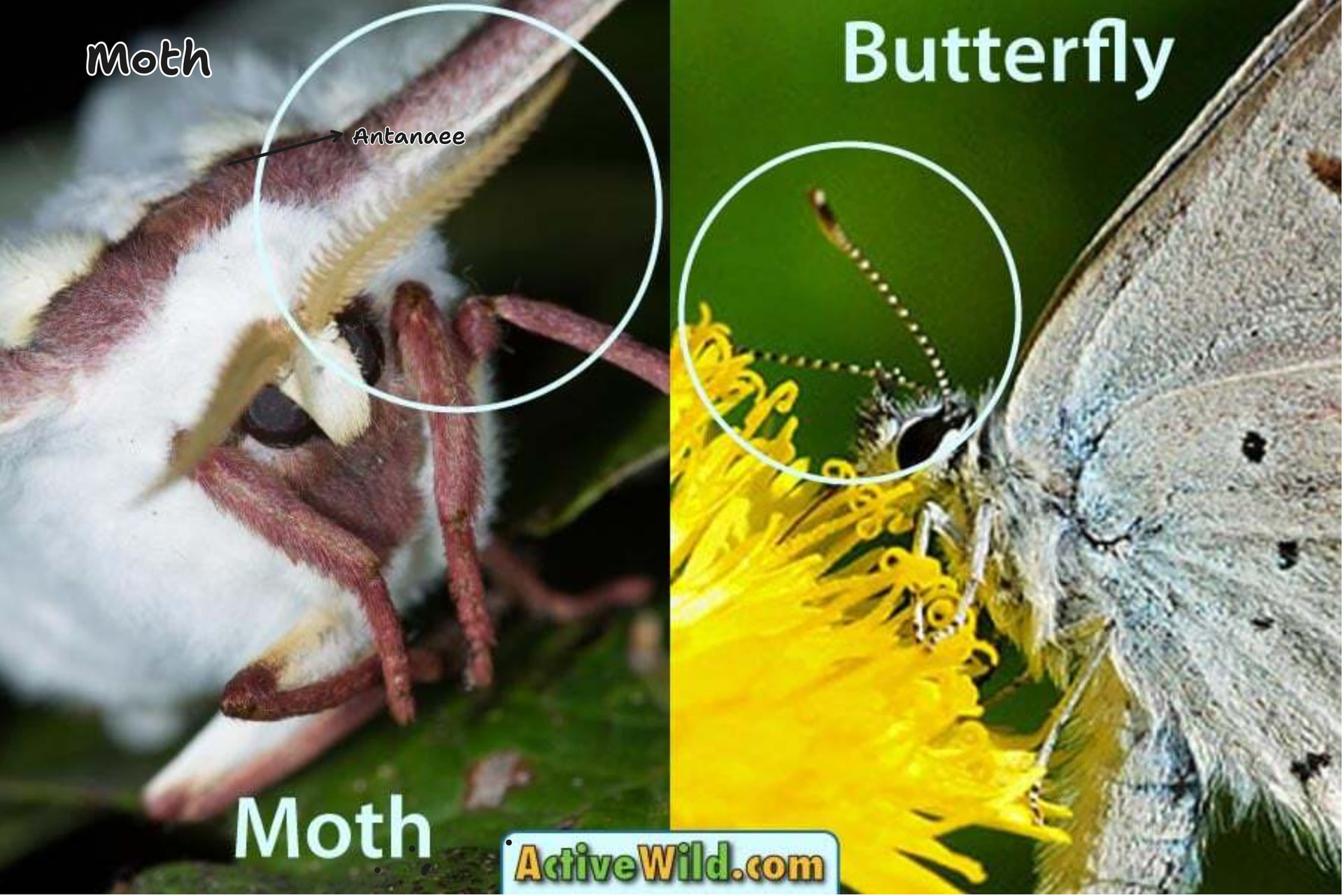
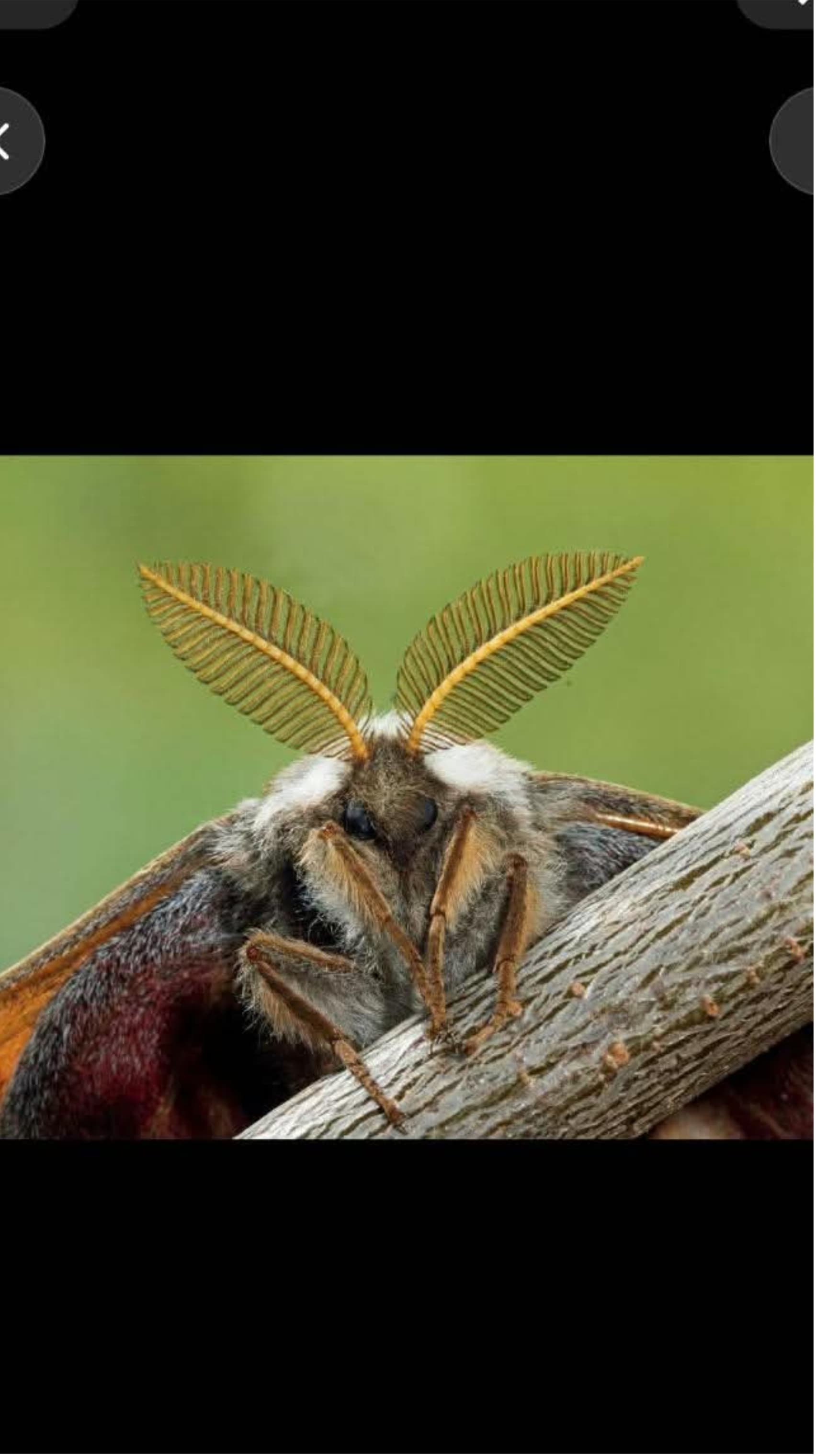
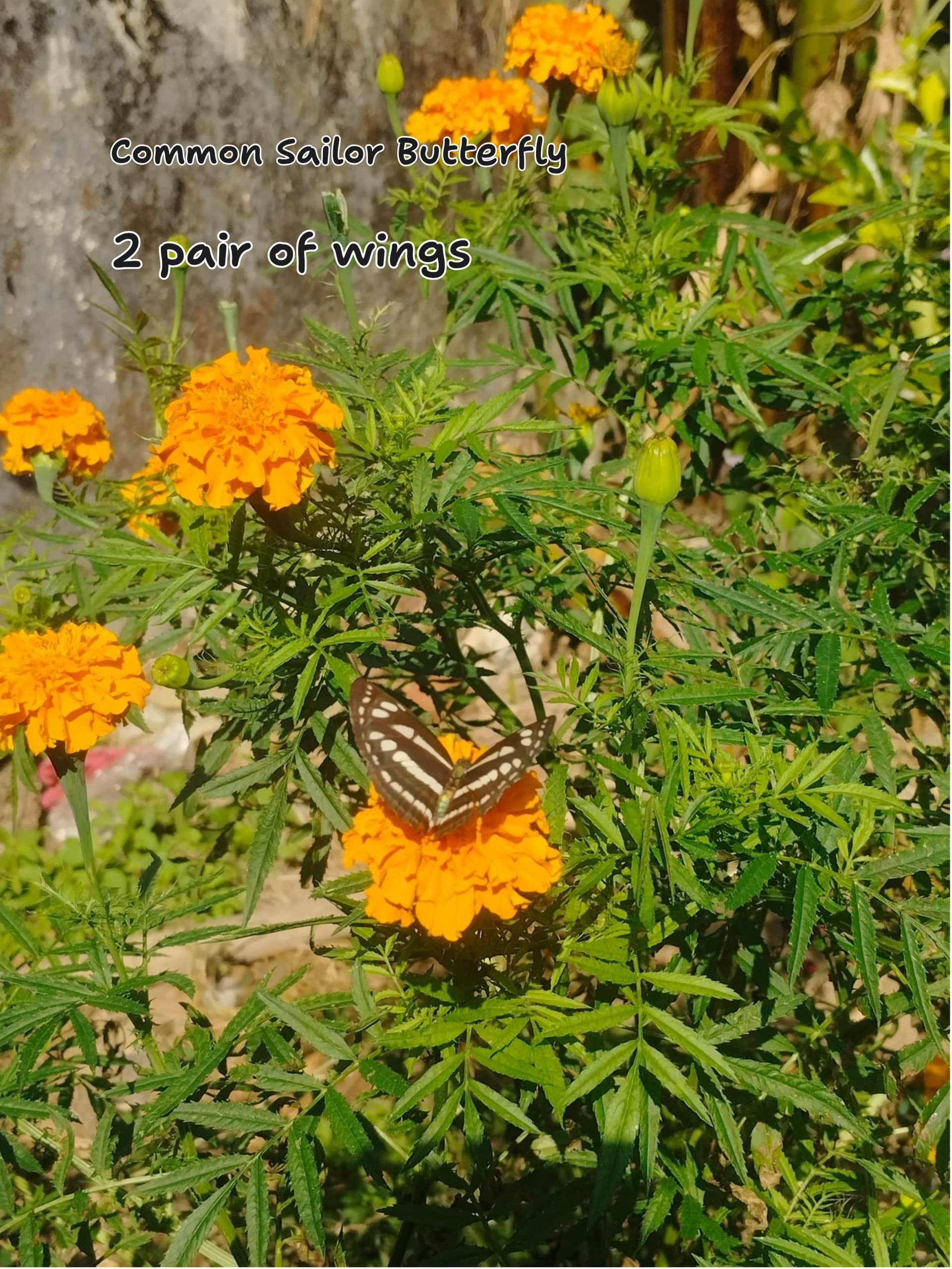
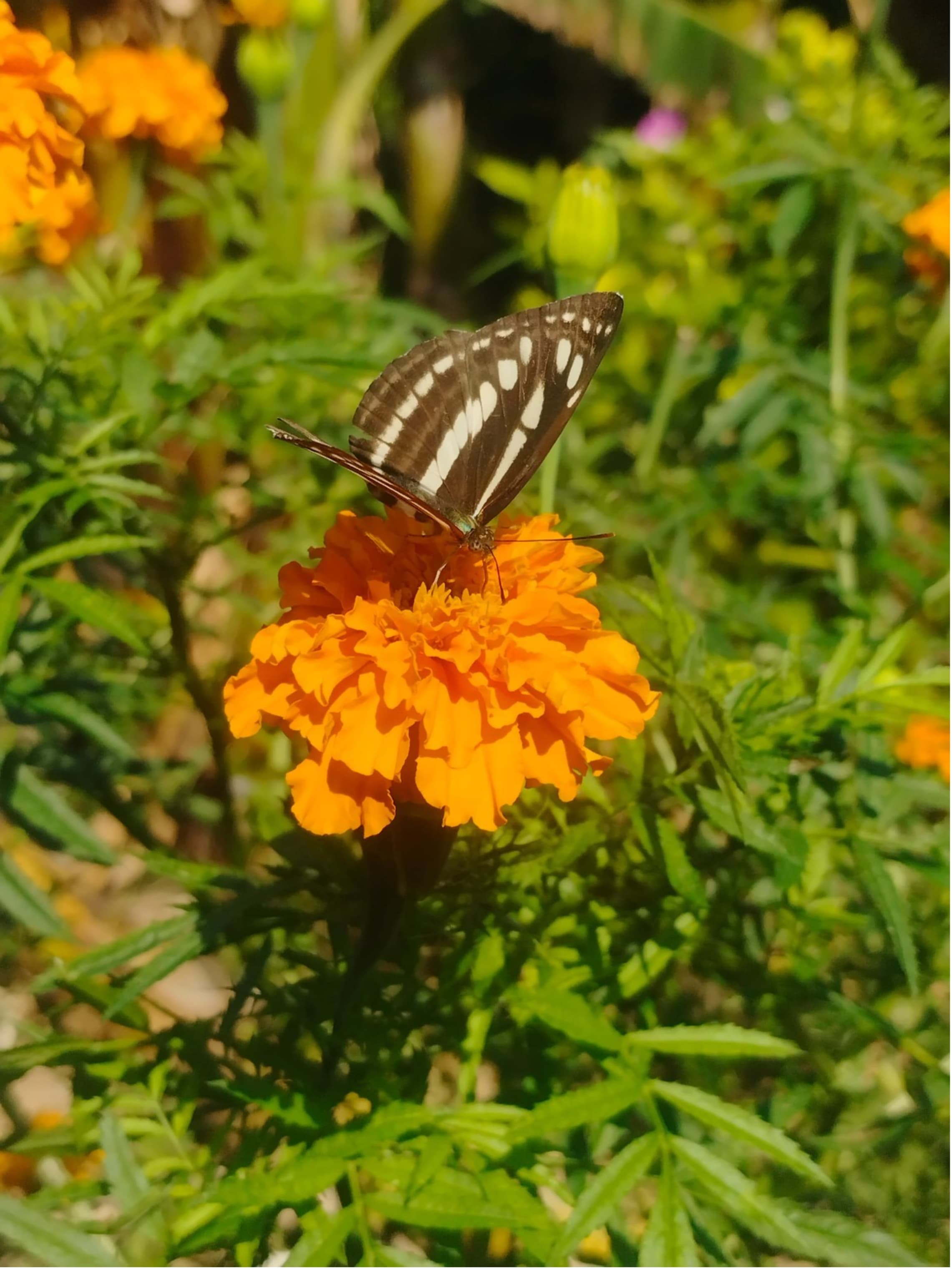
The main question on the first whiteboard was “Butterfly and Moth: how to identify?” The group settled on the antennae as the most dependable clue. A butterfly’s antenna is slender and ends in a small club, while a moth’s antenna is feathery or thread-like. The board showed this with a butterfly drawing and a circled antenna tip, next to a large sketch of a moth’s head with a comb-like antenna. Several photographs supported the point. They included a brown moth resting on a wooden surface, a close-up of a moth with strongly feathered antennae, and the ActiveWild comparison image placing a moth and a butterfly side by side. A Common Sailor Butterfly photographed on a marigold carried the note “2 pairs of wings”, a reminder that butterflies and moths both have four wings arranged as two pairs.
Manali shared the Wikipedia page for Neptis hylas, the Common Sailor, around 7:46 pm. The page describes its stiff gliding flight, made of short and shallow wingbeats held just above the horizontal. The ActiveWild article, shared by Niharika, widened the picture. It explains that butterflies and moths belong to the same insect order, Lepidoptera, and that butterflies evolved from moths. It also lists other differences: most moths fly at night and most butterflies by day, moths tend to have duller wings and stouter hairy bodies, and moths spin a silk cocoon while most butterflies form a hard chrysalis. The article is also careful to point out exceptions. Some moths fly by day, and a few butterflies are active at dusk or night.
Several side questions came up in the chat. Kiran remarked that she had heard spiders described as mosquitoes. The whiteboard answered with a small food-chain note, “Do spiders eat mosquitoes?”, with the spider marked as predator and the mosquito as prey, and a spider web with a trapped mosquito beside it. Kiran Varma pointed out that moths are attracted to light. She also asked why caterpillars chew leaves while adult butterflies mostly sip liquid nectar. Sailekshmi asked Manali whether a Phyllanthus plant could serve as a host plant for butterflies, which linked this session to the Phyllanthus work of the past week.
The later part of the session turned to earthworms. At about 9:10 pm, Arunan sir shared the MetaStudio thread “Earthworm culture” from 2019. In that thread, young learners set up a simple earthworm culture in a cup covered with cloth. They tested worm behaviour in pure water, soapy water, and salt water. They also discussed how water supports respiration and why earthworms come out of the soil when it rains. The second whiteboard, recorded at 01:54:52, was headed “Skill enhancement course: Vermiculture and Vermicomposting”. It showed a plastic cup holding pieces of wet plain paper, with the steps “put the earthworm into the cup” and “cover with cotton cloth”. The cloth covering at the mouth of the cup was circled in red.
 Provocative Questions
-
If antennae are such a reliable clue, why do some moths have thin, thread-like antennae that look nothing like the feathery ones in the textbook pictures? Where does the rule hold and where does it fail?
-
Butterflies evolved from moths. Does that make the butterfly a special kind of moth rather than a separate group, and what would that mean for how we teach the difference?
-
The Common Sailor holds its wings open while it feeds on a marigold, with the wings not touching the flower. Can resting posture be used as an identification clue as dependably as antennae?
-
A caterpillar chews leaves and the adult sips nectar. What does this tell us about how one animal can have two completely different lives, and why does it need two different sets of mouthparts?
-
A spider is a predator and a mosquito is its prey. If spiders are not insects, which features would you check first to prove it?
-
Why are moths drawn to light? Is it attraction, confusion, or something else, and how could a home lab test it safely?
-
Which plants in our own gardens could host butterfly caterpillars, and could Phyllanthus be one of them? How would we confirm it by observation rather than guesswork?
-
In the earthworm cup, what does the wet paper stand in for, and what else does a worm need from its surroundings to stay alive and healthy?
-
Why is the cup covered with cotton cloth and not a tight lid? What would change inside the cup if we sealed it completely?
-
The 2019 Metastudio experiment found that worms survived in pure water but died in salt water. What does that suggest about the skin of an earthworm, and how does it relate to the worms we see on the surface after heavy rain?
 What I Have Learned
The first lesson is that identification should rest on a pattern of features rather than a single trait. Antennae gave us a good starting point, but wing posture, body build, wing colour, and the pupal covering all add confidence. I also learned that every rule in this topic comes with exceptions, such as day-flying moths and butterflies that fold their wings like moths. Admitting the exceptions makes an observer more careful, and I think it improves the quality of any record we post.
The second lesson is that scientific classification is a family tree and not a set of separate boxes. Hearing that butterflies arose from moths made the two groups feel connected, not opposed.
The third lesson concerns life stages. A caterpillar and a butterfly of the same species behave and feed in completely different ways. This shows why host plants matter for caterpillars and nectar plants matter for adults, and it makes a garden planning question out of a simple observation.
Finally, I saw how a basic home set-up- a plastic cup, damp paper, and a cloth cover- can be the first step toward a skill like vermiculture. Reading the old 2019 thread next to our new whiteboard showed how the community keeps building on earlier work.
 TINKE Moments (This I Never Knew Earlier)
-
Butterflies evolved from moths, and moths appeared many millions of years earlier. The ActiveWild article places the earliest known moth in the Jurassic, long before the first butterflies. Before this, many of us treated the two as equal and separate groups.
-
Moths are far more numerous than butterflies. The article says there are roughly nine moth species for every butterfly species. The fluttering insects we notice by day are only a small share of the order.
-
A moth’s cocoon is made of silk, while a typical butterfly forms a hard-skinned chrysalis. Many of us use the two words as if they meant the same thing.
-
The Common Sailor has a stiff gliding flight, made of short, shallow wingbeats, which is a behavioural clue that can help even when the antennae are hard to see.
-
Earthworms in the old Metastudio experiment stayed active in pure water but died in salt water. This shows how sensitive their skin is to the surrounding solution, a point that matters when we prepare a culture medium.
 Gaps and Misconceptions
Misconception: Spiders are mosquitoes, or spiders are insects. A spider and a mosquito are very different animals. The mosquito is an insect with six legs and wings, while the spider has eight legs and is an arachnid. The whiteboard note about predator and prey addressed the food relationship, but the difference in body plan still needs to be stated clearly.
Misconception: Moths are always night fliers and butterflies always day fliers. The reference article lists day-flying moths such as the hummingbird hawk-moth, and butterflies active at dusk or night. Flight time is a hint and not proof.
Misconception: All moth antennae are feathery. The whiteboard wrote "feathery and thread-like for moths, which is the more accurate statement. The brown moth in our photograph shows that many moths do not have the dramatic feathered type shown in the close-up image. We need to take care that the textbook picture does not become the only picture in our heads.
Gap: Labelling in the photographs. In the brown moth photo, the arrow marked "Antennae "points to a pale flap near the front of the wing. The striped appendages at the top right look more like legs than antennae, and the true antennae are not clearly visible in that picture. Labels need to be checked against the image, and the word “antennae” needs correcting in the labels.
Gap: Several words on the whiteboard were misspelled, including “enchiment”, “Plactic,” and “Prices of plain paper”, which was clearly meant to be “pieces”. Small errors like these would confuse a reader who sees only the board.
Gap: The earthworm set-up was left incomplete. The board shows a cup, wet paper, and a worm, but it does not say what the worm eats, how the moisture is kept steady, how air gets in, or where the cup should be kept away from sunlight and heat. The 2019 thread solved part of this with holes at the base of the cup, and our discussion could revisit those details.
Gap: Open questions were left unanswered. The questions about why caterpillars chew, and adults sip, why moths come to light, and whether Phyllanthus can host butterflies were raised in the chat, but the session did not reach an evidence-based answer to any of them. They would make good follow-up observations.
Gap: The Common Sailor identification came from a single photograph. A second view of the underside of the wings, or a record of the host plant, would make the identification more secure.
 Photographs during ChatShaala




 Reference