"CUBE Chatshaala Learning Reflection’’
 From Nail Growth Observation to Understanding Memory, Neurons, and Scientific Thinking
 Date: 09 June 2026
“Learning begins with observation, grows through curiosity, and develops through scientific thinking.”
 Nail Growth Observation Study
I learned about a nail growth study presented by @Sailekshmi using the ink-mark method. In this investigation, an ink mark was placed on the nail and its movement was observed through photographs taken over a period of time.
 What I Learned
 I learned that nail growth can be studied scientifically through careful observation.
I learned that approximately 6 mm of nail growth was observed over 62 days.
I learned that the average nail growth rate was approximately 0.097 mm per day (about 0.1 mm/day).
I learned that even very slow biological changes can be measured accurately when observations are recorded systematically.
 Importance of Graph Paper and a Ruler
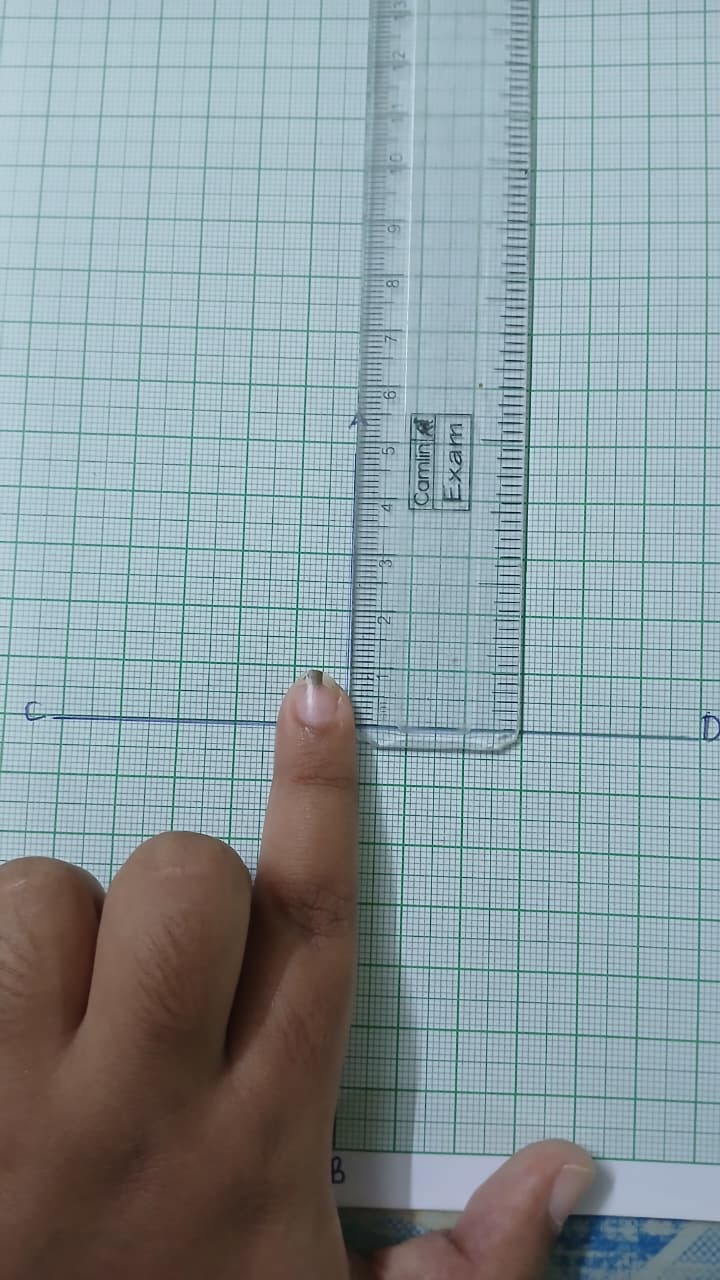
I learned that graph paper helps measure very small changes precisely.
I learned that each small square can be used as a reference for accurate measurements.
I learned that a ruler helps verify observations and reduces measurement errors.
I learned that scientific investigations become more reliable when measurements are recorded carefully.
 Questions Arising
 Does nail growth occur at the same rate in every individual?
Does nutrition affect nail growth?
Does nail growth vary during different seasons?
 Misconception I Had
Earlier, I thought nail growth was too slow to observe directly. However, I learned that even small biological changes can be measured and analyzed scientifically with proper observation methods.
 Understanding Measurements Using Graph Paper
I learned how graph paper can be used as a scientific measurement tool.
 What I Learned
I learned that 1 centimetre contains 10 small squares.
I learned that each small square represents 1 millimetre.
I learned that 5 small squares equal 0.5 centimetres.
I learned that accurate measurements improve the quality of scientific data.
 Why This Is Important
I learned that reliable scientific conclusions depend on precise measurements rather than estimates.
 Learning Through the CUBE Approach
I learned about the CUBE (Collaboratively Understanding Biology Education) approach.
Core Principles
Observation 
Experimentation 
Discussion 
Scientific Reasoning
What I Learned
I learned that science is not only about memorizing facts. It is also about asking questions, making observations, discussing ideas, and investigating biological phenomena.
Understanding Neurons
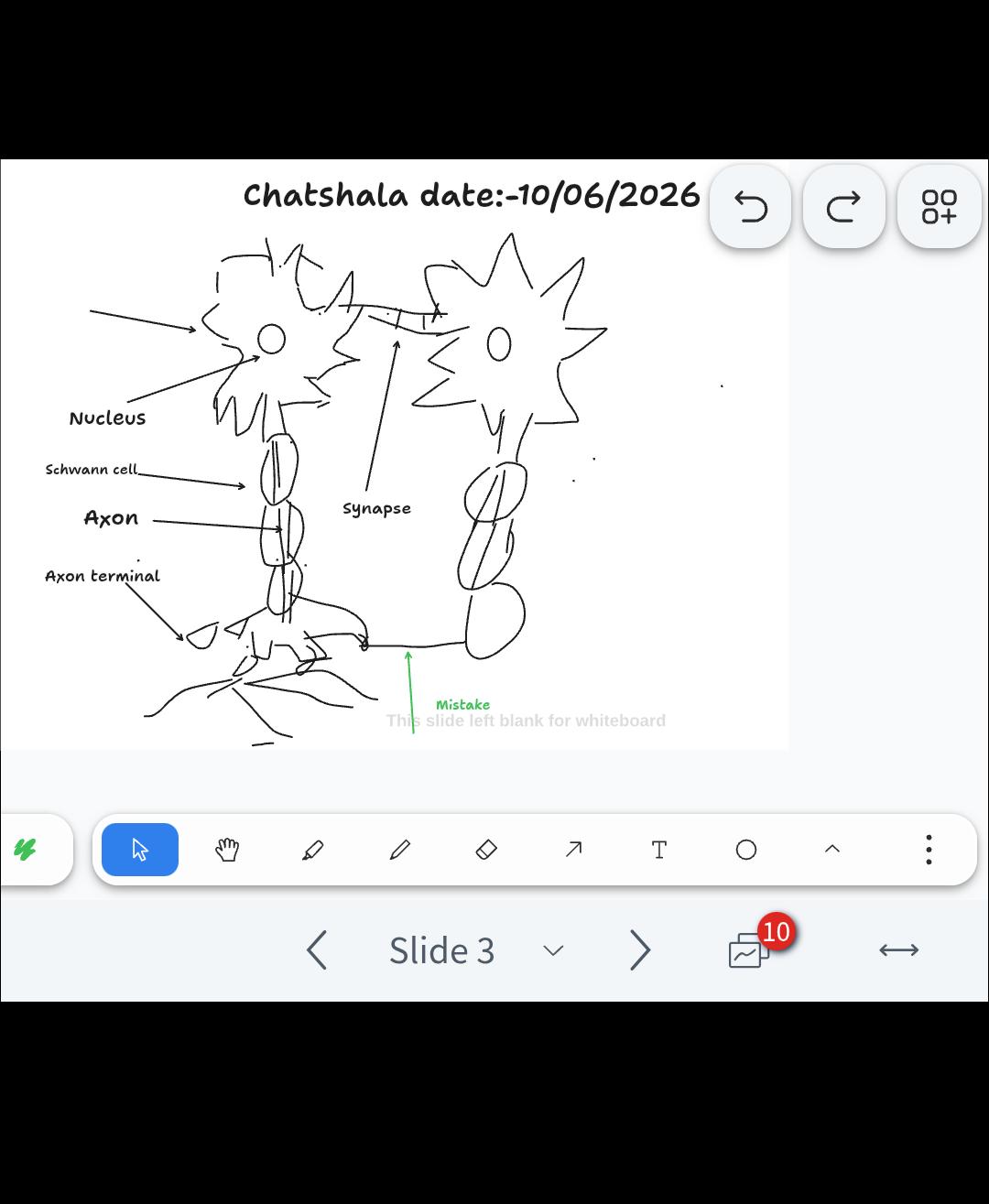
I learned that neurons are the basic units of the nervous system responsible for transmitting information throughout the body.
Parts of a Neuron
Dendrites – Receive signals from other neurons.
Cell Body (Soma) – Processes information.
Nucleus – Controls cellular activities.
Axon – Carries signals away from the cell body.
Myelin Sheath – Speeds up signal transmission.
Axon Terminals – Transfer signals to other neurons.
Interesting Fact I Learned
I learned that billions of neurons communicate continuously, allowing us to think, learn, remember, and interact with the world around us.
 Understanding Synapses
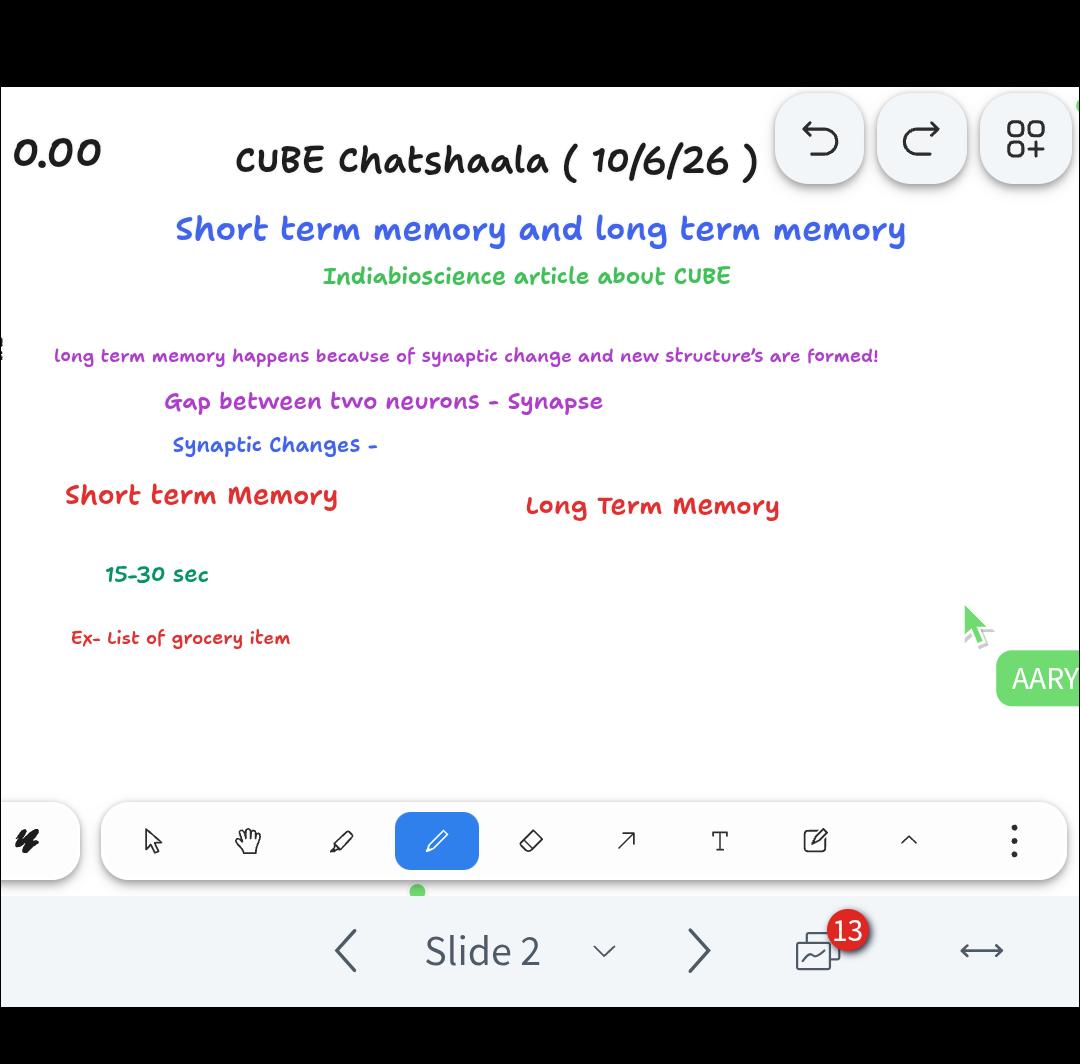
I learned that a synapse is the connection point where one neuron communicates with another neuron.
What I Learned About Synapses
I learned that information passes between neurons through synapses.
I learned that learning can strengthen synaptic connections.
I learned that repeated experiences improve communication between neurons.
I learned that these changes are called synaptic plasticity.
Something New I Learned
Before this session, I did not know that learning can physically change the strength of connections between neurons.
Understanding Short-Term Memory
I learned that short-term memory stores information temporarily.
 Example Discussed During the Session
Suppose someone tells me a grocery list:
 Potatoes
 Tomatoes
 Onions
 Milk
Milk
I may remember these items for a short period of time. However, if I do not repeat them, use them, or write them down, I may forget them later.
This is an example of short-term memory.
What I Learned
I learned that short-term memory is temporary.
I learned that information can be forgotten if it is not reinforced.
I learned that attention and repetition help us remember information.
Understanding Long-Term Memory
I learned that long-term memory stores information for long periods, sometimes even for years.
Grocery List Example
I learned that if I repeatedly use the same grocery items, write them down, discuss them, or encounter them regularly, I eventually remember them without effort.
The information then becomes part of long-term memory.
Scientific Explanation
I learned that repetition strengthens synaptic connections.
I learned that stronger neural connections make information easier to remember.
I learned that long-term memories are associated with lasting synaptic changes in the brain.
Key Learning
I learned that repetition, practice, and experience help transfer information from short-term memory to long-term memory.
Questions I Am Thinking About
Why do some memories last for many years?
Why do some memories disappear quickly?
How many repetitions are required to form a long-term memory?
Can synaptic connections continue changing throughout life?
 Major Learnings From This Session
I learned that observation is the foundation of science.
I learned that accurate measurements improve scientific investigations.
I learned that neurons are specialized communication cells.
I learned that synapses play an important role in learning and memory.
I learned that repeated experiences strengthen neural connections.
I learned that repetition helps convert short-term memories into long-term memories.
I learned that science grows through curiosity, observation, and evidence-based reasoning.
Conclusion
I learned that even simple observations can lead to meaningful scientific understanding. Through discussions on nail growth, graph paper measurements, neurons, synapses, and memory formation, I gained a deeper appreciation of how biological systems work. The session reinforced the importance of observation, questioning, measurement, and scientific thinking in understanding the natural world.
“Every observation teaches us something new, and every question brings us closer to understanding science.” :::
Screenshots during Chatshaala -