 CUBE ChatShaala – Discussion Summary
2026-04-06T18:30:00Z
Today’s ChatShaala centered on two interconnected themes: the solubility of glucose, sucrose, and starch in water and the role of bacteria in curd formation. The cubist explored how different carbohydrates behave when dissolved in water, noting that glucose and sucrose readily dissolve, while starch resists solubility due to its complex polymeric structure. This distinction sparked conversations about how solubility relates to digestion and the release of energy.
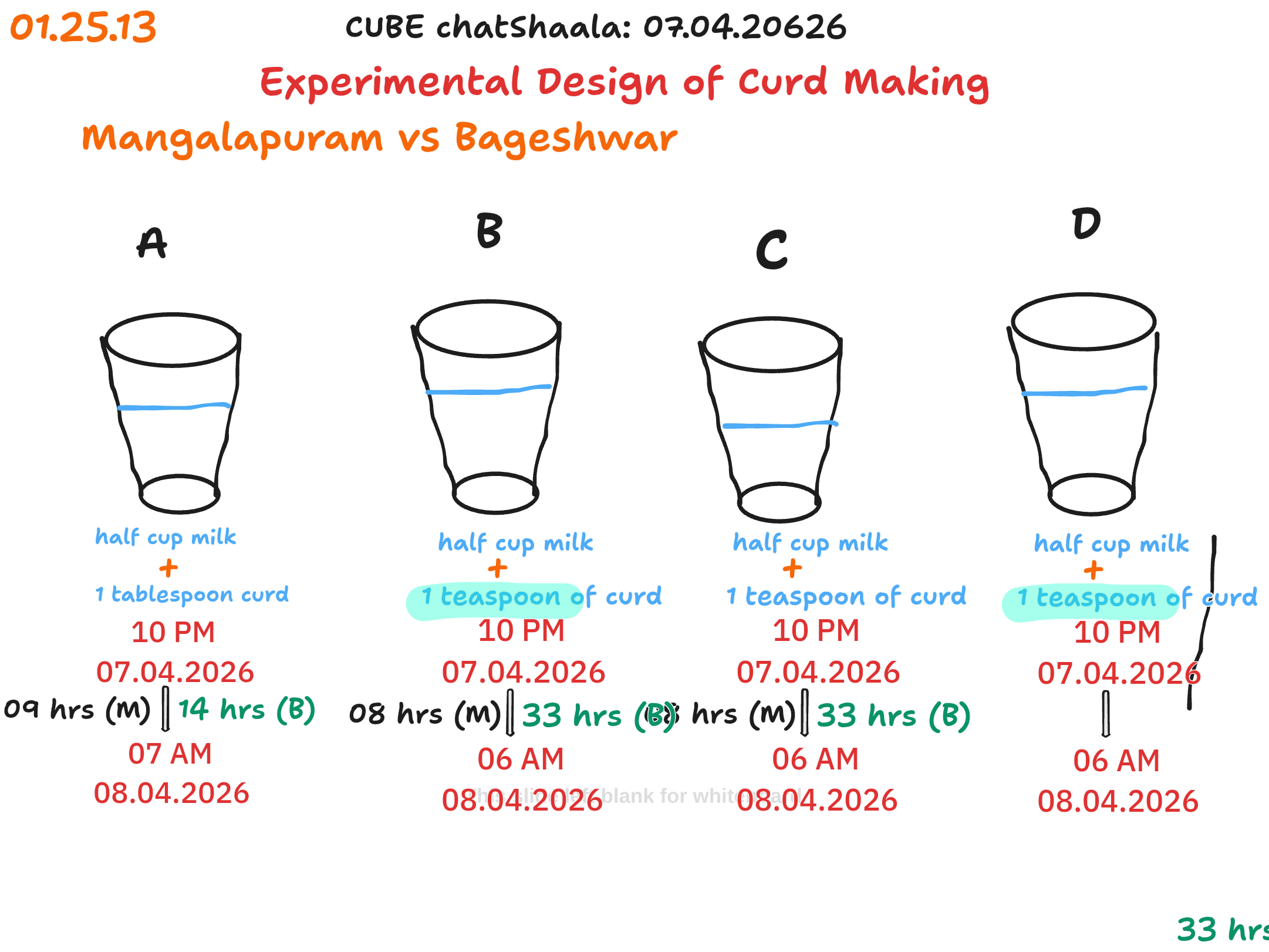
The second major thread focused on curd-making experiments conducted in Mangalapuram and Bageshwar, comparing fermentation times under different conditions. Participants discussed how adding varying amounts of curd starter (from a tablespoon to a teaspoon) influenced the speed of milk-to-curd transformation. A striking observation was the difference in fermentation duration between the two locations—shorter in Mangalapuram and significantly longer in Bageshwar—highlighting the impact of environmental factors such as temperature and microbial density.
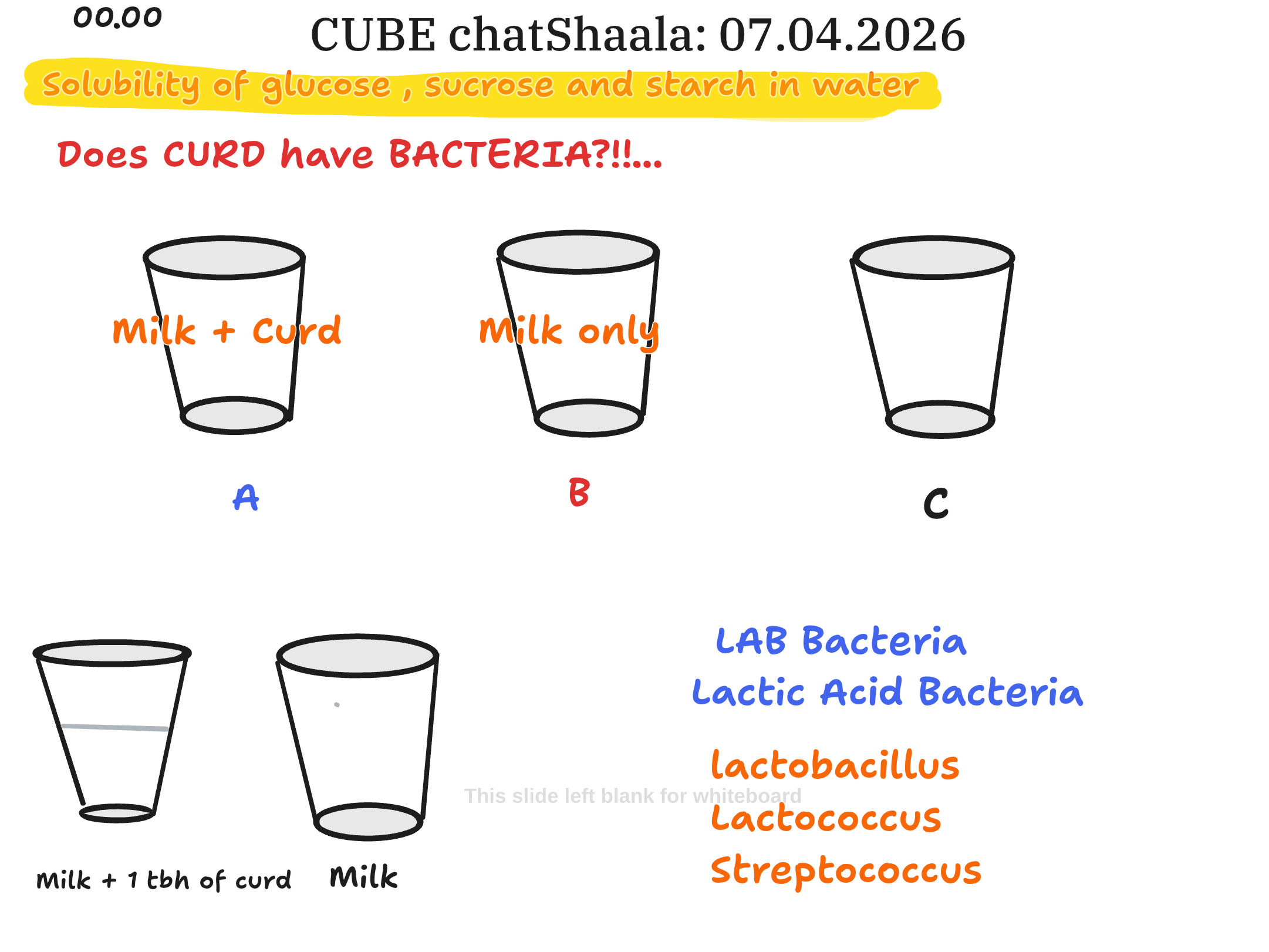
The whiteboard notes emphasized that curd indeed contains lactic acid bacteria (LAB), including Lactobacillus, Lactococcus, and Streptococcus. These bacteria ferment lactose into lactic acid, which lowers the, lowericausesnd causing milk proteins to coagulate into curd. The discussion reinforced the idea that curd is not just a food product but a living microbial ecosystem.
 Provocative Questions
-
Why does starch resist dissolving in water compared to glucose and sucrose, and how does this affect its role in human nutrition?
-
Could the difference in curd fermentation times between Mangalapuram and Bageshwar be explained solely by temperature, or are other environmental microbial factors at play?
-
How might the quantity of starter curd influence not just the speed but also the microbial diversity of the resulting curd?
-
If curd contains living bacteria, should it be considered a probiotic food, and what implications does this have for health?
-
What parallels can be drawn between solubility experiments in carbohydrates and microbial fermentation in curd-making—are both examples of how structure and environment shape outcomes?
 What I Have Learned
-
Carbohydrate solubility matters: Glucose and sucrose dissolve easily, while starch resists, teaching us about molecular complexity and its biological consequences.
-
Curd is alive: It is not just a dairy product but a microbial culture dominated by lactic acid bacteria.
-
Environmental context is crucial: The same experimental setup produced different results in Mangalapuram and Bageshwar, showing how local conditions influence microbial activity.
-
Starter quantity matters: More curd starter accelerates fermentation, while smaller amounts slow it down, revealing the importance of inoculum size in microbial experiments.
 TINKE Moments (This I Never Knew Earlier)
-
Temperature vs. Microbial Density Confusion: Some participants initially assumed that temperature alone explained the difference in fermentation times. The discussion revealed that microbial load and local microbial ecology also play a role.
-
Starter Quantity Misconception: There was a tendency to think that any amount of curd starter would yield curd in the same time. The experiments showed that inoculum size significantly alters fermentation speed.
-
Solubility Oversimplification: Early comments suggested that “all sugars dissolve in water,” but starch challenged this assumption, prompting deeper reflection on molecular structure.
-
Curd as Non-living Misbelief: A few participants questioned whether curd truly contains bacteria. Clarifying that curd is a living microbial system corrected this misconception.
 Gaps and Misconceptions
-
Incomplete understanding of starch solubility: More exploration is needed into why starch granules resist dissolution and how heating or enzymatic action changes this.
-
Limited view of environmental influence: The role of ambient microbial populations in curd-making was under-discussed compared to temperature.
-
Health implications of LAB: While LAB were identified, their probiotic benefits were not fully explored, leaving a gap in connecting microbiology to nutrition.
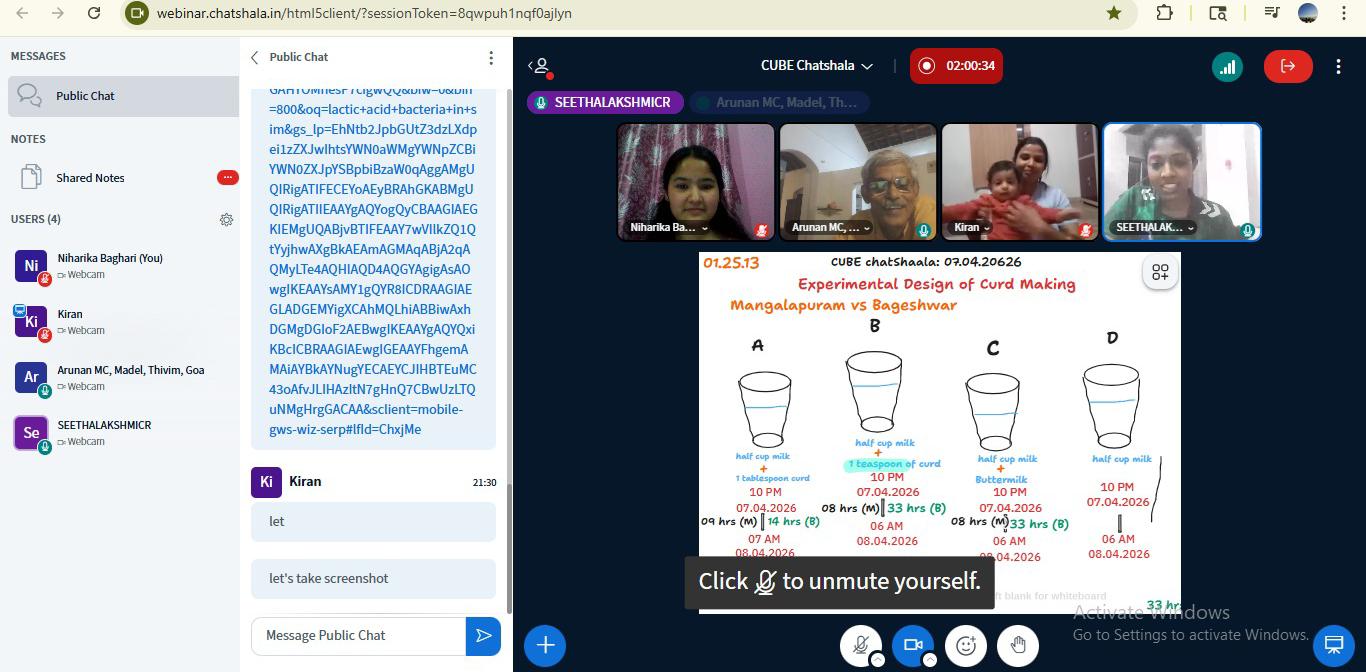
 Photographs during ChatShaala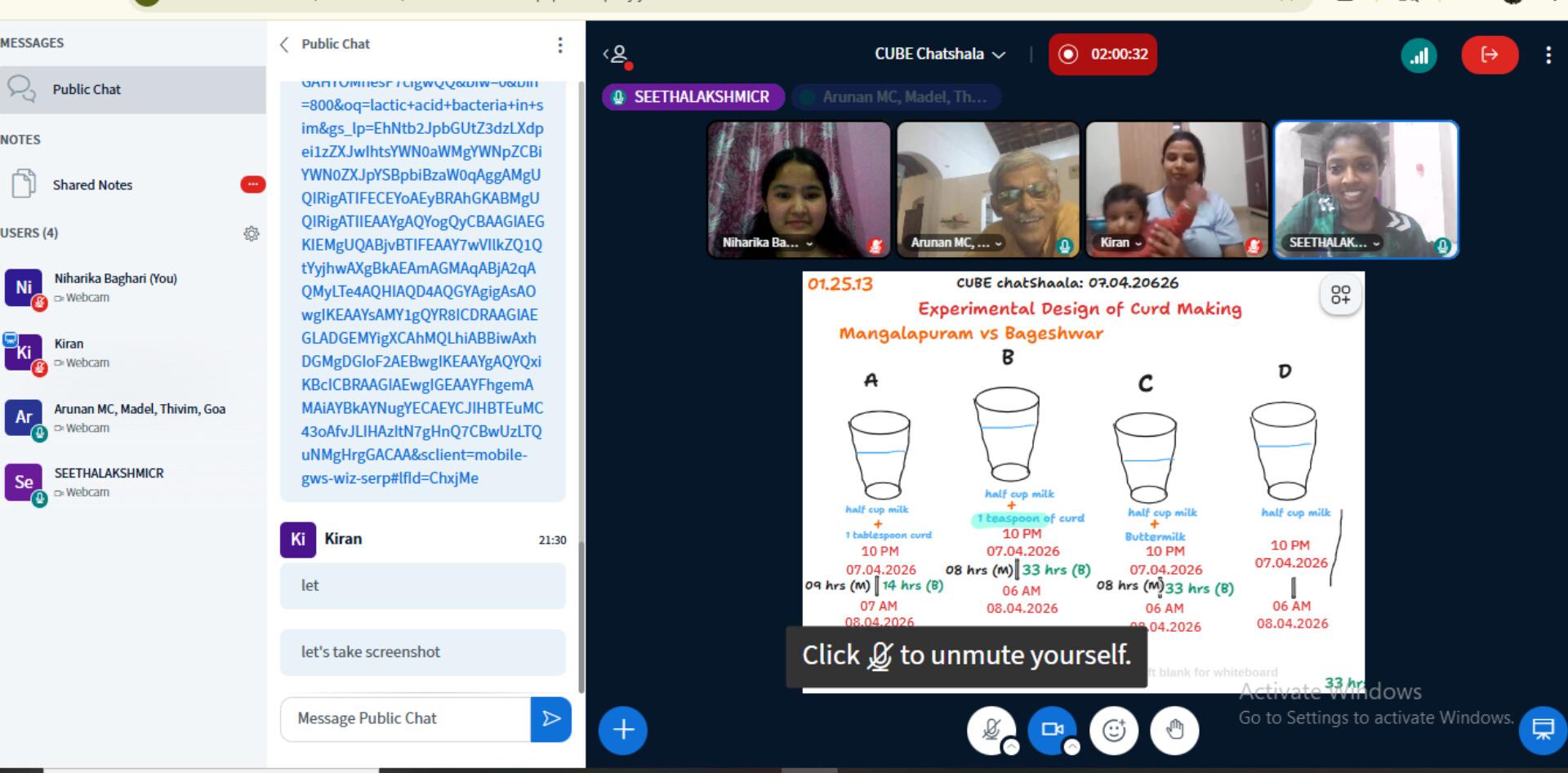
 Reference