 CUBE Chatshaala - Discussion Summary
The CUBE ChatShaala session on 14 February 2026 focused on the theme of Evolution and zoogeography. Cubists explored how zoology and geography intersect to explain the distribution of animals across different regions of the world. The discussion centered on Charles Darwin’s observations in the Galápagos Islands, where distinct bird species evolved specialized beak shapes to adapt to varied food sources such as fruits, seeds, worms, and fish. This provided a vivid example of natural selection and adaptive radiation.
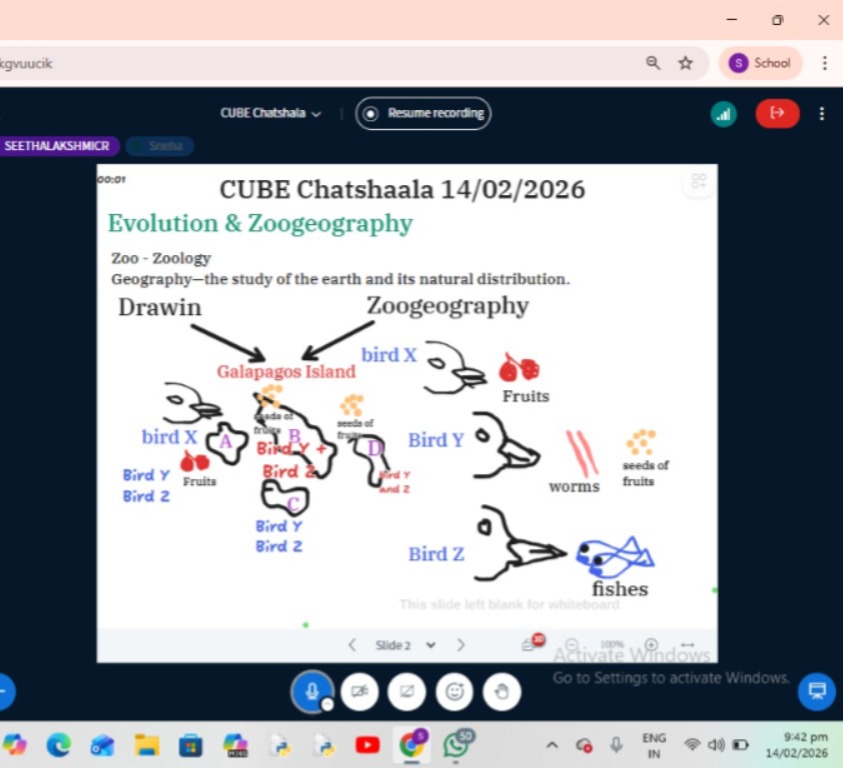
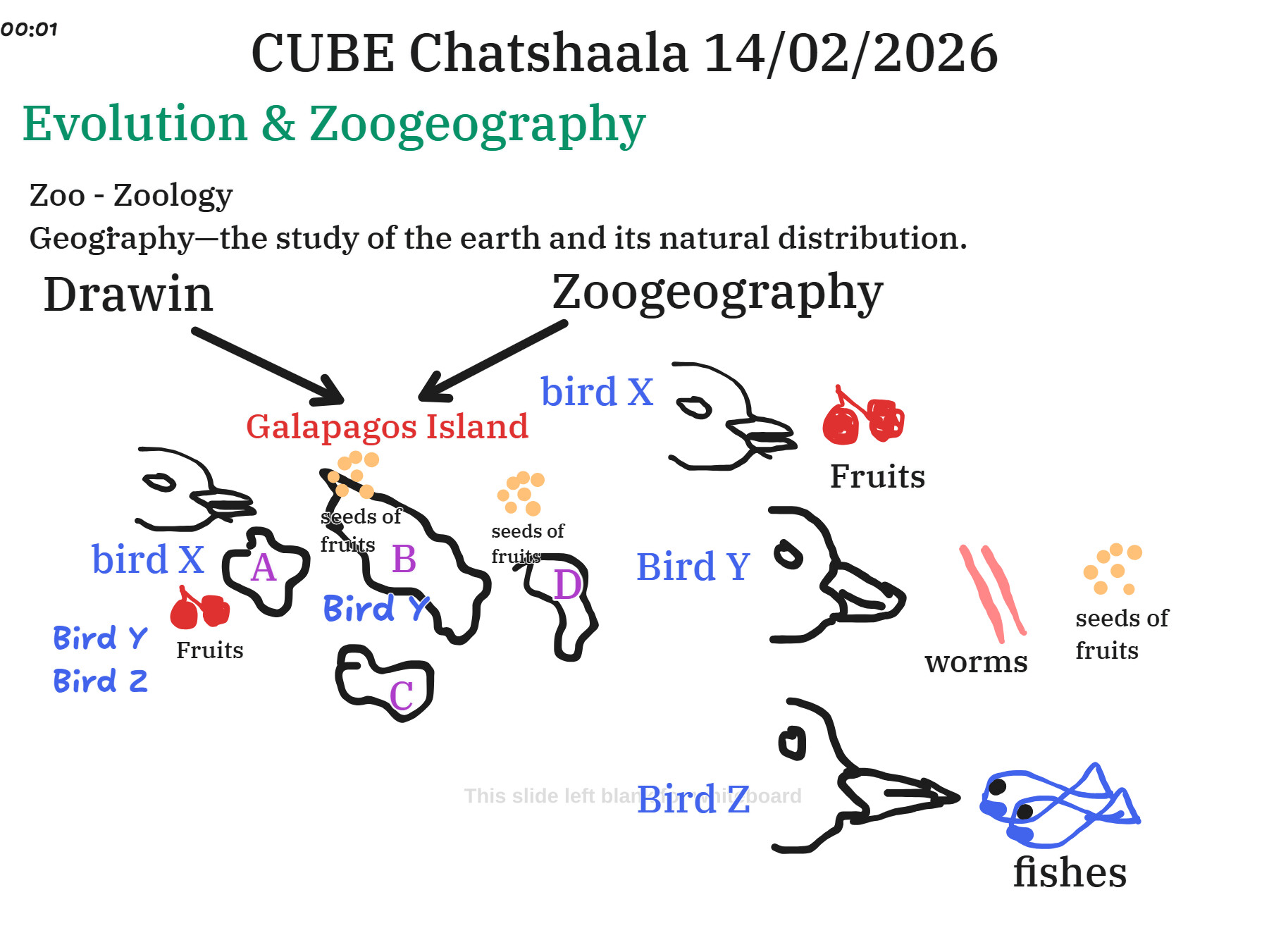
The session explored how zoogeography helps us understand not only the diversity of species but also the ecological pressures that shape their survival. The Galápagos Islands served as a case study, highlighting their unique ecosystem, volcanic origins, and isolation, which created a natural laboratory for evolutionary processes. The conversation emphasized the importance of ecological niches, geographic isolation, and environmental conditions in driving evolutionary change.
 Provocative Questions
-
How might geographic isolation accelerate evolutionary divergence compared to species living in connected ecosystems?
-
Could the principles of zoogeography help predict how species will adapt to climate change in the future?
-
In what ways do the Galápagos Islands illustrate both the fragility and resilience of ecosystems?
-
How do differences in food availability shape not only physical traits but also behavioral adaptations in species?
-
If Darwin had studied a different archipelago, would his theory of natural selection have taken a different form?
-
What parallels can be drawn between bird beak evolution in the Galápagos and human cultural adaptations to geography?
 What I Have Learned
-
Zoogeography is a powerful lens for understanding how animals are distributed across the globe and why certain species thrive in specific regions.
-
The Galápagos Islands exemplify how isolation and environmental diversity foster unique evolutionary pathways.
-
Darwin’s insights into natural selection were deeply influenced by his observations of bird beak variation, showing how small differences in environment can lead to profound evolutionary consequences.
-
Evolution is not a static process but a dynamic response to ecological pressures, resource availability, and geographic boundaries.
 TINKE Moments (This I Never Knew Earlier)
-
Realizing how ocean currents near the equator create a mix of tropical and temperate climates in the Galápagos, shaping species diversity in unexpected ways.
-
Discovering that the Galápagos penguin is the only penguin species living in the Northern Hemisphere, defying common assumptions about penguin habitats.
-
Understanding that volcanic activity not only formed the islands but continues to influence their ecosystems, making them a living laboratory of geological and biological processes.
 Gaps and Misconceptions
-
Some participants initially assumed that all island species evolve faster simply because of isolation. The discussion clarified that while isolation is a factor, environmental pressures and resource diversity are equally critical.
-
There was a misconception that Darwin’s theory was fully formed during his voyage. In reality, his ideas developed gradually, influenced by years of reflection and further study after leaving the Galápagos.
-
A gap identified was the limited discussion on human impact—modern tourism and climate change pose significant threats to the fragile ecosystems of the Galápagos, which deserves deeper exploration in future sessions.
 Photographs During Chatshaala
 Reference