 CUBE Chatshaala - Discussion Summary
The CUBE ChatShaala session on 15 February 2026 revolved around the intriguing comparison of “Pagalapos vs. Galapagos.” The metaphor highlighted how local, everyday observations (such as manholes and their ecological dynamics) can be juxtaposed with globally recognized ecosystems like the Galapagos Islands. The discussion emphasized the importance of drawing parallels between familiar urban environments and celebrated natural habitats to spark curiosity and deeper scientific inquiry.
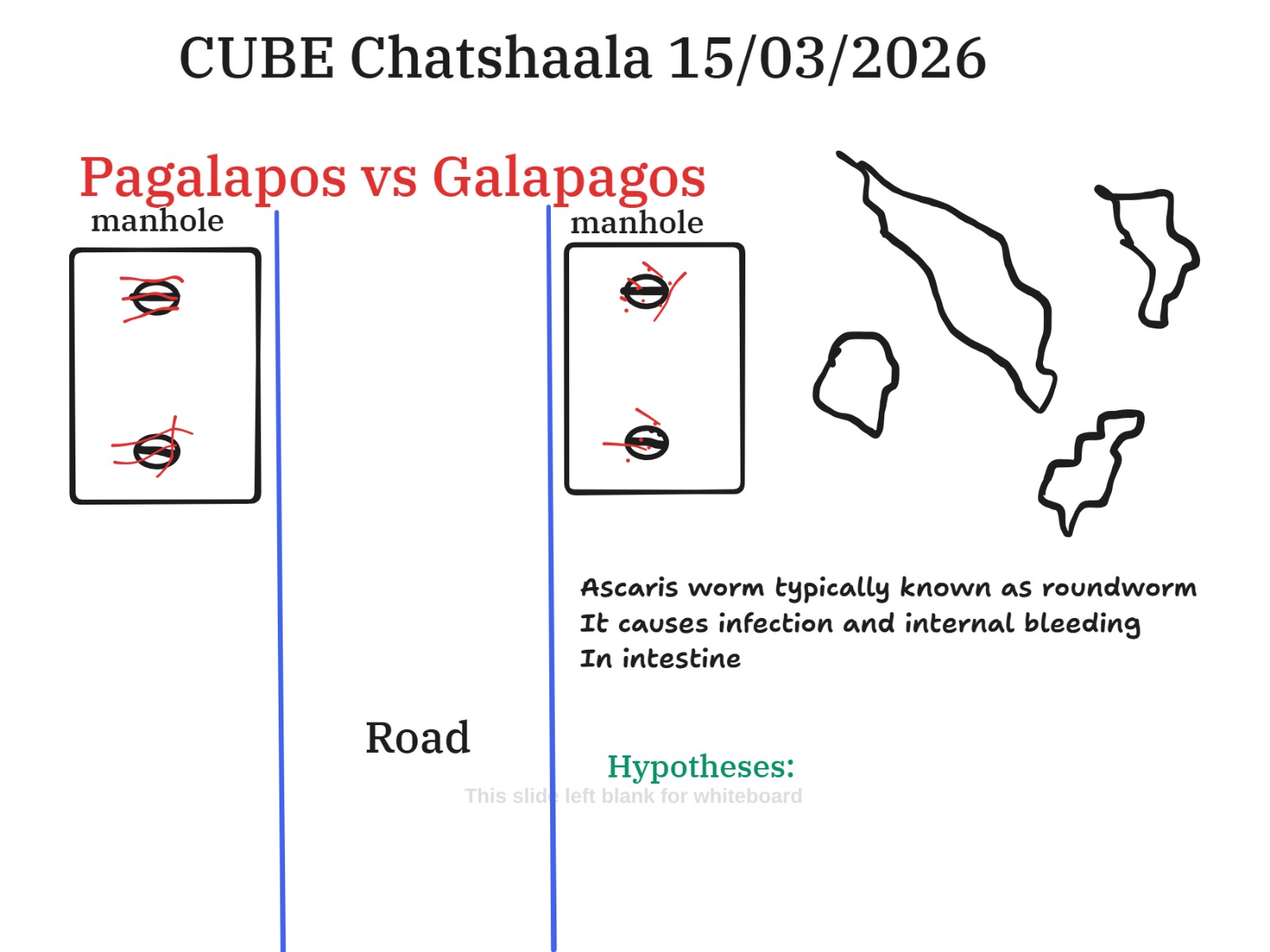
A key biological focus was the Ascaris worm (roundworm), which causes intestinal infections and internal bleeding. This served as a reminder of how parasitic organisms, though often overlooked, play a significant role in public health and ecological balance. The cubists also touched upon C. elegans, a microscopic worm that has been central to groundbreaking Nobel Prize-winning research, underscoring the value of model organisms in advancing biology.
The conversation further explored algal diversity in the metaphorical “Pagalapos,” connecting it to broader themes of biodiversity, adaptation, and the role of microhabitats. Participants reflected on how even mundane settings like manholes can serve as microcosms for studying ecological interactions, much like the Galapagos Islands serve as a natural laboratory for evolution.
The whiteboard section on “Hypotheses” was intentionally left blank, encouraging participants to actively generate and test their own ideas during the session. This open-ended approach fostered collaborative inquiry and critical thinking.
 Provocative Questions
-
How can everyday urban structures like manholes be reframed as ecosystems worthy of scientific study?
-
In what ways does comparing “Pagalapos” to the Galapagos challenge our assumptions about where meaningful biodiversity can be found?
-
What lessons can be drawn from the Nobel Prize-winning research on C. elegans for studying parasites like Ascaris?
-
Could algal diversity in manholes serve as a model for understanding resilience and adaptation in extreme environments?
-
How might metaphorical comparisons (Pagalapos vs. Galapagos) help students engage more deeply with scientific concepts?
-
What hypotheses could we design to test the ecological parallels between urban microhabitats and natural islands?
 What I Have Learned
-
Scientific curiosity thrives on metaphor: Comparing Pagalapos to Galapagos makes science accessible and relatable.
-
Model organisms matter: The story of C. elegans demonstrates how even tiny creatures can revolutionize biology.
-
Parasites are part of the ecological web: Studying Ascaris highlights the intersection of health, ecology, and evolution.
-
Microhabitats are laboratories: Manholes, though ordinary, can reveal complex ecological dynamics when studied carefully.
-
Collaborative inquiry is powerful: Leaving hypotheses open encourages active participation and creative thinking.
 TINKE Moments ( This I Never Knew Earlier)
-
Realizing that manholes can host algal diversity, functioning as miniature ecosystems.
-
Discovering the extent of Nobel Prize recognition for C. elegans, which has shaped genetics, neuroscience, and developmental biology.
-
Recognizing the educational power of metaphors in bridging everyday experiences with global scientific narratives.
-
Understanding that parasites like Ascaris are not just medical concerns but ecological players, influencing host populations and environments.
 Gaps and Misconceptions
-
Some participants initially viewed manholes as “dirty” or irrelevant to science, overlooking their ecological potential.
-
There was limited discussion on the specific mechanisms of Ascaris infection, which could be explored further for clarity.
-
The metaphor of Pagalapos vs. Galapagos, while engaging, risks oversimplification if not paired with concrete scientific data.
-
The blank “Hypotheses” section revealed a gap in structured hypothesis-building, suggesting the need for more guided frameworks in future sessions.
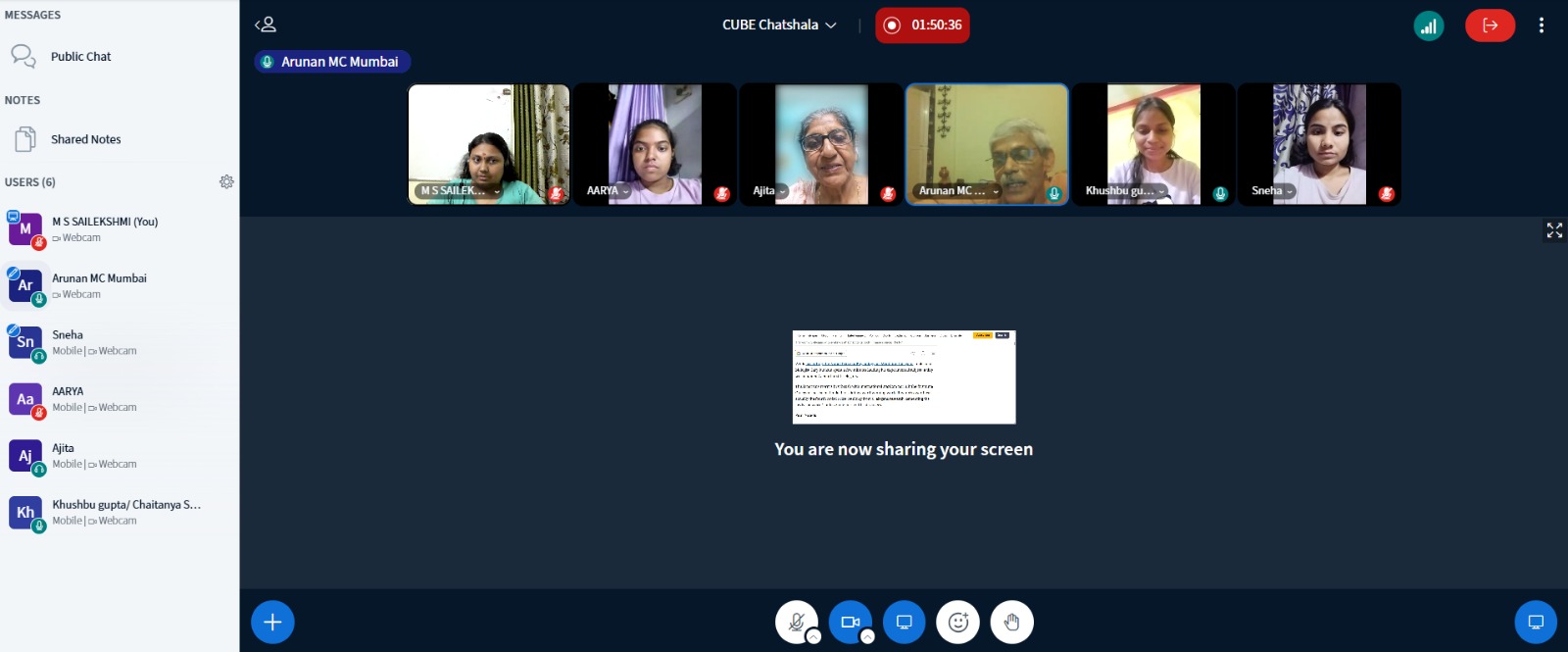
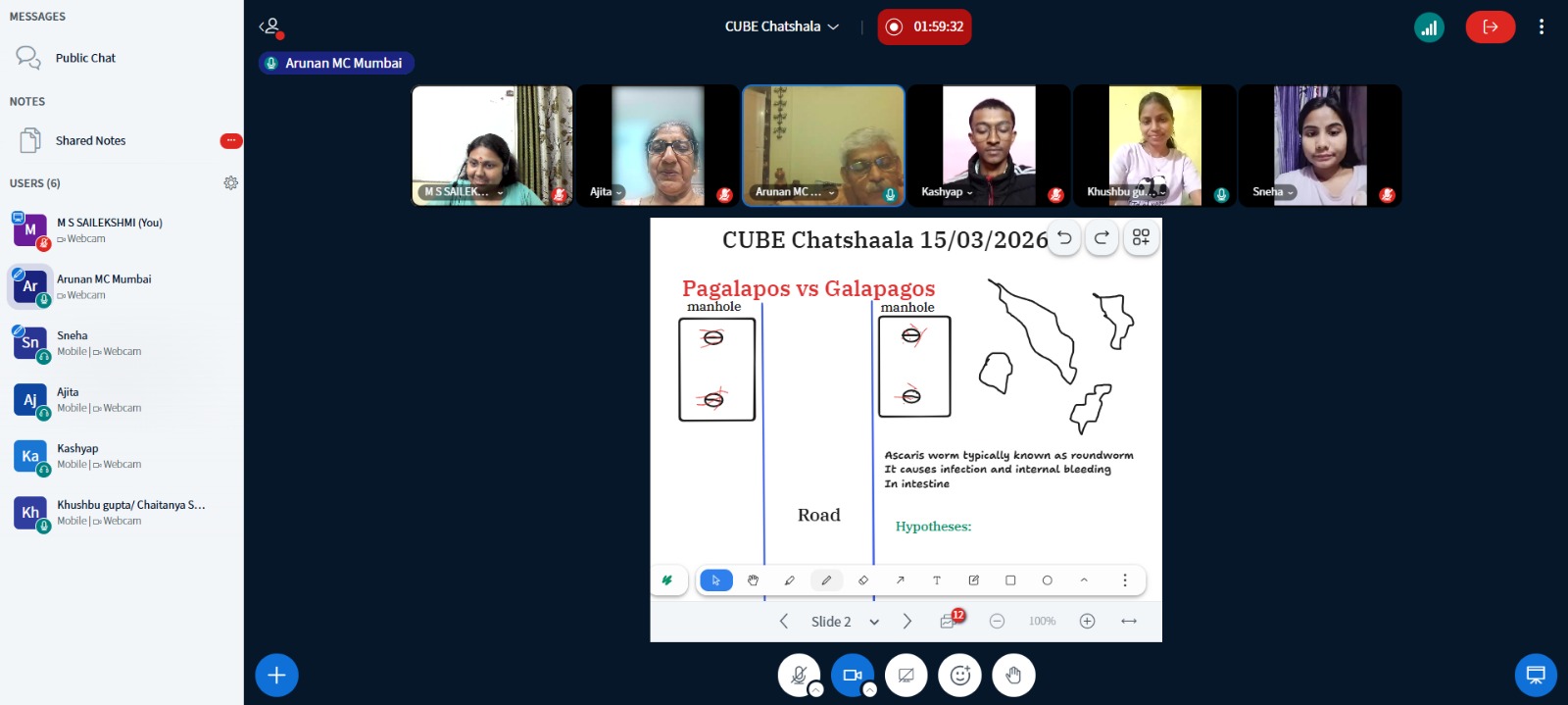
 Photographs during Chatshaala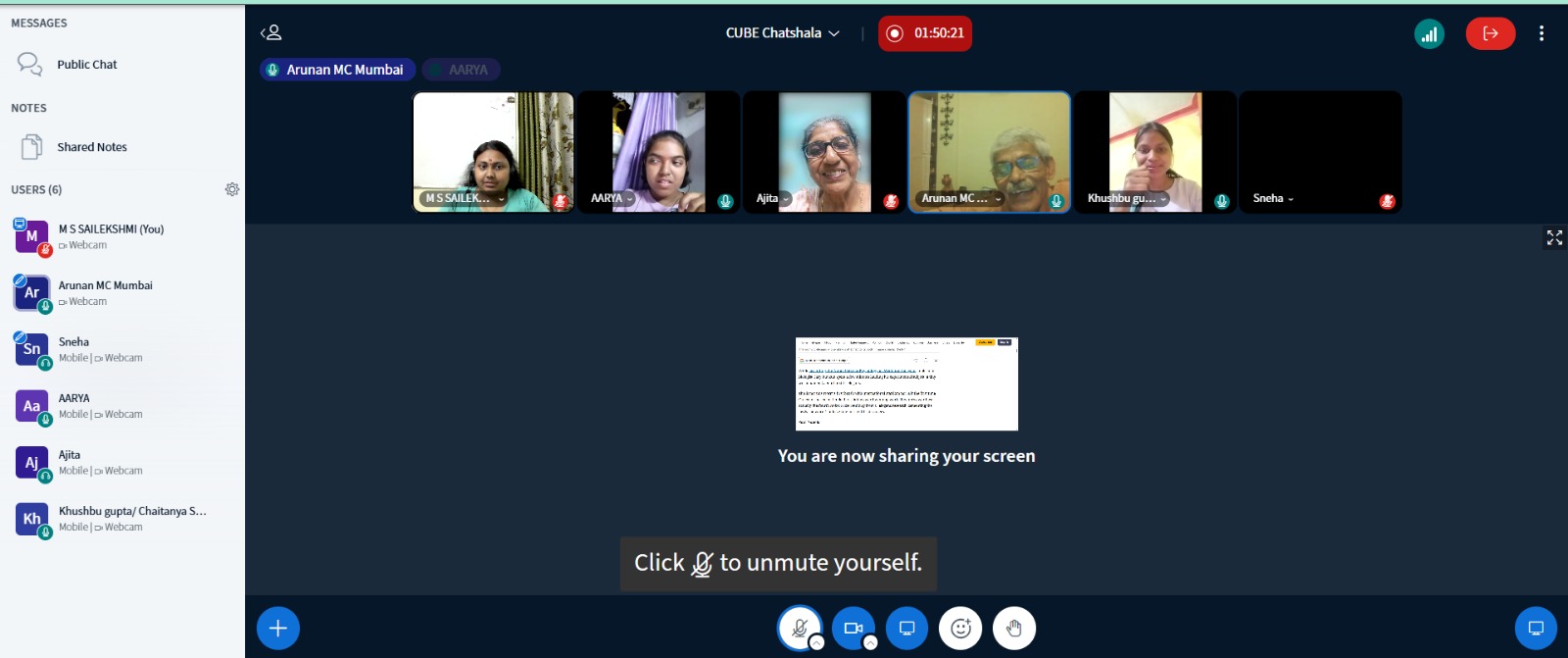
 Reference