 CUBE Chatshaala — Session Summary
30 March 2026 · Topics: NEP 2020 Internships · Genetics · Model Organisms · Cardamine research
Discussion Summary
Opening context — Internships under NEP 2020
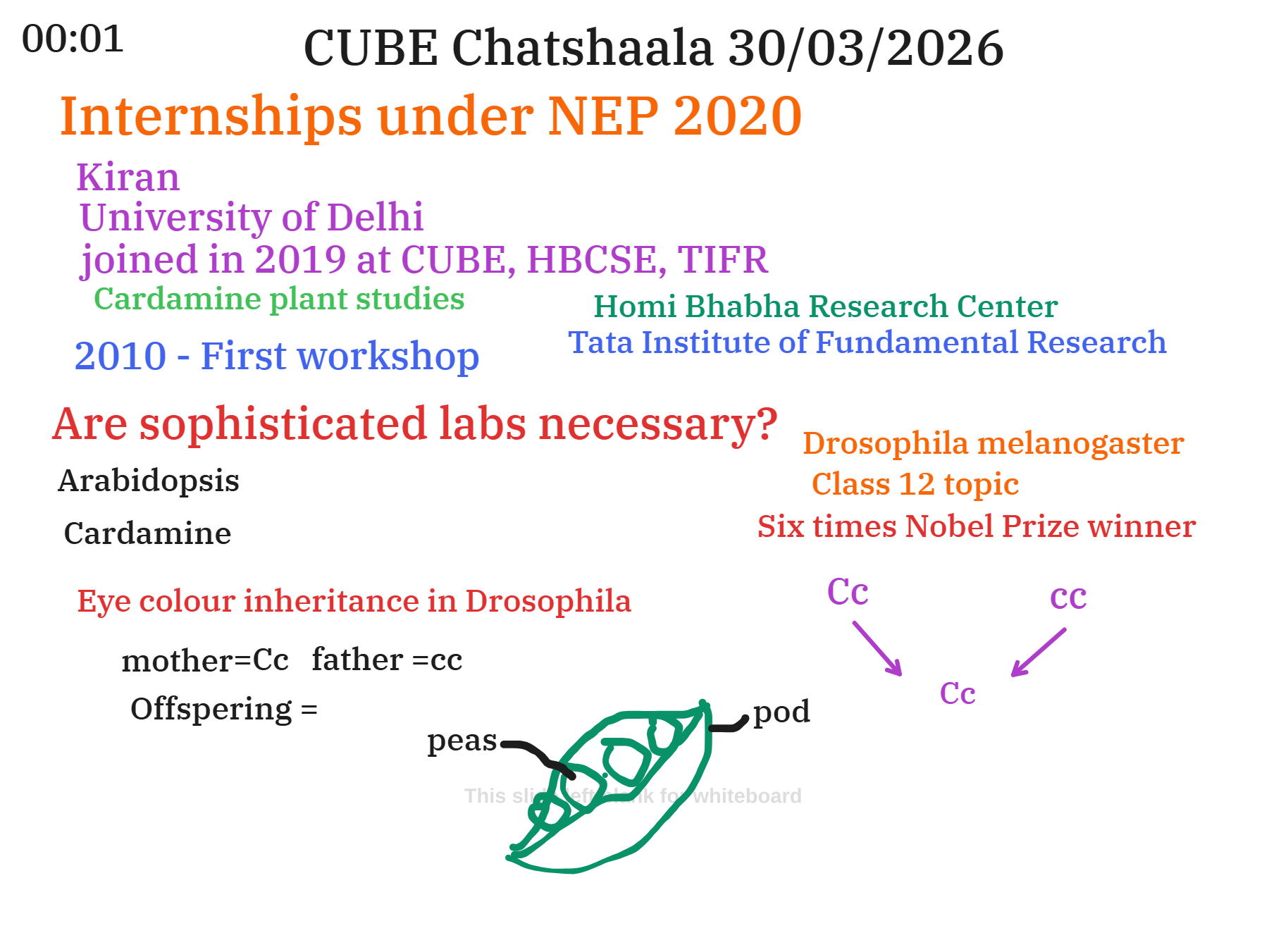
The session opened with a discussion led by Kiran (University of Delhi), who has been associated with CUBE at HBCSE, TIFR since 2019. The focus was on how internships under the National Education Policy 2020 can be meaningfully integrated into undergraduate science education. Kiran’s own journey was cited as a model: she started with Cardamine plant studies in the very first CUBE workshop held in 2010, demonstrating that high-quality research does not demand expensive, sophisticated laboratory infrastructure.
Are sophisticated labs necessary?
A central and provocative question raised was whether elaborate laboratory setups are prerequisites for genuine scientific inquiry. Two model organisms were highlighted to argue the contrary — Arabidopsis thaliana (the well-known lab workhorse) and its close relative Cardamine, both of which can be studied with modest resources. Drosophila melanogaster (the common fruit fly) was also brought up as a Class 12 textbook organism that has contributed to six Nobel Prizes, underscoring how accessible organisms have driven groundbreaking science.
Genetics problem — Eye colour inheritance in Drosophila
A genetics cross was worked through on the whiteboard. The scenario: mother is Cc (heterozygous for eye colour) and father is cc (homozygous recessive). Participants were asked to predict offspring genotypes. The expected result is a 1:1 ratio of Cc and cc offspring — a standard test cross outcome. A drawing of peas inside a pod was also sketched, connecting Mendelian concepts visually to participants who may be encountering them for the first time.
Pea plant height — Mendel’s classic trait
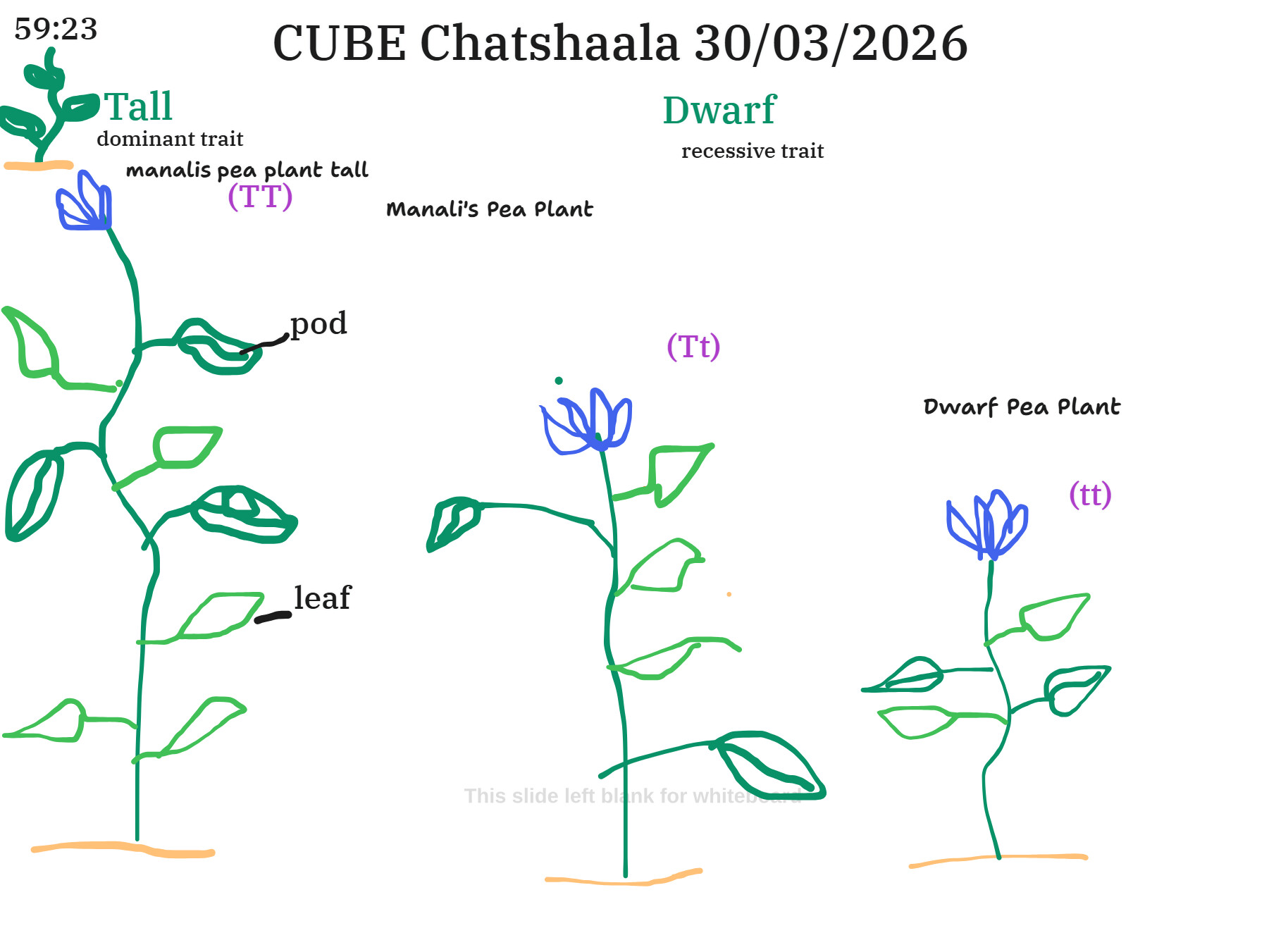
The session transitioned to discussing height in pea plants, illustrated through Manali’s pea plant observations. Three plants were drawn: a tall homozygous dominant (TT), a heterozygous tall (Tt), and a dwarf recessive (tt). Tall was identified as the dominant trait and dwarf as recessive, reinforcing the foundational concept of dominance and recessiveness through real experimental observation rather than textbook memorisation alone.
Cardamine — Floral Dip method and Kanamycin resistance
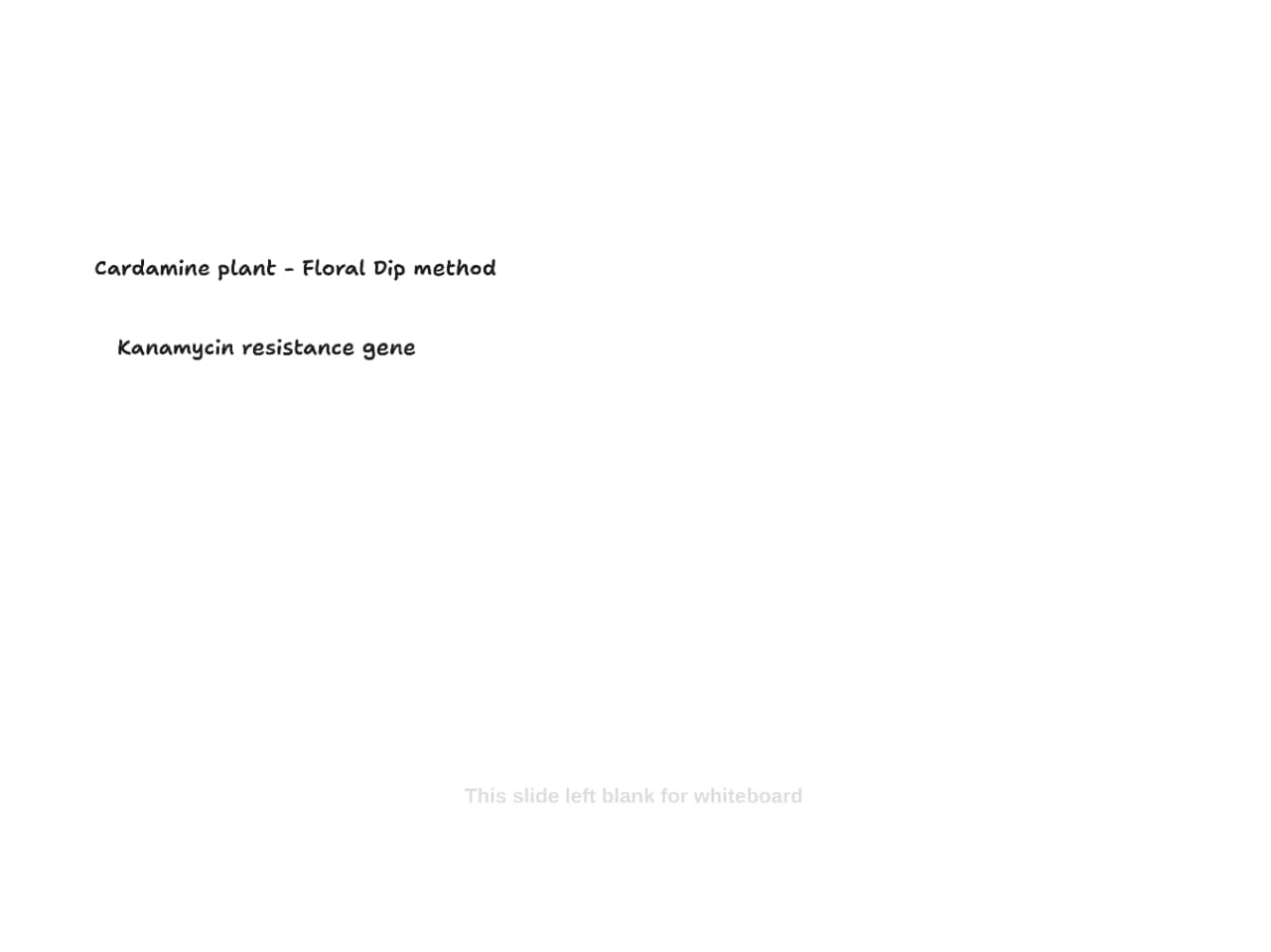
The final slide referenced the Cardamine plant being used in a Floral Dip transformation method, a technique originally developed for Arabidopsis. The use of a Kanamycin resistance gene as a selectable marker was noted. This represents the more advanced end of CUBE’s work, where students can explore plant transformation and molecular biology without high-cost infrastructure, using Cardamine as a tractable and fast-cycling model organism.
University College Thiruvananthapuram — Zoology internship
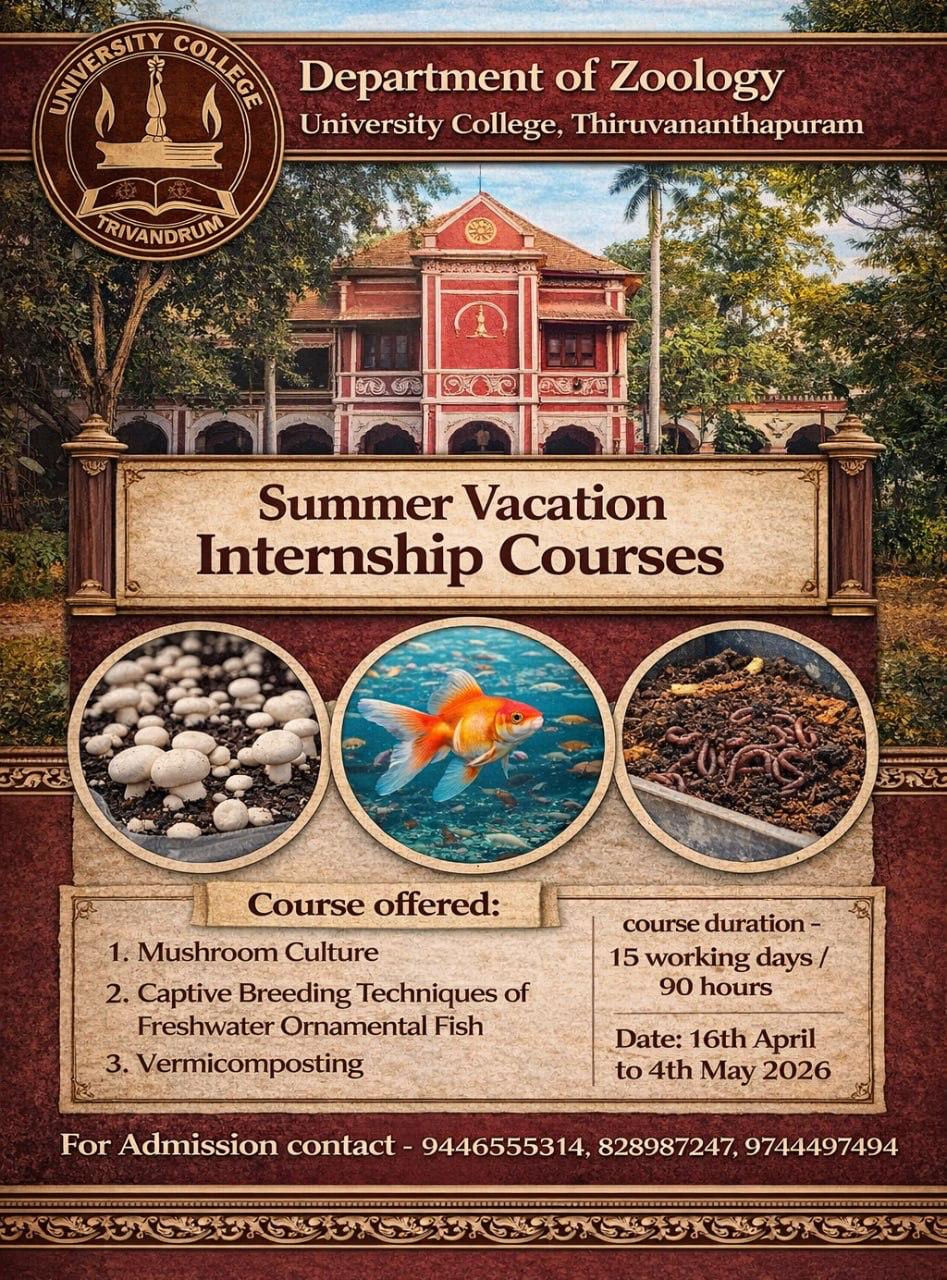
A parallel resource shared during the session was the Summer Vacation Internship programme from the Department of Zoology, University College, Thiruvananthapuram. Running from 16 April to 4 May 2026 (15 working days / 90 hours), it offers three applied courses: Mushroom Culture, Captive Breeding Techniques of Freshwater Ornamental Fish, and Vermicomposting. This was likely shared as an example of the kind of hands-on, practically-oriented internship opportunities that NEP 2020 encourages.
 Provocative Questions
Q1 · Genetics
If the mother Drosophila is Cc and father is cc, exactly half the offspring will show the recessive phenotype. Does this mean dominant traits always “win” in a population over time — or can recessive alleles become more common? What does Hardy-Weinberg equilibrium tell us here?
Q2 · Model organisms
Arabidopsis is the “standard” model plant. If Cardamine can do the same job — and is arguably more accessible — why isn’t it more widely used in school and college labs across India? What structural or institutional barriers exist?
Q3 · Molecular biology
The Kanamycin resistance gene is used as a selectable marker in Cardamine transformation. What happens to plants that did NOT successfully take up the transgene when you grow them on Kanamycin-containing medium? Why is antibiotic resistance ethically uncontroversial here compared to its use in pathogens?
Q4 · History of science
Drosophila has contributed to six Nobel Prizes. What is it about the fruit fly — biologically and practically — that has made it such a productive research organism? Could a similar case be made for Cardamine in the future?
Q5 · Experimental design
Manali’s pea plant is identified as TT (tall). If she performs a cross with a tt (dwarf) plant to produce F1 (all Tt), and then self-fertilises the F1 generation, what ratio of tall to dwarf plants would she expect in F2? How would she experimentally verify the genotype of each tall F2 plant?
Q6 · Education policy
NEP 2020 emphasises experiential learning and internships. Looking at both the University College Thiruvananthapuram Zoology programme and the CUBE approach, which model of internship — applied vocational training or open-ended inquiry — better builds scientific temperament in students?
What I Have Learned
Key insight 1
Sophisticated infrastructure is not a precondition for doing real science. Organisms like Cardamine, Drosophila, and pea plants are “low-cost, high-yield” research tools that can anchor everything from Mendelian genetics to plant molecular biology.
Key insight 2
A test cross (crossing an unknown individual with a homozygous recessive) is one of the most elegant tools in genetics. The Cc × cc problem today was a live reminder of why this works — the ratio of offspring phenotypes directly reveals the parent’s genotype.
Key insight 3
The Floral Dip method bridges accessible biology (growing plants in pots) with cutting-edge molecular biology (stable transformation). Kanamycin resistance as a selectable marker is a beautifully simple read-out of transformation success.
Key insight 4
NEP 2020 internships are not just about skill-building — at their best, they are entry points into genuine scientific communities of practice, as Kiran’s own trajectory from 2019 to a full researcher demonstrates.
Key insight 5
Dominant does not mean “more frequent” — this is one of the most common misunderstandings in genetics. The TT / Tt / tt illustration today was a subtle reminder that trait expression and allele frequency in a population are entirely different questions.
 TINKE Moments (This I Never Knew Eariler)
TINKE 1 — Offspring prediction left incomplete
The whiteboard shows “Offspring =” with no answer filled in. This is a deliberate TINKE moment — participants were left to work it out. The expected answer (50% Cc, 50% cc) was likely discussed verbally, but leaving it visually blank is a pedagogical prompt worth noting: did all participants arrive at the answer independently?
TINKE 2 — Cc × Cc incorrectly drawn as Cc × cc on the right side panel
The top-right of the whiteboard (Image 2) shows a cross between Cc and cc producing only “Cc” as offspring. This appears to be an incomplete or illustrative sketch rather than a complete Punnett analysis, and could mislead students who read it in isolation. The full 1:1 ratio (Cc : cc) should be made explicit.
TINKE 3 — “Dominant” and “more common” conflated
Several cubists in CUBE sessions historically equate “dominant trait” with “more common in nature.” The TT/Tt/tt diagram (Image 3) does not explicitly address this misconception, which may leave it unresolved. A follow-up question — “Which phenotype would be more common if TT and Tt plants were freely crossing in a field?” — could productively surface this confusion.
TINKE 4 — Cardamine slide is almost empty (Image 4)
The final slide contains only two lines: “Cardamine plant – Floral Dip method” and “Kanamycin resistance gene.” This sparseness is either intentional (to be filled during live discussion) or represents a TINKE where the discussion ran out of time. The mechanism of Agrobacterium-mediated transformation and the specific role of the selectable marker were not elaborated on the whiteboard.
TINKE 5 — Connection between Cardamine work and NEP internships not made explicit
While Kiran’s journey was described as a model for NEP internships, the session did not explicitly map how a student today would enrol, design a question, and receive academic credit for Cardamine work done at home. This gap may leave prospective interns unclear about the pathway.
 Gaps and Misconceptions
-
Punnett square mechanics — The cross was set up but not completed on the board. Students new to genetics need to see the full square, not just the parental genotypes.
-
Dominance vs. frequency — No explicit clarification that a dominant allele need not be the most common allele in a population. This is one of the most persistently tested misconceptions in biology education.
-
Cardamine vs. Arabidopsis biology — The session mentioned both but did not distinguish their key differences (chromosome number, growth cycle, transformation efficiency). Students may treat them as interchangeable.
-
What “Floral Dip” involves physically — The method was named but not described. Students unfamiliar with plant transformation would not know this involves dipping flower buds in a suspension of Agrobacterium tumefaciens carrying the gene of interest.
-
Nobel Prize history for Drosophila — The claim of “six times Nobel Prize winner” was stated but not unpacked. Listing the discoveries (Morgan, Muller, Lewis, Nüsslein-Volhard, Wieschaus, Hall/Rosbash/Young) would anchor the claim and make it memorable.
-
Practical pathway for NEP internship credit — The policy context was mentioned (NEP 2020) but no concrete steps were outlined for how a student at a college like University College Thiruvananthapuram could officially register Cardamine home research as an internship credit.
 Photographs duing Chatshaala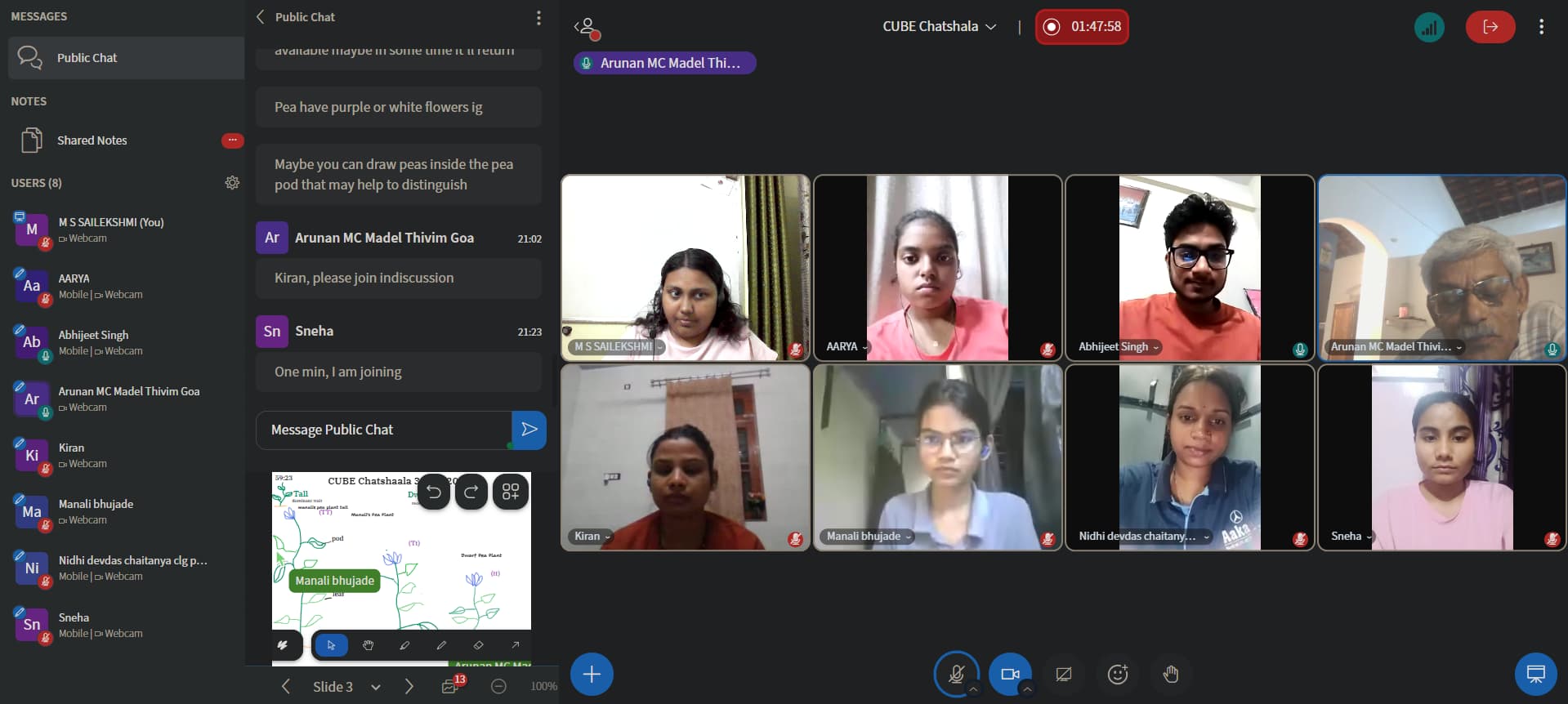
 Reference