 CUBE Chatshaala – Discussion Summary (13/03/2026)
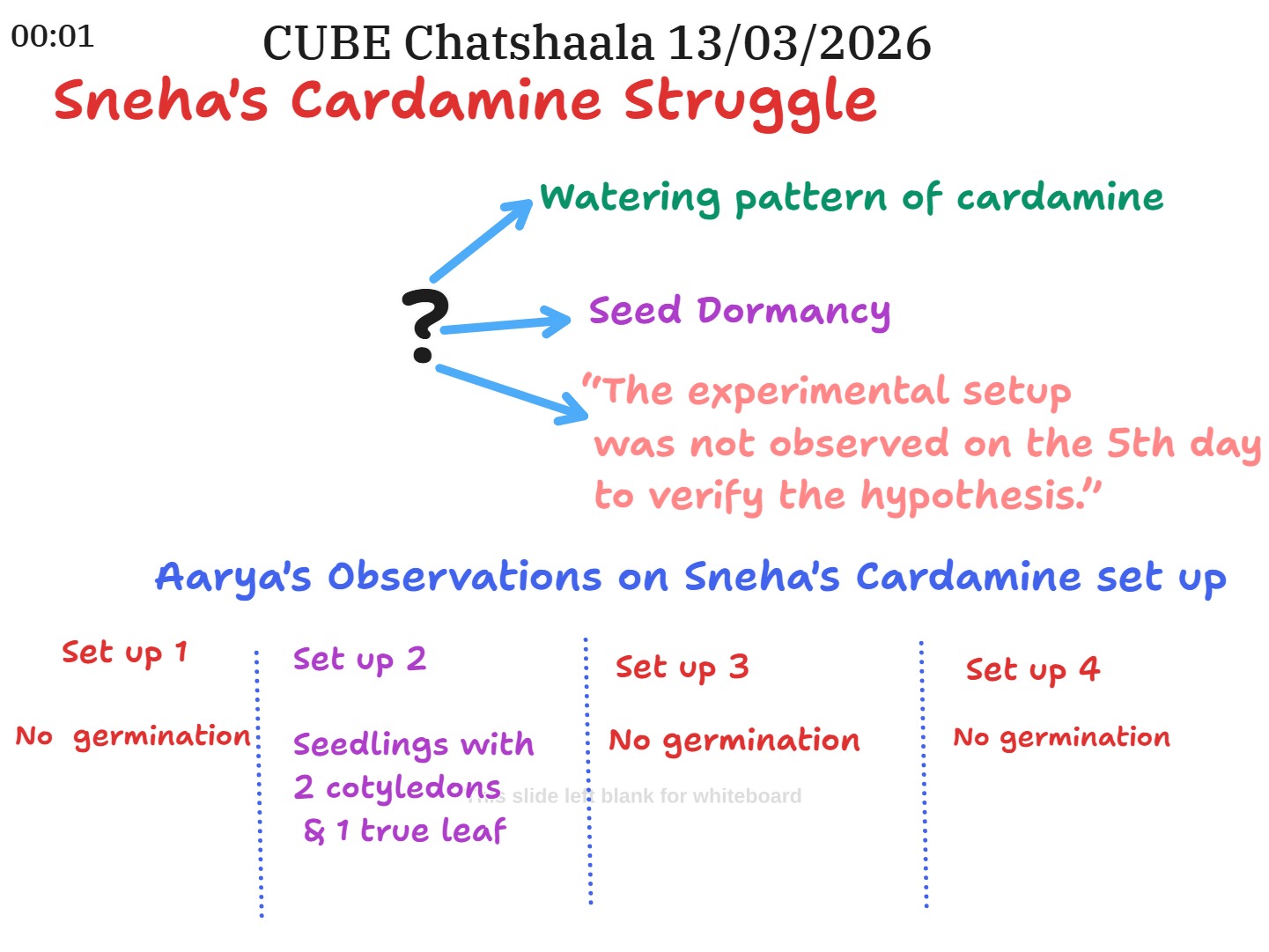
Today’s Chatshaala centered on the challenges faced in Cardamine seed germination experiments conducted by Sneha. Sneha’s setups (four containers sown on 10th February 2026) revealed inconsistent outcomes: only Setup 2 produced seedlings with two cotyledons and three true leaves, while the other three showed no germination. Several possible factors were discussed:
-
Watering patterns: Morning watering was consistent (7:30–8:00 am), but evening watering varied (8:30–9:00 pm), raising concerns about irregular hydration.
-
Seed dormancy: The possibility that seeds required a longer dormancy-breaking period was considered.
-
Observation gaps: Sneha admitted she did not monitor daily, leading to missing data on germination timing.
-
Environmental interference: The presence of snails and white insects in the soil raised questions about biotic stress affecting seed survival.
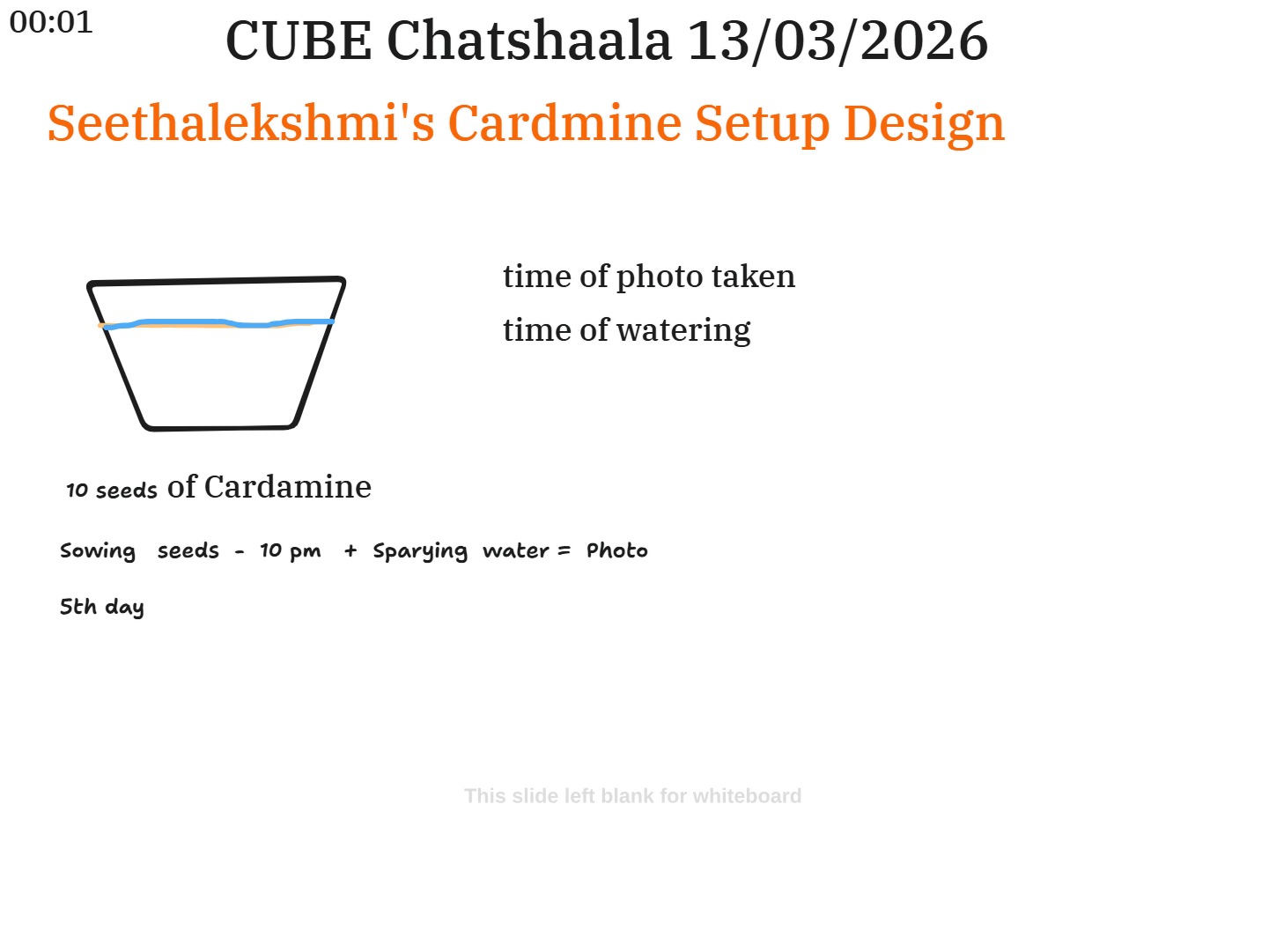
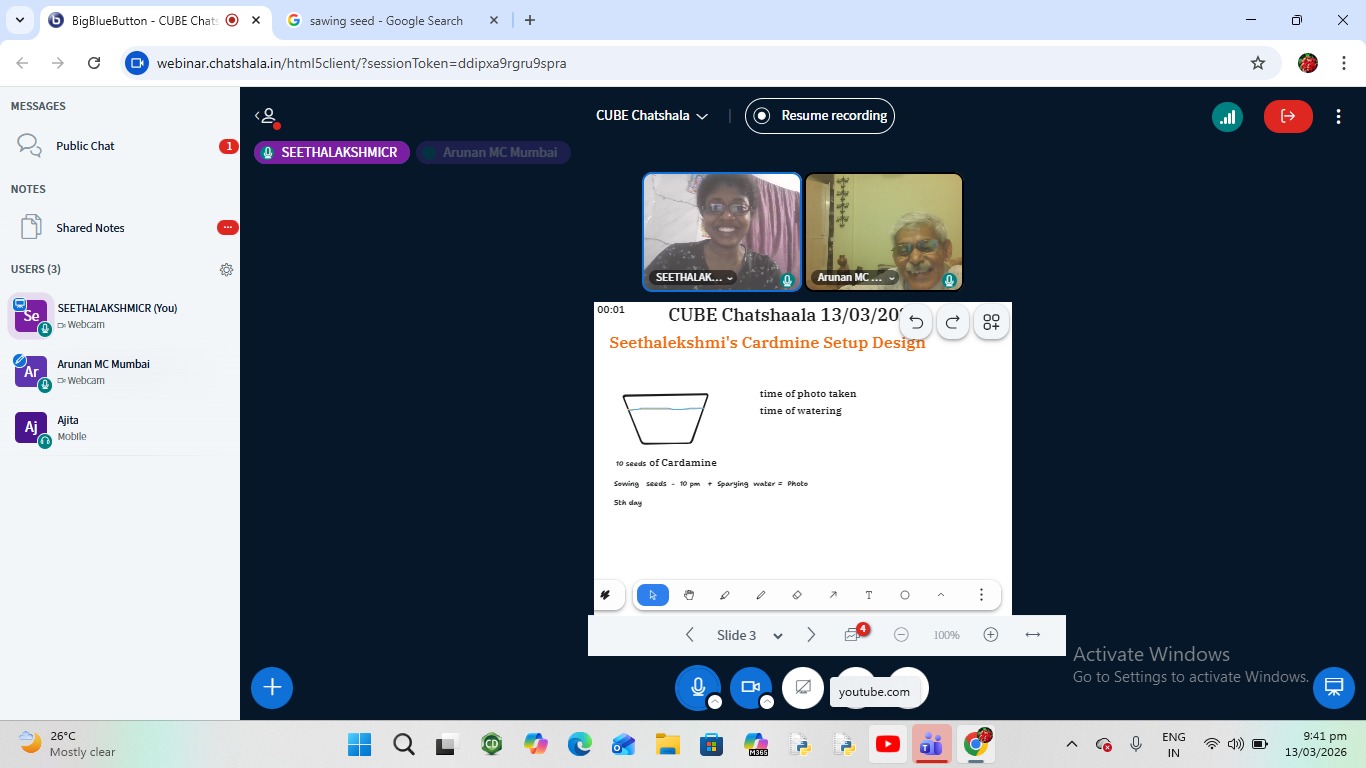
Seethalekshmi’s setup design was also presented, showing careful documentation of sowing time, watering, and photo capture on the 5th day. This highlighted the importance of systematic record-keeping in experimental biology.
The cubists reflected on how Arabidopsis substitutes like Cardamine hirsuta can serve as model systems for genetic studies but require meticulous care in experimental design. The Shakespearean reminder, “The fault, dear Brutus, is not in our stars, but in ourselves,” was invoked to emphasize responsibility in scientific rigor and observation.
 Provocative Questions
-
Could irregular watering schedules alone explain the lack of germination, or are biotic factors (snails, insects) more significant?
-
How might seed dormancy in Cardamine differ from Arabidopsis, and what strategies could break it effectively?
-
What role does daily observation play in validating hypotheses, and how can missed data compromise conclusions?
-
If only one setup showed growth, what variables might have differed subtly between setups despite identical preparation?
-
How can we design experiments that minimize external interference (soil organisms, contamination) while still using natural soil?
-
Should Cardamine be considered a reliable substitute for Arabidopsis in Indian labs, given these practical challenges?
 What I Have Learned
-
Consistency matters: Even small variations in watering time can influence seed germination outcomes.
-
Observation is data: Missing daily records create gaps that weaken experimental conclusions.
-
Environment influences biology: Soil organisms like snails and insects may significantly affect seed survival.
-
Documentation is critical: Seethalekshmi’s careful setup notes demonstrate how structured records strengthen experimental reliability.
-
Model systems demand rigor: Using Cardamine as a substitute for Arabidopsis requires not only biological knowledge but also disciplined methodology.
 TINKE Moments (This I Never Knew Earlier)
- Snails as hidden experimental variables—The idea that tiny snails in soil could harm seeds was surprising and highlighted overlooked biotic stress factors.
- Dormancy complexity in Cardamine—Unlike Arabidopsis, Cardamine seeds may require different dormancy-breaking conditions, a nuance often underestimated.
- Impact of irregular watering schedules – The realization that even half-hour variations in watering could influence outcomes was eye-opening.
- Documentation gaps as experimental failure points—Sneha’s missed observations revealed how absence of data can be as damaging as flawed methodology.
 Gaps and Misconceptions
-
Assumption of identical setups: Believing all four containers were truly identical overlooks micro-variations in soil composition, seed quality, or watering.
-
Neglecting biotic stress: Initial focus was on watering and dormancy, but soil organisms may have played a larger role than acknowledged.
-
Overconfidence in seed germination timelines: The hypothesis of “germination within 5 days” was too rigid, ignoring natural variability.
-
Documentation undervalued: The misconception that occasional observation suffices was challenged—systematic daily records are essential.
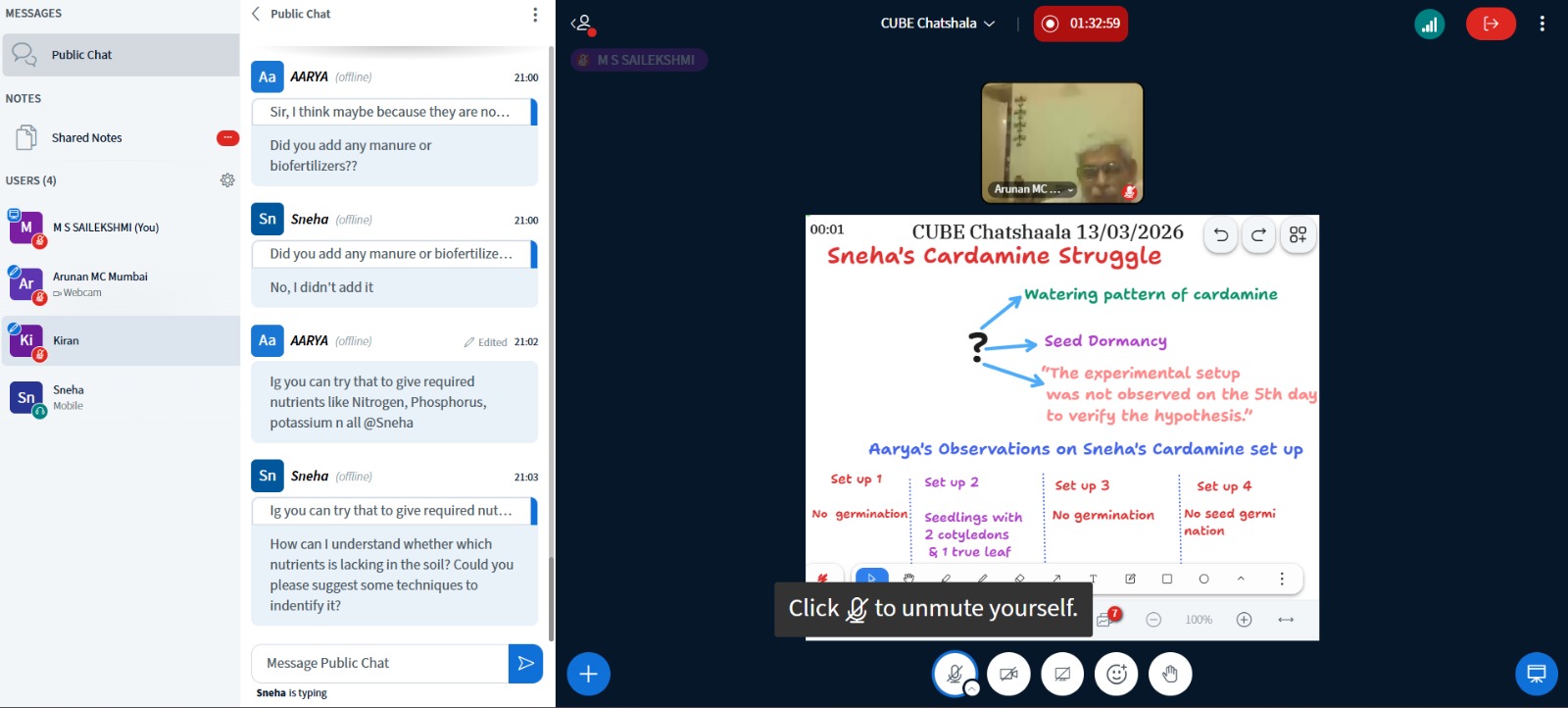
 Photographs during Chatshaala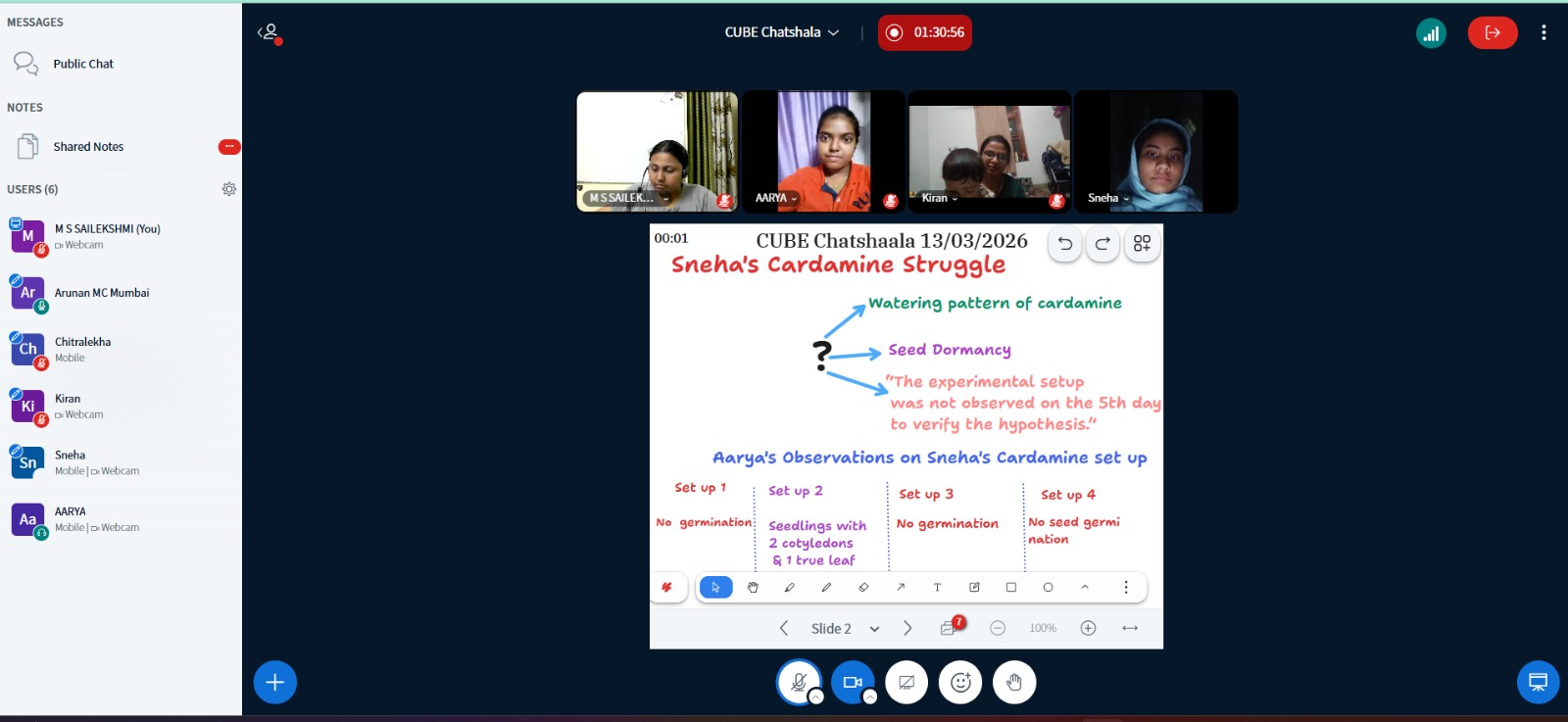
 Reference