Meeting Summary: CUBE ChatShaala (Jan 19, 2026)
Today’s session was a multi-disciplinary exploration of plant biology, spanning from the macro-scale of phenology to the micro-scale of genetic engineering.
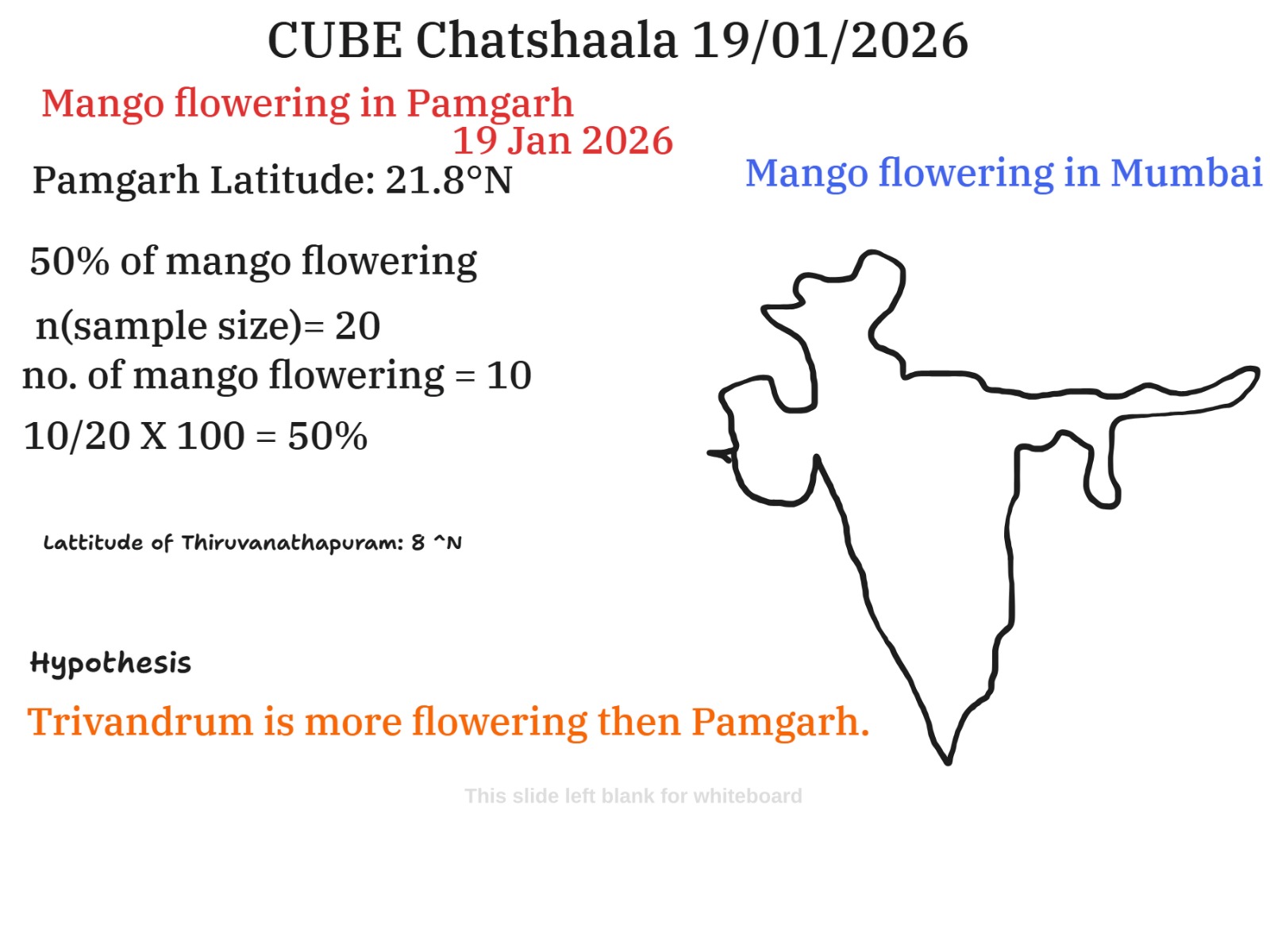
The meeting opened with a citizen-science observation of Mango (Mangifera indica) flowering patterns across different latitudes in India. Data from Pamgarh (21.8°N) showed a 50% flowering rate among sampled trees. This led to the formulation of a comparative hypothesis: locations at lower latitudes, such as Thiruvananthapuram (8°N), likely exhibit advanced flowering stages compared to northern regions, likely due to thermal accumulation and photoperiod differences.
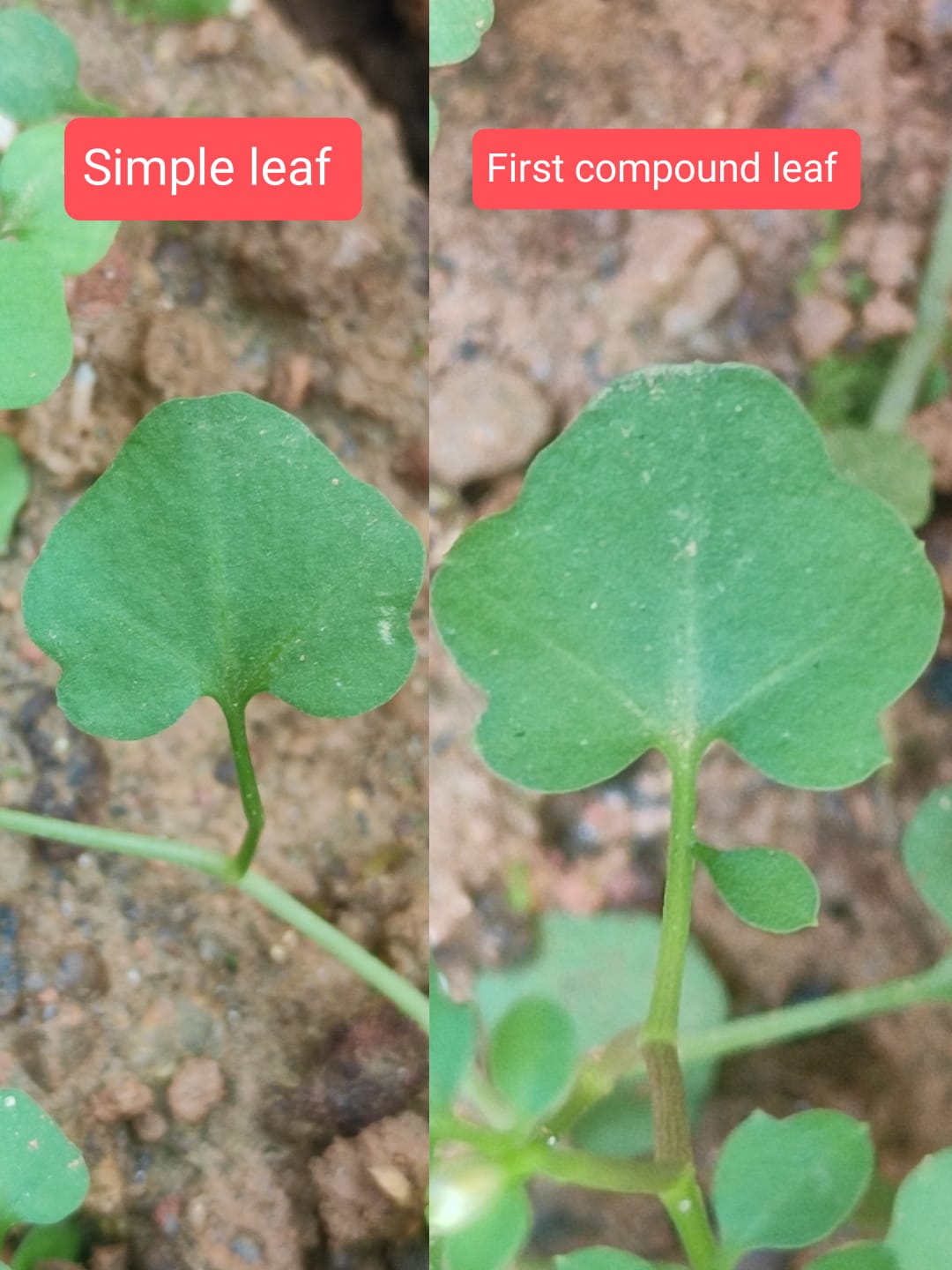
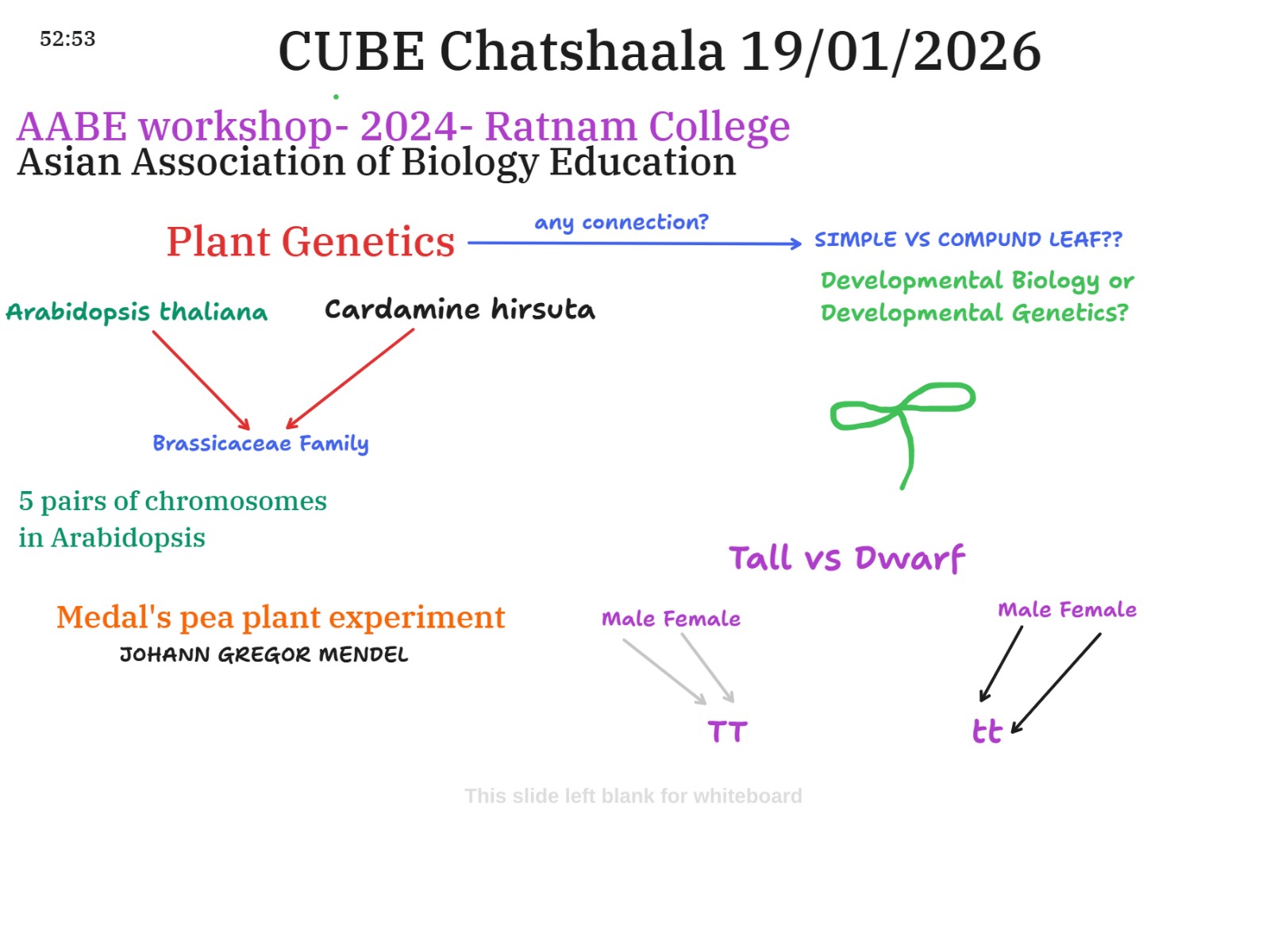
The discussion then pivoted to Plant Genetics and Developmental Biology. We compared Arabidopsis thaliana and Cardamine hirsuta (both of the Brassicaceae family) to understand the genetic basis of leaf morphology (simple vs. compound). The session revisited Mendelian principles, specifically the inheritance of “Tall” and “Dwarf” traits, emphasizing how chromosomal arrangement dictates phenotype.
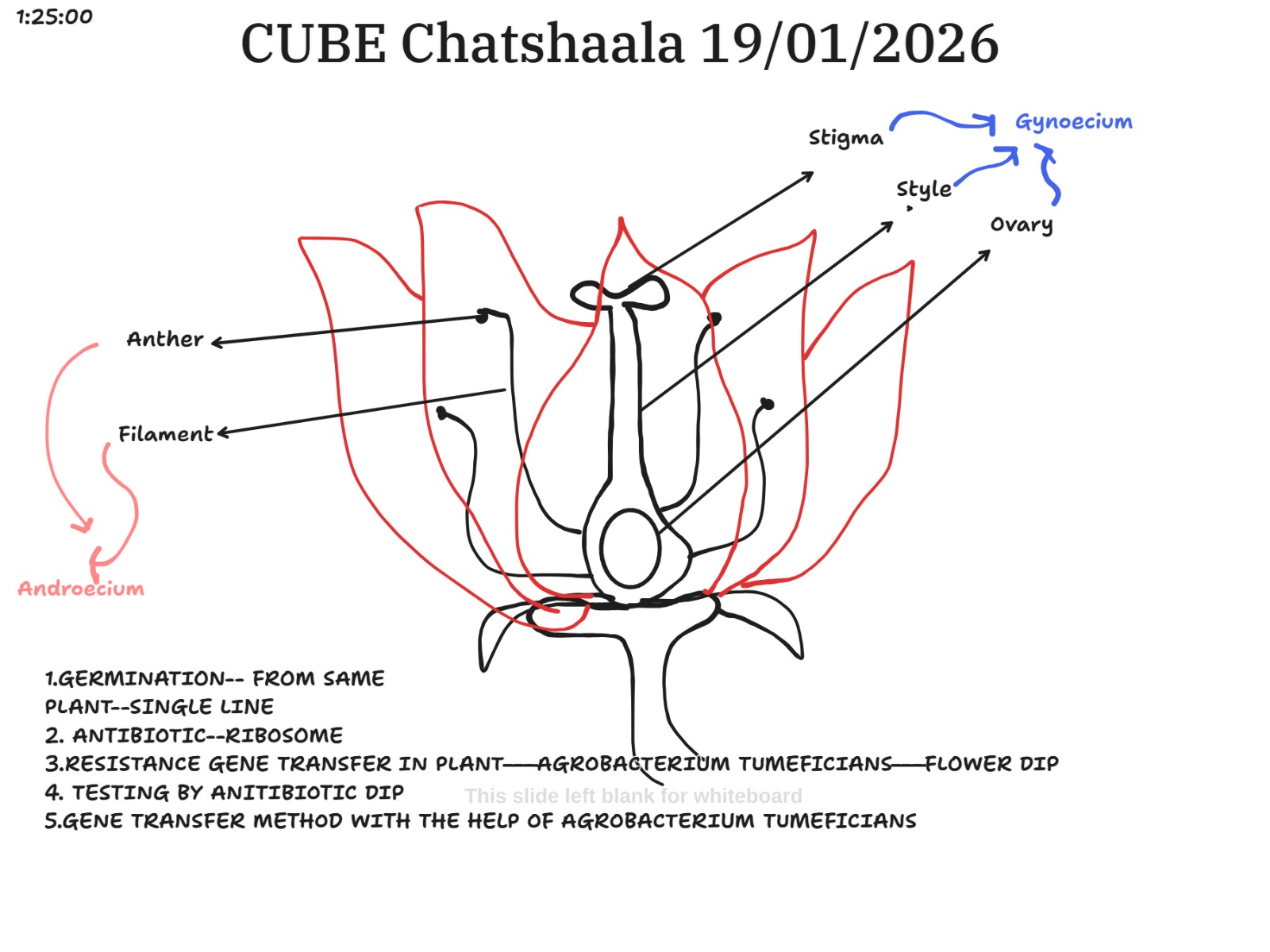
Finally, we reviewed Biotechnological Interventions. The group discussed the “Flower Dip” method using Agrobacterium tumefaciens for gene transfer. This technique bypasses traditional tissue culture by directly infecting the germline cells within the gynoecium, allowing for the selection of transformants via antibiotic resistance markers that affect ribosome function.
 Provocative Inquiries for the Curious Mind
-
If mango trees in Kerala are blooming while those in Chhattisgarh are just waking up, are we witnessing a biological clock or a response to a warming planet? How will the “flowering wave” shift by 2030, and What does that mean for scientific thinking?
-
We know Arabidopsis has 5 pairs of chromosomes, but what determines if a plant grows a simple blade or a complex compound leaf? Is it just “Developmental Biology,” or is there a hidden “Developmental Genetics” code we haven’t cracked yet?
-
Using Agrobacterium to “dip” a flower and change its genetic destiny sounds like science fiction. If we can bypass the lab and edit plants in the field, where do we draw the ethical line between “improvement” and “interference”?
 TINKE Moments (This I Never Knew Earlier)
-
We thought about how the physical structure of the flower (the Gynoecium) serves as the gateway for genetic modification.
-
We inquired whether the latitude is the only factor in mango flowering, or if soil salinity and local micro-climates play a larger role.
-
Our next step is to gather data from Mumbai and Thiruvananthapuram to validate the 50% flowering hypothesis.
-
We now know that Agrobacterium tumefaciens is a natural genetic engineer that we have repurposed for modern biotechnology.
-
We must explore the connection between antibiotic resistance in ribosomes and the successful selection of transgenic seeds.
 Gaps and Misconceptions
-
The “Single Line” Germination Myth: There was a brief confusion regarding whether germination from the same plant results in an identical “single line” of genetics without considering the genetic recombination that occurs during meiosis in the anther and ovary.
-
Antibiotic Mechanism Clarity: A misconception arose regarding how antibiotics work in plant selection; it was clarified that they specifically target the ribosomes of non-resistant cells, preventing protein synthesis, rather than just “poisoning” the plant generally.
-
Latitude vs. Temperature: A gap remains in distinguishing between photoperiodism (day length) and vernalization (temperature requirements) as the primary driver for mango flowering at different latitudes.
-
Androecium vs. Gynoecium Roles: In the context of the Flower Dip method, there was initial uncertainty about which part of the flower is the target. It was clarified that the Gynoecium (stigma/style/ovary) is the target for the Agrobacterium to reach the developing ovules.
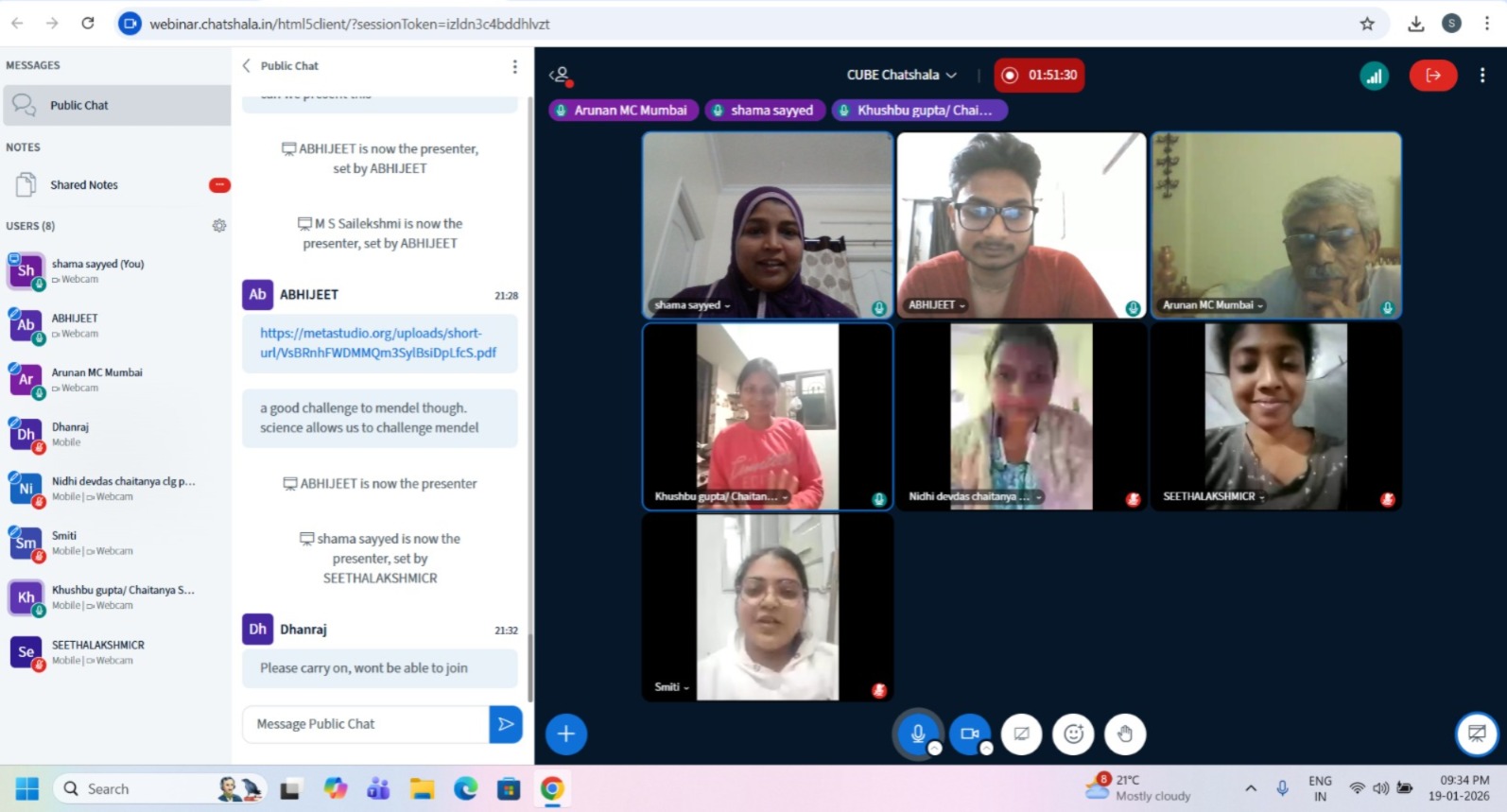
 Photographs during Chatshaala


 Reference
-
Compound leaf development in model plant species - ScienceDirect
-
https://metastudio.org/uploads/default/original/2X/a/a4404ded3ccf8276808bc6af3bf70680c45dc164.jpeg
-
Collaboratively Understanding Biology Education – Kishore Bharati
-
CUBE Interaction with Japanese members of Asian Association of Biology Education (AABE)