CUBE Chatshaala Summary (03/11/2025)
Today’s CUBE Chatshaala session was a really focused check-in on our ongoing Cardamine seed germination experiment. It was fantastic to regroup and see the progress, especially after the exciting development from yesterday.
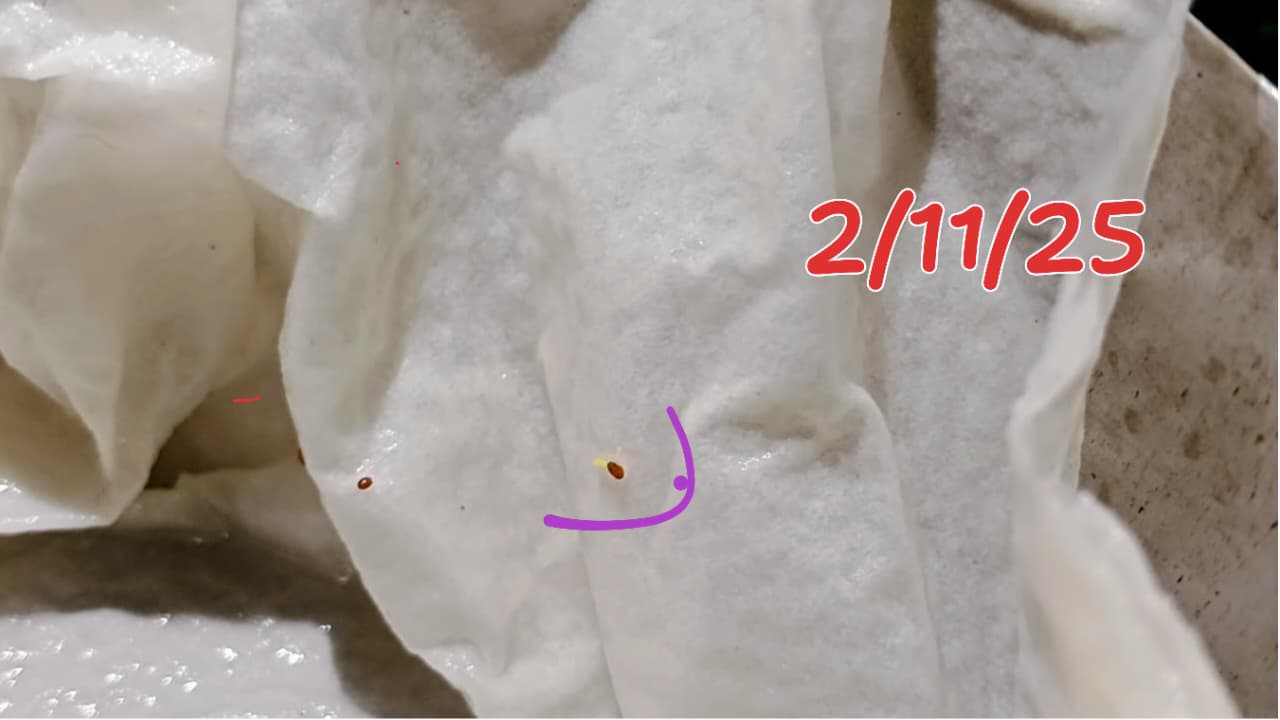
Our main focus was the batch of Cardamine seeds we set up on the wet paper towel back on October 27th. For almost a week, it was a quiet observation. However, the key breakthrough everyone was discussing was the observation from yesterday, November 2nd, where one of the seeds (which was circled in purple in the photo) clearly showed its radicle (the first tiny root) emerging.
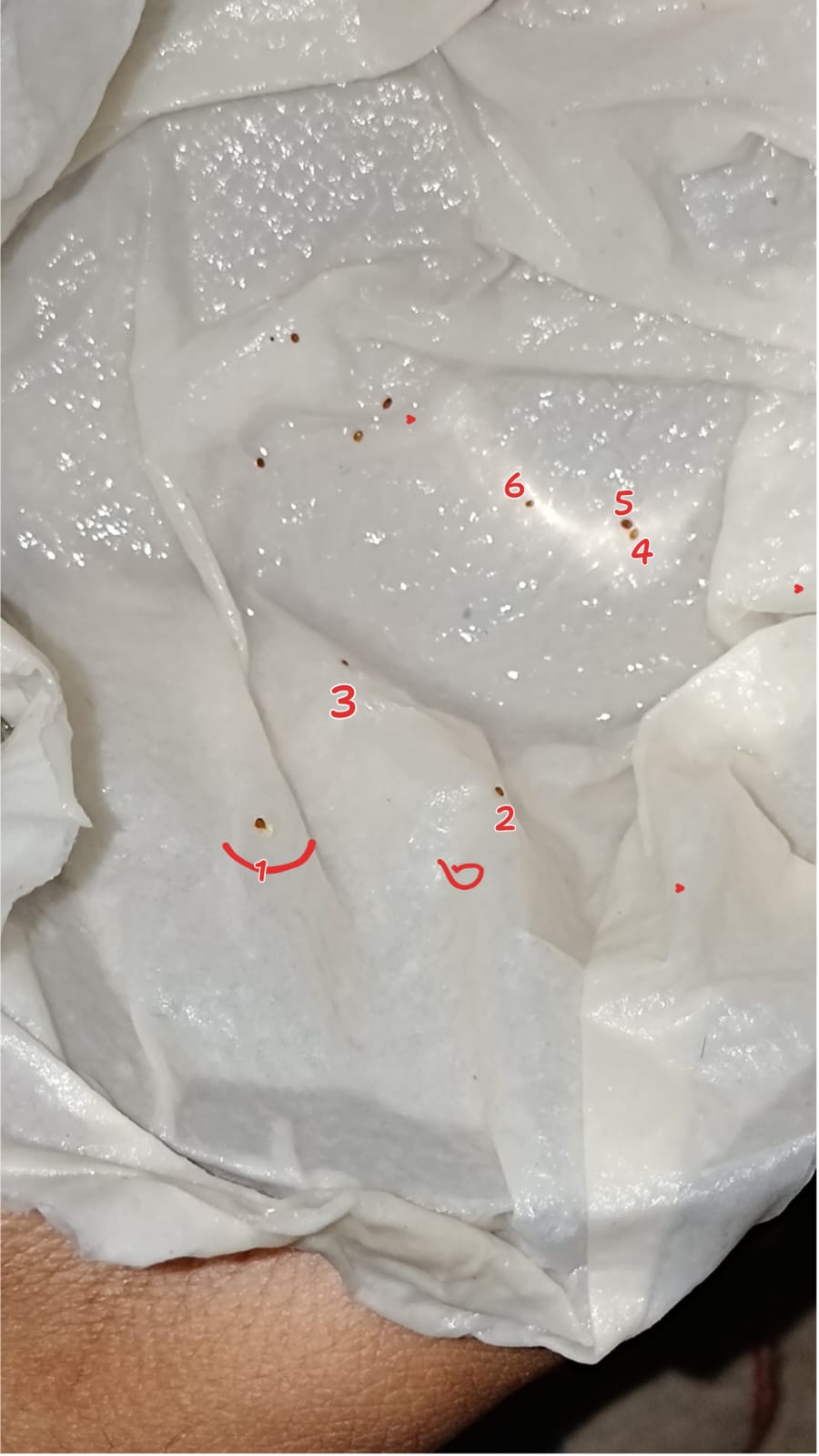
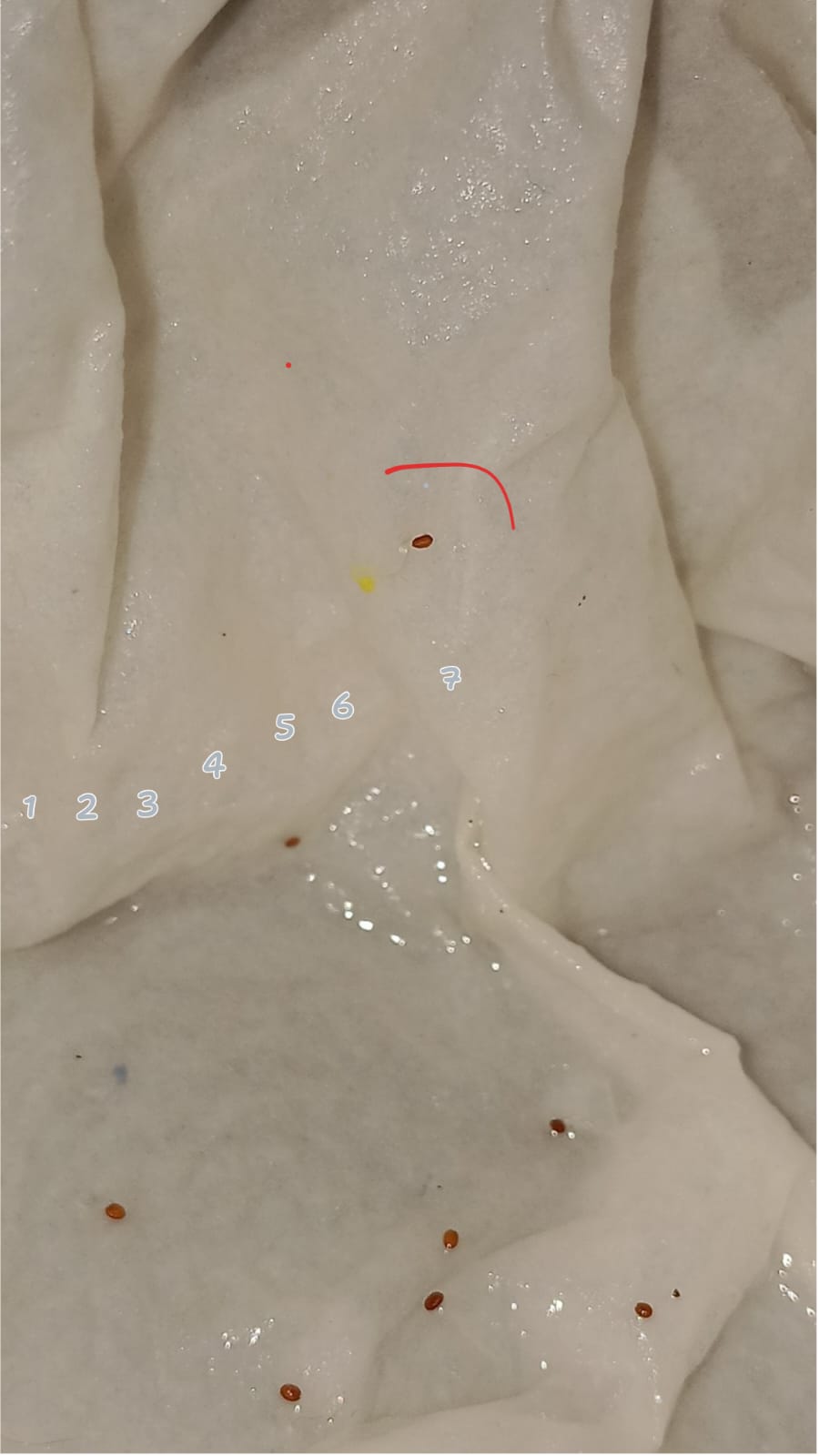
In today’s session, we all zoomed in on the paper towel again. We carefully numbered and examined several seeds (as seen in the annotated photos) to see if any others had followed suit. While many are still in their original state, the discussion was rich with speculation and observation about the conditions, the moisture, and the variability between individual seeds.
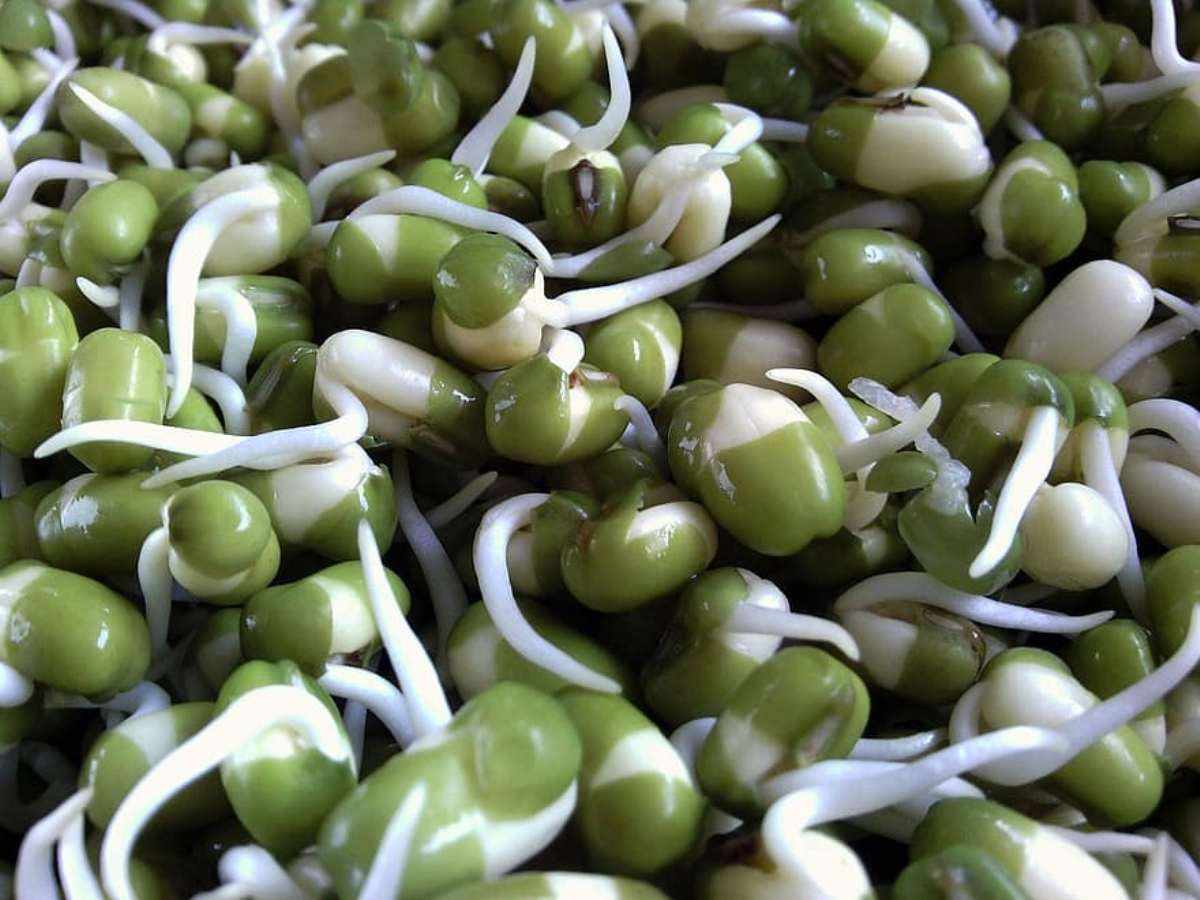
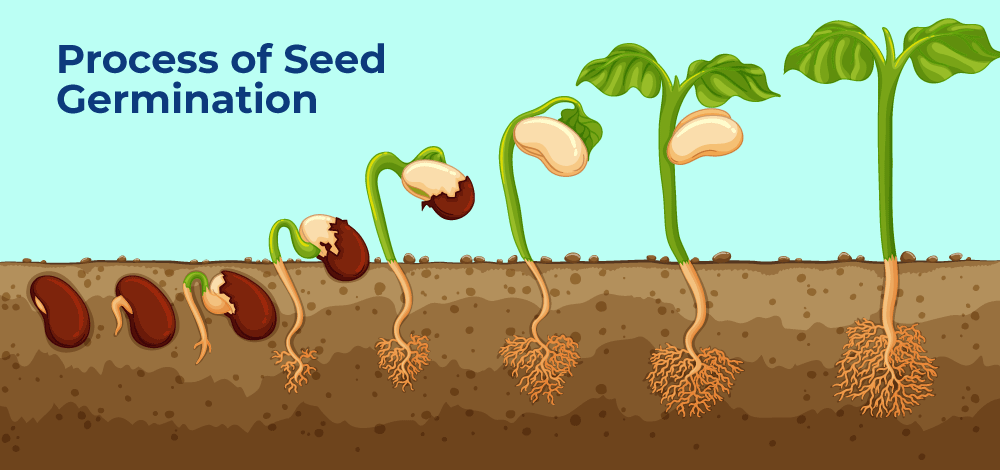
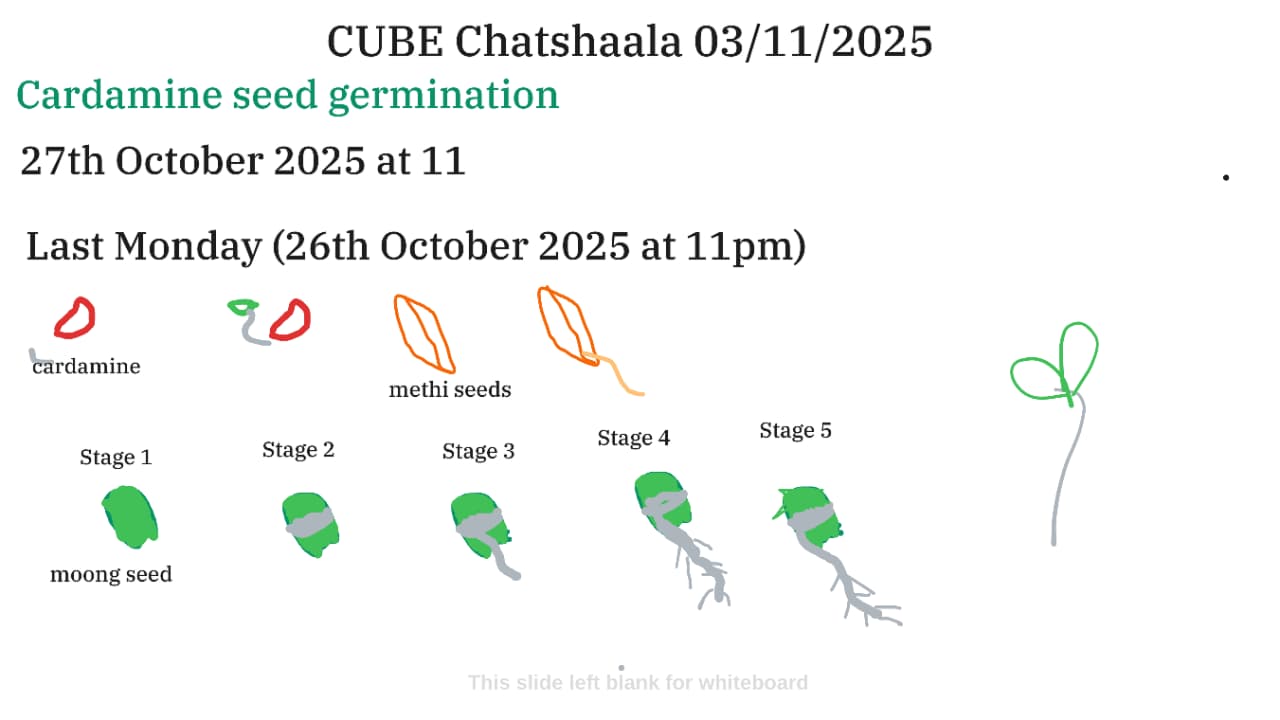
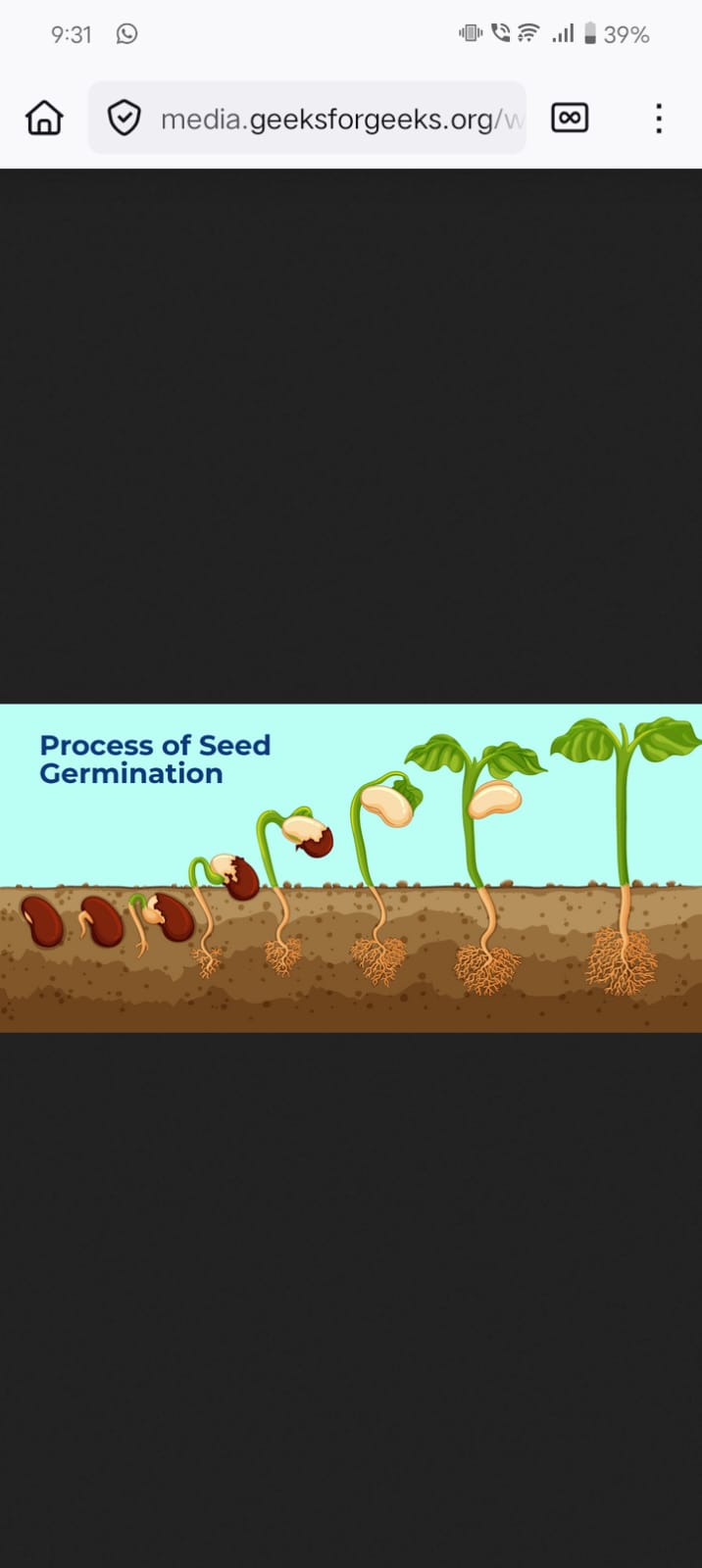
A significant part of our discussion was also driven by the comparative whiteboard summary. We contrasted our slow-and-steady Cardamine with the germination models for Methi (fenugreek) and Moong (mung bean). The 5-stage diagram for the moong seed and the reference image of bean germination helped us place our single Cardamine sprout in the context of the larger biological process. It sparked a great debate about why different seeds have such vastly different timelines and strategies.
 Provocative Questions to Inspire
-
We celebrated the one seed that sprouted, but what about the ten that haven’t? Are they failures, or are they just waiting for a different cue? What does this teach us about uniformity in an experiment?
-
How would this entire story—the timing, the root growth, the “stages”—be completely different if these seeds were in actual soil? What are we not seeing because we’re using a paper towel?
-
We’re looking at a standard “process of germination” diagram for a bean. Is it a helpful guide or a limiting box? Does it stop us from seeing the unique process of our own Cardamine seeds?
 What I Have Learned
-
Patience is a scientific virtue. My biggest takeaway is that not all life operates on a “moon seed” timeline. I was almost convinced nothing was happening, but the single sprout on Day 6/7 (Nov 2) proved that biological processes take their own time.
-
Comparison is the key to understanding. Without contrasting the Cardamine with the methi and moong diagrams, I wouldn’t have appreciated how different its strategy is. The comparison gave context to our observation.
-
Micro-observation matters. The act of numbering individual seeds (as seen in the photos) is crucial. It shifts the thinking from “the batch” to “this individual seed.” It’s a reminder that every seed is its own system.
 TINKE Moments (Gaps & Misconceptions)
Today’s session also revealed a few gaps in our collective understanding that we can explore:
-
Is it a root or a shoot? When the first white speck appeared (on Nov 2), there was a moment of confusion. Is it a root (radicle) or a leaf (plumule)? The bean diagram helped clarify it’s the radicle, but it’s a common misconception. We need to be precise with our language.
-
Are the “dead” seeds really dead?There was an assumption that the seeds that didn’t sprout with the first one are non-viable or “dead.” This is a gap. They could simply be dormant, have a thicker seed coat, or be waiting for slightly different conditions. We mistook “slow” for “stopped.”
-
The “checklist” fallacy. We were looking at the 5-stage moon diagram and the bean process. A misconception that emerged was treating these “stages” as a rigid checklist. Germination is a continuous fluid process, not a set of discrete steps. Our diagrams are just snapshots, and we should be careful not to let them limit our observation of the actual, messy, continuous growth.
 Reference
- 🌿 Seeds of Thought: When Mustard Meets Fenugreek in a HomeLab
- https://images.news18.com/ibnlive/uploads/2022/08/dsc_2617-14-188167-16617755404x3.jpg
- https://www.agrifarming.in/wp-content/uploads/2020/05/Comp1-17.jpg
- https://media.geeksforgeeks.org/wp-content/uploads/20230210152417/Process-of-Seed-germination.png